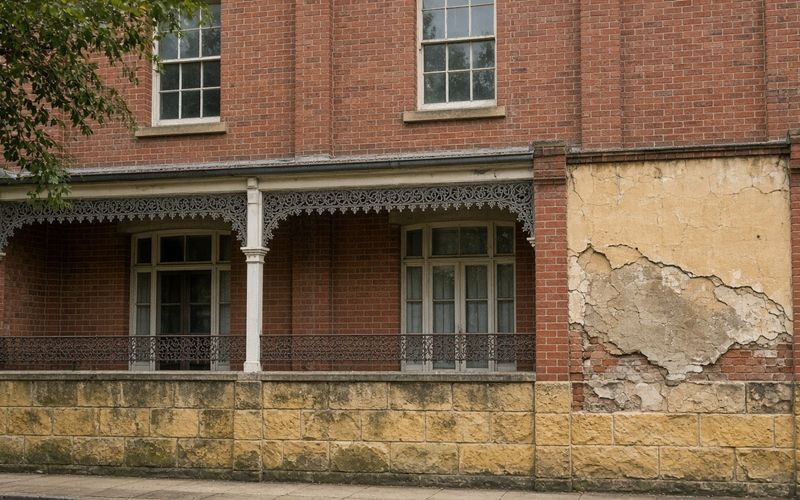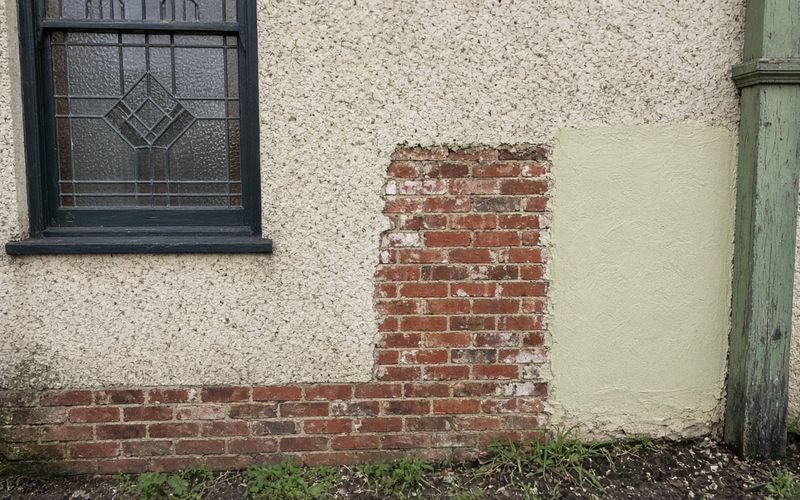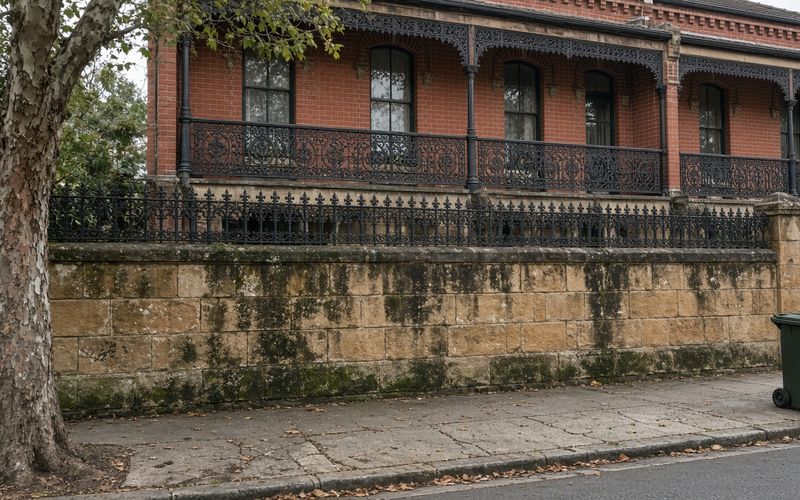
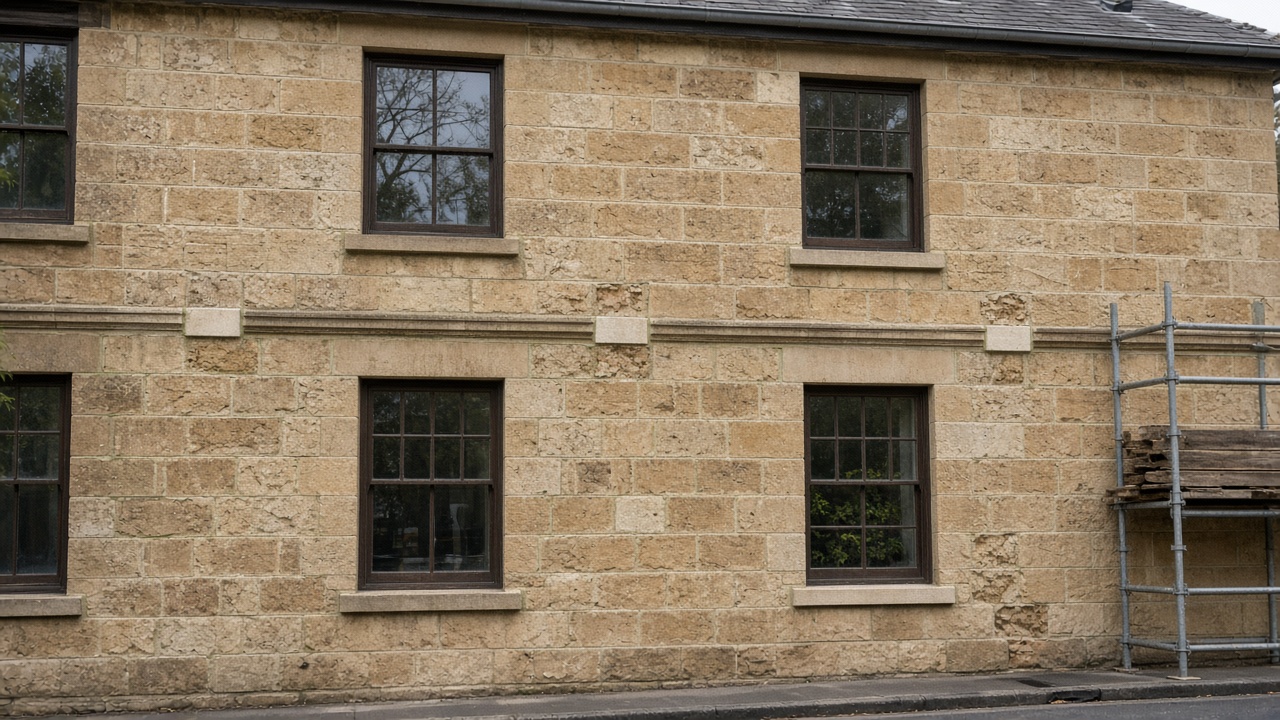
Façade replacement versus repair is one of the most consequential decisions on a heritage or older NSW building. Replacement can mean new stone units, full render renewals, or — in less conservation-minded briefs — wholesale recladding that erases historic fabric. Repair means retaining sound material, renewing failed joints and coats, and replacing only what cannot be saved. Conservation-led practice starts with repair-first criteria, not with a demolition quote.
This supporting article sits under façade restoration and repairs in NSW. It explains how to decide, what “replacement” covers, cost and approval implications, and how to brief contractors. Service detail remains on façade restoration and renovation. Related fabric guides: render repairs, cleaning.
What people mean by “replacement”
Clarify the vocabulary before comparing prices:
Unit replacement — individual stones, bricks or decorative elements.
Bay or elevation renew — full render strip and rebuild; large stone campaigns.
System replacement — new cladding systems over or instead of historic skins (often hostile to heritage significance).
Like-for-like renewal — matching materials and profiles where retention failed.
Conjectural rebuild — inventing detail without evidence (usually avoid).
Owners searching façade replacement may actually need targeted repair. Ask which meaning is on the table.
Repair-first criteria (conservation default)
Prefer repair when:
Most of the elevation is sound despite local defects.
Failures are driven by moisture paths that can be corrected.
Soft historic brick or sandstone retains structural section.
Decorative profiles can be patched or moulded locally.
Hollow render is limited and edges can be cut back cleanly.
Significance and listing favour retention of original fabric.
Repair-first is not sentimentality. Retaining fabric often reduces waste, preserves character that new materials struggle to match, and can be easier to justify to heritage authorities.
When replacement of elements is justified
Replacement of selected elements — or larger renewals — becomes reasonable when:
Stone or brick has lost section beyond reliable consolidation or indenting.
Render is extensively debonded with little sound edge remaining.
Corrosion of entire metal-lath systems has failed the coat.
Structural advice requires rebuilding a panel or parapet.
Hazardous materials or failed modern systems must come off for safety.
Matching salvage is available and retention would leave unsafe fabric.
Even then, replace the minimum necessary. A whole-street “new look” is a design choice, not an automatic conservation outcome.
The cost trap of “just replace it”
Wholesale replacement quotes can look tidy as a single line item. They often hide:
Disposal and hazardous material handling.
Temporary weatherproofing of opened elevations.
Matching difficulties and mock-up cycles.
Heritage approval delays or redesign after refusal.
Longer occupation disruption.
Loss of character that affects long-term value in ways a spreadsheet misses.
Targeted repair with proper access can cost less than full renew — or cost more per square metre while still being cheaper overall because less area is touched. Compare like scopes: include making-safe, moisture correction and finishes in both options.
Approvals and significance
On listed buildings and conservation-area properties, removing significant fabric to install modern cladding or heavily altered façades can trigger refusal or onerous conditions. Repair and like-for-like renewal are usually easier pathways. Document condition thoroughly — photographs, defect maps, engineer letters where relevant — so “must replace” claims are evidence-based. Conjectural ornament or fake “heritage style” cladding rarely satisfies conservation policies.
Confirm listing status early. State Heritage Register items have distinct pathways from local listings.
Technical decision points by material
Sandstone / stone: Indent and consolidate where viable; replace units when fretting or fracture leaves inadequate section. Match bedding, colour and tooling. See also sandstone topic guides on the site.
Brick: Repoint and replace individual face bricks before considering panel rebuilds. Hard cement history may force careful removal trials.
Render / plaster: Local cut-out versus full strip — driven by hollow extent and background condition (render guide). Decorative mouldings deserve profile-aware repair before wholesale loss.
Coatings and “reclads”: Dense modern systems over damp historic walls often fail and complicate future repair. Treat as last resort with full moisture diagnosis.
Hybrid programmes — the usual reality
Most conservation projects mix repair and replacement: renew failed cornice stones, repoint the field, patch render bays, clean gently, leave sound weathered face. Hybrid scopes need clear drawings or marked photos so tenderers price the same boundaries. Variation rules should say how newly discovered hollow areas are measured.
Strata politics and “new façade” pressure
Committees sometimes push full replacement for visual uniformity or perceived longevity. Uniformity can be achieved with careful repair and compatible coatings without discarding sound fabric. Longevity claims for replacement systems need evidence on *this* substrate — especially with salts and rising damp. Stage repairs by weather-critical elevations if budgets cannot fund a full wrap; do not let uniformity rhetoric force unsafe delay on loose overhead work.
Cleaning and “replacement by abrasion”
Aggressive power washing or blasting that removes the historic face is a form of uncontrolled replacement of surface character. Avoid creating a need for replacement through damaging cleaning. Use heritage cleaning methods and trials.
Questions to ask before approving replacement
What percentage of the elevation is actually failed — by measured survey?
Have moisture sources been identified and priced for correction?
What repair options were considered and why rejected?
How will new material match — samples on the building?
What heritage pathway applies, and has council advice been sought?
What is the temporary weatherproofing plan during opening-up?
What maintenance does the replacement system require in year five and year fifteen?
Who owns defects if the new system traps moisture?
If answers are vague, pause. Repair-first assessment under façade restoration is the safer next step.
Environmental and waste considerations
Full strip generates skip after skip of historic material that often cannot be recycled as character. Retention reduces waste. Where replacement is required, salvage sound units for unseen elevations or future patches. Document salvage. It is practical conservation, not merely idealism.
Working with Stoneline Heritage
Stoneline Heritage takes a repair-first, assessment-led approach to façade restoration and repairs across Sydney and NSW. We recommend replacement of elements when retention is no longer practical — and say so plainly when a proposed reclad would harm fabric or fail for moisture reasons. Send photographs, known listing status and what you have been quoted for “replacement.” Ask for a condition-based options note: repair, hybrid, and full renew — with implications for each.
Continue with façade restoration overview, render repairs, and crack diagnosis.
Case-pattern thinking (no invented project claims)
Patterns we see repeatedly: (1) soft sandstone “replaced” after blasting that should never have happened; (2) full render strip quoted where 20% hollow would have sufficed; (3) modern cladding proposed over unresolved rising damp; (4) unit replacement done well with matched stone and restrained joints. Use patterns to interrogate quotes — not as proof about your address.
Insurance, defects liability and who pays when replacement fails early
Replacement systems sold on long warranties still fail when installed over unresolved damp or incompatible backgrounds. Read warranty exclusions. Require the moisture strategy in writing. Defects liability should cover workmanship on both repair and replacement options — do not assume replacement transfers all risk away from diagnosis. If a reclad fails because rising damp was ignored, the argument will be unpleasant for everyone; prevent it with assessment.
Matching and mock-ups for replaced fabric
When units or coats must be replaced, build mock-ups on the elevation. View dry and in raking light. Check joint width, colour, texture and profile against retained fabric. Reject “close enough” boards in the yard that ignore the building’s weathered tone. Keep spare matched material for future patches where the campaign is large — colour drift years later is a common regret.
Energy upgrades versus heritage skins
Sometimes replacement is proposed to hang insulation or new weather barriers. Those goals can be legitimate in parts of a building without discarding a significant street façade. Explore internal upgrades, roof and window performance, and targeted repair of the historic skin before accepting that heritage fabric must go. Conservation and comfort are not automatically opposed — but they need a design that respects both.
Dilapidation and neighbour interfaces during replacement
Full strip and rebuild can affect adjoining party walls, shared cornices and continuous terraces. Dilapidation surveys, temporary support and neighbour notices matter more when replacement opens large areas. Repair-first programmes often reduce that interface risk by limiting opening-up. Factor legal and neighbour time into the true cost of replacement.
Decision record for committees and future owners
Write down why repair, hybrid or replacement was chosen, with photographs and consultant notes. Future committees should not re-litigate from myth. A one-page decision record beside the method statement is enough. It also helps heritage officers understand that replacement, if chosen, was not casual.
Soft language for a hard choice
Sales language often frames replacement as decisive and repair as temporary. In conservation practice, good repair is decisive: it keeps working fabric in service. Replacement is sometimes necessary and should then be done excellently — matched, detailed, moisture-aware. The soft title of this article is intentional: supporting /news that helps people choose, not a second money page competing with façade restoration services.
Frequently asked questions
Is façade replacement better than repair?
Not by default. Conservation-led practice repairs first and replaces only what cannot be retained safely or practically.
When must a façade be replaced?
When fabric is unsafe or beyond reliable repair, or when systems have comprehensively failed — evidenced by assessment, not by preference for a new look.
Will heritage listing stop replacement?
It can restrict or condition removal of significant fabric. Early advice and strong condition evidence matter.
Can we replace just the bad sections?
Often yes — hybrid programmes are common and usually preferable.
Does replacement stop future maintenance?
No system is maintenance-free. Some modern skins create new failure modes if moisture is trapped.
How do I decide?
Commission assessment with measured defect mapping and options. Compare total scopes, approvals and moisture strategy — not only headline replacement prices.