
Sandstone Restoration & Repair in Sydney
We provide sandstone restoration and stone repairs across Sydney for buildings affected by weathering, salt damage, cracking and previous repairs. Our services include cleaning, consolidation, compatible repairs and replacement of severely deteriorated sections, following an assessment of the stone’s condition.
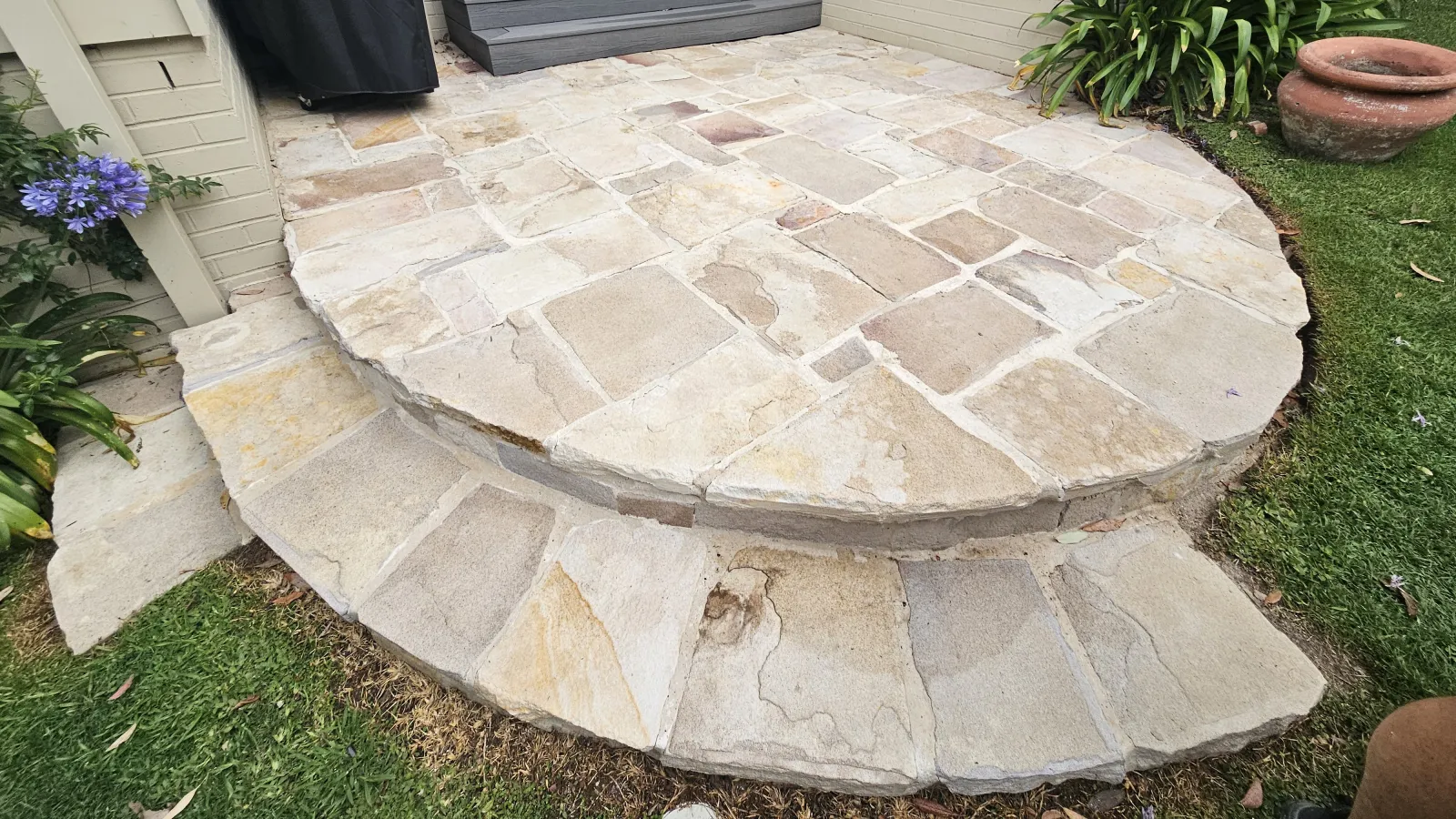
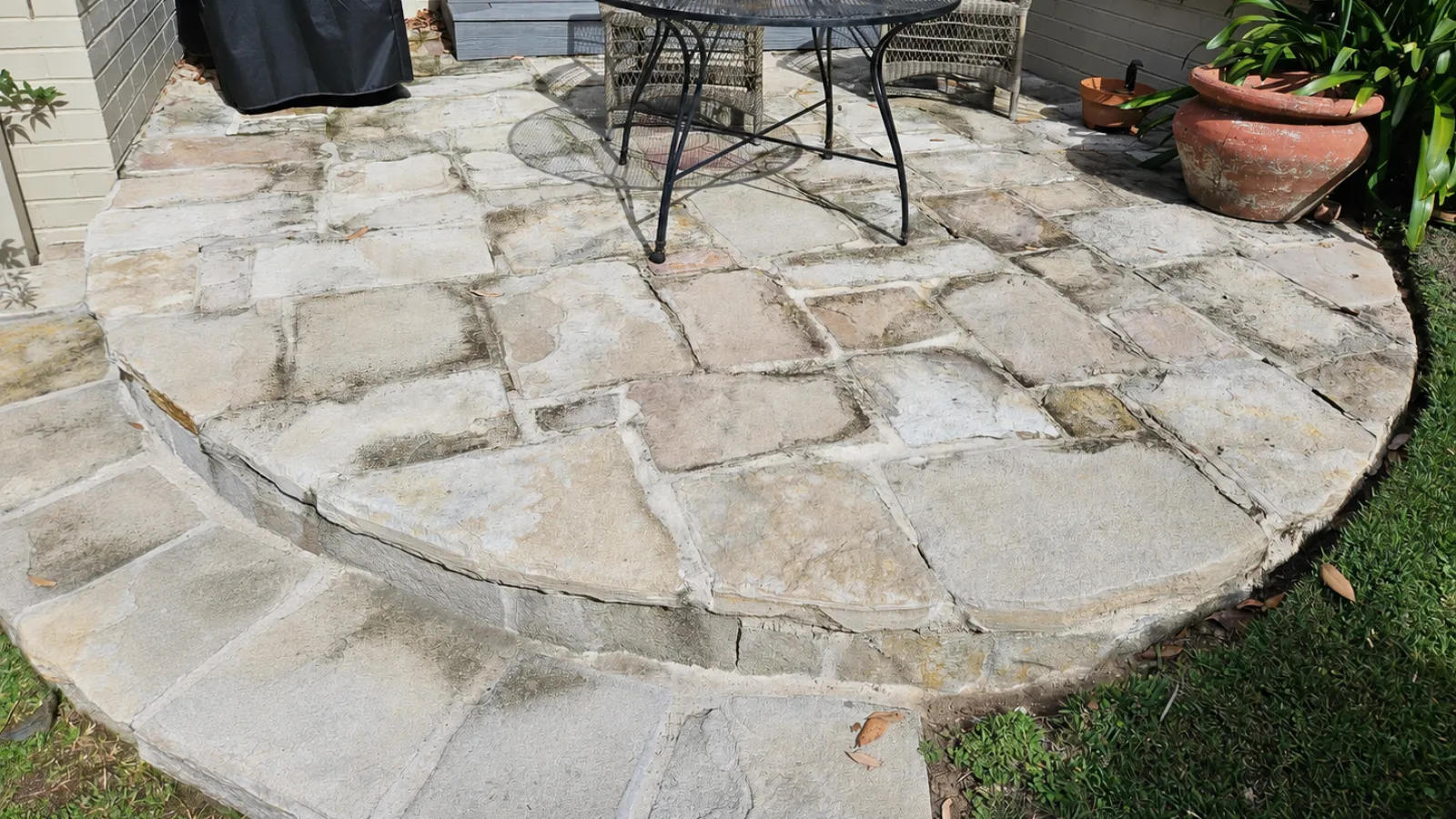
Our Stone Conservation Services
A full range of conservation-led services for sandstone and natural stone.
- 01Stone Cleaning
- 02Graffiti & Paint Removal
- 03Stone Consolidation
- 04Cavity Repairs
- 05Dutchman (Stone Indent) Repairs
- 06Lime Mortar Repairs
- 07Hydrophobisation
- 08Protective Treatments
Natural stone is one of the most durable and distinctive building materials, yet decades of weather exposure, moisture ingress, salt contamination and previous incompatible repairs can gradually lead to deterioration.
At Stoneline Heritage Restoration, we specialise in the conservation, repair and preservation of sandstone and natural stone. Our services include stone cleaning, conservation, cavity filling, structural consolidation, load-bearing improvement, protective treatments, hydrophobisation, graffiti removal and paint removal.
Every project begins with understanding the condition of the stone and the causes of deterioration before selecting the most appropriate conservation and restoration method.
Stone Cleaning
The careful cleaning of natural stone is often the first step in any successful restoration project. Dirt deposits, biological growth, pollution and previous surface treatments can conceal defects, accelerate deterioration and diminish the appearance of the building.
Our cleaning methods are selected according to the type, condition and significance of the stone. Depending on the project, this may include specialist chemical cleaning systems, peel-off cleaning technologies and low-impact conservation techniques designed to remove contaminants while preserving the original surface.
Each cleaning method is carefully assessed to achieve the required result while minimising intervention and protecting the integrity of the stone.
Stone Repairs & Conservation
Conservation is about preserving existing material wherever practical rather than replacing what can still be retained.
Repairs may include cavity filling, stone consolidation, structural stabilisation, carefully matched stone indents and load-bearing improvements where deterioration has affected the integrity of the structure.
Where sections of stone have deteriorated beyond repair, replacement is undertaken using carefully selected matching stone to preserve both the structural performance and architectural character of the building.
Lime Mortars & Compatible Repairs
Traditional lime mortars remain an essential component of heritage stone conservation.
Unlike dense cement-based materials, lime mortars accommodate natural movement, allow moisture to evaporate through the masonry and remain compatible with historic stone construction.
Where appropriate, we utilise carefully formulated hydraulic or non-hydraulic lime mortars that are matched to the original stone in terms of strength, porosity, permeability and appearance. Correctly selected repair mortars contribute to the long-term performance of the building while reducing the risk of future deterioration.
Protective Treatments
Protective treatments may be used where appropriate to reduce water ingress while maintaining the natural breathability of the stone.
Specialist silane- and siloxane-based water repellents provide long-term protection against moisture penetration while allowing water vapour to escape naturally. These conservation-grade treatments help minimise weathering and extend the service life of natural stone without significantly altering its appearance.
Treatment selection is based on the condition of the substrate, environmental exposure and the conservation requirements of each individual project.
A Conservation-Focused Approach
Every building presents unique challenges. Rather than applying a standard repair, we assess each project individually and recommend treatments based on the condition of the stone, the causes of deterioration and the desired long-term outcome.
Our objective is to preserve as much original fabric as possible while addressing the underlying causes of deterioration, helping ensure historic stonework continues to perform for generations to come.
For buildings affected by moisture ingress, soluble salts or rising damp, we recommend appropriate investigation and treatment as part of a comprehensive conservation strategy. More information can be found on our Salt Damage & Rising Damp page.
Recent work in this category.
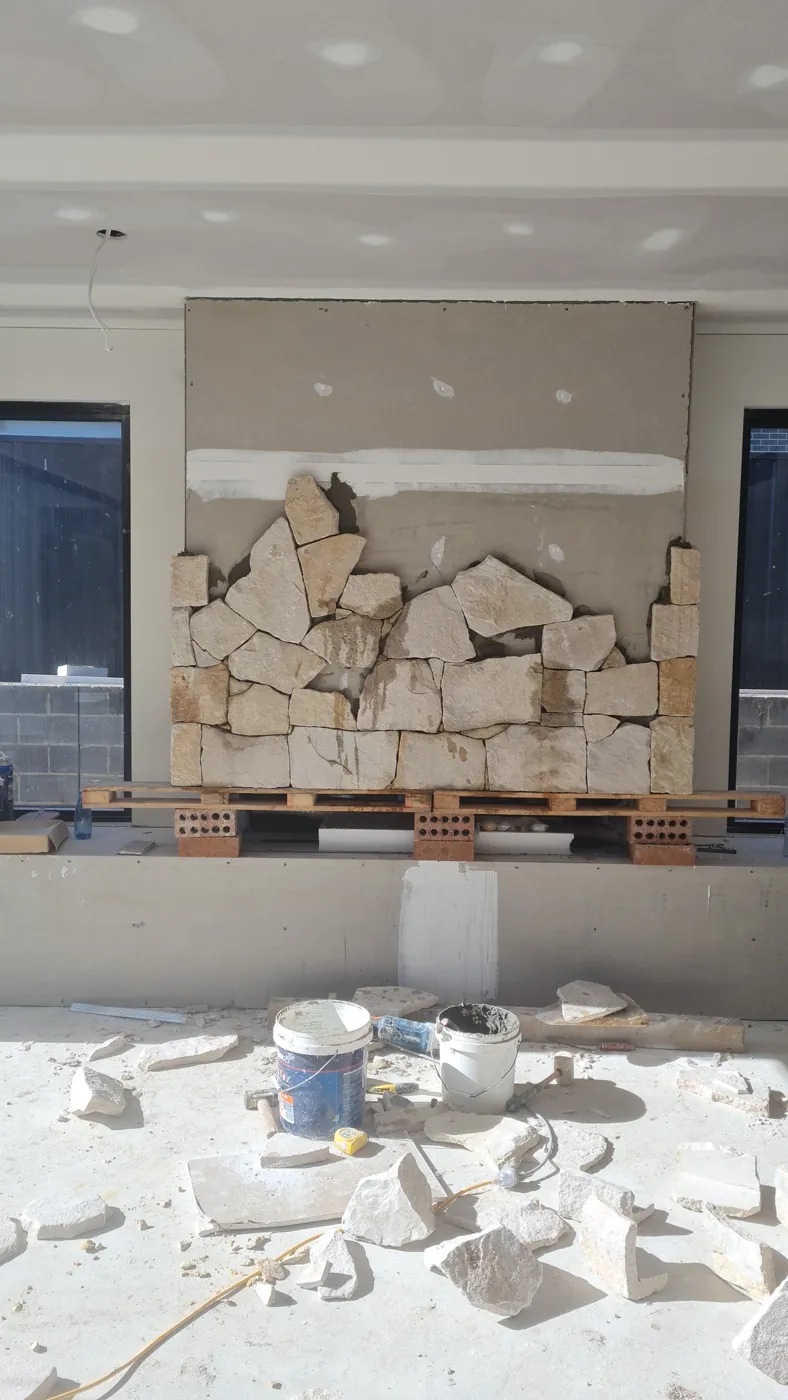
Sandstone feature-wall cladding
Random-ashlar sandstone cladding to an interior feature wall — stone selected for natural colour and laid to a tight, characterful coursing.
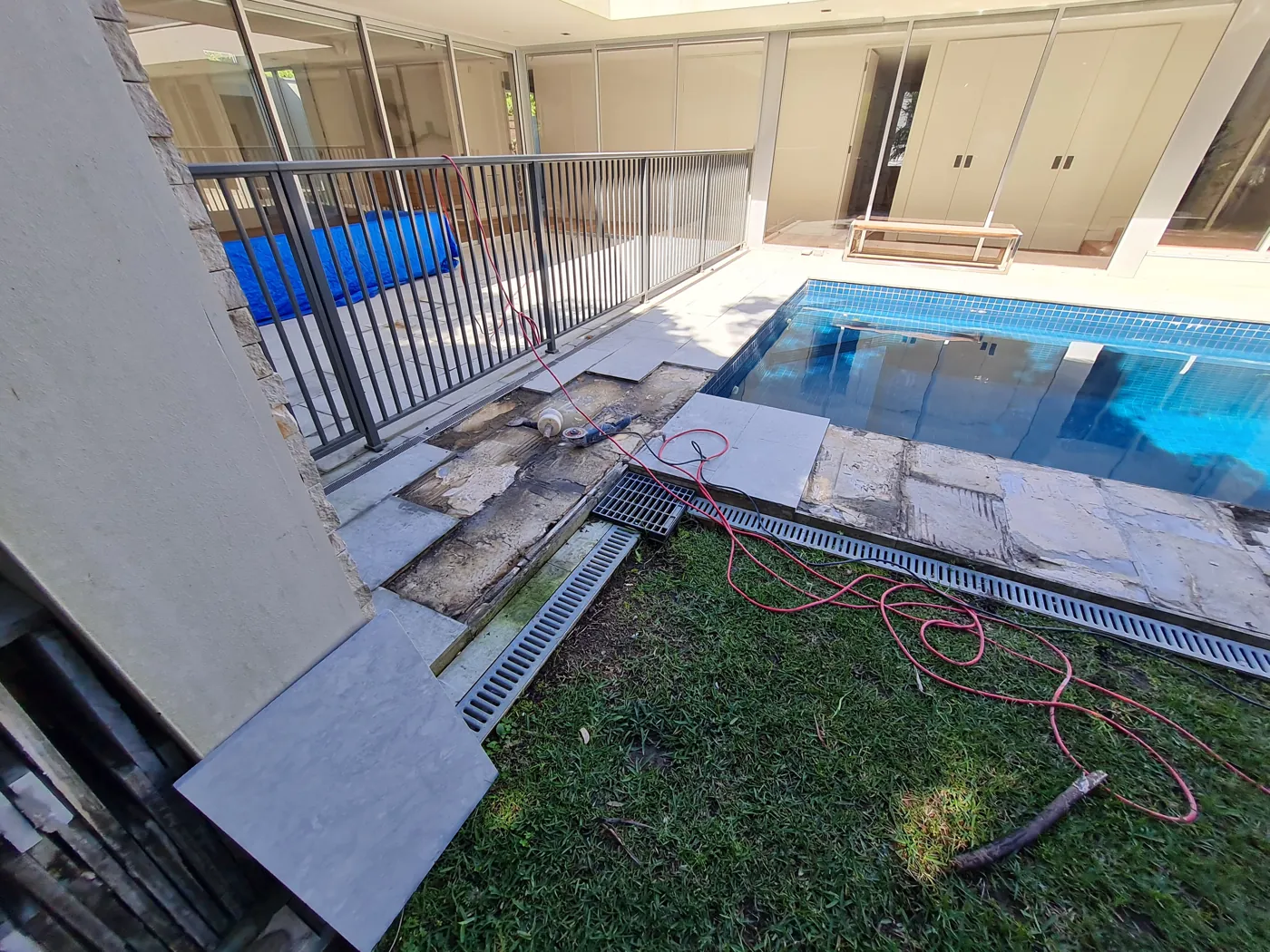
Natural-stone pool surround
Natural-stone paving and coping to a pool surround — lifted and relaid on a prepared bed, set out for fall and finished with clean, even joints.
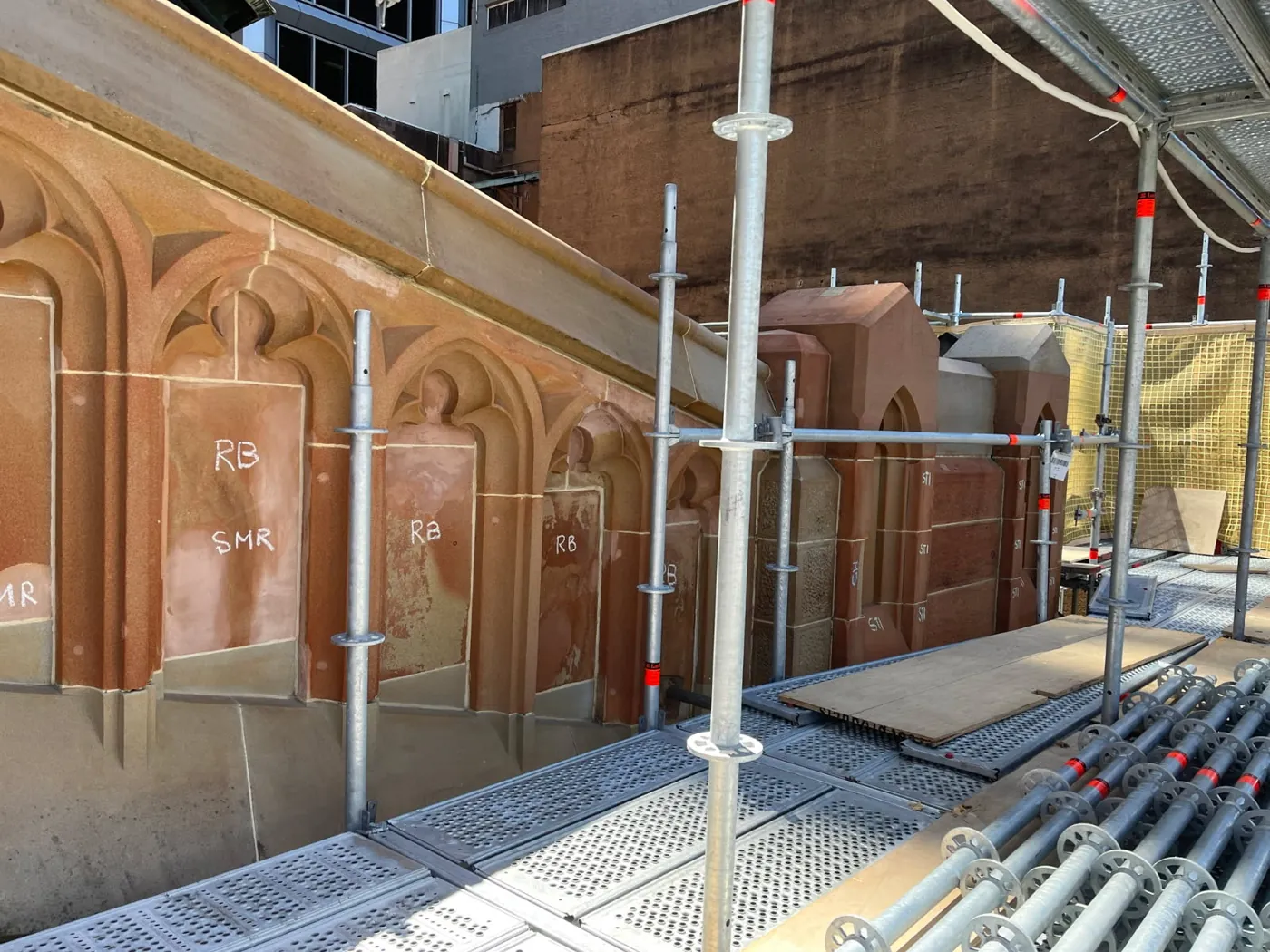
Carved sandstone façade restoration
Conservation-led restoration of a carved sandstone arcade — decayed sections marked up for stone indents and replacement, then repaired with matched stone and compatible mortar.
Common questions
Can weathered or salt-affected sandstone be repaired instead of replaced?
Usually yes. We assess each stone and favour compatible mortar repair, indenting or consolidation to retain sound original fabric, replacing units only where retention is no longer viable.
Why do earlier cement repairs to sandstone often fail?
Cement is harder and less breathable than the stone, so it traps moisture and salts and tends to accelerate decay around the repair. We use lime-based, compatible repairs instead.
Do you treat the cause of stone decay, not just the surface?
Yes. Where rising damp or salt is driving the damage we assess the moisture source and salt load first, because a surface repair on its own will fail if the cause is left active.
Get a specialist assessment for sandstone & stone restoration.
Send photos and a short description — we'll come back with a method we'd recommend assessing on site, and what we'd need to confirm before quoting.