
Salt Damage, Rising Damp & Masonry Desalination
Assessment‑led treatment for salt, moisture and deterioration in older stone, brick and mortar structures.
Moisture and salt contamination are among the most common causes of deterioration in historic masonry. While rising damp is often recognised as the visible symptom, the greatest damage is frequently caused by the soluble salts carried through brick, stone and mortar.
As moisture travels through porous building materials, salts crystallise within the masonry. Over time, this can result in crumbling mortar, stone decay, plaster failure, surface scaling and the gradual loss of historic fabric.
At Stoneline Heritage Restoration, we investigate the source of moisture, assess salt contamination and develop remediation strategies that address both the cause of the problem and its long-term effects.
Understanding Rising Damp
Historic buildings were designed to manage moisture differently from modern construction. The use of dense cement renders, impermeable coatings and inappropriate repair materials often prevents walls from drying naturally, trapping moisture and accelerating deterioration.
Our approach focuses on restoring the building's natural moisture balance through compatible, breathable repair systems rather than simply concealing the symptoms.
Damp-Proof Course Installation
Where rising damp has compromised the building fabric, a chemical damp-proof course may be recommended as part of a comprehensive remediation strategy.
This process involves introducing specialist siloxane or silicone-based treatments into the masonry using carefully controlled gravity-fed or injection methods. Once cured, these treatments form a hydrophobic barrier within the porous brick or stone, helping to reduce the upward movement of moisture while remaining compatible with the existing structure.
Desalination
Removing accumulated salts is often essential before permanent repairs can be undertaken.
We utilise specialist desalination compresses and poultices designed to safely extract soluble salts, including chlorides and nitrates, from masonry without causing physical damage to the original substrate.
Depending on the building and the level of contamination, cellulose-based or hydrophilic mineral wool poultices may be used. These temporary, non-destructive and reversible treatments gradually reduce salt concentrations while preserving the original building fabric.
Cleaning & Surface Preparation
Historic masonry often accumulates dirt, pollution and surface deposits that retain moisture and accelerate deterioration.
Cleaning is undertaken not only for aesthetic reasons but also to improve the long-term performance of the building by:
- removing salt-rich surface deposits and environmental contaminants
- restoring the natural capillary absorbency of the substrate
- preparing surfaces for conservation treatments
- reducing conditions that promote continued deterioration
Depending on the substrate and contamination present, cleaning methods may include specialist chemical cleaning systems, conservation poultices and solvent-free peel-off cleaning technologies that minimise the use of water while protecting delicate historic surfaces.
Breathable Lime-Based Repair Systems
Many historic buildings suffer because dense cement-based renders and mortars have replaced traditional breathable materials.
Where appropriate, we replace incompatible repairs with natural hydraulic lime mortars and breathable lime-based repair systems that allow moisture to evaporate naturally through the wall construction.
In areas affected by severe salt contamination, sacrificial lime plasters may be used. These highly porous plasters draw salts away from the original masonry, helping protect the historic substrate while allowing accumulated salts to be removed during future maintenance.
Structural Stabilisation
Where prolonged moisture exposure has weakened the building fabric, additional stabilisation measures may be required.
Depending on the condition of the structure, natural hydraulic lime mortars combined with specialist reinforcement systems can be used to improve structural integrity while maintaining vapour permeability and compatibility with the original construction.
A Long-Term Conservation Approach
Every building behaves differently. Rather than applying a standard treatment, we assess each structure individually to determine the source of moisture, the level of salt contamination and the most appropriate conservation strategy.
Our objective is not simply to stop rising damp, but to restore the building's natural moisture balance, preserve original materials and reduce the risk of future deterioration through compatible, conservation-led repair methods.
Recent work in this category.
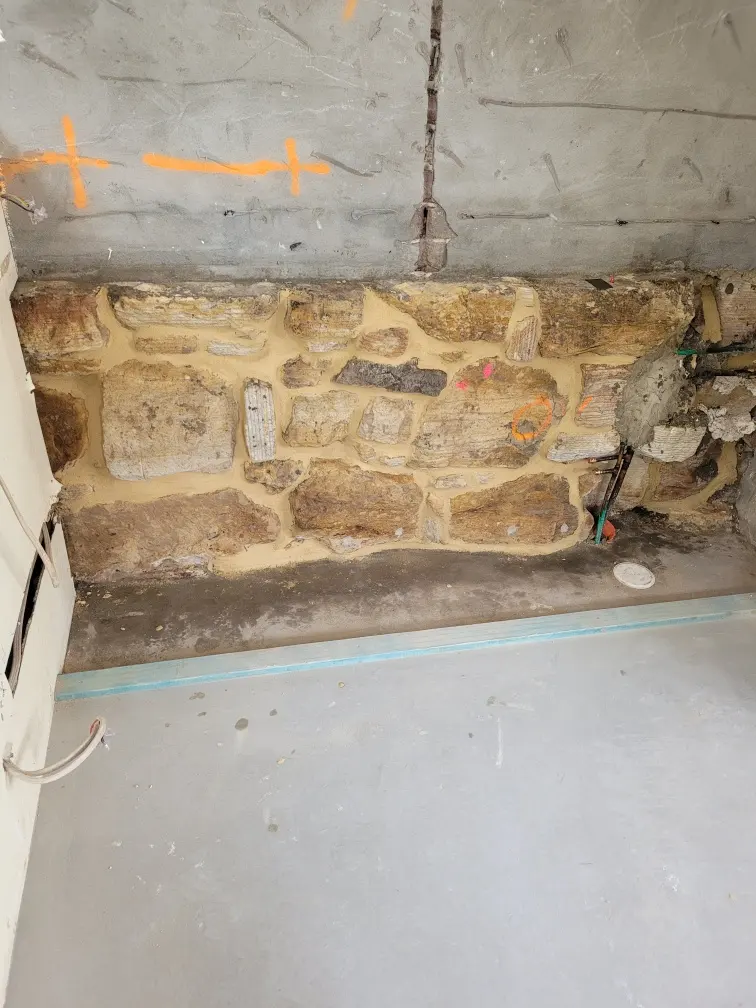
Salt-laden masonry desalination
Soluble salts drawn out of salt-affected masonry with a specialist poultice. The compress binds with chlorides and nitrates in the stone and is peeled away once cured, lowering the salt load before any repair is attempted — the same desalination process shown in the hero clip.
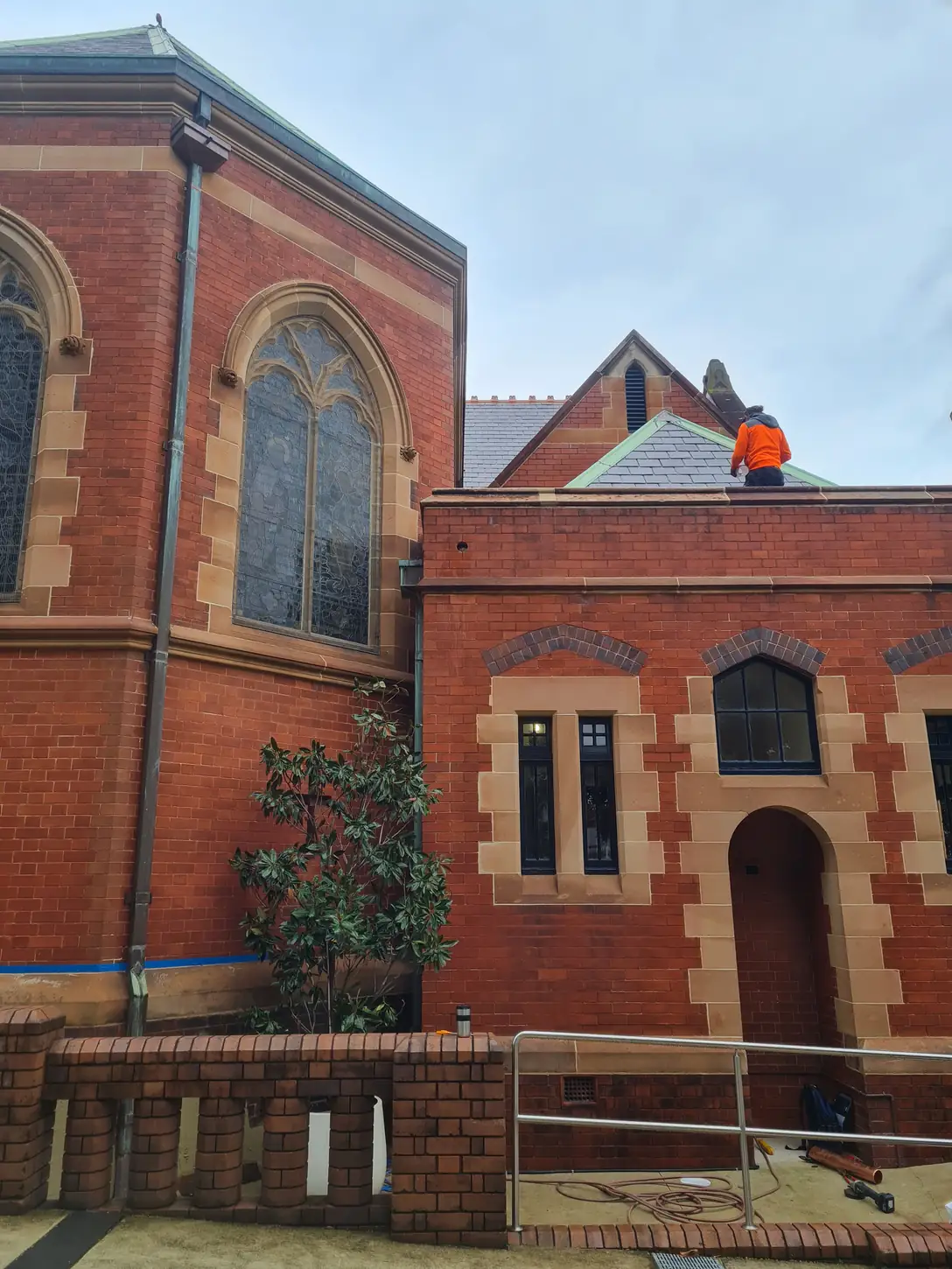
Rising damp and mould in brickwork
Rising damp drawing moisture into heritage brickwork and encouraging mould growth — the kind of case where the moisture pathway has to be managed, not just the surface cleaned.
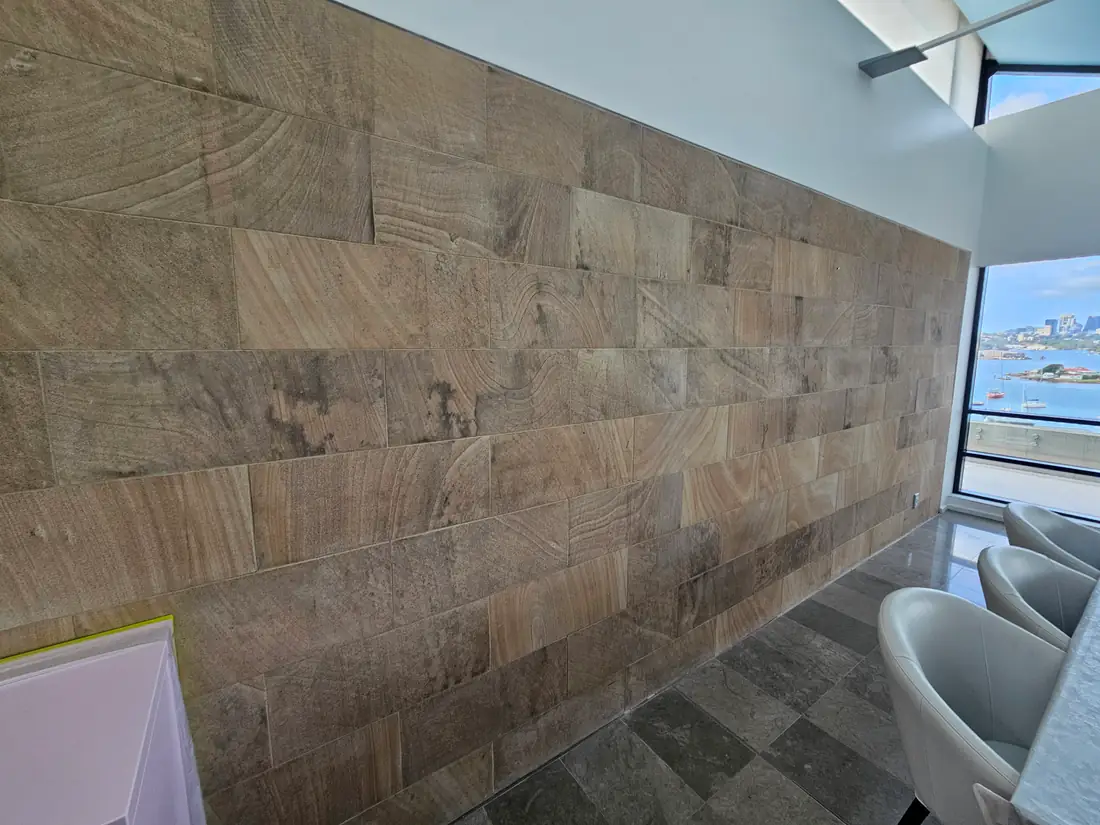
Mould driven by trapped moisture
Surface mould forming where damp is held in the wall — a sign the underlying moisture needs addressing at its source rather than simply being washed off.
Common questions
Why does rising damp and salt damage keep coming back after repairs?
If salt and moisture are still active in the wall, a new repair becomes the next thing to fail. Lasting results need the cause addressed, not only the surface.
What is desalination and when is it needed?
Desalination uses poultices to draw salts out of the masonry before compatible lime-based repair. It is used where salt load is driving decay, and is usually staged work rather than a single visit.
Will waterproofing fix rising damp?
Not usually. A blanket waterproof coating on older masonry can trap moisture inside and make damage worse — breathable systems and detailing are generally safer, decided wall by wall.
Get a specialist assessment for salt damage & rising damp.
Send photos and a short description — we'll come back with a method we'd recommend assessing on site, and what we'd need to confirm before quoting.