
Heritage Finishes & Decorative Restoration
Restoration of the decorative layer of older buildings — the ornamental plaster, traditional renders, lime and mineral finishes and tessellated tiling that give heritage buildings their character — repaired and reinstated with compatible materials and traditional methods.
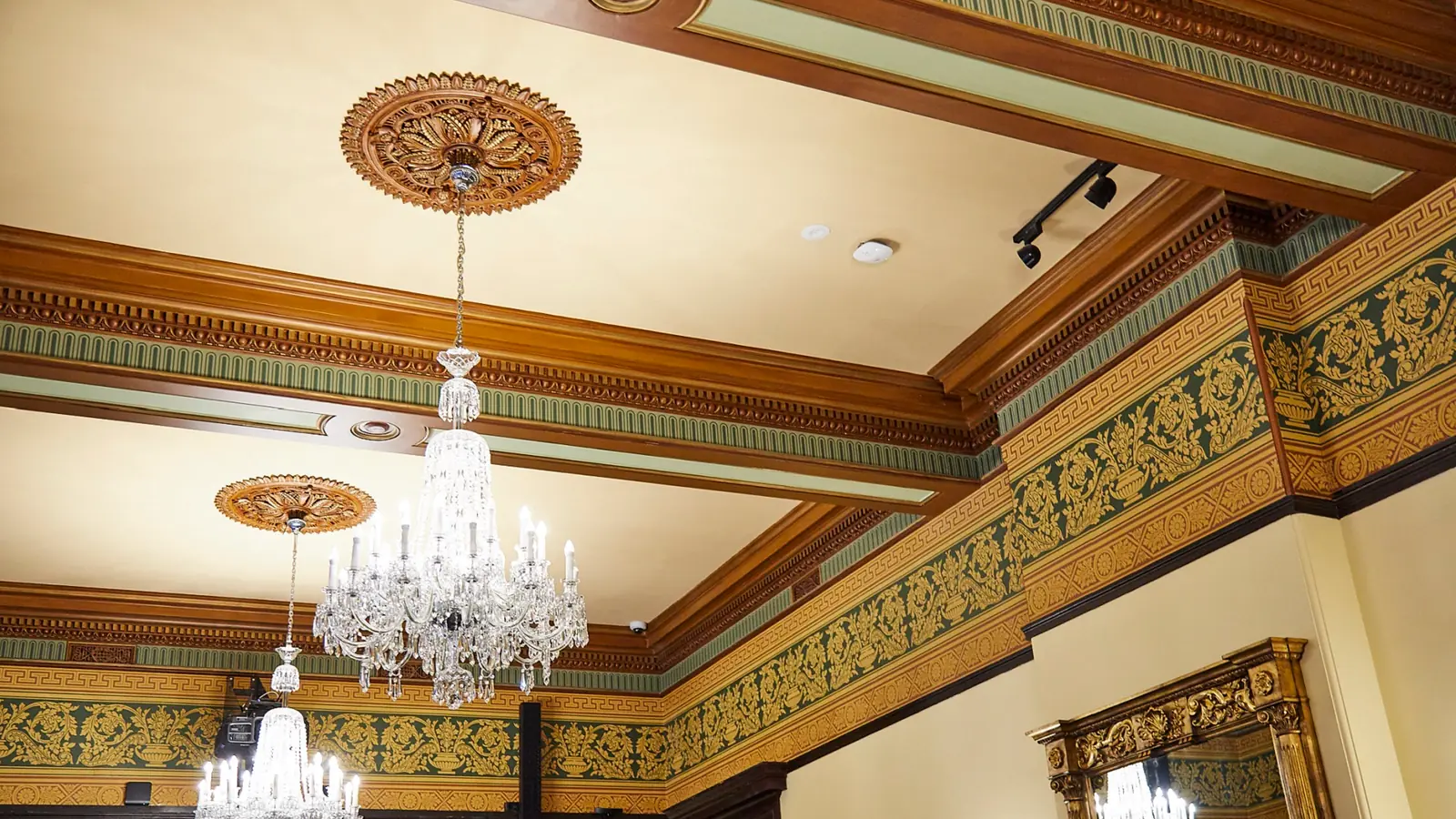
Historic buildings often contain decorative elements and surface finishes that are as significant as the structure itself. Decorative plasterwork, lime finishes, stucco details, mouldings and painted surfaces all contribute to the character, authenticity and heritage value of a building.
At Stoneline Heritage Restoration, we undertake the conservation, repair and careful recreation of traditional finishes and decorative architectural elements using methods and materials compatible with the original construction. Our focus is to preserve the building's character while ensuring repaired surfaces remain durable, breathable and sympathetic to the historic fabric.
Decorative Lime Finishes & Limewash
Traditional lime-based finishes have been used throughout Europe and Australia for centuries, forming an integral part of many historic buildings. Unlike many modern coatings, limewash and mineral-based finishes remain highly breathable, allowing moisture to move naturally through the building fabric while helping to reduce the risk of trapped moisture and salt-related deterioration.
We undertake the application, repair and restoration of traditional lime finishes using materials and techniques appropriate to the age and significance of the building. Whether conserving original finishes or recreating historic decorative surfaces, our objective is to maintain both the architectural character and the long-term performance of the structure.
By selecting compatible, breathable materials, we help ensure that repaired surfaces continue to perform as intended while remaining sympathetic to the original construction.
Historic Plaster & Stucco Restoration
Historic plaster and stucco are defining features of many heritage buildings, contributing to both their architectural character and long-term performance. Over time, these elements can deteriorate due to moisture ingress, structural movement, weathering and previous incompatible repairs.
Our restoration works include the repair, consolidation and recreation of traditional plaster and stucco finishes using materials and techniques compatible with the original construction. Every intervention is carefully considered to preserve the building's character while ensuring the repaired elements perform as intended.
Where decorative features have been damaged or lost, mouldings, profiles and ornamental details can be accurately reproduced based on surviving evidence, historic documentation or existing architectural elements.
Architectural Mouldings & Decorative Features
Cornices, mouldings, capitals, decorative bands and ornamental details are often among the most distinctive features of a heritage building, reflecting the craftsmanship and architectural style of their time.
Our restoration works include the conservation, repair and recreation of architectural mouldings and decorative features using traditional materials and techniques appropriate to the original construction. Where elements have been damaged or lost, new details can be accurately reproduced using surviving evidence, historic documentation or existing architectural features as reference.
Every intervention is carried out with the aim of preserving the building's architectural integrity while ensuring new work remains visually and physically compatible with the original design.
Fresco & Decorative Surface Conservation
Decorative finishes, frescoes surfaces and architectural details contribute significantly to the character and heritage value of a building. Their conservation requires a careful and considered approach that prioritises the preservation of original material wherever possible.
Depending on the condition of the substrate, restoration works may include specialist cleaning, consolidation, stabilisation and the conservation of decorative painted finishes and architectural features. Every treatment is selected to minimise intervention while maintaining the authenticity, appearance and long-term stability of the original surface.
Traditional Materials & Historic Techniques
The use of traditional materials and application techniques remains one of the fundamental principles of heritage restoration. Successful conservation is not simply about repairing defects—it is about understanding how historic buildings were originally constructed and selecting materials that continue to work in harmony with the existing fabric.
Where appropriate, we utilise object-specific recreation of historic mortars, plasters, renders and decorative finishes, carefully matching the original composition, appearance and performance. By combining traditional craftsmanship with modern conservation knowledge, we help maintain the authenticity, breathability and long-term durability of historic buildings while respecting their architectural significance.
Preserving Character Through Craftsmanship
Decorative finishes are often among the most distinctive and historically significant features of a heritage building. Their careful conservation helps preserve not only the building's appearance but also its craftsmanship, authenticity and architectural identity.
By combining traditional craftsmanship, conservation principles and modern restoration materials, we help ensure these features continue to enhance and define the building for future generations.
Recent work in this category.
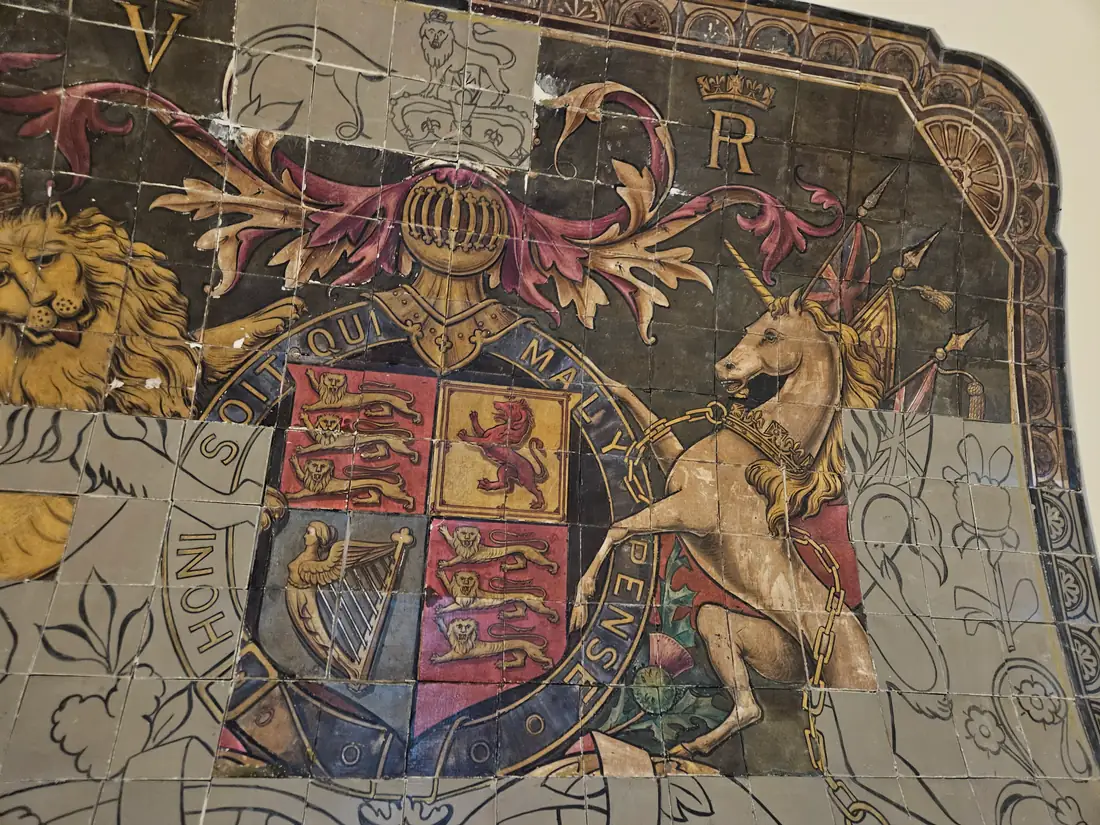
Royal Arms painted tile mural
Conservation of a Victorian hand-painted tile mural of the Royal Coat of Arms — faded and lost detail repainted tile by tile, restored colour brought back beside sections still in outline.
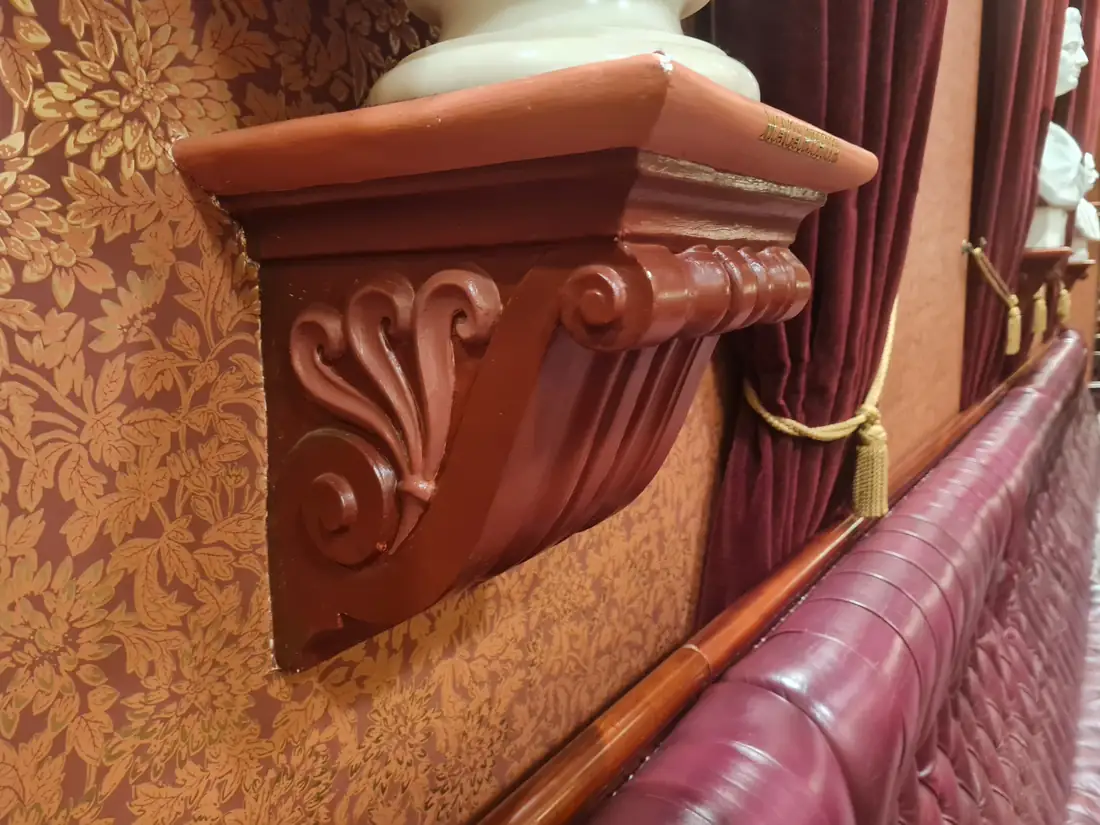
Carved console brackets
Restoration and decorative finishing of carved console brackets carrying marble busts in a heritage chamber — the mouldings repaired and refinished to match the original scheme.
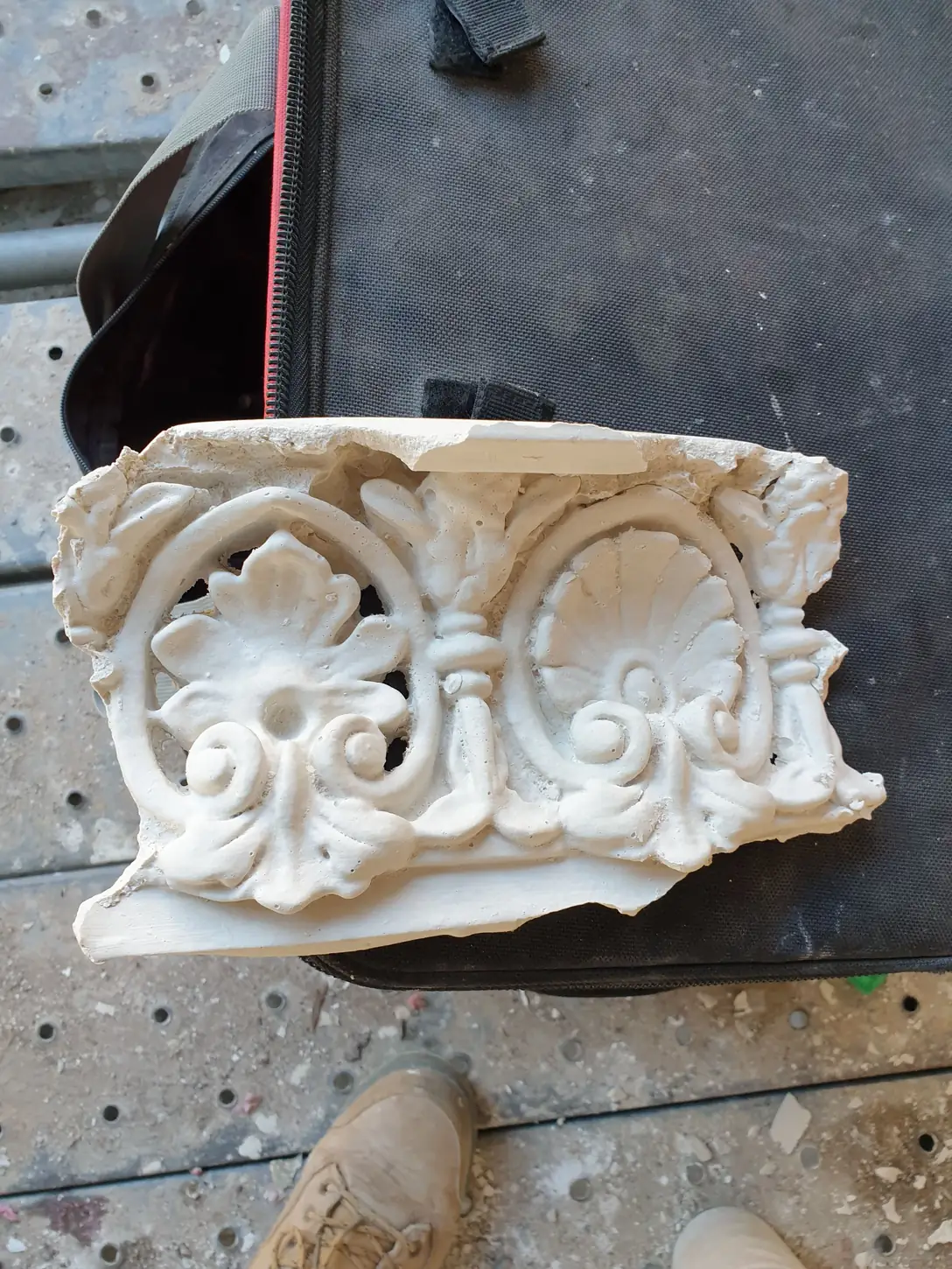
Reproduced plaster enrichments
Ornamental plaster enrichments cast to match surviving detail — acanthus scrolls and shell motifs reproduced from original profiles for reinstatement.
Common questions
Can you restore or reinstate missing decorative plaster or mouldings?
Yes — where surviving profiles or photographic evidence exist, we repair in situ or cast replacements to match, then reinstate with compatible materials.
Can you match original tessellated or encaustic tile patterns?
Where possible we match pattern, colour and laying method; for patterns no longer made we source the closest compatible tiles and reinstate the layout.
What paints and finishes do you use on heritage walls?
Breathable lime and mineral-based finishes suited to the substrate, not modern film-forming coatings that can trap moisture and accelerate decay.
Get a specialist assessment for heritage finishes & decorative restoration.
Send photos and a short description — we'll come back with a method we'd recommend assessing on site, and what we'd need to confirm before quoting.