Marble repair is the work of returning a damaged marble surface to a sound, even condition: filling a chip, easing a scratch, or bringing an etched or worn face back to one honed or polished finish. The method depends on the mark itself: an etch, a stain, a scratch, a chip, a crack, lost polish, or lippage between slabs. A small chip in a quiet spot can sometimes be filled by the owner, with narrow limits on colour and sheen. Cracks, wide etches, strongly figured stone and older decorative pieces should be assessed before anyone abrades the surface.
Introduction
This guide is for owners, architects and designers dealing with marble in Sydney and elsewhere in New South Wales. It covers benchtops, fire surrounds, washstands, thresholds, floors and the occasional external panel.
Stoneline installs and repairs stone, brick and cladding in Sydney and NSW, including marble repair. It does not provide kits, sealers or replacement stone. Where a piece has to be replaced, the owner, architect or designer selects and sources the marble. Stoneline advises on whether that piece is a practical match, then installs or repairs it.
Understanding Marble and Its Vulnerabilities
Marble used in buildings is a metamorphic stone made largely of calcium carbonate. Acids dissolve that carbonate and leave a dull patch. Oils and dyes can enter the pores and leave a stain. The stone is soft enough for grit, a knife or a dragged pan to scratch it.
A polished face shows etches, fine scratches and a resin fill in raking light. A honed face is matte, so the same etch is less obvious, but the stone is still dissolved and a shiny patch will stand out. Matching the finish already there, rather than forcing a higher sheen, is the same judgement set out for sandstone in Sandstone Polishing in Sydney: Finish Choices That Respect the Stone.
Common Issues Faced
- Etch. A dull patch from acid, such as citrus, vinegar, wine, tomato, some soft drinks, and some cleaners. It will not wipe off.
- Stain. Colour in the pores, from oil, cosmetics, tea, coffee, or rust from steel wool or iron. One spill can leave both a stain and an etch.
- Scratch. A cut from grit, sand or a blade. It often catches a fingernail. An etch usually does not.
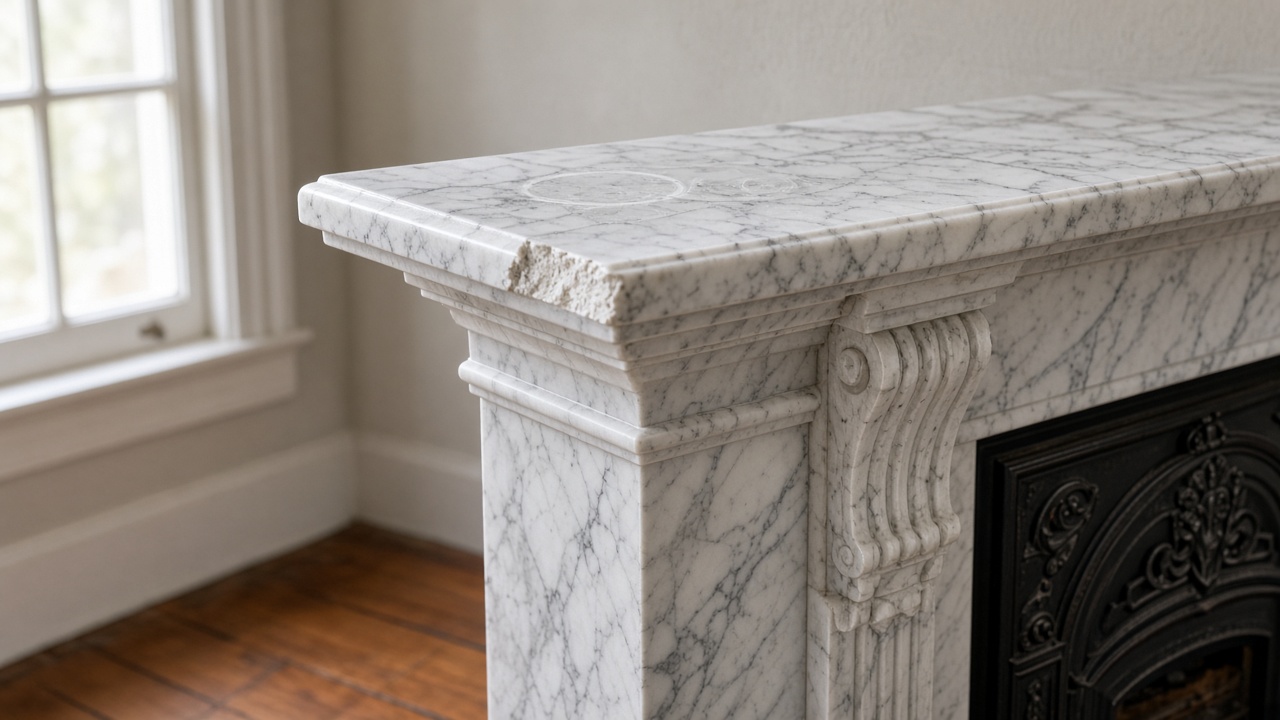
- Chip. Stone missing from an edge, corner, arris or cut-out.
- Crack. A fracture, not a vein. A vein continues the pattern. A crack can offset it and may grow if the piece moves or is poorly supported.
- Loss of polish. Even dulling from traffic, abrasive cleaners or many small etches.
- Lippage. One slab or tile proud of the next. It is a setting fault, not a stain.
Benefits of Marble Repair
A filled chip binds the broken edge so fewer grains break away. A sound slab can stay in place, and a later piece of the same name rarely matches its vein. On a surround or washstand, a local fill can keep a moulded profile. A fill can still remain visible, and repair does not make the stone proof against acid.
DIY Techniques for Marble Repair
Owner work has a narrow place: a small chip, a simple colour, and the sense to stop if the result looks wrong. Over-sanding, a dark fill, or acid on an etch makes the next repair larger. These DIY techniques for marble repairs are general information only. A marble repair kit is a retail item. Stoneline does not provide kits, pigments, abrasives or sealers.
Using a Marble Repair Kit
A typical kit holds a filler, a way to tint it, and sometimes a fine abrasive or polishing powder. Filler replaces missing volume in a chip. It does not treat an etch, and it will not hold a moving crack.
Colour is the hard part. A vein may cross the chip, and resin reflects light differently from the stone, so a close tint can still show. Test on an offcut or inside a sink cupboard, and let it cure before you judge it. If the test is wrong, stop. Digging a bad fill out enlarges the hole and dulls the polish. Keep the resin inside the chip.
Step-by-Step Guide to Repairing Chips
These steps suit a small chip where a visible repair is acceptable. They are not for a long edge loss, a crack, or a moulded profile.
- Brush out dust. Do not dig with metal. Let the chip dry.
- Confirm it is a chip, not a stain or a vein.
- Compare the tint in daylight on an offcut or a hidden face.
- Place the filler slightly proud of the surface.
- Leave it for the curing time in the product instructions.
- Level it with a fine abrasive, staying on the fill. Stop if the surrounding polish dulls.
- If colour, sheen or profile is wrong, stop.
How to Fix Scratches on Marble Benchtops
Decide whether the mark is a scratch or an etch. Do not fill an etch, or the filler sits as a raised line. A very light mark is sometimes rubbed with a polishing powder made for marble. Test a hidden area, and stop if the sheen around it changes.
A scratch that catches a fingernail needs more than a local rub. Hone a wider area, often the whole top, then bring it to one finish. Do not use cream cleansers, scouring powders, steel wool, vinegar, lemon, or a cleaner meant for lime and scale. When the task is to repair marble benchtop scratches that are deep or in figured stone, a kit is the wrong tool.
Professional Marble Repairs: When to Call the Experts
Professional marble repairs mean naming the damage and using a method the finish can support. The wrong abrasive pass on a large or older piece removes surface that cannot be put back. The work may be a filled edge, honing and polishing, lippage eased within the thickness of the piece, or a joint refilled. If the piece is too broken to fill, the owner, architect or designer sources the replacement and Stoneline installs it.
Signs You Need Professional Help
- A crack runs through a slab or starts at a sink or cooktop cut-out.
- A chip is on a front edge, a corner in daily view, or a moulded profile.
- Etches are widespread, or polish is gone across a floor, tread or benchtop.
- Tiles or slabs have lippage, or a tile sounds hollow.
- A stain keeps returning. Rust usually means the source is still there.
- An earlier fill or sanding has left the wrong colour or a dull halo.
- The marble is a threshold, entry lining or facade panel, so joints, fixings and weather matter as much as the face. That scope belongs with facade restoration.
- The piece is a fire surround, hearth or washstand, and the profile should be kept.
Fire, structural and waterproofing requirements, where the work touches them, are checked against the National Construction Code, the manufacturer's installation instructions and the project engineer or certifier. A surface fill is not a structural repair.
Comparing Costs: DIY vs. Professional Services
Cost follows the work.
Extent, finish and colour come first. Strong veins through a chip are harder to blend than an even stone. Access changes the job, from an open benchtop to a tight room or a facade, and an occupied house needs the joinery protected. The larger difference is a local fill against re-honing the whole surface so the repair is not an island of different sheen. A moving crack must be understood, or the fill will not hold.
Marble Benchtop Repairs
Acid, blades, pans, sink water and knocks all land on one slab. Marble benchtop repairs start by separating etch, scratch and chip, which often arrive together.
Specific Techniques for Benchtops
Dress an edge chip so the profile continues. A flat fill on a rounded edge reads as a nick.
At a sink or cooktop, look for a corner crack, rim chips, and stains where water has sat. A corner crack is a stress sign. Look at the support, and at the load from a bowl or appliance, before treating filler as the remedy. If the top is moving, that belongs with the joinery or the project engineer.
Refinish etches from lemon, wine and vinegar. Do not fill them. Shallow etches on a sound surface may be brought back by polishing. A patchy top is often better brought to one honed face, and a high polish is a further choice, not a default. Stone Polishing on Heritage Work: When It Helps — and When It Does Not sets out when that choice helps on older work.
A deep scratch needs stone removed over a wide area, or a dish shows in raking light. Refill an open joint to suit the width and colour, but do not expect it to hold a moving crack. If a slab is past repair, the owner sources the replacement and Stoneline installs it.
Lippage and hollow tiles are faults in the setting. Polish will not hide them, and a tile can only be ground so far before it is too thin. Tiling work of that kind is governed by AS 3958 tiling and the setting materials' instructions.
Maintenance Tips for Longevity
Maintenance will not close a crack.
Wipe acids at once. Wash with water, or with a pH-neutral cleaner labelled for natural stone. Vinegar, lemon, cream cleansers and bathroom descalers etch or scratch. Use boards and trivets, and lift pots rather than sliding them.
Blot oil instead of scrubbing it in. A poultice may draw some oil out, but it will not repair an etch, and the wrong liquid can mark the stone. Test a hidden face first.
An impregnating sealer, selected and sourced by the owner, can slow oil uptake. It does not stop etching, and it will not hide scratches. Follow its instructions. Keep wet steel off the stone, and avoid a mat that traps moisture. Marble will etch again if acid is left on it.
Marble Repairs in Melbourne and Sydney
The damage does not change with the city. Marble repairs in Melbourne and marble repair in Sydney both usually start from a chipped edge, a dull patch or a crack. Stoneline works in Sydney and NSW only, and does not undertake marble repairs in Melbourne. The checks for choosing a provider are the same in either place. The building is what differs.
Coastal humidity and salt air bring grit and salt to Sydney entries, and they bear on outside joints. Indoors, sand reaches hall floors and bathrooms stay damp. Victorian and Federation houses commonly include a marble fire surround, hearth, threshold or washstand, sometimes next to a later benchtop. Flattening a moulding to save time removes the detail that makes the piece worth keeping.
Terraces often set that marble beside sandstone. Honing slurry left on a step can mark the sandstone, so the two jobs should be sequenced and each face protected. Sandstone Restoration and Repair on Older Sydney Buildings covers that neighbouring stone. If the house is heritage-listed or in a conservation area, confirm with the council or a heritage adviser before honing or replacing significant marble. Whether consent is required is a question for them.
Choosing the Right Service Provider
Choose on method. Expect the repair to remain visible. A useful provider says whether they will fill, hone, polish or replace, and what will still show.
Stone Mason Sydney: What Heritage and Character Work Actually Needs covers who should do heritage and character work, including on profiles that should not be sanded flat. For marble, add these checks.
- They name the mark: etch, stain, scratch, chip, crack, lost polish or lippage.
- They state the finish, and do not treat a high polish as the only proper result.
- They test on the actual stone before the whole face is committed.
- They describe access, protection and which rooms are affected.
- Replacement marble is selected and sourced by the owner, architect or designer. Their role is advice, installation and repair.
- A surface fill is not offered as the fix for a moving crack or a loose facade panel.
Local Success Stories and Case Studies
This guide does not set out case studies. An invented job would not show whether your own stone can be repaired.
Ask for photographs of comparable repairs, a plain account of the method, and a note of where it will still show. Then ask for a test on your stone, in morning and afternoon light, before the rest proceeds. If that test is refused, photographs are not a substitute.
Conclusion and Final Thoughts
Marble repair starts by naming the mark. An etch is dissolved stone, a stain sits in the pores, a scratch is a cut, a chip is missing volume, and a crack may be movement.
A marble repair kit can fill a modest chip of simple colour if the tint is tested and a visible fill is acceptable. It is the wrong tool for cracks, wide etches, deep scratches and moulded pieces. Where those limits need a mason, Stoneline carries out marble repair Sydney-wide and across NSW as part of its sandstone and stone restoration service, and can assess the stone on site.
Frequently asked questions
Can an acid mark on marble be cleaned off?
No. An etch is dissolved surface, so wiping the spill away leaves the dull patch. A light etch on a sound polish can sometimes be improved by polishing. A deeper etch needs a wider refinish, and more acid only makes it worse.
When is a chip beyond a marble repair kit?
A kit suits a small chip in a simple colour, where a visible fill is acceptable, after a test on an offcut or a hidden edge. It is a poor fit for a long edge loss, a moulded profile or a front arris. If the colour trial is wrong, stop, because taking the fill out makes the chip larger.
How is an etch different from a stain?
An etch is a dull patch left by acid, such as citrus, vinegar or some cleaners. A stain is colour in the pores, commonly oil, rust, tea or a dye. Cleaning may lighten a stain, but it will not rebuild an etched face, and one spill can leave both.
Does Stoneline carry out marble repairs in Melbourne?
No. Stoneline works in Sydney and NSW only. Owners comparing marble repairs in Melbourne with marble repair in Sydney can use the same checks either way: name the damage, have the method explained, and judge a test on the stone. Sydney work also involves coastal grit and older surrounds.
Should a fire surround be repaired like a benchtop?
The damage is similar and the piece is not. A Victorian or Federation surround may be significant fabric, so do not flatten its moulding to make filling easier. If the place is listed or in a conservation area, check with the council or a heritage adviser first. The fill has to follow the profile, and if the loss is too great the owner sources the replacement before it is installed.