
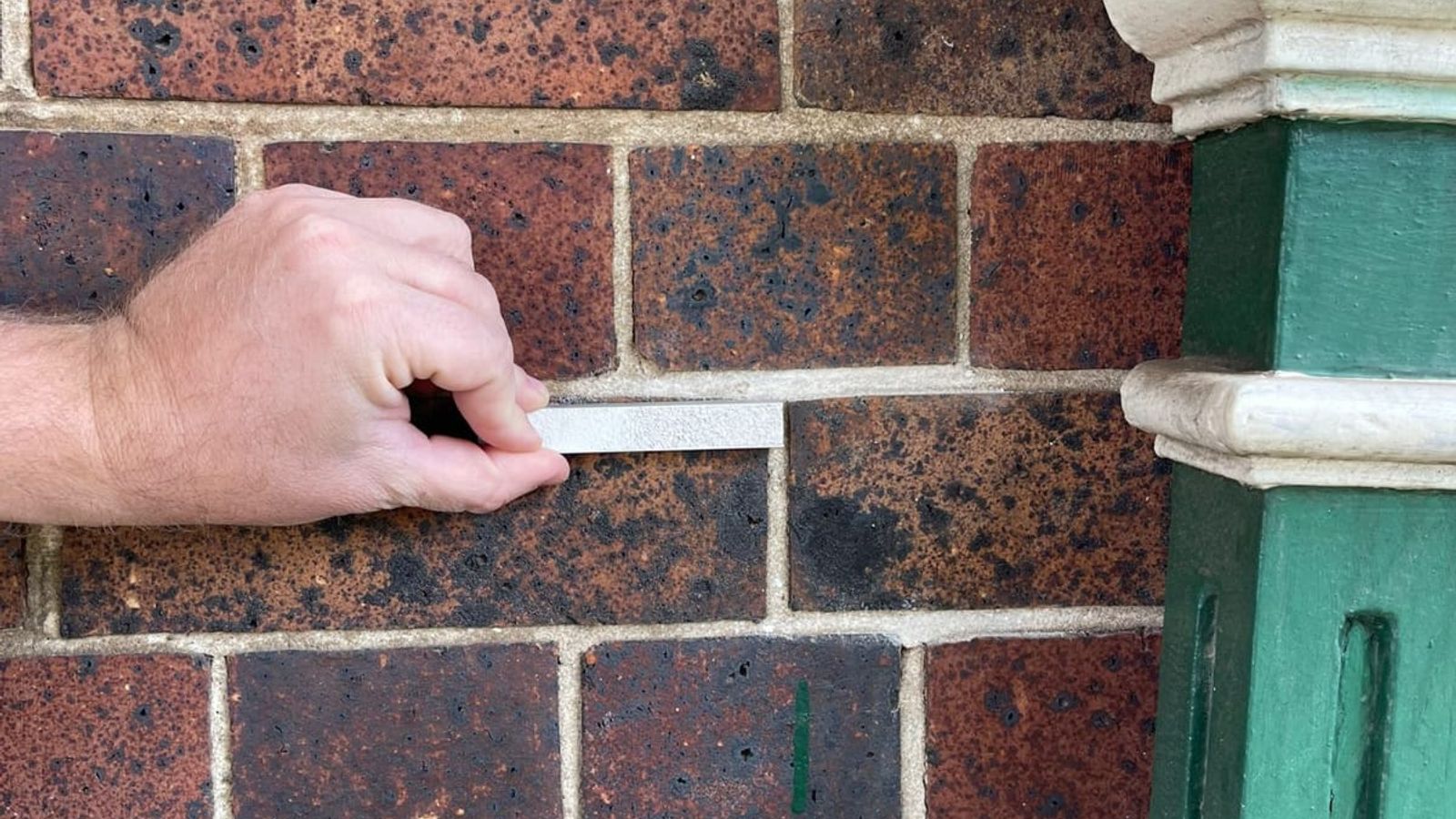
Sandstone restoration and repair on an older Sydney building is rarely one finish. It may mean careful cleaning, renewing failed joints, consolidating weakened faces, indenting a decayed arris, or deciding that a unit must be replaced. The useful question is not “how do we make the stone look new?” It is what has failed, why it failed, and which intervention will protect the fabric you already have.
This guide is written as supporting /news under the live sandstone cleaning pillar and beside our early-signs article on recognising sandstone deterioration. Commercial service detail and quoting remain on sandstone restoration and stone repair in Sydney. Sister guides on stone polishing, sandstone polishing in Sydney and choosing a heritage stone mason cover related decisions without turning this page into a second money page.
What “restoration” actually covers on sandstone
Owners and strata often use restoration for any of the following. Clarify which before comparing day rates:
Cleaning — removing soiling, biological growth or pollution so defects can be read honestly. Method belongs in assessment and trials; see the cleaning techniques guide.
Compatible repairs — cavity fills, mortar repairs and indents that retain sound original stone.
Consolidation — strengthening weakened surface zones where retention is still viable.
Replacement — matching new stone only where retention is no longer practical.
Protective treatments — water-repellent or related treatments only where substrate, salts and exposure support them; never as a substitute for fixing open joints or active damp.
A quote that jumps straight to “polish and seal” without diagnosis is not a restoration scope. Neither is aggressive blasting that brightens a photograph while removing the weathered face that carried the building’s character.
Why Sydney sandstone fails — patterns, not slogans
Sydney and NSW older sandstone faces coastal and harbour salts, driving rain on exposed elevations, pollution soiling, and decades of incompatible cement patches. Soft historic faces can fretting or laminate when moisture and salts crystallise near the surface. Hard grey cement repairs often look crisp while trapping moisture and accelerating decay around the patch — a pattern explained on our service page and in NSW salt-damp guidance.
Common drivers include:
Open or failed joints that feed water into the wall.
Rising damp or lateral moisture from ground levels, overflows or failed flashings.
Earlier dense coatings or colour-enhancing sealers that restrict drying.
Mechanical damage at edges, sills and carved details.
Cleaning that was too aggressive for the stone’s condition.
Photograph elevations dry and after rain. Note gutters, overflows, ground build-up against walls, previous grey cement bands and any white crystalline deposits. If white powder is the main symptom, start with efflorescence on brick and sandstone before assuming a colour or polish problem. Early fretting, laminating faces and open joints are covered in recognising sandstone deterioration.
Assessment before tools — what a useful visit establishes
Conservation-led work begins with condition and cause, not with a favourite product. A competent assessment typically records:
Fabric and significance — original tooling, profiles, later alterations, heritage controls.
Defect map — which blocks, joints and details have failed; which remain sound.
Moisture and salts — active sources versus residual staining.
Previous repairs and coatings — cement patches, paints, sealers, unknown cleaners.
Access and occupation — scaffolding, rope access, strata notices, pedestrian management.
Trial needs — cleaning trials, mortar samples, indent stone matching.
Historic Environment Scotland’s sandstone guidance and SPAB’s cautious approach both stress retaining sound material and testing before wholesale treatment. NSW Heritage Act exemptions and council processes have conditions; “maintenance” is not blanket permission for any method. Confirm listing and conservation-area status early — paperwork and technical method can diverge even when the wall looks similar to a neighbour’s.
Cleaning versus repair — when each is the right next step
Cleaning is appropriate when soiling or growth conceals the true condition, or when a controlled clean is part of a wider programme. It cannot reinstate missing stone, close a moving crack or renew failed mortar. If deterioration is already visible, ask for cleaning and repair to be considered together so you do not wash a façade that then needs immediate making-safe.
Repair is appropriate when cavities, fretting, failed joints or localised decay threaten weather performance or fabric retention. Compatible lime-based mortars and carefully matched indents (sometimes called dutchman repairs) favour retention over wholesale replacement. Consolidation may help weakened but still coherent stone; it is not a cosmetic gloss.
Replacement belongs where retention is no longer viable. Matching colour, bedding orientation, tooling and joint profile matters on heritage façades. A bright modern unit in a soft historic field reads as a patch forever unless the elevation already mixed periods honestly.
Compatible mortars, indents and consolidation — without the sales pitch
Traditional lime mortars remain central to heritage stone conservation because permeability and small movement suit historic construction. “Lime” is still a family of materials — hydraulic and non-hydraulic limes differ in early strength and curing. Ask what evidence supports the proposed mix for *your* stone: strength, porosity, texture and finish. A bag labelled “heritage” is not a specification.
Indent repairs cut out decayed stone and bed a matching piece so profiles and load paths continue. They should be discrete, well bedded and finished to the agreed tooling — not a smear of repair mortar over fretting faces.
Consolidation and protective silane/siloxane treatments may reduce water ingress while allowing vapour movement — but only after salts and moisture sources are understood. Sealing a damp, salt-loaded wall often pushes crystallisation to a worse plane. Sealing and consolidation are different decisions; neither replaces joint repair or drainage correction.
What drives sandstone repair cost in Sydney
There is no honest single rate for every elevation. Cost moves with:
Extent — selected units, one façade or a staged building programme.
Condition — salt load, soft faces, hard cement removal trials, structural advice.
Matching — indent stone sourcing, samples, carved or moulded details.
Access — scaffolding, occupied strata, rope access on tall street fronts.
Protection and curing — adjoining surfaces, weather windows, handover records.
Approvals — heritage documentation, sample panels, consultant input.
A low square-metre figure that omits access, trials or making-safe is not cheaper once the true scope appears. Compare marked-up photographs and exclusions, not headline rates. Restoration does not guarantee a particular sale-price uplift; the return is a repair matched to the wall.
How professional work is usually sequenced
A sound programme typically includes:
Assessment and recording — defects, moisture, earlier repairs, heritage status.
Specification and samples — cleaning trials, mortar panels, indent stone viewed dry beside original work.
Making-safe and preparation — loose overhead stone, failed joints, protection of openings.
Cleaning where required — controlled methods only after trials.
Repairs — cavities, pointing, indents, consolidation as specified.
Protective treatments only if justified — never automatic.
Handover — photographs, materials, maintenance advice, monitoring points.
That sequence is what you are paying for when you hire sandstone restoration and repair in Sydney — not only a brighter façade photograph.
Heritage, strata and commercial constraints
On heritage-listed buildings and properties in conservation areas, visible change to stone and mortar can trigger approval requirements. Documentation, photographs and a clear method statement help. Strata schemes add common-property façades, access through lots and staged budgets: prioritise making-safe and weather paths before cosmetic evening-up of sound stone. Commercial street fronts often need pedestrian management and after-hours windows — price those into the programme rather than discovering them mid-scaffold.
Related decisions: polishing and who does the work
Polishing can refine selected floors, ledges or modern paving — it is usually the wrong default for weathered heritage façades. See stone polishing services and sandstone polishing in Sydney for when polish helps versus when cleaning or repair is correct. Choosing capacity is covered in stone mason Sydney — heritage: locality helps logistics; method protects the stone.
When to call for assessment — and what to send
Call when stone is fretting, laminating, cracked through, loose above public access, or repeatedly damp after “sealing”; when earlier cement patches are failing; or when cleaning quotes ignore trials. Send wide elevation photographs plus close-ups (dry and after rain if you can), note access limits and heritage status, and ask for a method that covers diagnosis and sample approval — not only a start date.
Stoneline Heritage undertakes assessment-led sandstone and stone restoration across Sydney and NSW. Cleaning questions can start with the live sandstone cleaning guide; early defect recognition with recognising sandstone deterioration.
Moisture, salts and why “seal then forget” backfires
Many sandstone repair requests arrive after someone has already painted or sealed the wall. Dense coatings can trap moisture in soft stone, push damp sideways and accelerate salt damage at the face. If previous coatings are failing, the repair plan may need careful removal trials as well as joint work — not another impermeable layer.
Ground levels built up against sandstone, overflowing box gutters and unventilated subfloors all feed the same symptoms. Joint repair without drainage correction often returns as “the mortar failed again.” Fix the water path when it is part of the cause.
NSW coastal and harbour suburbs see salt crystallisation that looks like white powder or sandy deposits. Treat that as a moisture and salt problem first; colour matching and polish second. Our efflorescence guide is the right starting point for that pattern, alongside NSW salt-attack and rising-damp technical guidance.
Matching replacement stone without creating a patchwork façade
When units must be replaced, matching colour, bedding orientation, texture and tooling matters. Salvage stone from the same building (hidden elevations, demolished outbuildings) is often the best match. New stone can work when carefully selected and when the joint profile does not advertise the repair.
Avoid bright, hard modern units in a soft historic field unless the elevation already mixed periods honestly. A competent mason will say when a perfect match is unavailable and propose the least conspicuous alternative — including leaving some weathered original units if they remain structurally sound.
Document batch sources and keep spare matched pieces for future repairs where the programme is large. That reduces later colour drift when a single unit fails years on.
Maintenance after sandstone repair
After handover, keep gutters and overflows clear, watch for new open joints after storms, and avoid sealing soft masonry with dense coatings that trap moisture. Regular inspection and timely minor repairs usually cost less than waiting for a whole elevation to fail again. Record the materials used and any monitoring points so the next contractor inherits a history rather than another unexplained treatment.
Frequently asked questions
What is sandstone restoration?
Assessment-led conservation and repair of sandstone — cleaning where appropriate, compatible mortar and indent repairs, consolidation or replacement of severely deteriorated sections — chosen after understanding cause and condition.
Is cleaning the same as restoration?
No. Cleaning removes soiling; restoration addresses decay and failed fabric. They often sit in one programme but answer different questions.
Can weathered or salt-affected sandstone be repaired instead of replaced?
Often yes. Compatible mortar repair, indenting or consolidation can retain sound original fabric. Replace units only where retention is no longer viable.
Why do cement repairs to sandstone often fail?
Dense cement can trap moisture and salts and concentrate stress on softer stone, accelerating decay around the patch.
Do you need to polish sandstone after repair?
Not as a default. Polish is a finish decision for suitable surfaces; many heritage elevations need cleaning and compatible repair, not a high shine.
How do I start a quote for sandstone repair in Sydney?
Send clear photos, the address, access notes and what you have noticed. Expect assessment and, where needed, trials before a firm scope.