Sandstone deteriorates gradually, and the early signs — a powdery surface, a hairline crack along a bedding plane, a patch that's lost its crisp edge — are easy to put down to normal weathering. They're not always urgent, but they're always worth a proper look: catching sandstone decay early usually means a smaller, more compatible repair, while the same problem left for a few more years can mean structural work instead of conservation.
Why Sandstone Weathers Differently to Other Masonry
Sandstone is a porous, sedimentary material, and its performance depends heavily on bedding orientation, quarry source and exposure. Unlike fired brick, it responds to moisture and salt in ways that are gradual and often invisible until the damage is well established — a block that looks sound on the surface can already be losing strength a few millimetres in.
This is why conservation practice treats sandstone repair as a "minimum intervention" job: Australia ICOMOS's Burra Charter, the national standard for managing heritage places, sets retaining as much original fabric as possible and using compatible materials as the starting principle for any repair — not replacing stone that can still be conserved.
Much of Sydney's older stonework — sandstone terraces, civic buildings, harbourside sea walls, church facades — was cut from local sources such as Hawkesbury and Pyrmont sandstone, generally known simply as "Sydney sandstone." Quality varies even within the same quarry, which is part of why two stones on the same building can weather at noticeably different rates.
Common Signs Worth Investigating
Most of these can be seen from ground level, and each is worth photographing and dating so any change over time is easy to track.
- Surface powdering or a sandy residue at the base of a wall, sometimes called "sugaring"
- Flaking or delamination of the outer stone face
- Colour changes, dark staining or a white powdery deposit near ground level or below sills — often a sign of salt damage or rising damp rather than sandstone decay on its own
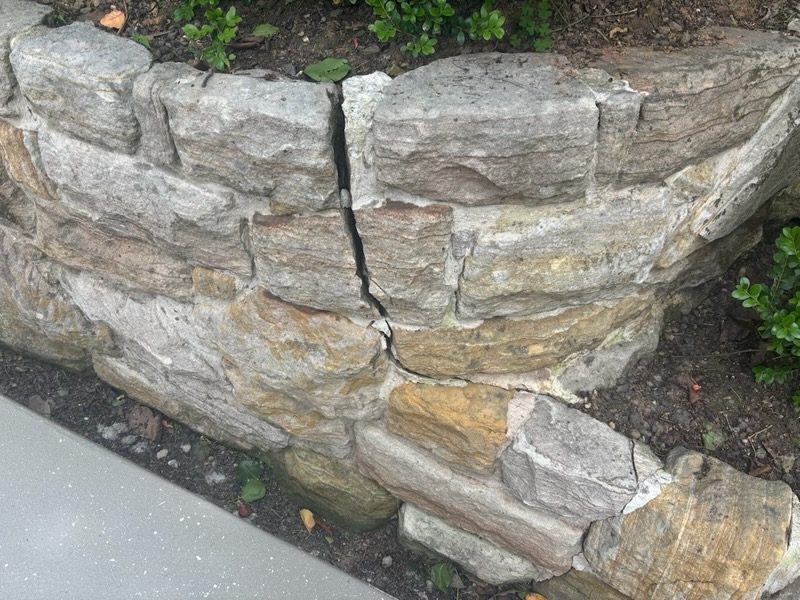
- Hairline cracking following the stone's natural bedding planes
- Loss of crisp detail on carved, moulded or dressed elements
- Previous repairs — cement patches, hard render, mismatched stone — that are cracking, staining or coming loose, which can point to incompatible mortar or repair materials
None of these confirm a serious problem on their own, but each is worth a proper assessment rather than a cosmetic fix.
What's Actually Causing It
Sandstone deterioration is rarely one single mechanism. The usual contributors are moisture moving through the stone and evaporating at the surface, salts carried by that moisture crystallising just below the surface, previous repairs carried out in incompatible cement or dense render, and — over a long enough period — straightforward weathering from wind, rain and sun exposure. Sydney's sandstone buildings, especially those close to the harbour, are also exposed to salt-laden air, which adds to the salt-crystallisation cycle even without a rising-damp or leak problem underneath.
Repair or Replace? What Actually Decides It
This is a genuine judgement call, not a fixed rule, and it should follow an assessment rather than precede one. In practice the decision usually comes down to a few factors:
- How much sound stone is left behind the deteriorated surface — consolidation and cavity repair rely on there being enough structurally intact material to work with
- Whether the element is load-bearing or decorative — a carved or moulded feature has less tolerance for approximation than a plain wall section
- Whether the cause has actually been addressed — repairing or replacing stone without correcting the moisture or salt source behind it usually just delays the same failure
- Visual and heritage significance — matching stone, tooling and finish becomes more important the more visible or significant the element is
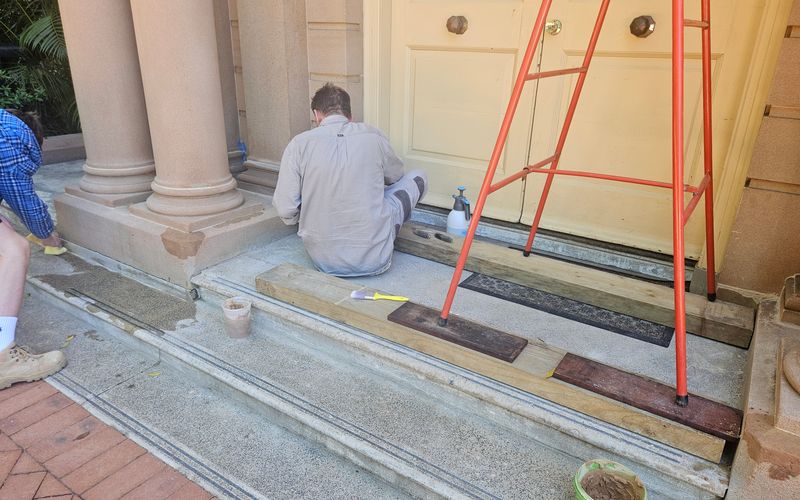
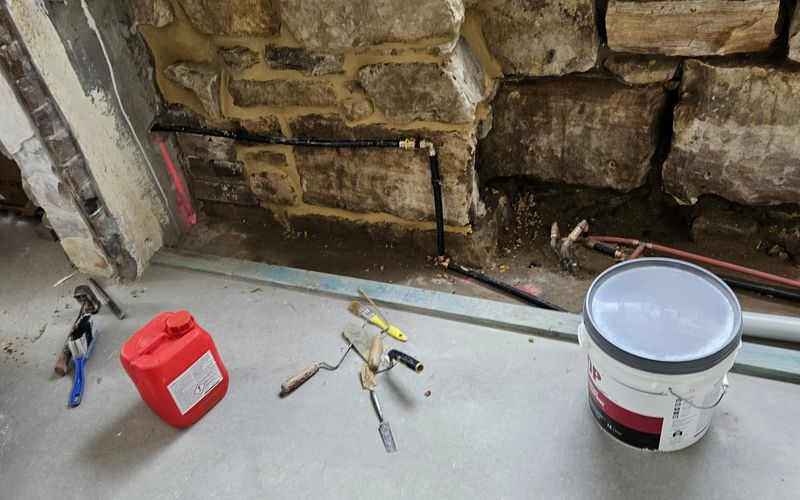
Where enough original material remains, options like consolidation (strengthening the stone from within), cavity filling, or an indent repair (commonly called a Dutchman repair, where a matching piece of new stone is let into the damaged area) can retain most of the original fabric. Full replacement is usually reserved for stone that's lost too much structural integrity to repair safely, or where a previous repair has already failed.
Heritage Listing and Council Approval
If the building is heritage-listed or sits in a conservation area, it's worth checking what approval a repair needs before starting — even consolidation or an indent repair can fall under a council's heritage controls, though many councils treat like-for-like conservation work differently to a full development application. The City of Sydney, for example, allows an exemption from development consent for certain heritage works — requirements vary by council, so it pays to check before work starts rather than after.
A Note on DIY Cleaning
Pressure washing, sandblasting or strong chemical cleaners are sometimes used to remove paint, graffiti or grime from sandstone, but sandstone is soft enough that aggressive cleaning can strip away the harder outer weathered face (the "case-hardened" surface) that's protecting softer stone underneath — accelerating the exact decay it was meant to fix. A test panel in an inconspicuous area, using the gentlest method that works, is standard conservation practice for a reason.
When to Get a Professional Assessment
If you're noticing any of the signs above on a sandstone building, an on-site assessment is the most reliable way to understand what's actually happening beneath the surface — a photo can flag that something's changed, but it can't tell you how deep the deterioration goes or what's driving it.
Stoneline Heritage Restoration carries out assessment-led inspections for sandstone and stone restoration across Sydney and NSW. Request a site assessment and we'll take a proper look before recommending anything.
Frequently Asked Questions
Can flaking or crumbling sandstone be repaired without replacing the stone?
Often, yes — where enough sound stone remains, consolidation, cavity filling or an indent (Dutchman) repair can retain most of the original material. How much can be saved depends on the extent of the damage and is a job for an on-site assessment, not a guess from photos.
What causes sandstone to turn powdery or sandy ("sugaring")?
Sugaring is usually a sign that salts are crystallising within the stone, near the surface, as moisture evaporates — the same mechanism behind efflorescence on brick. It points to a moisture source that needs identifying, not just a surface that needs cleaning.
Is it safe to pressure-wash or sandblast sandstone?
Generally no, without testing first. Aggressive cleaning methods can strip the weathered outer surface that protects softer stone underneath, which can accelerate deterioration rather than fix it. A trial panel with the gentlest effective method is the standard, lower-risk approach.
Does heritage-listed sandstone need council approval before cleaning or repair?
Often, but it depends on the council and the exact scope — many councils treat genuine like-for-like conservation repair differently to other works and offer an exemption or simplified approval pathway for it. Check with the relevant council before work starts.
How urgent is flaking, cracking or fretting sandstone?
It depends on the cause and extent, which is exactly why an assessment matters rather than a rule of thumb — some surface loss is slow and monitorable, while active moisture or salt problems can accelerate quickly. If a previous repair is failing or the loss of material is increasing, it's worth having it looked at sooner rather than later.
Recognising sandstone deterioration early is mostly about noticing change and asking why, rather than assuming it's just age. A compatible repair, chosen after a proper assessment, is almost always less invasive — and less costly — than the alternative.