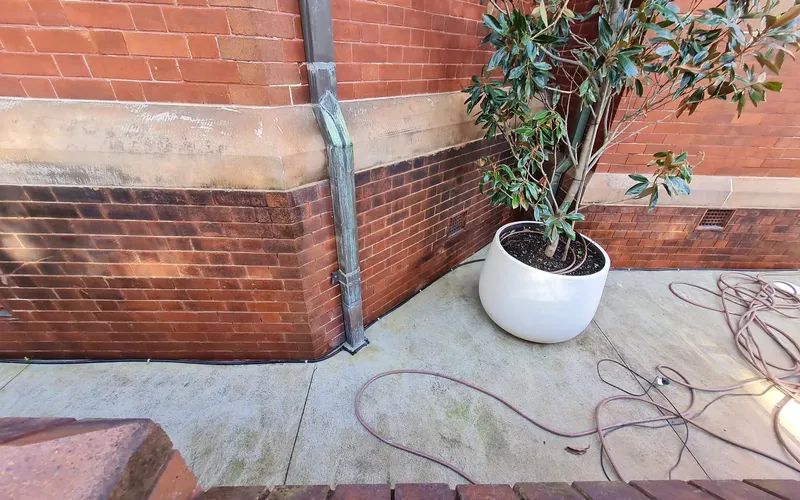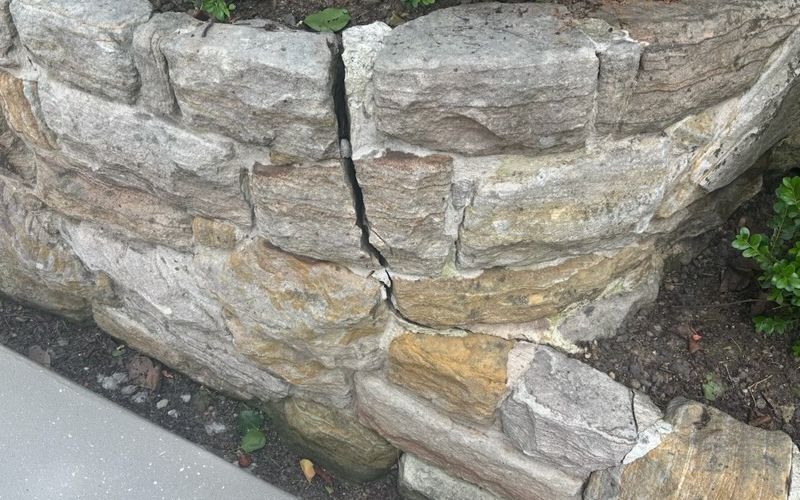
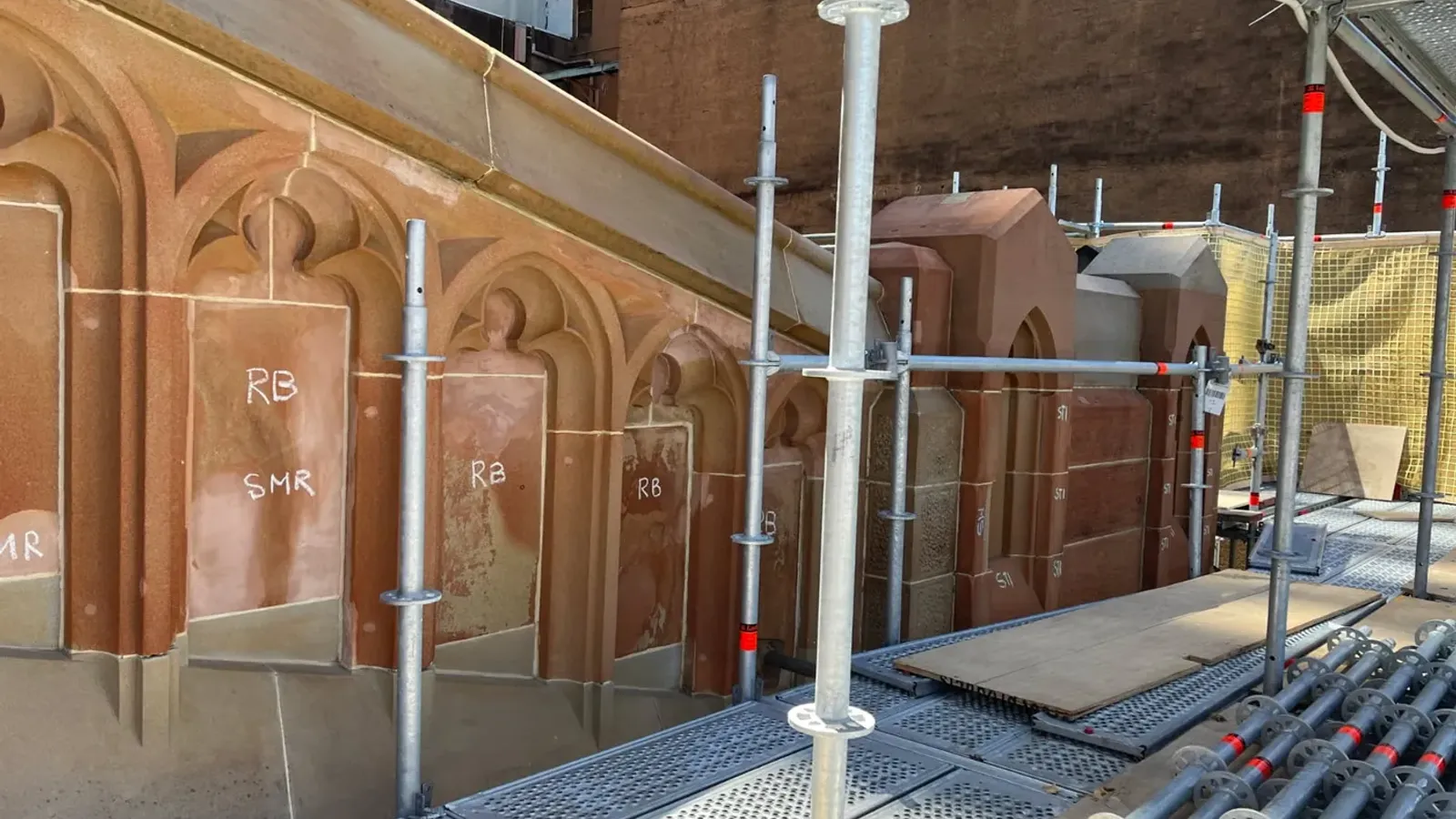
Sandstone cleaning is not simply a matter of finding a stronger product. A stained courtyard, a weathered garden wall and a carved heritage façade present different problems, even when they are all described as sandstone. The useful starting point is to understand what needs removing, what should remain and whether the stone can tolerate cleaning at all.
For Sydney homeowners, strata managers and commercial property owners, a successful result should be more than a brighter photograph. The aim is to address unwanted soiling while retaining the surface, details and character that make the stone worth looking after.
Check the sandstone before choosing a method
Look beyond the stain. Loose grains, lifting surface layers, cracks, failed joints and damaged carved details need assessment before cleaning begins. Take photographs of these areas without scraping or probing them. If pieces are loose above a doorway or footpath, keep people clear and arrange a professional inspection.
A test should represent the work being proposed. One inconspicuous patch cannot demonstrate how every block, repair or exposure will respond. Keep a record of the product, application method and result, and compare the surface after it has dried. Historic Environment Scotland describes inspection, representative cleaning trials and recorded evaluation as essential parts of a cleaning specification. Its sandstone guidance also explains why damaging cleaning can accelerate deterioration.
For a heritage property, check the applicable controls before work starts. NSW State Heritage Register exemptions have conditions; maintenance is not a blanket permission to use any cleaning method. Consult the Heritage NSW exemption guidance and seek advice about the requirements for your particular property.
Choosing a sandstone cleaner
A product labelled “stone cleaner” is not automatically suitable for every sandstone surface. Establish compatibility with the stone, mortar, existing finishes and nearby materials. Ask for the product instructions and safety data sheet before agreeing to its use.
For sound stone with ordinary surface dirt, a mild, pH-neutral product intended for the material may be appropriate after testing. Avoid household vinegar, abrasive scouring products and general-purpose acid cleaners as default treatments. Follow the specified dilution: extra concentrate can leave residue without improving the result. The Natural Stone Institute’s care guidance explains why stone composition matters and recommends mild cleaning and thorough removal of residue.
Professional stain treatments may use different chemistry. That makes product selection and testing more important, not less. Do not mix cleaning products or improvise chemical recipes.
How to clean sandstone pavers
For stable, non-significant paving, a cautious maintenance sequence can help establish whether a small cleaning task is manageable:
- Inspect and clear the area. Remove furniture and loose debris, and identify damaged pavers or joints before introducing water.
- Trial the proposed method. Begin with the mildest suitable option on a representative area. Do not treat the whole patio while waiting to see whether the trial works.
- Work in controlled sections. Use soft bristles where appropriate and follow the cleaner’s application instructions. Protect adjacent surfaces and manage runoff.
- Remove the residue. Rinse as required by the tested method without prolonged saturation or forcing water into defects.
- Review the dry surface. Check texture, colour and joints before extending the treatment. Stop if the stone sheds grains or the surface changes unexpectedly.
These principles reflect the GSA’s historic masonry cleaning guidance, which emphasises trials, gentle methods and protection of surrounding materials. They are not a specification for fragile or heritage paving.
How to clean sandstone walls and blocks
Vertical stonework brings different practical constraints. Water and cleaner can travel beyond the area being treated, so the plan needs to account for windows, doors, metalwork, garden beds and rooms behind the wall. Access arrangements also matter: a method suitable at ground level may be impractical around a high parapet or decorative cornice.
When considering how to clean sandstone blocks, pay attention to joints, edges and earlier repairs as well as the broad faces. Do not assume all blocks in a wall have the same condition or cleaning history. Ask which areas will be excluded, protected or repaired first.
For a shared building, agree on working hours, pedestrian access and the extent of each stage before cleaning starts. These details belong in the scope of work, alongside the proposed finish.
Treat stains according to their cause
Different-looking marks should not automatically receive the same treatment. Useful distinctions include:
- Loose dirt: A gentle, tested surface clean may be enough; repeated intensive washing is not routine maintenance.
- Green or dark biological growth: Investigate persistent dampness and shade as well as the growth itself. A stain-specific treatment may be needed.
- White crystalline deposits: Recurring deposits warrant investigation of moisture and salts, not repeated attempts to wash the wall white.
The GSA’s sandstone cleaning procedure distinguishes these problems and cautions against frequent cleaning. It also recommends checking for water sources when efflorescence returns.
Oil, rust, paint and unknown stains need their own assessment. Photograph the mark and record any likely source or previous treatment. For a fresh spill, blotting rather than spreading it across neighbouring stone is a useful first response. Avoid escalating through several products when you do not know what caused the mark.
Is sandstone sealing necessary after cleaning?
Sandstone sealing should be a separate decision, not an automatic final step. A treatment intended to reduce staining on selected paving is not necessarily appropriate for an old wall. Existing moisture, salts, previous coatings and the required appearance all need consideration.
Historic masonry often does not need a water-repellent coating. Such coatings cannot correct leaking gutters, open joints or rising damp, and unsuitable treatments can restrict drying or aggravate salt-related deterioration. The US National Park Service explains these limitations in its guidance on cleaning and water-repellent treatments.
Ask what specific problem a proposed sealer is intended to solve, what evidence supports its use and how future maintenance will be handled. A small appearance trial does not, by itself, establish long-term moisture compatibility. Sealing and consolidation are also different interventions: making a surface water-repellent should not be presented as repairing weakened stone.
When sandstone restoration is the next step
Cleaning may form part of a wider repair programme, but it cannot replace missing stone, close a moving crack or renew failed mortar joints. If deterioration is present, ask for the cleaning and repair requirements to be considered together.
Stoneline Heritage provides sandstone restoration and repair in Sydney, including assessment of weathering, cracking, salt damage and previous repairs. Depending on the condition, the scope may include compatible repairs, consolidation or replacement of severely deteriorated sections. The appropriate work is selected after assessment, rather than assumed from a photograph.
If you are unsure whether you need cleaning or restoration, describe the symptoms first. You do not need to choose a technical treatment before making an enquiry.
Planning sandstone cleaning in Sydney
A useful initial enquiry gives the contractor enough context to discuss the next steps. Include:
- The property address and whether the stone is indoors or outdoors.
- Wide photographs showing the setting, plus close-ups of the affected areas.
- Whether the issue concerns pavers, walls, blocks, steps or decorative work.
- Any known cleaning products, coatings or repairs previously applied.
- Access restrictions, occupancy requirements and relevant heritage information.
For strata or commercial work, identify who will approve the scope and provide access. Ask whether an initial inspection or a separate cleaning trial is required before a quote can be prepared. Agree how the proposed result will be reviewed, including any areas where staining or natural variation is expected to remain.
Keep the assessment, approved method and completion photographs with the building’s maintenance records. That gives the next person responsible for the property a useful history instead of another unexplained treatment.
Sandstone cleaning questions
Can I use a pressure washer?
Do not assume a domestic pressure washer is suitable. Whether water-based cleaning is appropriate depends on the stone and its condition, and the method should be established through assessment and testing.
Does old sandstone need to look uniformly new?
No. Discuss an achievable finish before work begins. Remaining colour variation is not, by itself, a reason to repeat cleaning or increase its intensity.
Can you quote from photographs?
Photographs help us understand the enquiry and discuss the likely next steps. An on-site assessment and, where appropriate, a trial may still be needed before the cleaning scope can be confirmed.
Discuss your sandstone cleaning project
Stoneline Heritage provides sandstone cleaning in Sydney for heritage and older buildings. We select methods after considering the stone’s condition and the nature of the soiling. Selected regional NSW projects are considered by arrangement.
Contact Stoneline Heritage with your address, photographs and a short description of the problem to discuss an initial assessment.