White powder on bricks or sandstone is often efflorescence: salts left on the surface as moisture evaporates. It is a clue to investigate, not a diagnosis of rising damp. The first task is to establish what the deposit is, where the moisture comes from and whether the masonry is deteriorating.
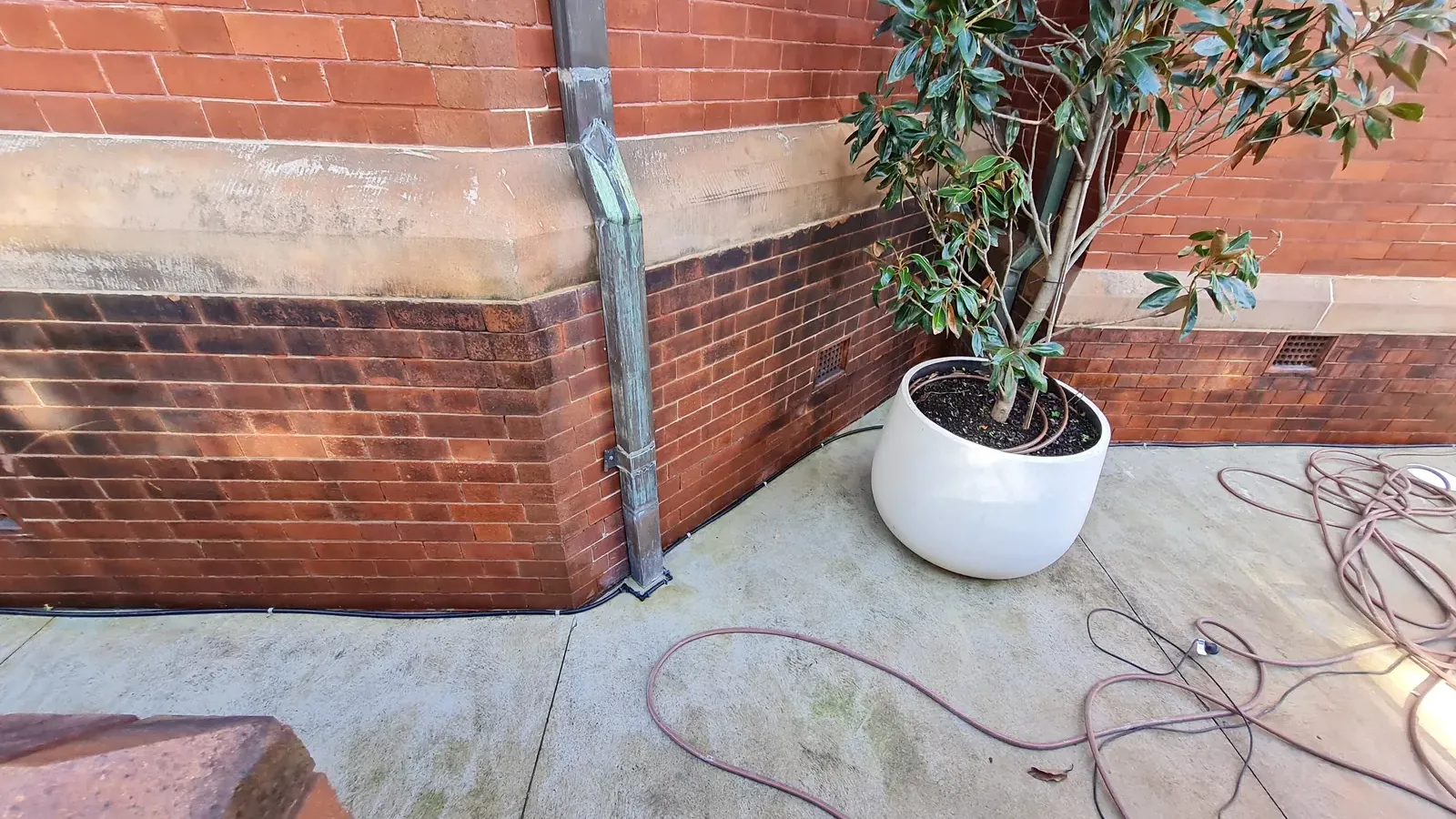
Before reaching for a cleaner, photograph the wall and look at the surrounding building. A recurring patch below a downpipe needs a different investigation from deposits appearing after recent masonry work.
Efflorescence and salt attack are different
Efflorescence describes salts visible at the surface. Salt attack describes damage associated with salts crystallising in the masonry. White deposits can occur without obvious damage, while damaging crystallisation can happen beneath a surface that does not look especially white.
Rising damp is moisture moving upwards through porous materials from below. It is one possible moisture pathway, not another name for efflorescence. The NSW guide Salt attack and rising damp explains why moisture movement and salt damage need separate consideration.
The practical distinction is straightforward: removing a deposit changes the appearance, but does not establish the cause or tell you whether the wall needs repair.
Start with these observations
Keep a short record rather than repeatedly cleaning the evidence away. Useful photographs include the whole wall, a close-up of the deposit and the ground or roof details nearby.
Note:
Where it appears: at the base, around an opening, beneath a downpipe or across a recently repaired area.
When it changes: after rain, during drying weather or after a particular use of water nearby.
What the surface is doing: staying intact, shedding sand, flaking or losing mortar.
What has changed recently: paving, garden beds, plumbing, cleaning, pointing or wall coatings.
Whether the other side is affected: internal paint damage or damp patches may help an assessor understand the pattern.
For example, if a patch returns after each storm, record that timing and include a photograph of the wall above it. This is useful evidence, although it does not prove which building detail is at fault.
Check the water routes before choosing a treatment
Start with accessible maintenance checks. Look for overflowing gutters, leaking downpipe joints, water pooling beside the wall and irrigation directed at masonry. Check whether plants or stored items obstruct inspection or ventilation openings. Observe from a safe position; roof access and concealed drainage checks belong with the appropriate trade.
SPAB's preventative maintenance guidance emphasises rainwater disposal, routine inspections and keeping a building log. These basic records can help avoid an expensive treatment being specified before an ordinary maintenance defect has been addressed.
Raised paving or garden beds may also provide a route around an existing damp-proof course. Do not start excavating beside old footings to test that theory. Ask the assessor to establish the construction and the appropriate next step.
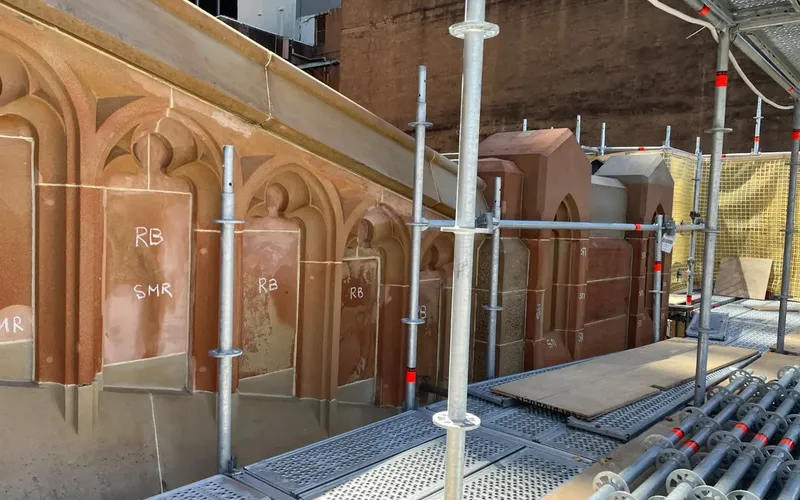
In a Sydney terrace courtyard, show the assessor the full relationship between paving, walls, downpipes and neighbouring work. In a freestanding house, include all affected elevations. A close-up of powder alone leaves out much of the information needed to plan an investigation.
When does white powder need prompt assessment?
Book an assessment if deposits repeatedly return, the wall stays damp, mortar is falling out, brick faces are flaking or sandstone is shedding grains. Photograph changes over time so the assessor can distinguish an old stain from active deterioration.
Loose masonry, bulging or developing cracks need a broader building assessment. Keep clear of unstable material. A cleaning contractor's proposal should not substitute for an assessment of movement or stability.
If you are unsure whether the material is salt, deteriorating paint, mortar dust or biological growth, leave its identification open. Colour alone is not enough. Avoid scraping a friable sandstone surface to obtain a sample yourself.
What a proper damp assessment should explain
A useful report connects observations to a proposed cause, describes any uncertainty and sets out what further testing would change the repair decision. Ask the assessor to distinguish the moisture source from the visible damage.
Moisture meters can help map patterns, but a reading needs interpretation for the material and instrument used. Salts and other conditions can affect electrical readings. A single high reading does not, by itself, establish rising damp. The RICS, Historic England and PCA guidance on moisture investigation sets out the need to understand moisture measurement methods and their limitations; its building-physics guidance is relevant here, while NSW approval requirements remain separate.
Before committing to a treatment, ask:
What evidence supports the proposed moisture source?
Is further investigation needed before specifying repairs?
Which defects should be corrected first?
How will improvement be checked, and when?
Which work is essential now, and which can wait for the findings?
Those questions are especially useful when a proposal moves directly from a moisture reading to a whole-house treatment package.
Can you clean the white deposits off?
Where the surface is sound, a specialist may remove loose salts using controlled dry brushing and suitable vacuum collection. Capturing the residue helps prevent it returning through the surrounding soil. Fragile masonry needs a gentler, individually assessed approach. The NSW salt attack guide discusses dry removal and staged salt-reduction treatments.
Do not assume a pressure washer, brick acid or vinegar is suitable for old brickwork and sandstone. Aggressive washing can erode surfaces; inappropriate chemicals can affect the masonry or mortar. A selected method needs a trial on the actual material. The US National Park Service's masonry cleaning guidance describes these risks and the need to identify the material and deposit first.
For stone-specific considerations, our guide to sandstone cleaning explains why the least damaging effective method should be chosen.
Why sealing or repainting may make matters worse
A coating should not be used simply to hide a damp or salt-affected wall. Some treatments restrict drying or alter where evaporation occurs, leaving moisture and salts within the masonry. The National Park Service guidance on water-repellent treatments explains why coatings require particular care on damp historic walls.
Before approving a coating, ask what it is intended to solve, how it affects moisture movement and what evidence supports using it on that wall. “Breathable” on a product label does not replace an assessment of the complete construction.
What might the repair involve?
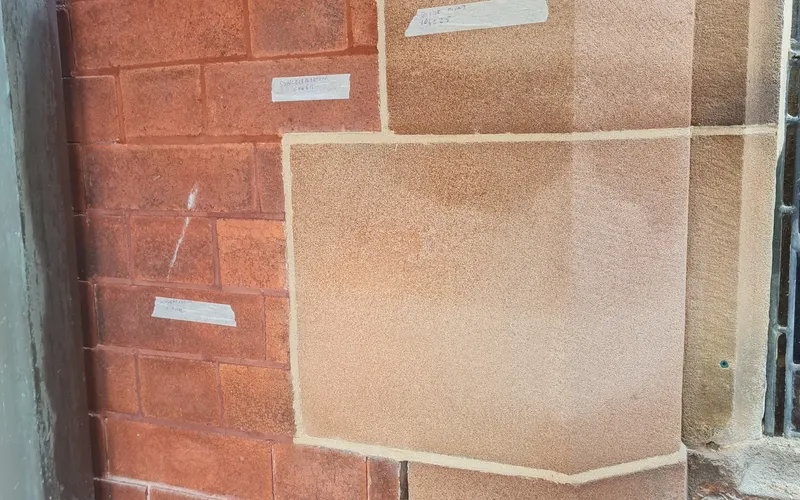
The work may begin with fixing a leak or correcting another source of wetting. Depending on the findings, it may then involve compatible mortar repairs, removal of inappropriate finishes, specialist salt reduction or a staged maintenance plan. Poultices can draw salts into a removable absorbent material; they do not make the original source of moisture disappear. The NSW technical guide covers their role in treatment.
Ask for a written sequence with review points. That makes it clear when cleaning, repairs and final decoration should happen, and avoids treating a freshly cleaned surface as proof that the underlying problem has been resolved.
For a heritage property, establish the listing and check proposed work before starting. Local listing enquiries go to the local council; State Heritage Register work needs the appropriate pathway or must meet applicable exemption conditions.
Getting an assessment in Sydney or NSW
Send photographs, the location of the affected walls and a short history of the problem. Include any previous damp treatment, coatings or nearby building work, even if you do not know whether it is relevant.
Stoneline's salt damage, rising damp and desalination service considers the masonry and moisture conditions before setting the repair scope. For work affecting several parts of an older property, see our heritage building restoration guide.
Questions and answers
Does white powder on bricks always mean rising damp?
No. Efflorescence indicates that salts have reached the surface, but it does not identify the moisture source. Rainwater leaks, recent wet work and other moisture routes need consideration before diagnosing rising damp.
Is efflorescence the same as salt damage?
No. Efflorescence is a surface deposit. Salt damage involves deterioration associated with crystallisation in the material. An assessor should check the condition of the bricks, sandstone and mortar as well as the visible powder.
Why does the white powder return after cleaning?
Cleaning removes what is visible at that time. Further deposits can appear while moisture continues to carry salts towards the surface. Record when it returns and investigate the water route rather than repeatedly increasing the cleaning strength.
Should I use acid or a pressure washer on sandstone?
Do not use either as a default treatment for white deposits. Older sandstone and its mortar can be damaged by inappropriate chemicals or pressure. Identify the deposit and have a suitable cleaning method tested first.
Can a moisture meter confirm rising damp?
A moisture meter alone cannot confirm the cause of damp. Its readings need interpretation alongside the wall materials, salts, observed pattern and building condition. Ask what additional evidence supports the diagnosis.
What should I send when requesting a salt-damage assessment?
Send a whole-wall photograph, close-ups, the location of the problem and notes on when it appears. Include recent repairs, paving changes, leaks and any previous treatments so the assessor can plan the inspection.