
A Stoneline Heritage case study
Cleaning historic sandstone at No. 1 Martin Place
Stoneline Heritage carried out sandstone façade cleaning of historic sandstone in the lobby at No. 1 Martin Place, a sensitive CBD setting, using a specialist waterless peel-off system so the stone could be cleaned without high-pressure washing, while keeping its natural character, texture and appearance.
Explore the project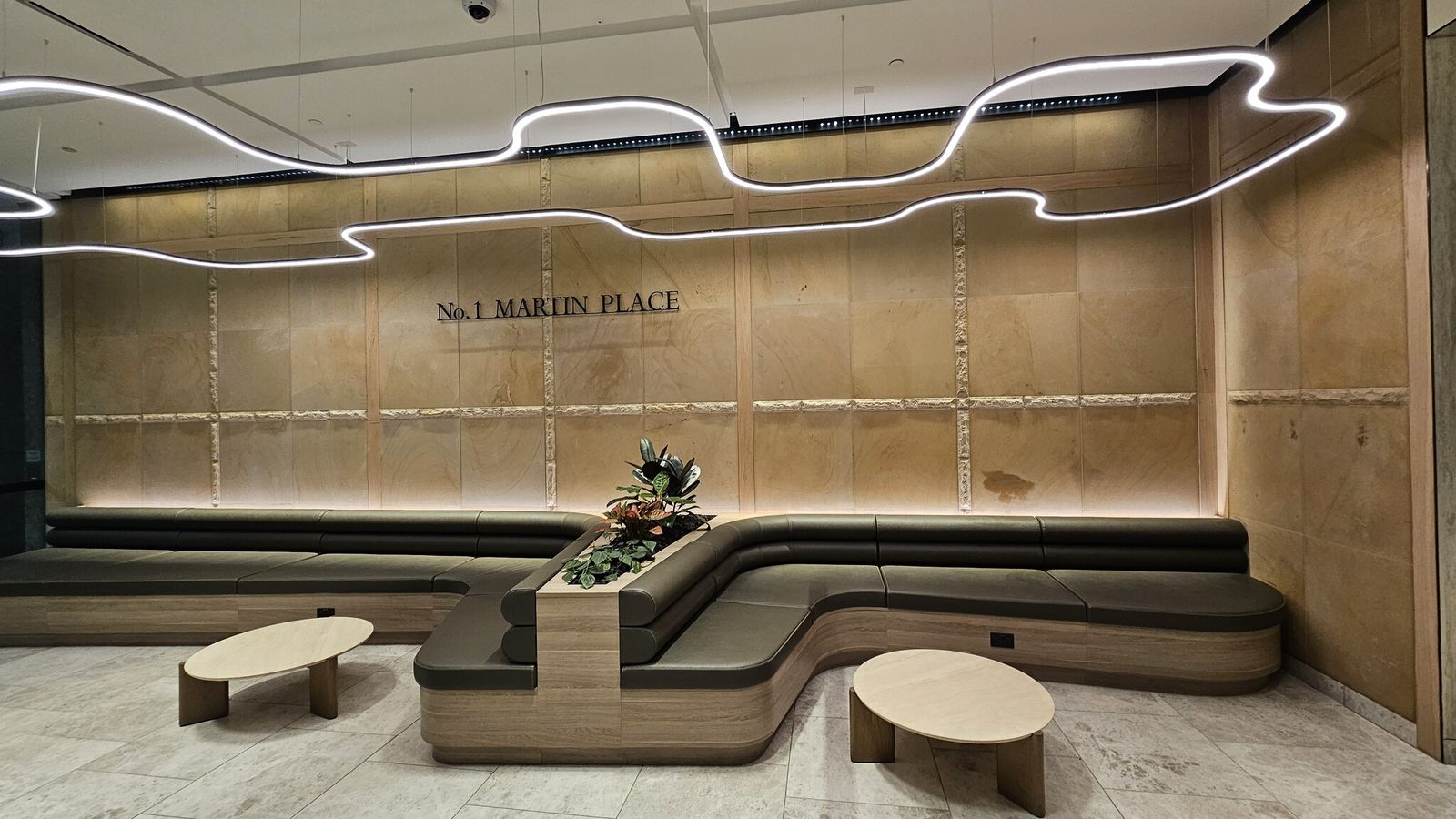
- Location
- No. 1 Martin Place, Sydney CBD
- Specialism
- Heritage sandstone cleaning and surface conservation
- Our role
- Waterless peel-off cleaning of historic sandstone.
01 / The project story
Understanding the condition
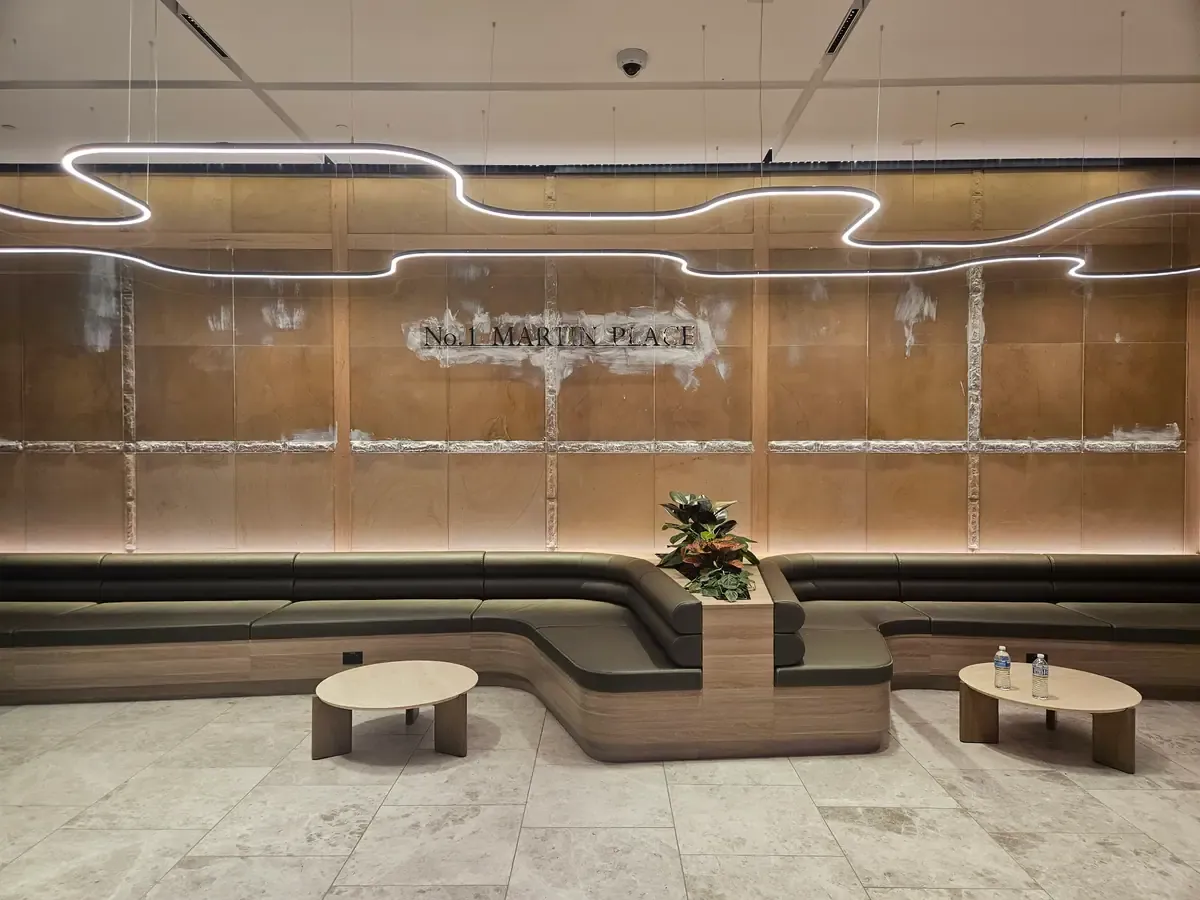
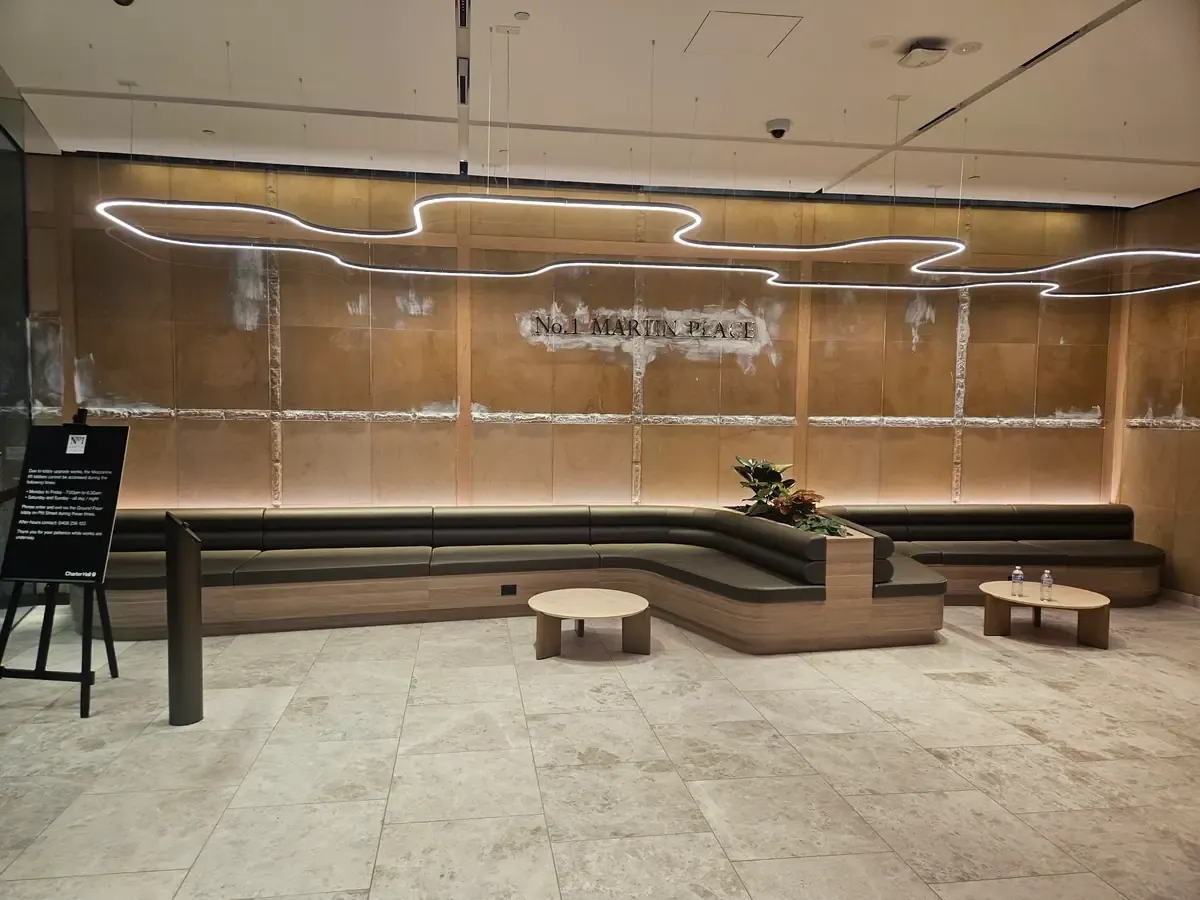
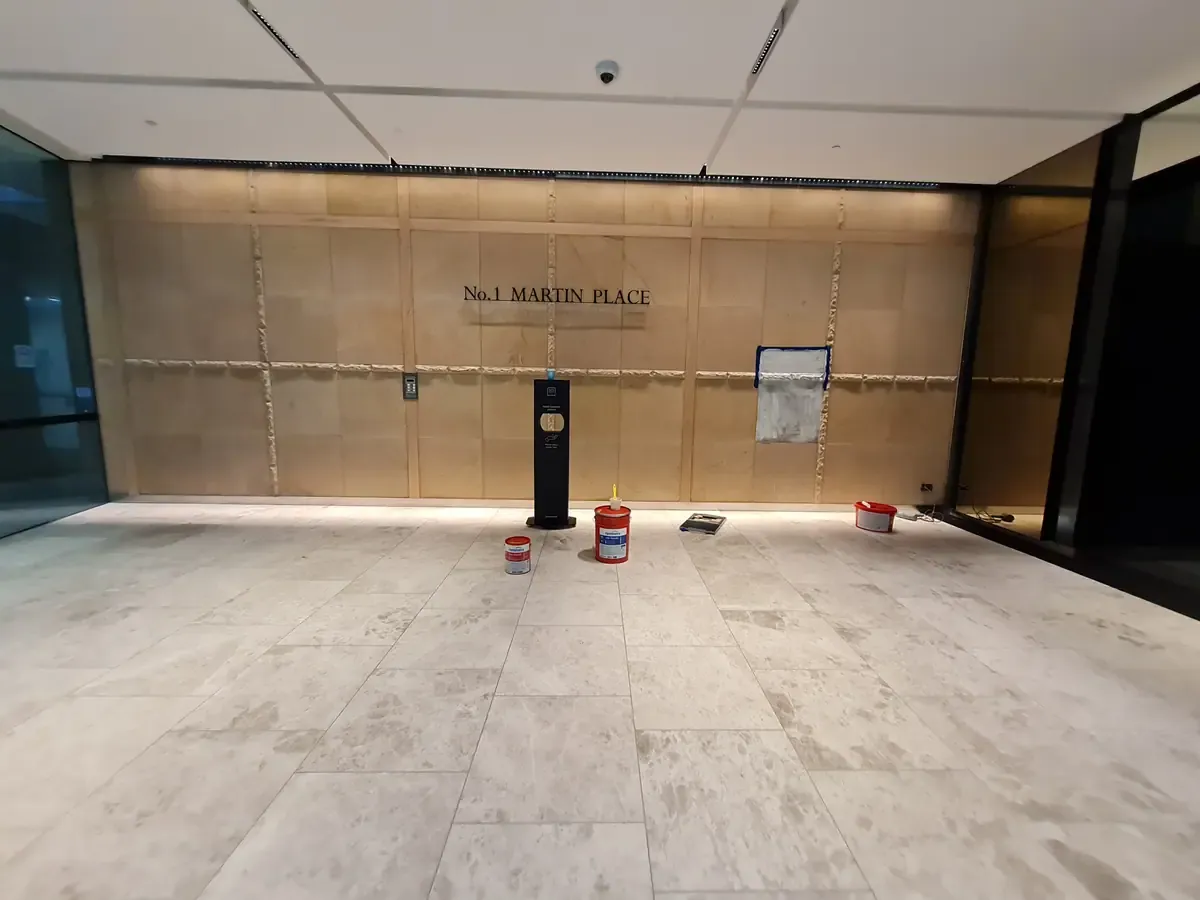
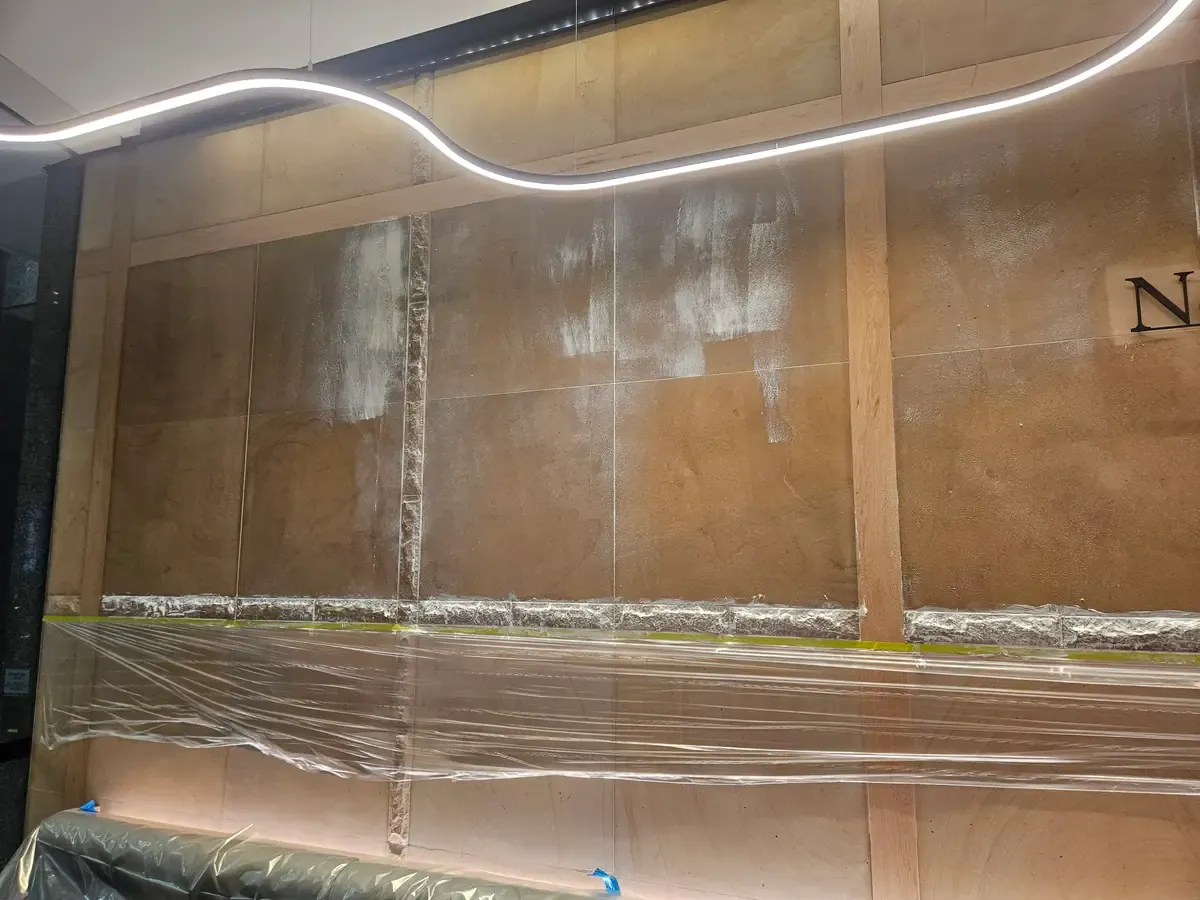
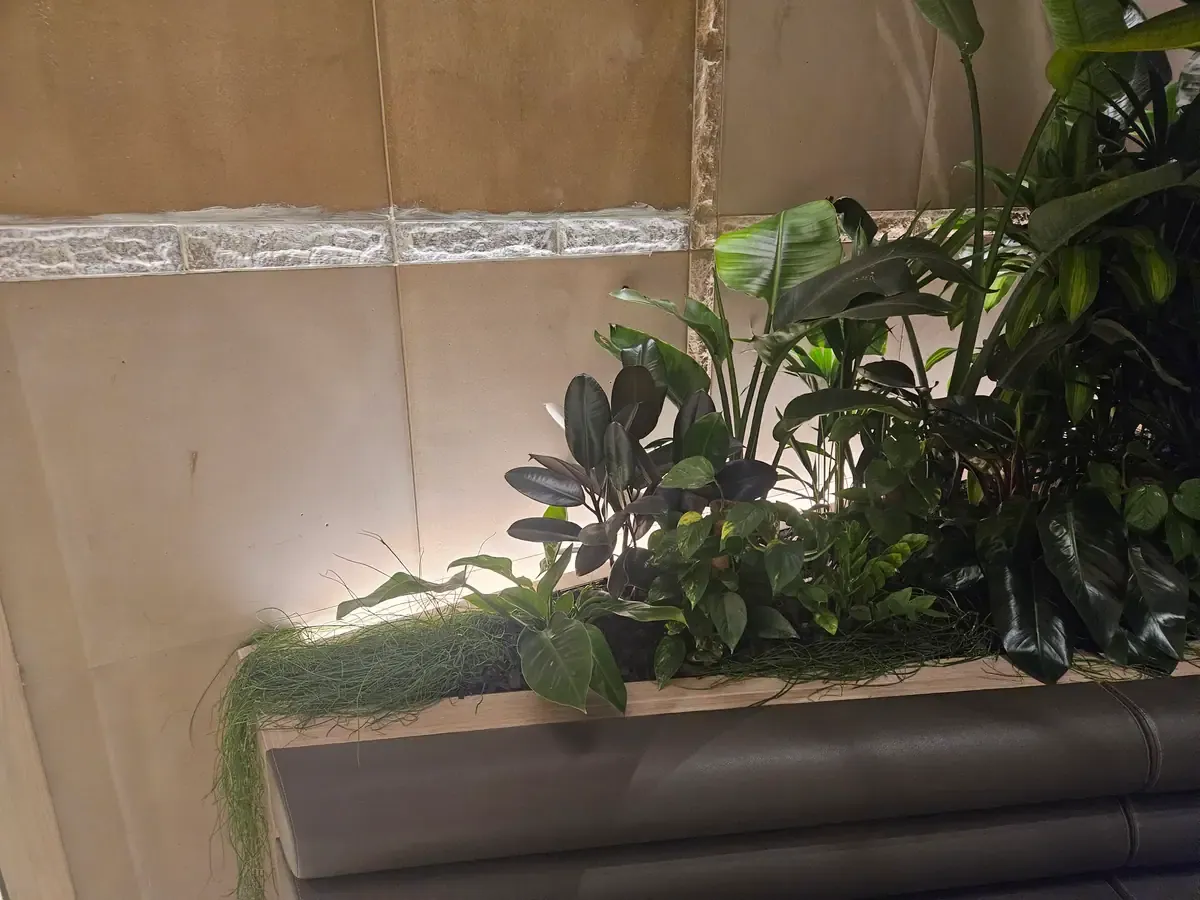
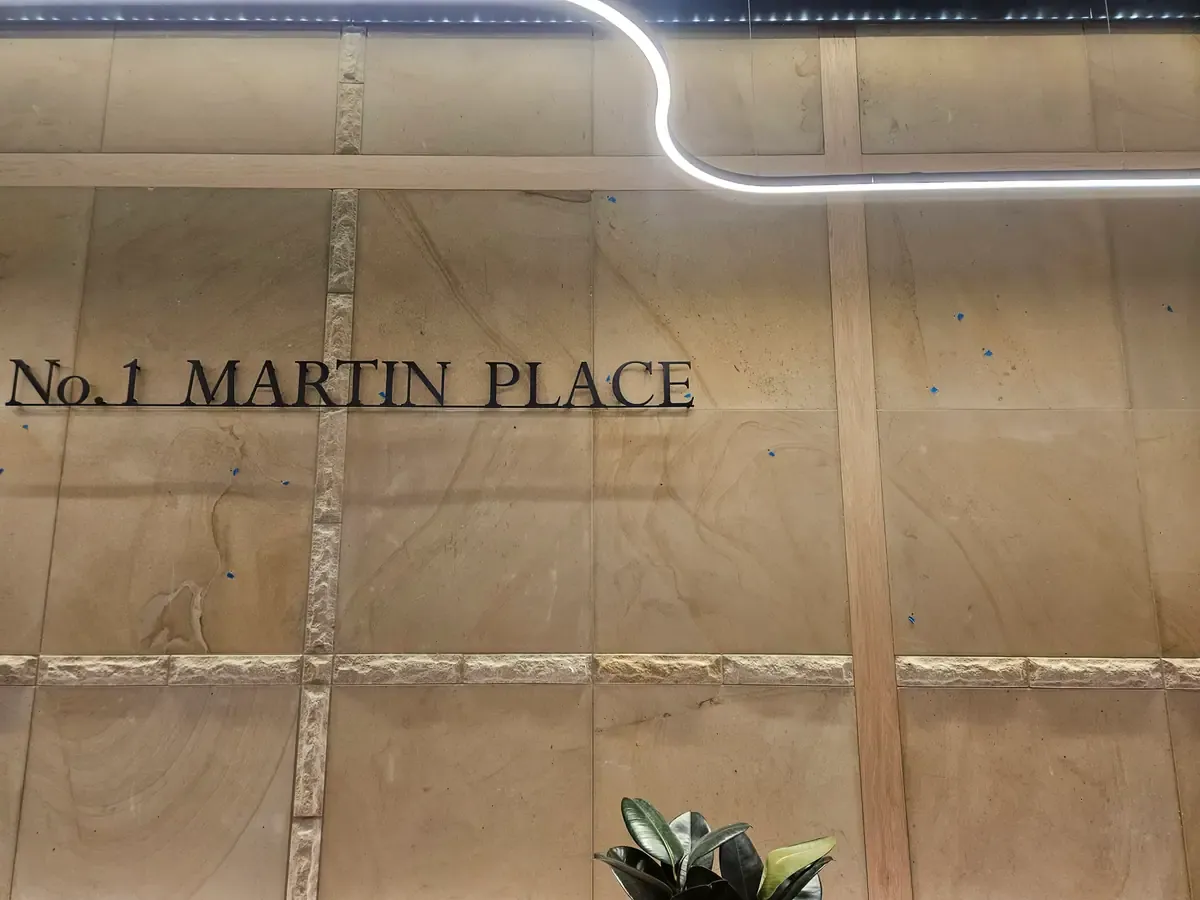
Sandstone in high-traffic urban settings often carries atmospheric pollution, soot, dust, surface staining and previous contamination. In the early photographs of this lobby wall, pale residue sits along the rusticated joint course and around the metal lettering. The stone is porous, so the method had to be chosen carefully: avoid damaging the original stone, and avoid introducing unnecessary moisture into the substrate.
This was sandstone façade cleaning of historic sandstone elements in a sensitive CBD setting, where conventional high-pressure washing or other aggressive cleaning methods were not suitable.
02 / The project story
A considered approach
High-pressure washing was ruled out. On porous sandstone a jet can cut a weathered face, open the pores and drive water, dissolved soiling and salts into the substrate. In a busy, sensitive CBD lobby it also produces runoff that is hard to control around public space and an occupied building. Other aggressive cleaning methods were set aside for the same reason: they risked the original stone and were a poor fit for this setting.
The method was chosen after assessment and testing. A taped sample area established what the stone would accept before the work was extended. The approach throughout was to understand the substrate, select compatible materials and preserve as much of the original fabric as possible. Cleaning here is conservation, not a cosmetic reset to a new-looking face.
03 / The project story
The work carried out
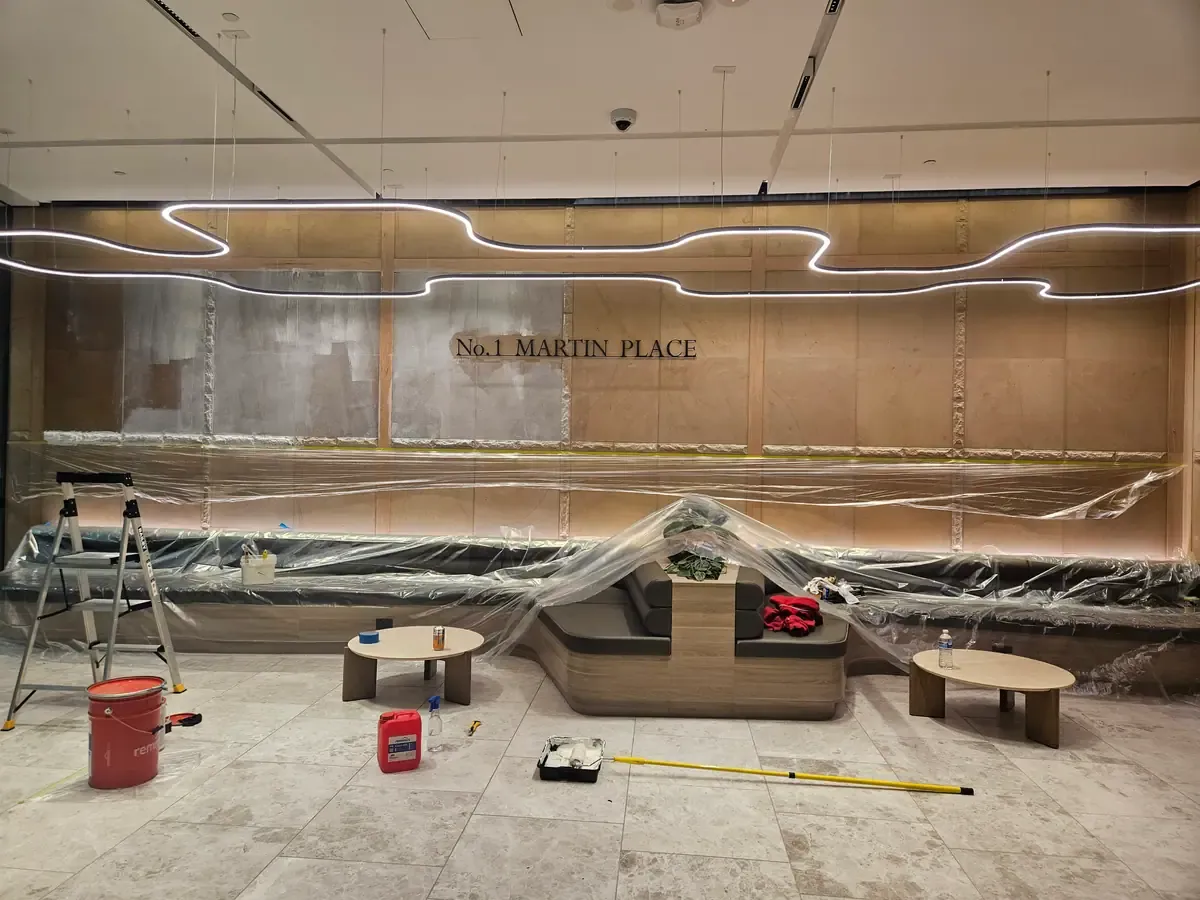
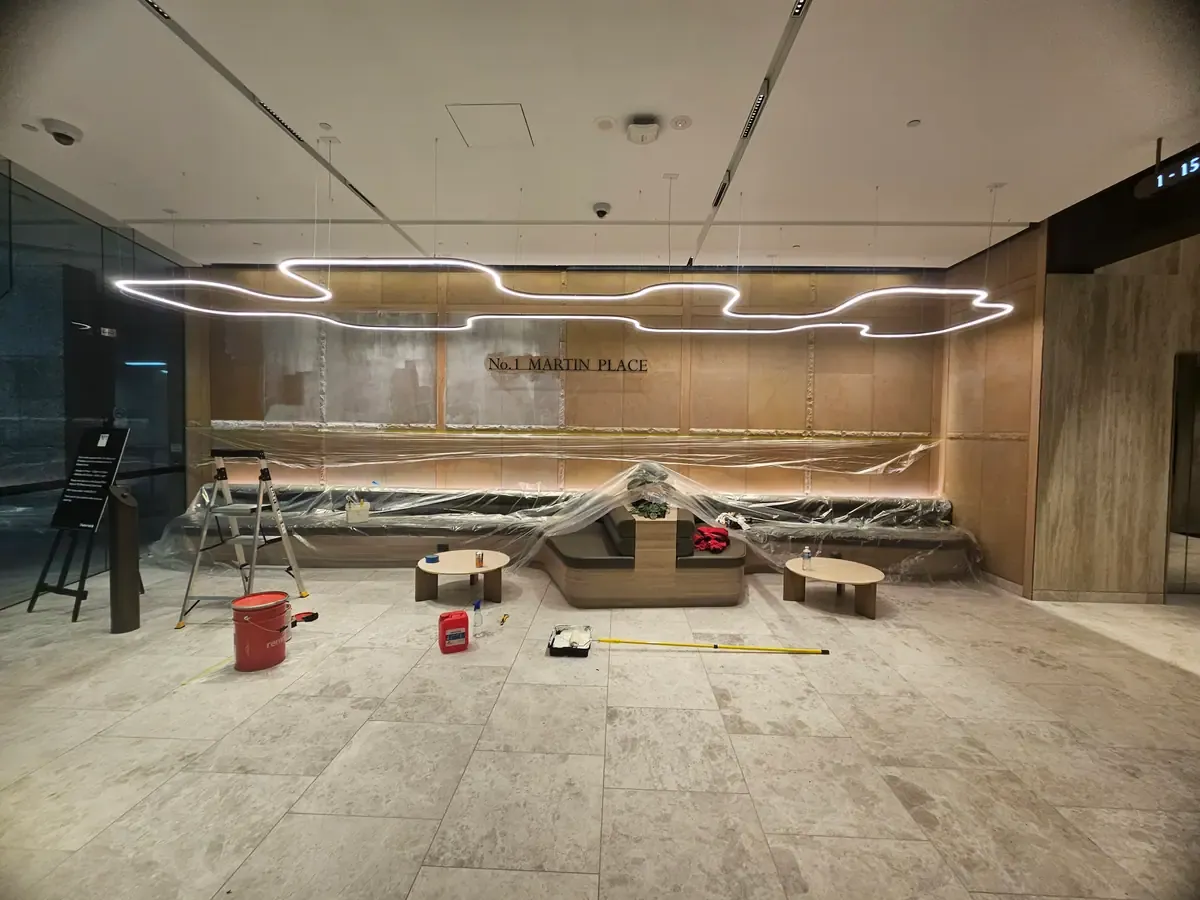
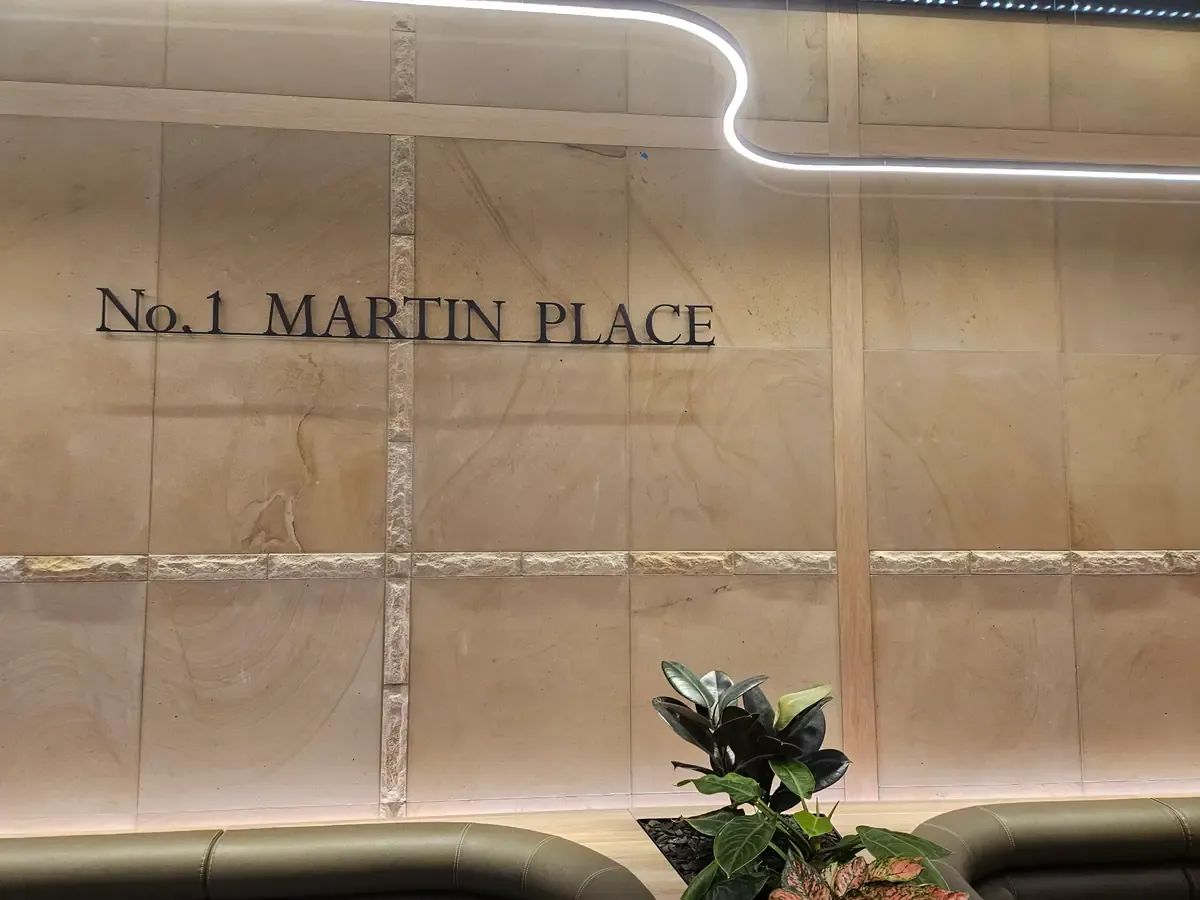
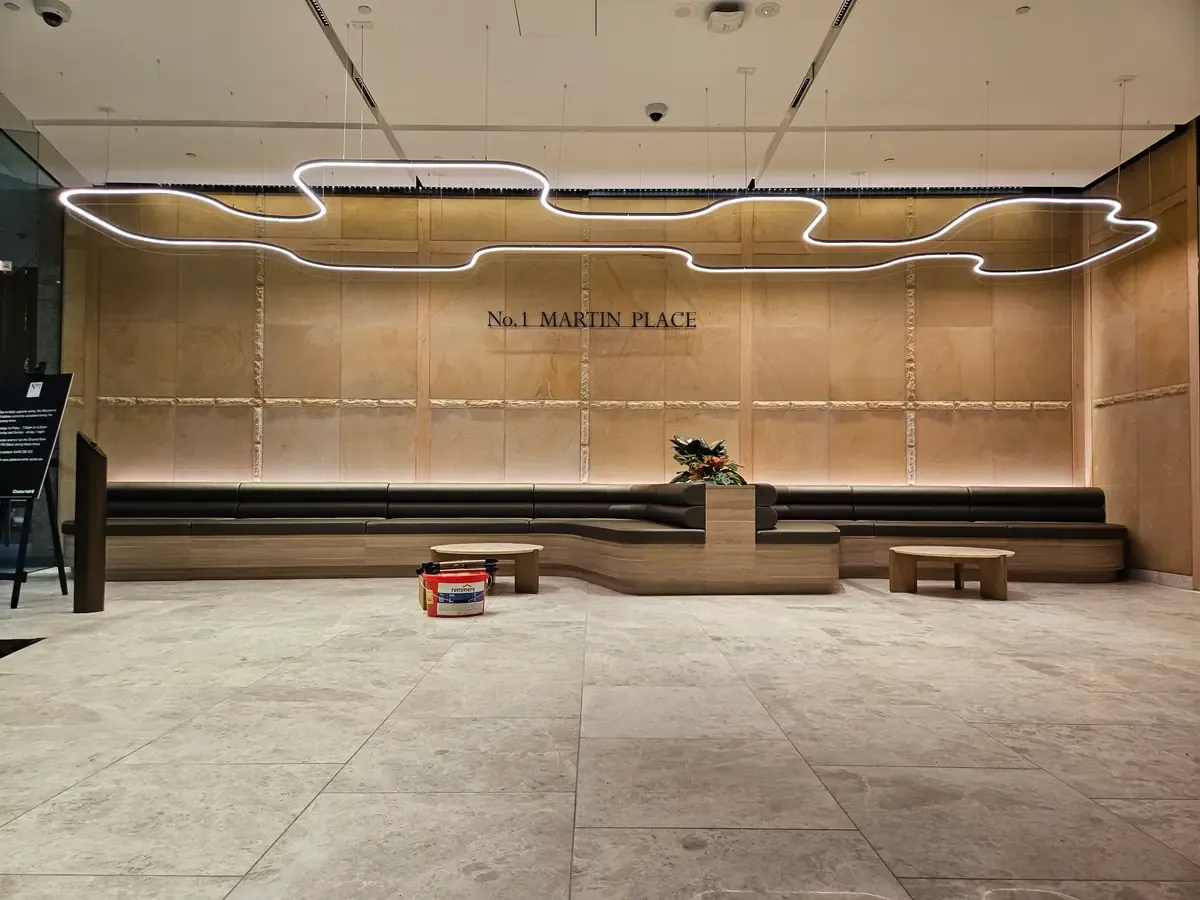
The team used a specialist waterless peel-off cleaning system to remove accumulated grime and surface contamination from the sandstone. The cleaning paste was applied to the stone surface, allowed to bind with the contaminants, and then removed once cured. Because the lobby stayed in use, the seating and the lower wall were covered with plastic sheeting during application. Work proceeded from the trial area across the wall, panel by panel, including the rusticated joint course and the panels around the lettering.
This method reduced the need for water, minimised runoff and protected the porous sandstone substrate. The objective was to clean the stone carefully while preserving its natural character, texture and appearance.
Chosen for the building
Materials & methods.
- Waterless peel-off cleaning paste
- Applied to the stone, allowed to bind with soiling and removed once cured.
- Protection in an occupied lobby
- Seating and the lower wall covered with plastic sheeting during application.
- Trial / sample area
- A taped patch of the cleaning material tested before the work was extended.
- Historic sandstone wall
- Ashlar panels with a rusticated joint course and applied metal lettering.
The change, in detail
Before & after.
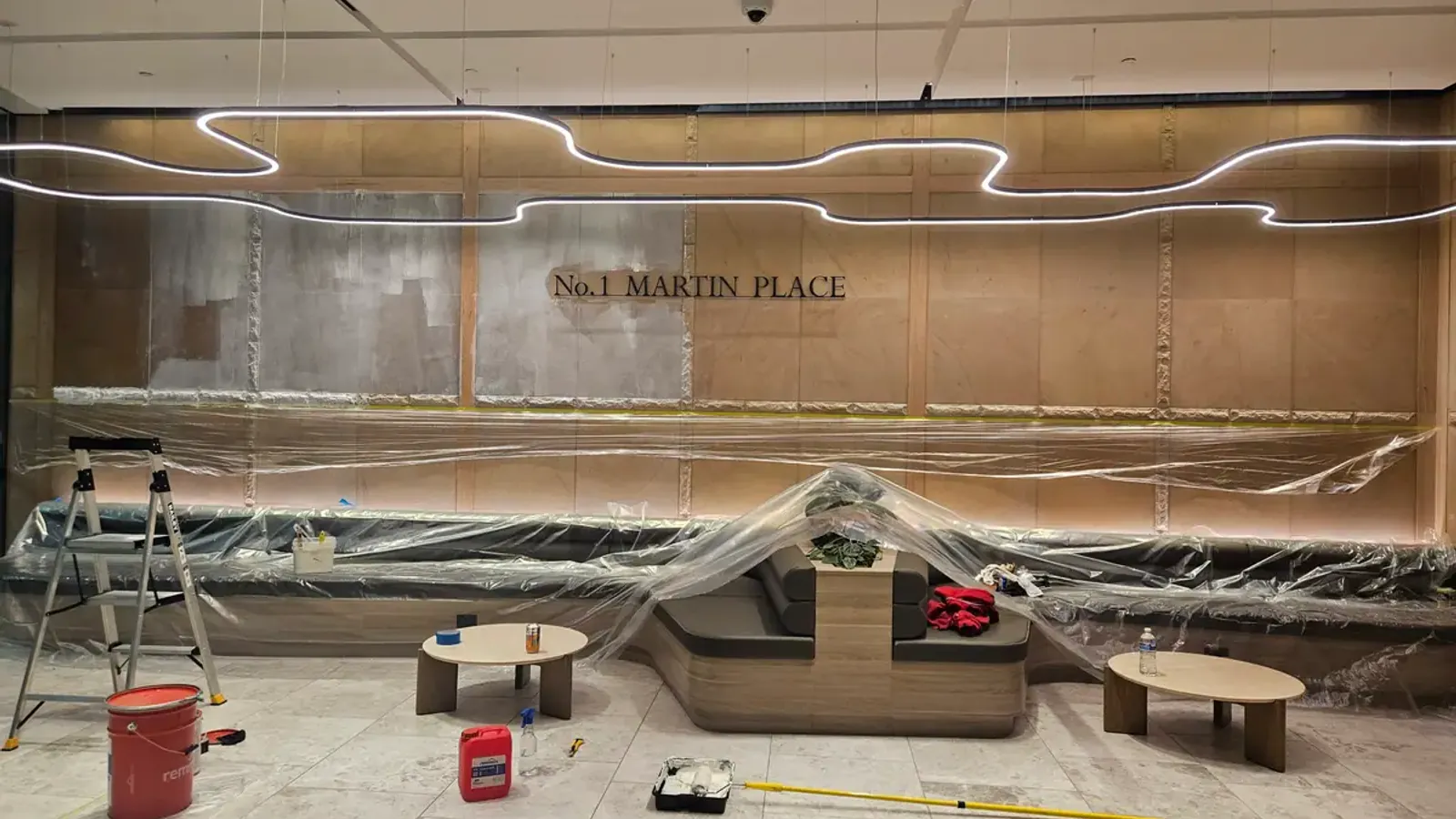
Left: peel-off paste on the left-hand panels with the seating and lower wall protected. Right: the same wall after cleaning, the lettering clear and the sandstone texture visible. The set contains no dedicated pre-cleaning photograph, so this pair shows the wall mid-application and finished rather than a true before state.
From the project
A closer look.
Follow the job from start to finish. Swipe or use the arrows.
Cleaning historic sandstone at No. 1 Martin Place: photographs in order, from the start of the job to the finish
04 / The outcome
Care that carries forward.
The wall is cleaned, not renewed. The lettering stands clear on the panels and the sandstone keeps its texture and natural character. Because the peel-off method used no high-pressure water, no moisture was driven into the porous stone and runoff was minimised in a working lobby. That is the outcome the method was chosen for: a cleaner face that is still the original stone.
05 / The Gallery
Every photograph from the job.
14 photographs. Select one to enlarge it.
Related expertise
Every building has its own story
Let’s talk about yours.
Send us photographs and a short description of the work you’re considering.