Repointing renews the failed mortar in the joints between bricks; tuckpointing adds a fine decorative lime line over a colour-matched joint fill, and is specified only where the surviving evidence or a heritage brief calls for it. In a repointing vs tuckpointing decision for a Sydney terrace, the useful question is what has actually failed: the joint itself, the fine surface detail, or the masonry around it. Across NSW, many period terraces need compatible repointing only — some also need the tuckpointed finish reinstated.
Tuckpointing vs repointing at a glance
Repointing | Tuckpointing | |
|---|---|---|
What the job is | Renews failed mortar in the joints so the wall sheds water and moves with the brick | Packs the joint with brick-coloured mortar (the stopping), then strikes a narrow lime putty line (the "tuck") |
When it's needed | Open, recessed, powdery or missing joints while the bricks remain sound | Surviving fine lime lines, or a listing or conservation brief requiring the original finish — after the wall is stable and breathable |
Materials | Compatible mortar matched to the wall — lime-based where the original was lime; failed joints raked to a sound depth first | Compatible lime-based fill plus a lime putty line suited to the brick and exposure; never a skim over hard cement |
Finish | Joint profile suited to the building, agreed on a dry sample panel | Crisp, regular joints: a fine contrasting ribbon over stopping that visually blends with the brickwork |
Terminology varies between trades and countries, so ask a contractor to show you the proposed finish rather than relying on the name alone. The Society for the Protection of Ancient Buildings explains the technique in its illustrated tuckpointing guidance and its repointing advice. For an owner comparing quotes, a price for ordinary repointing may cover a different result from a price for reinstating decorative tuckpointing — ask each contractor to describe the preparation and finish separately.
What does your terrace actually need?
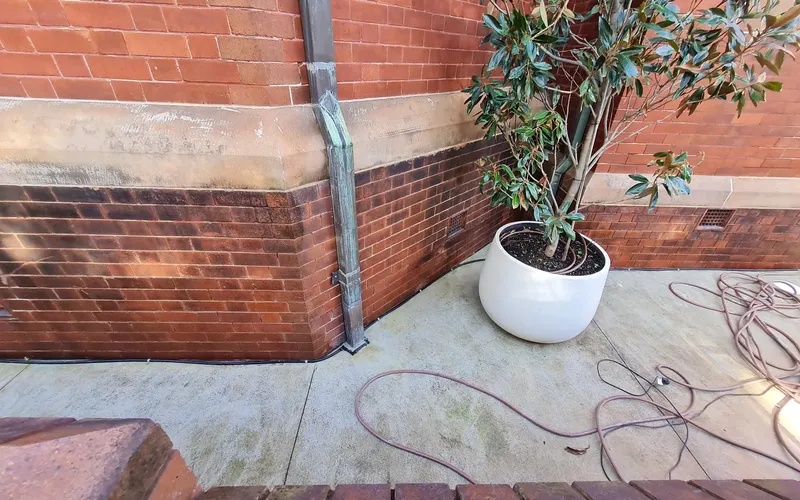
Start with photographs of the whole elevation and close views of the affected areas. Compare exposed sections with sheltered joints beneath eaves or window sills. You are looking for evidence, not trying to test the mortar with a screwdriver.
Open or crumbling joints
Missing mortar, loose fragments and visibly recessed areas warrant assessment for repointing. The repair may be localised; a few failed joints do not automatically justify stripping an entire façade. Softness alone is not proof that an old lime mortar has failed. SPAB's repointing advice cautions against unnecessary removal and the damage it can cause to brick and stone edges. Ask the assessor to mark the proposed repair areas on a photograph — it is much easier to agree a measured scope when retained and repaired areas are visible.
Faded decorative lines with otherwise sound mortar
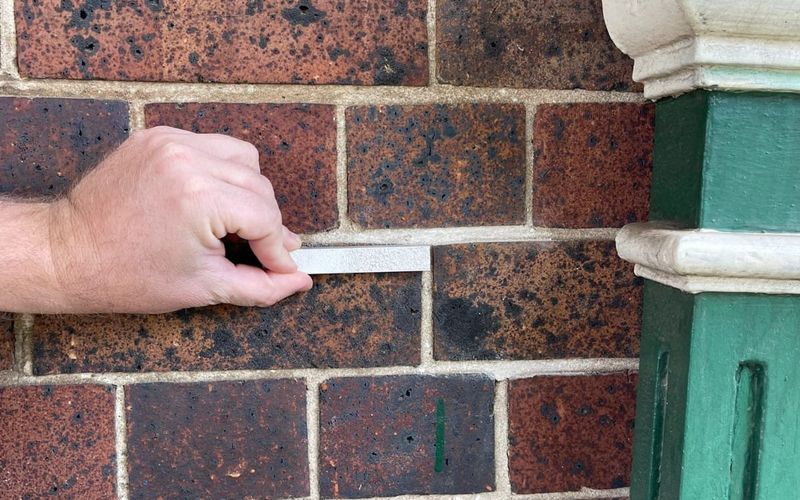
Weathered tuckpointing needs a different judgement. Faint ribbons can remain part of a sound historic finish; renewal may sacrifice surviving material, so the specialist should explain what can be retained and how any repairs will meet the old work. Simply applying new ribbons over old stopping is not a reliable repair. SPAB's tuckpointing guidance discusses these conservation choices.
Cracked bricks, bulging walls or persistent damp
These signs call for investigation beyond the appearance of the joints. Repointing cannot correct ongoing structural movement or a leaking roof detail. Where masonry is loose or visibly unstable, arrange an assessment before cosmetic work and keep people clear of the affected area. If white deposits or damp patches accompany the failed joints, read our guide to white powder on brick and sandstone — the moisture problem and the mortar specification need to be considered together.
Victorian and Federation façades: follow the surviving evidence
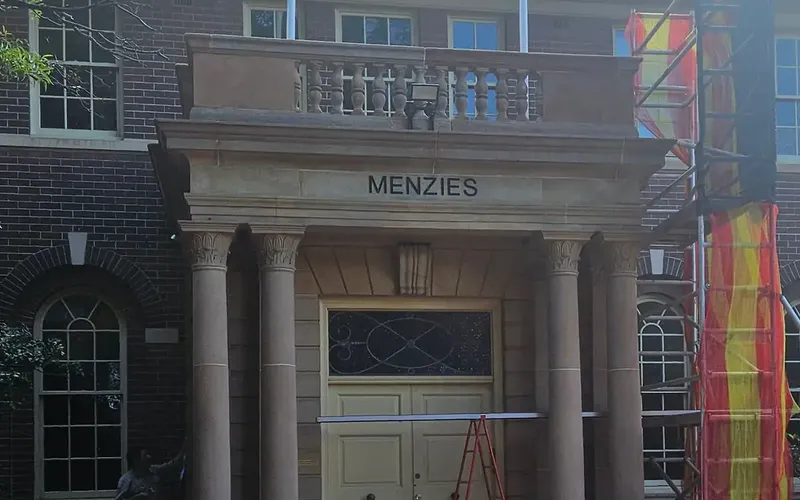
A building's architectural period helps frame an investigation, but it is not a specification. Two neighbouring terraces may have different bricks, alterations and surviving finishes. For a Victorian terrace with traces of fine ribbons, ask for close photographs and a proposal that explains how those traces inform the repair. For a Federation façade with contrasting brick details, ask how the proposed mortar will sit beside each brick colour. These are assessment examples, not claims that every house of either period was tuckpointed. A front elevation and a later rear addition may also need different treatment — record which areas are original, which are later work and which remain uncertain.
Why the mortar matters as much as the finish
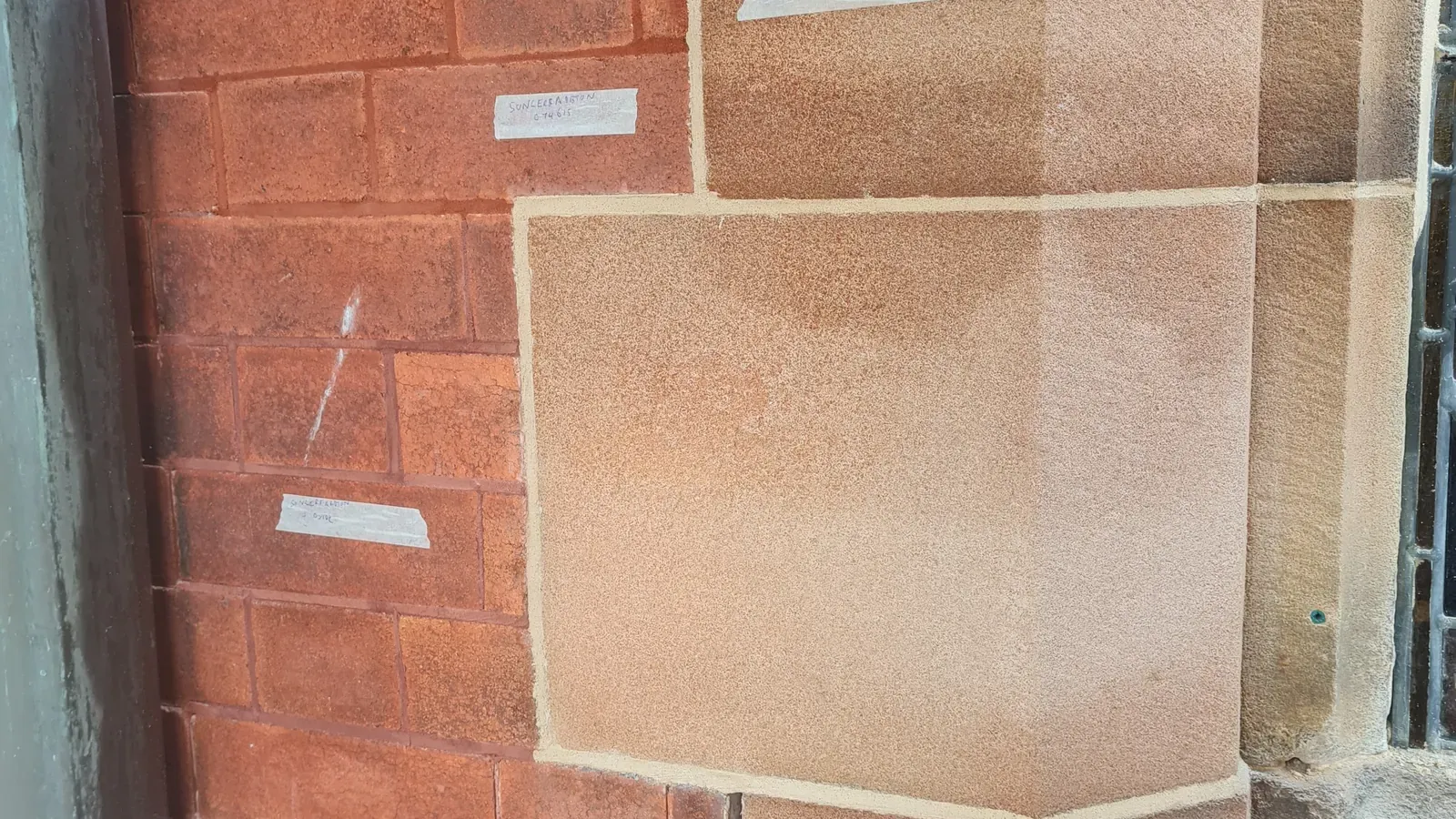
A colour match alone is not enough. The repair mortar must suit the original masonry, its exposure and the way the wall handles moisture. Mortar that is too hard or insufficiently permeable can contribute to deterioration of softer brick or stone. Older brickwork across NSW was typically laid in softer lime mortar, so a lime-based repair is often the right starting point — but lime is a family, not one bag, and the mix is matched to the surviving mortar and the brick for strength, permeability, colour and texture. The NSW technical guide, Mortars: materials, mixes and methods covers investigation, mix selection, preparation and curing for older Australian buildings; there is no single mix ratio suitable for every heritage wall. Ask for a sample panel and review it after drying, because wet mortar can look substantially darker. For the longer comparison, see why lime-based repointing matters for heritage brickwork.
What affects the cost
Stoneline publishes no prices, so this article gives no dollar figures — a firm quote follows an on-site assessment and is issued as a written scope in AUD. What moves the price, in broad terms:
- Access and scaffold — narrow terraces, occupied strata, street frontages and how long the scaffold is needed often decide the access cost more than the mortar does.
- Joint depth and condition — how much failed or hard cement pointing must come out, trialled carefully so brick edges are not damaged.
- Area — whether the price covers selected joints, one elevation or the whole building, and whether the quantity is measured repair area or gross wall area with openings deducted.
- Mortar matching — sampling, specialist binders and sands, and matching colour, texture and profile to the original work.
- Ribbon and colour work — for tuckpointing, the fine lime line is slower, separate craft work and should appear as its own line, not ordinary joint fill priced by the metre.
- Heritage and council needs — local listings, conservation areas and State Heritage Register items can add approval steps, and exemptions come with conditions.
For the factor-by-factor breakdown, see how much brick repointing costs in Sydney — published, like this article, without dollar ranges, because a published band would not tell you what your wall needs.
What a useful repointing quote should include
A quote should let you understand both the result and the decisions behind it. Ask for:
- The repair area: which elevations and joints are included, and what will be retained.
- The preparation method: how defective mortar will be removed without unnecessarily widening joints or damaging edges.
- The proposed mortar: its intended compatibility, colour, texture and finish, with a sample panel allowance.
- The decorative work: whether tuckpointing is included, as a separate line, and how its detail will be agreed.
- Access and protection: scaffold, pedestrian arrangements, protection of windows and the treatment of adjoining property.
- Separate repairs: how damaged bricks, damp investigations or unexpected defects will be priced and approved.
- Completion records: photographs, the agreed materials and any maintenance advice.
There is little value in comparing a single square-metre rate when one quote includes access and decorative finishing and another does not. Whether the work is worth doing at all is covered in is brick repointing worth doing on an older house. If a contractor proposes removing hard cement pointing, ask about a trial: removal itself can damage the masonry, and should not be assumed harmless. SPAB explains this limitation.
Check NSW heritage requirements before work begins
For a locally listed property, contact the relevant local council about the proposed work — Heritage NSW directs enquiries about local listings to the council. Describe changes to mortar, joint profile and appearance, rather than asking only whether "maintenance" is allowed. For a State Heritage Register item, check the applicable approval pathway and the standard exemption conditions. An exemption under the Heritage Act does not remove requirements under other legislation. Keep the photographs, specification and any written advice with your building records.
Planning the repair with Stoneline Heritage
When requesting an assessment, send a whole-wall photograph, close-ups of damaged joints and any earlier repair information. Mention access restrictions and whether you know the property's heritage status. These details help frame the visit; the final repair scope still depends on inspecting the masonry. Our brick, mortar and repointing service starts with the condition of the existing wall, and our tuckpointing service is specified only where the evidence or the heritage brief calls for the decorative finish. If the work forms part of a wider renovation, the heritage building restoration guide explains how to coordinate masonry repairs with the rest of the building.
Questions and answers
Is tuckpointing the same as repointing?
No. Repointing replaces failed mortar in masonry joints. Traditional tuckpointing creates a fine decorative ribbon over a background mortar that blends with the bricks. A repair project can involve both, so the quote should distinguish them — they are not interchangeable prices.
Does every terrace in NSW need tuckpointing?
No. The appropriate finish depends on the individual building and evidence of its original treatment. Many terraces need compatible repointing only. Ask a specialist to examine surviving joints before specifying a decorative finish based on the age or style of the house.
Can I repoint only the damaged sections?
Often, localised repairs are appropriate where surrounding joints remain sound. The extent depends on condition and the finish involved. Decorative tuckpointing can be difficult to blend, so agree repair boundaries and a sample before work begins.
How do I compare repointing and tuckpointing quotes?
Compare the same repair area, preparation, mortar, finish, access and protection. Ask whether decorative ribbons and sample panels are included as separate lines. A cheaper quote may describe a substantially different scope of work.
Will repointing stop damp inside the house?
Repointing may address water entering through defective joints, but it will not fix every cause of damp. Leaks, drainage and other moisture sources need assessment before treating mortar repairs as the complete solution.