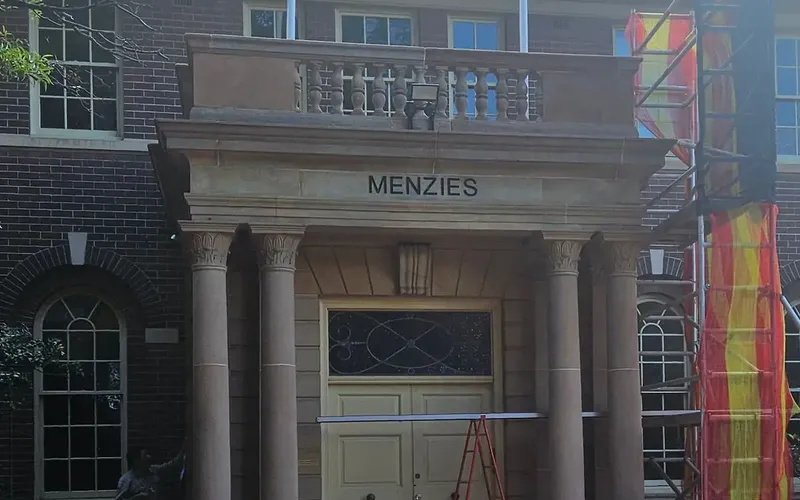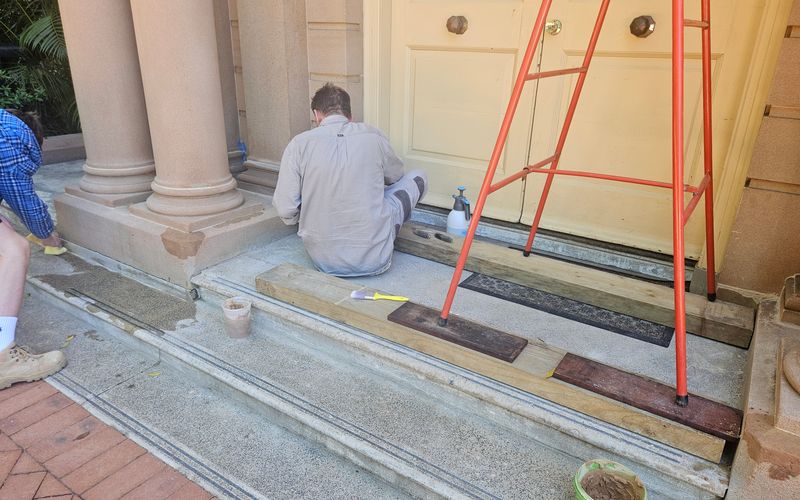
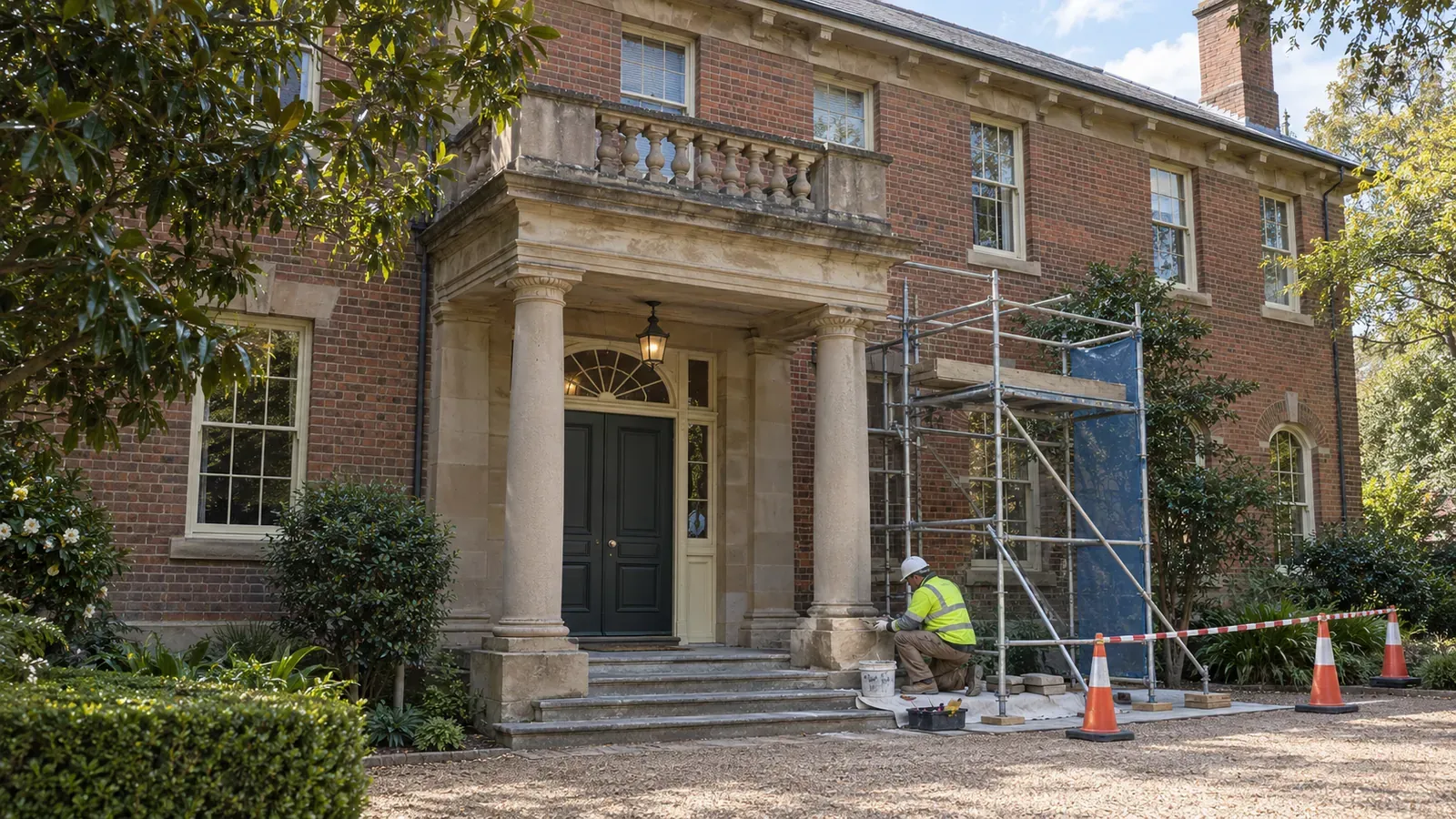
Heritage construction is building work that conserves a place’s cultural significance while repairing, adapting or extending it for continued use. In NSW, it combines knowledge of traditional materials with careful investigation, skilled trades and the approvals relevant to the property.
Innovation has a practical role: better records, targeted repairs and well-planned upgrades can help retain important fabric. The starting point is understanding the building, rather than choosing a product or technology first. This article explores construction methods and project delivery; our heritage building restoration guide covers the wider restoration process.
What makes heritage construction different?
Heritage construction decisions consider both the condition of a building and the significance of its surviving materials, design and history. An uneven surface or altered room may contain evidence worth retaining. Replacing it simply to achieve a uniform finish can remove that evidence.
The Australia ICOMOS Burra Charter and Practice Notes provide a conservation framework. They distinguish several approaches:
- Conservation encompasses the processes used to retain cultural significance.
- Restoration returns a place to a known earlier state using existing fabric, including removing additions or reassembling components.
- Reconstruction introduces new material to return a place to a known earlier state and needs sufficient evidence.
- Adaptation changes a place to suit its existing or proposed use.
These distinctions help owners describe the work accurately. A repair to an original sandstone wall, reconstruction of a missing detail and a new rear addition involve different decisions. New heritage home construction that copies a period appearance is also different from conserving an existing historic house.
Traditional materials and sustainable choices
Start by assessing what can remain in service. Retaining sound brick, stone, timber and decorative work can reduce the need for replacement materials. Reuse still needs a condition assessment: reclaimed material is not automatically suitable because its colour or age appears to match.
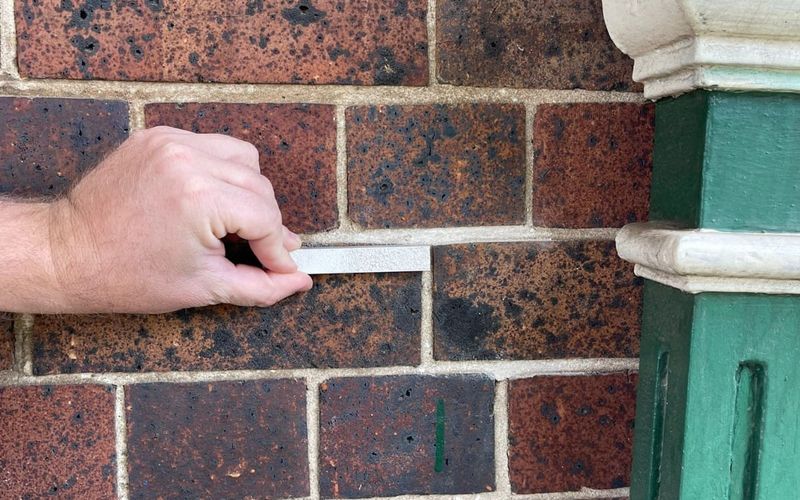
Mortar selection is particularly important. A repair mortar must work with the existing masonry, accounting for strength, moisture movement, exposure and the original construction. A harder mix is not automatically better, and a single lime mortar recipe will not suit every wall. The NSW technical guide Mortars: materials, mixes and methods explains mortar investigation, selection and repointing practice.
For a masonry repair, discuss:
- Existing material: the brick or stone type, condition and evidence of earlier repairs.
- Compatibility: the proposed mortar and its relationship to the surrounding masonry.
- Appearance: aggregate, colour, texture and joint profile, assessed through a sample panel.
- Execution: preparation, application, curing and protection appropriate to the selected system.
Our brick repair, repointing and tuckpointing service explains the work involved. Material decisions should form part of a written scope that the owner and trades can review.
Modern restoration methods should solve a defined problem
Useful innovation makes an intervention more precise. It should help the team understand a defect, retain sound material or control the effect of a treatment.
For sandstone, specialist options can include localised stone indents, compatible repair mortars or consolidation where assessment supports their use. Stoneline’s sandstone and stone restoration service describes these approaches. The appropriate method depends on the stone’s condition, the cause of deterioration and the repair’s structural and visual requirements.
Cleaning also needs a defined objective. A trial area can help establish the effect of a proposed method before a larger surface is treated. The aim may be to remove harmful deposits or an unsuitable coating while retaining the underlying surface. A uniformly new appearance is not a suitable objective for every historic wall.
For decorative fabric, surviving profiles and finishes can guide the repair. Our heritage finishes and decorative restoration service covers specialist work including ornamental plaster and traditional finishes. Agree what will be retained, repaired and reconstructed before work starts.

How digital tools support traditional craftsmanship
Digital records can help a project team coordinate work and preserve knowledge for future maintenance. Depending on the scope, useful tools may include measured drawings, organised condition photographs and three-dimensional building models.
Choose the record to answer a practical question. Where is the defect? Which component does the repair schedule refer to? How will a new service pass through the building? What changed during construction? A modest project may need a clear photographic register rather than a complex model.
Digital information still needs interpretation. A model can record geometry, but it cannot by itself determine a material’s significance, explain a damp problem or authorise a repair. Keep the survey records connected to specialist advice, approved drawings and the final record of completed work.
Published NSW examples: craft and technology in practice
Elizabeth Bay House: conserving historic residential joinery. Museums of History NSW’s account of the external joinery conservation describes documenting sash windows, workshop repairs, replacement of deteriorated putty and sash cords, and care to retain original glazing. French doors were repaired and painted in place. The article credits MJ Bielby Construction and Haller’s Master Painters. For owners considering heritage home construction or repair, the lesson is to assess individual components before specifying wholesale replacement.
Sydney Opera House: digital models for a complex heritage asset. The Opera House’s account of its digital scale models describes their development towards a digital twin intended to support construction, maintenance, conservation and asset management. This illustrates how shared building information can support the care of a complex site. The transferable principle is to keep reliable records that future project teams can use; a residential repair does not need the same scale of technology.
What should a heritage construction company coordinate?
A heritage construction company should turn the assessed condition, conservation objectives and approved proposal into a buildable scope. Heritage construction services can involve several professions and trades, so responsibilities need to be clear.
A practical delivery sequence is:
- Assess the place. Review significance, materials, defects, access and available reports.
- Confirm the proposed work and approvals. Coordinate the owner, designer, heritage adviser and relevant authority.
- Specify methods and samples. Record material requirements, trial areas and points requiring review before work continues.
- Protect and sequence the site. Plan temporary protection, access and the relationship between structural work, services and finishes.
- Inspect and document delivery. Record discoveries, agreed changes, completed repairs and maintenance requirements.
Ask prospective contractors for comparable work, relevant licences and insurance, a clear scope and an explanation of who makes conservation decisions. Older heritage constructions vary in materials and condition; a method used successfully elsewhere still needs assessment for your building.
NSW approvals and construction heritage management plans
Check whether the property is locally listed, within a heritage conservation area, or on the NSW State Heritage Register. Service NSW’s heritage alterations guidance explains when to contact council or investigate Heritage Council of NSW approval.
Some State Heritage Register work may qualify for standard exemptions, but only when the applicable conditions and standards are met. An exemption under heritage legislation does not remove other approval requirements. Confirm the pathway for the actual scope before starting.
A construction heritage management plan sets out how heritage will be protected during construction. Its required scope depends on the project and approval conditions. The published Parramatta Light Rail Stage 2 construction heritage management sub-plan provides a NSW infrastructure example, including responsibilities, protective measures and procedures for unexpected finds. It is a project-specific document, not a template every homeowner must adopt.
A conservation management plan, or CMP, has a broader role in understanding significance and guiding a place’s conservation and management. Heritage NSW’s CMP guidance explains that purpose. Ask your heritage adviser which documents your project needs; preparing a plan does not itself grant permission to build.
Plan for the building’s next chapter
The useful direction for heritage construction is closer coordination between traditional craft, reliable records and carefully selected modern interventions. Technology adds value when it helps preserve important material, explain a decision or make future maintenance easier.
Begin with an assessment and a defined problem. Stoneline Heritage can discuss the masonry, façade and decorative restoration parts of projects across Sydney and NSW. Contact our team with the property address, photographs and proposed scope to discuss the work and availability. For the broader conservation approach, see the heritage building restoration pillar guide.
Heritage construction Q&A
What is heritage construction?
Heritage construction is work on an existing place that protects its cultural significance while repairing, adapting or extending it. It combines assessment of important fabric, suitable construction methods and the approvals relevant to the project.
How does heritage construction differ from a period-style new home?
Heritage construction conserves an existing place and its significant fabric. A period-style new home uses new construction to evoke an older architectural style. Similar appearance does not make the two activities equivalent.
Which materials are suitable for heritage masonry repairs?
Suitable materials depend on the existing brick or stone, its condition and the exposure. Mortar should be selected for compatibility, including strength and moisture behaviour. Investigation and a sample panel are more useful than assuming one standard mix suits all old walls.
Can modern technology help conserve a heritage building?
Yes. Digital drawings, condition photographs and building models can help teams record defects, coordinate proposed work and retain information for maintenance. They support professional assessment; they do not establish significance or replace construction approval.
What does a construction heritage management plan cover?
A construction heritage management plan describes how heritage will be protected during the works. Depending on project requirements, it can identify responsibilities, protection measures, inspections and procedures for unexpected discoveries. Check the approval conditions and seek advice on the required scope.
Is a construction heritage management plan the same as a CMP?
No. A conservation management plan guides the understanding and ongoing management of a place’s significance. A construction heritage management plan focuses on controls during construction. A project may use both documents for different purposes.
Do heritage construction projects in NSW need approval?
Approval requirements depend on the listing, location and proposed work. Contact the council for local heritage controls and check Heritage NSW requirements for State Heritage Register items. Exemptions may apply to some work, subject to their conditions and any other required approvals.
How should I choose a heritage construction company?
Look for relevant experience, appropriate licences and insurance, clear methods and coordination with heritage advisers and specialist trades. Ask how the company protects retained fabric, manages discoveries and documents completed work. Compare written scopes as well as prices.