A heritage restoration quote worth signing reads like a plan for the building rather than a single figure on the last page. It should set out the scope element by element, describe how the site will be accessed and protected, explain how mortar and stone will be matched to the existing fabric, and commit to trials and sample panels before the main work proceeds. It should also state what is excluded, how the work will be documented and recorded, and how approvals and hidden conditions will be handled. A quote that covers these points can be compared line by line with any other; a price alone cannot.
Why comparing price alone fails
Heritage masonry does not lend itself to like-for-like price comparison, because the condition of the fabric and the philosophy of the repair drive the work as much as the area of wall involved. Two quotes can carry the same heading, such as repointing a front elevation, and describe entirely different jobs. One may assume joints are raked to a shallow depth and filled with a general-purpose off-the-shelf mix; the other may rake back only to sound mortar, flush the voids, and finish in a lime-based mortar matched to the analysed joint material. The headings match; the buildings a few years later do not.
The lower of two prices is often low for reasons that never appear on the page. There may be no allowance for trial panels, no scaffold or containment, no protection of adjoining finishes, and no provision for the decay that old walls commonly conceal behind sound-looking faces. None of this shows up as a red figure at quoting stage. It shows up later as staining around repaired joints, spalling at the edges of brick and stone, and call-backs that cost more than the difference between the quotes ever represented. An incompatible repair is not a neutral outcome; it harms the fabric around it and narrows the options for whoever deals with it next.
There is also a contractual reality. On restoration works, the quote often becomes the scope of the contract, and whatever its wording fails to say is what the owner cannot later hold the contractor to. A quote that never mentions mortar matching cannot be enforced to produce it. Comparing totals before comparing content puts the decision backwards.
The checklist in outline
The sections below set out what a thorough heritage restoration quote should contain, both as a request list when asking contractors to price and as a reading frame when the quotes arrive. Work through each quotation against the eight headings, note where an item is silent, and raise the silences before any decision is made. Gaps are sometimes just assumptions that have not been written down, and asking about them is how those assumptions surface.
1. Scope of works
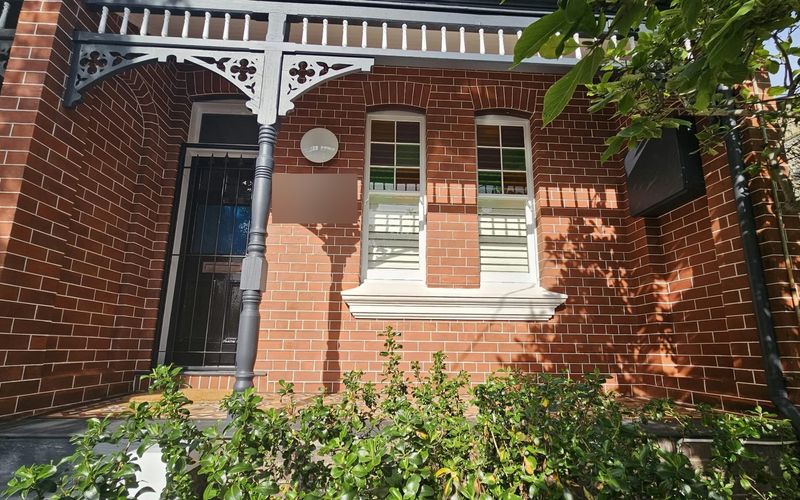
The scope should read element by element and area by area. Rather than a single line such as repair front wall, it should name which elevations and which elements are included, from wall faces to sills, string courses, copings, chimneys and boundary walls. For each element it should record what condition has been observed on inspection and what method is proposed in response: raking out and repointing open joints, indenting decayed stone, pinning or grouting where faces have delaminated, or careful cleaning where soiling is driving decay. The boundaries of the work should be just as clear as its content, including where the work stops at a parapet, a party wall or a neighbouring property, and which related trades, such as roofing, plumbing or drainage, sit outside the masonry contract altogether.
This detail matters because a single elevation rarely needs one uniform treatment; eroded faces, open joints, cracking and salt damage can all appear on the same wall, and each calls for a different response. A scope that names a method against each element shows the building has been looked at, not priced from the footpath.
2. Access and protection
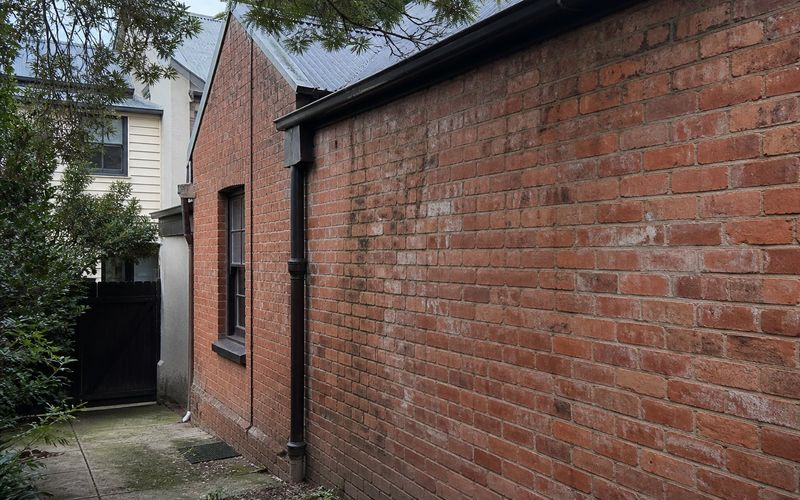
Access to heritage fabric is seldom straightforward: terraces are reached through narrow side passages, parapets and chimneys sit above occupied footpaths, and garden walls adjoin planting and paving that cannot be disturbed. The quote should describe how the work will be reached, including any scaffold, and how that access has been designed with the fabric in mind; where ties would land in fragile mouldings, an alternative arrangement should be proposed. Where work fronts a footpath, any occupancy is arranged with the council on the council's conditions.
Protection belongs in the quote alongside access. That includes the containment of dust and slurry, the management of water so that runoff does not soak the wall being repaired or the neighbour's, and the masking or covering of adjacent finishes such as leaded glass, joinery and paving. On occupied buildings it also includes hours, hoarding and keeping an entry usable. An access and protection section is one of the clearest signals that the contractor has visualised the job rather than priced it from a photograph.
3. Materials and the mortar and stone matching approach
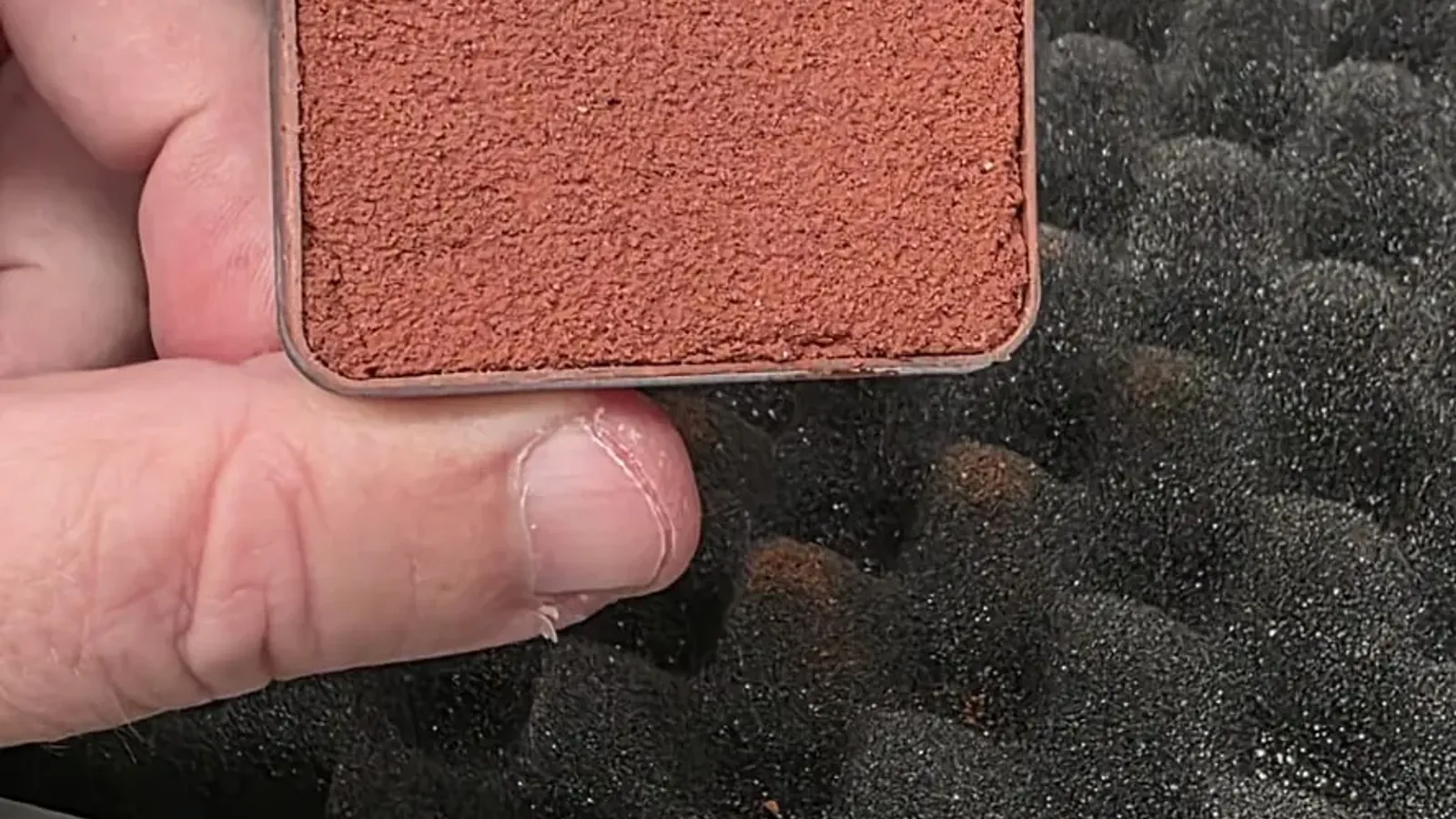
The quote should describe how repair materials will be matched, not merely name them. For repointing, it should state whether the existing joints will be analysed for binder type, strength and aggregate colour before the mix is fixed, and it should record the governing principle: that repointing mortar on old masonry is deliberately weaker and more permeable than the brick or stone it sits between, so that the joint, not the masonry unit, sacrifices itself to weathering. Lime-based mortars are the usual expression of that principle. A quote that proposes a cement-rich mix on old fabric, or that is silent on the question, is telling you something important.
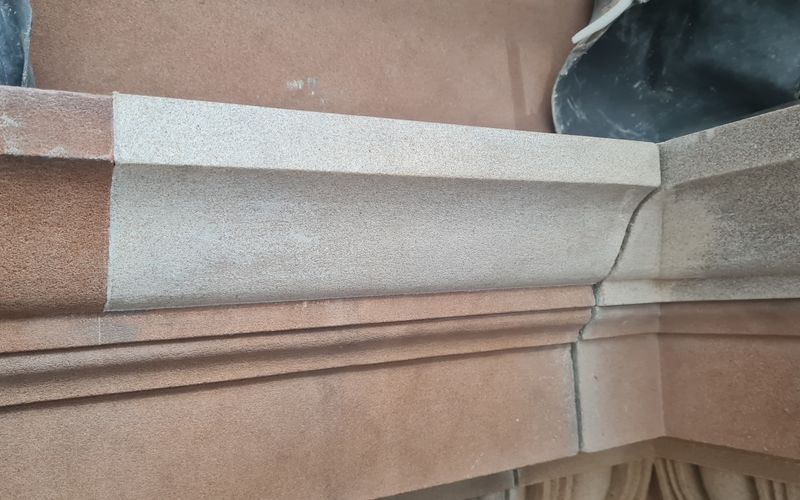
For stone repair, the quote should set out the matching approach in similar terms: how the existing stone is identified by bed, colour and weathering character; how replacement units will be selected, face-bedded and dressed to match the surrounding tooling; and how much decayed material is intended for indenting versus stabilising in place. The selection and sign-off of replacement stone typically involves the owner, the architect or conservation consultant as well as the masonry contractor, with the contractor advising on workability and installing what is agreed. The making-good side of this work is covered in detail in our sandstone restoration service, and the jointing side in brick and mortar repair and repointing; a quote for either kind of work should read as though the writer understands both.
4. Trials and sample panels
Trials are how a quote's assumptions are tested before they are applied to a whole elevation, and the quote should name them as work in their own right, with their own line and stage. A trial panel tests a method on the actual substrate: a candidate cleaning or paint removal approach applied to a small unobtrusive patch, allowed to dry fully, and assessed for staining, residue and surface harm, because damp masonry can present well and only reveal its condition once dry. A sample panel, by contrast, demonstrates an intended finish: mortar colour, joint profile and finish, on the wall, for the owner's approval.
Both kinds of panel are assessed on the building, and wherever the programme allows, re-checked after a period of weathering. The approved panel then becomes the benchmark for the whole contract: it converts a subjective word like matched into something visible and enforceable. Approaches of this kind are discussed further in sandstone restoration and repair in Sydney and brick repointing services in Sydney. A quote that treats panels as an optional extra is inviting the programme to proceed on assumption.
5. Approvals and heritage notes
This item belongs in the quote as a flag, not as advice. Whether restoration work needs consent depends on the listing type and the local government area: work to a heritage item or within a conservation area commonly requires consent through the local council, state-listed items involve Heritage NSW, and strata owners also work through their owners corporation for common property. A quote cannot resolve those questions; what it should do is state whether the works are priced on the assumption that approvals are in place, who is obtaining them, and that the programme is contingent on them.
A short heritage notes section can also record anything the contractor observed that bears on consent, such as earlier repairs in mismatched materials. Checking the listing status and consent path is the owner's discussion with the relevant authority in the first instance. The point of the flag is narrower: no work should start on a protected building while an approval question is open, and the quote should say so.
6. Exclusions
A clearly drafted exclusions section protects both sides. Old buildings hide their condition, and decay that is invisible until joints are opened up or render is stripped cannot be honestly priced in advance. Typical exclusions include repairs to concealed conditions revealed during the work, elements that could not be closely inspected such as upper chimneys, related trade work such as roofing and stormwater, and making good of surfaces beyond the work area.
Reading the exclusions tells you where the risk sits, which is exactly what a quote is for. An exclusion is not an evasion; it is a definition. What should concern an owner is not the presence of exclusions but their absence, or their vagueness, because a quote that excludes nothing has committed to conditions it has not seen.
7. Documentation, photographs and as-built notes
Heritage repair is also a record-keeping exercise, and the quote should commit to the records it will produce. The baseline is a photographic record keyed to the scope before work begins, and a matching record at completion. Beyond that, the quote should promise written documentation of what was actually done: the mortar analysis results and the mixes adopted, the joint finishes approved on the sample panel, notes on the source and dressing of any replacement stone, and as-built notes recording where conditions differed from the scope and how they were resolved.
These records carry practical value long after the scaffold comes down. They give the next custodian, and the next contractor, a factual starting point for maintenance instead of guesswork, and on listed fabric they support the historical record of the building. Documentation costs little to produce as the work proceeds and is effectively impossible to reconstruct afterwards, which is why it belongs in the quote rather than in a conversation at handover.
8. Licence and insurance verification
The quote should name the entity that will hold the contract, and that name should be checkable. In NSW, licence details can be verified through the Service NSW online licence check, and general licensing questions can be put to NSW Fair Trading, before signing rather than after. The checks are simple: the name on the quote should match the name on the licence and the insurance certificates, and the cover should be current for the period of the works.
Insurance should be evidenced rather than asserted. Current certificates of currency for public liability cover, and contract works cover where the project calls for it, should be available on request before work starts. Nothing in this verification tells you how good a mason the contractor is, but it tells you that the contractor is who the paperwork says they are, which is the floor beneath every other assurance in the quote.
How staged work and provisional sums appear
Sound heritage quotes are usually structured in stages, and the stages should be visible on the page: inspection and analysis; trials and sample panels; main repairs by elevation or element; completion, making good and documentation. Progress claims are then tied to completed and inspected stages rather than to dates, and each stage is checked against the approved panels before the next begins. Staging is how trial results actually govern the wider programme, and how the owner signs off appearance while there is still time to adjust.
Provisional sums handle the parts of the work whose extent cannot be known before opening up, such as decay found behind sound-looking faces once joints are raked out, or defective material revealed when render is removed. A well-drafted provisional sum states what the allowance is for, how it will be measured if triggered, for example by rates per metre of joint repointed or per stone indented, and that it is not spent without the owner's written authorisation. When comparing quotes, ask how each provisional sum is valued and who authorises its use. The structure of these items, far more than their totals, shows whether the contractor expects to be held to the scope or to renegotiate it once the wall is open.
What compatible repair language looks like
The wording of a quote tells you what philosophy it is working from. Language that reflects a compatible approach includes phrases like raked back to sound mortar only; lime-based mortar matched to the analysed joint material; replacement units face-bedded and dressed to match existing tooling; minimum intervention, with original fabric retained wherever sound; and repairs detailed to be reversible where practicable. None of these phrases is a guarantee, but together they show the writer is thinking about the old fabric's behaviour, not just its appearance.
Vague language deserves the opposite attention. Make good as necessary, repair and repaint wall, and modern durable products throughout can mean anything, and in practice tend to mean whatever suits the contractor once the work is under way. Claims that a wall will be sealed against all moisture also deserve caution: old masonry manages moisture by breathing, and a coating or mortar that blocks that exchange causes the decay it was meant to prevent. A good quote reads like a short method statement; if it could have been written for a new build by swapping the address, it probably was.
From quote to site assessment
Every item in this checklist is filled in the same way: by someone standing in front of the building. A site assessment observes the fabric at close range, photographs each element, checks access on the ground, and forms a view on where trials are needed and where condition is concealed. It is the thing to request from a contractor, because a quote promised over the phone or from photographs tends to produce exactly the single-line documents this article has argued against. Stoneline Heritage carries out site assessments and prepares quotes on this basis for stone, brick and masonry restoration across Sydney and NSW.
Frequently asked questions
How many heritage restoration quotes should I compare?
Two or three quotes, each prepared after a site inspection, are usually enough. Compare them against the checklist above, section by section, rather than on totals alone. Where one quote is silent on an item the others cover, ask the question before weighing the prices.
What is a provisional sum in a masonry quote?
A provisional sum is an allowance for work whose extent cannot be known until the fabric is opened up, such as decay behind sound-looking joints. The quote should state what the allowance covers, how it is measured if triggered, and that it is only spent with written authorisation. It exists to define risk honestly rather than to hide it.
Should a heritage restoration quote mention approvals?
It should flag them, not resolve them. Whether consent is needed depends on the listing type and the local government area, with state-listed items involving Heritage NSW, and strata owners also working through their owners corporation. The quote's job is to state what approvals are assumed, who is obtaining them, and that the programme depends on them.
Can an accurate heritage quote be written without a site visit?
Not for repair work. Photographs and descriptions help, but the condition of joints, the extent of decay and the realities of access only become clear in front of the fabric. A quote written without an inspection should be treated as an indication, and the checklist applied once a site assessment has been done.
How do I verify a contractor's licence and insurance in NSW?
Licence details can be checked through the Service NSW online licence check, and general licensing questions can be put to NSW Fair Trading. Confirm that the name on the quote matches the licence and the insurance certificates, and sight current certificates of currency before work begins.
What is the difference between a trial panel and a sample panel?
A trial panel tests a proposed method on the actual substrate, such as a cleaning or paint removal approach on a small patch, assessed after drying and, where possible, weathering. A sample panel demonstrates an intended finish, such as mortar colour and joint profile, for approval on the wall. The approved panel becomes the benchmark for the contract.