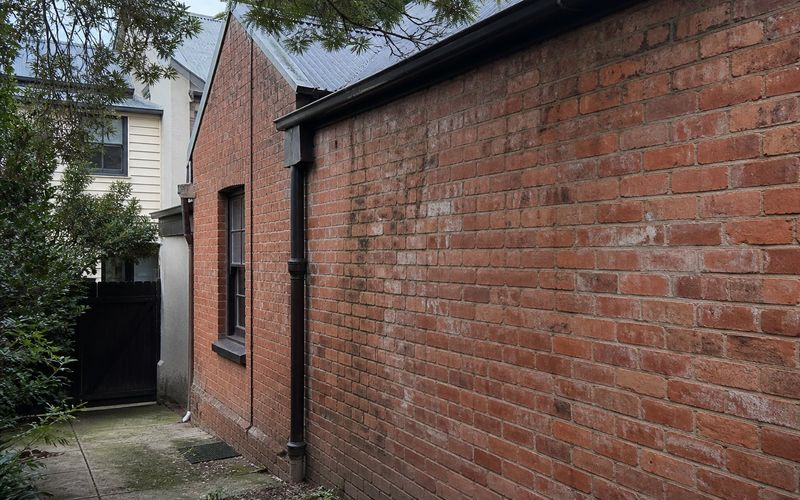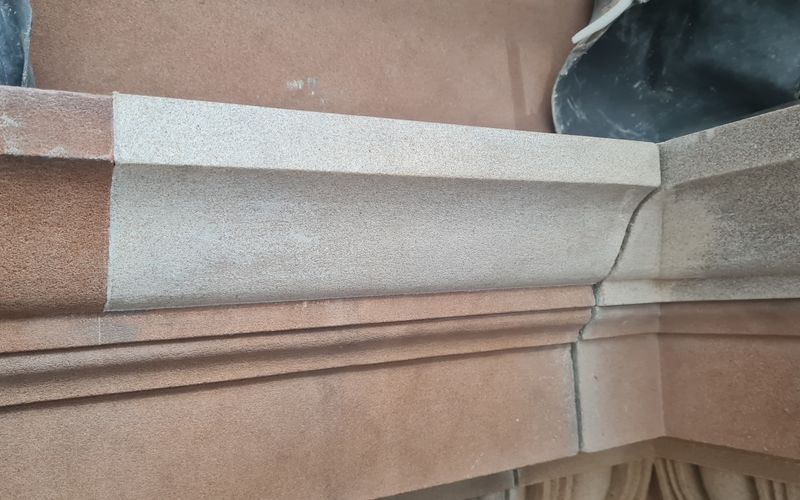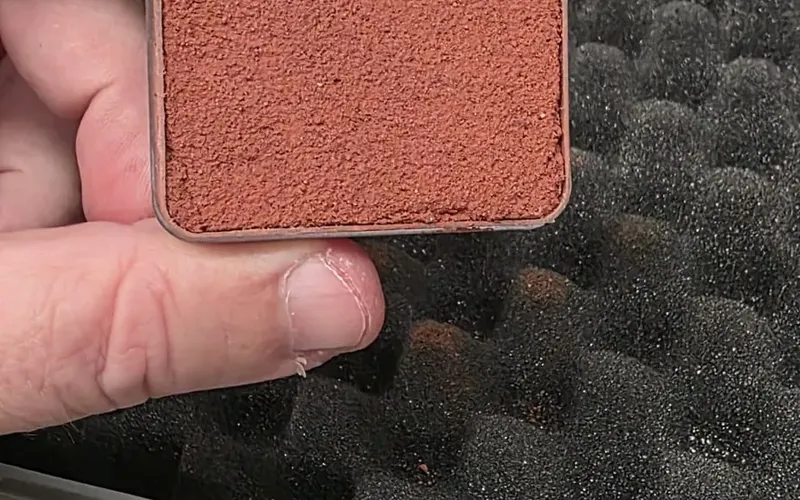
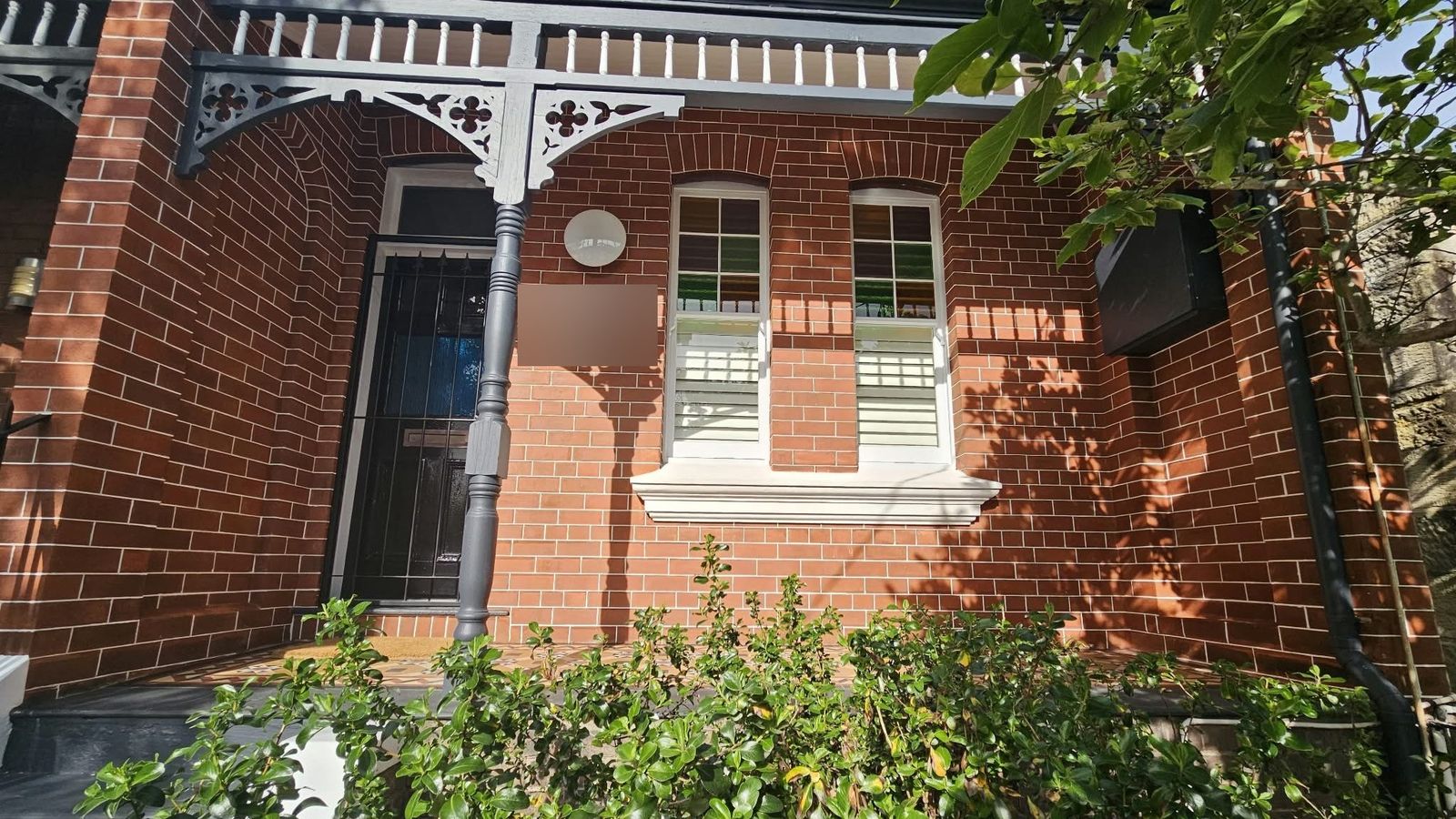
Limewash, mineral paint and acrylic are not interchangeable on older masonry. Limewash and mineral-based finishes remain highly breathable, so moisture can move through the wall. Many modern film-forming coatings, including acrylic, can trap that moisture and the salts it carries, and speed decay. The right finish follows the substrate, not a single product name.
Why older masonry has to breathe
Historic buildings were built to manage moisture through breathable materials. Water moves through porous brick or sandstone and through lime joints. As the wall dries, soluble salts can crystallise in the fabric. If a finish stops that drying, the salts stay where they do the damage.
Lime mortar lets moisture evaporate and suits the small movement of historic masonry. A dense cement joint or an impermeable coating has the same effect: the wall cannot dry, and decay develops around the harder repair. That mechanism is set out in why hard cement pointing damages older masonry.
Limewash and mineral-based finishes
Traditional lime-based finishes have been used throughout Europe and Australia for centuries, and they form part of many historic buildings. Unlike many modern coatings, limewash and mineral-based finishes remain highly breathable. Moisture can move naturally through the fabric, which helps reduce the risk of trapped moisture and salt-related deterioration.
That is why we use breathable lime and mineral-based finishes suited to the substrate, not modern film-forming coatings that can trap moisture and accelerate decay. The work may be the conservation of an original finish, or the careful recreation of a historic decorative surface, using materials and techniques appropriate to the age and significance of the building.
Compatible, breathable materials keep repaired surfaces working with the original construction, rather than sealing it. Decorative finishes are often as significant as the structure itself, so the aim is to keep the character of the building as well as its long-term performance.
Where a film-forming acrylic is the wrong default
Acrylic and other modern film-forming paints are made to form a skin. On soft, porous masonry that skin can stop the wall drying. Water and salts are then trapped in the brick, stone or mortar, and the face can fret, scale or show white deposits.
A coating should not be used simply to hide a damp or salt-affected wall. Some treatments restrict drying or change where evaporation occurs, leaving moisture and salts within the masonry. The word breathable on a product label does not replace an assessment of the complete construction. Our note on white powder on brick and sandstone explains why a coating is the wrong first response to salt.
The same caution applies to sealers on heritage sandstone. A film that stops drying can trap moisture and salt. A breathable water repellent is a separate decision, made only after the cause of the damp is dealt with, as set out in whether you should seal sandstone.
Choose from the wall, not from a label
There is no single finish that suits every older wall. Limewash is not automatically right, and neither is a mineral paint. The choice depends on the substrate, its condition, any salt or damp already in the fabric, surviving original finishes, and the significance of the building.
Deal with the source of wetting first: a leaking gutter, rising damp, or an earlier impermeable coating can keep feeding moisture into the wall. A new finish will not fix that. Existing paint on sandstone should be tested on a small, discreet area before any wide removal, because the wrong method can etch or stain the stone.
On a listed building or in a conservation area, visible changes to the finish may need approval before work proceeds. Scope, matching and methods are confirmed during an on-site assessment, from surviving evidence and the condition of the substrate. A trial patch, judged once it has dried, is the shared reference before a large area is done.
Short answers
Is limewash always the right choice? No. It is a breathable traditional finish, and it is often compatible with older masonry, but the substrate and the existing fabric still have to be assessed.
Can old brick or stone be painted with acrylic? A film-forming acrylic is the wrong default on breathable historic masonry. It can trap moisture and salt and speed decay.
Does a breathable label make a modern paint safe? No. A label is not an assessment of that wall, its moisture paths, or the finish already on it.
Who should you engage? A heritage specialist who will assess the substrate and specify a compatible finish. Send photographs and a short description through our heritage finishes and decorative restoration service. We will come back with a method to assess on site, and what has to be confirmed before a quote.