Sealing heritage sandstone is not a blanket answer, and it is not an automatic finish after cleaning. The stone has to let moisture, and the salts it carries, leave the wall, so a film that stops that drying can trap them. A breathable water repellent may help on some walls and may do harm on others, depending on the stone, the salt and where the water is coming from.
Why sandstone has to breathe
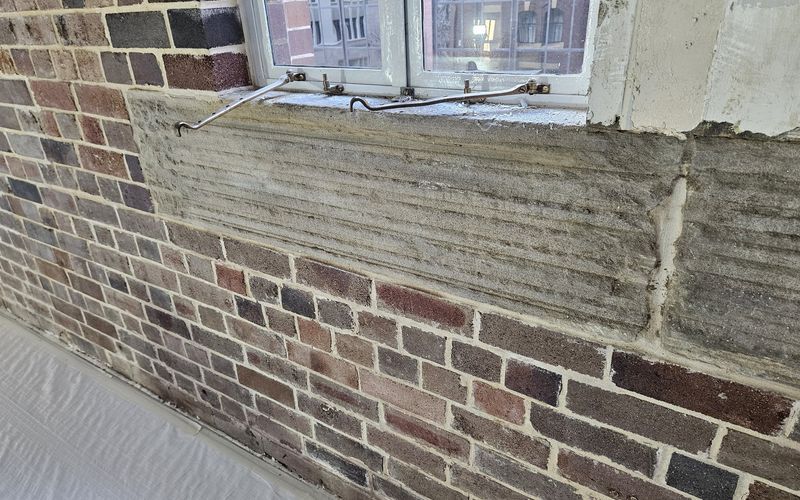
Older masonry was built to manage moisture. Water moves through porous sandstone and the joints. As the wall dries, soluble salts crystallise in the stone and the mortar, and the face frets, scales and loses original material. If the wall cannot dry, those salts stay where they do the damage.
Lime mortar lets that moisture evaporate and suits the movement of historic stone. Dense cement is harder and less breathable, so it traps moisture and salts and decay develops around the repair. Cement render and a coating that will not let vapour through stop the wall drying in the same way. That mechanism is set out in why hard cement pointing damages older masonry.
What a film-forming sealer does
A film-forming or waterproof coating is the wrong default on heritage sandstone. A sealer that stops the wall drying traps water, and the salt crystallises in the face. The stone can fret and scale. Where the surface is softer than the coating, it can spall, and salt left behind the film can mark the stone from the inside.
White deposits and fretting near the base are a reason to look for salt, not to seal the wall. Hard pointing, cement render, an impermeable coating, a leaking gutter or persistent wetting can all keep the wall wet. A coating does not show which of those paths is active.
What a breathable water repellent is
A breathable, or vapour-permeable, water repellent is not a skin over the face. It limits liquid water getting into the stone while water vapour can still leave. Silane- and siloxane-based repellents are the type used for this: they reduce moisture penetration and still let vapour escape, without a large change to the look of the stone. They are used only where they suit that building.
Whether it helps depends on the stone, its exposure, the moisture source, the salt load and earlier repairs. It may help where the stone is still sound, the joints work, and the reason the wall gets wet has already been dealt with. It does not find the moisture, take salt out, or replace lost stone.
When a water repellent may not help
It may not help, and it can make the damage worse, when water is still arriving. Rising damp, a leak, poor drainage that keeps the base wet, or cement mortar and render that hold the wall wet will keep feeding salt into the stone. A repellent does not stop that water. A coating that blocks drying makes the salt damage worse.
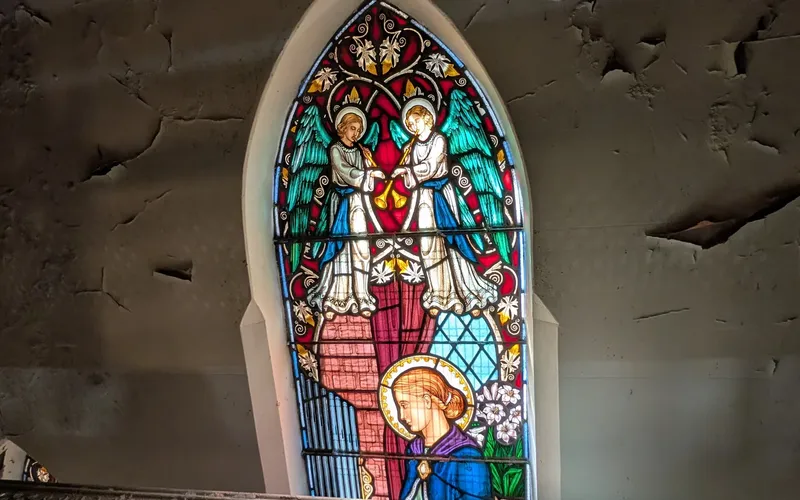
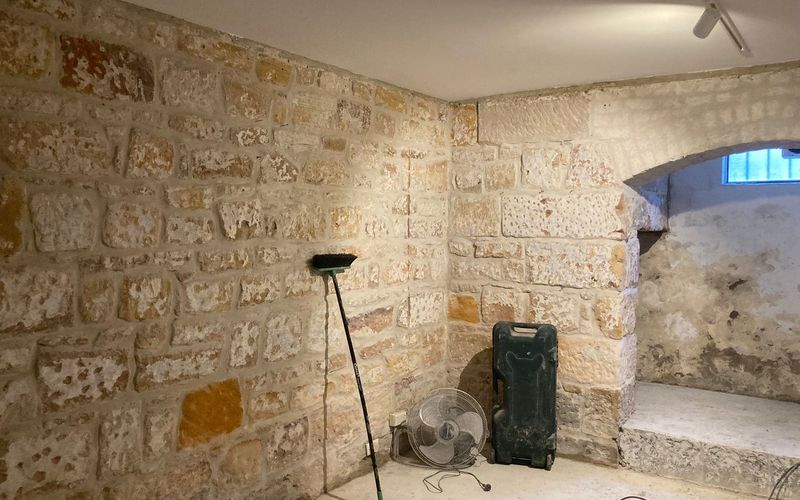
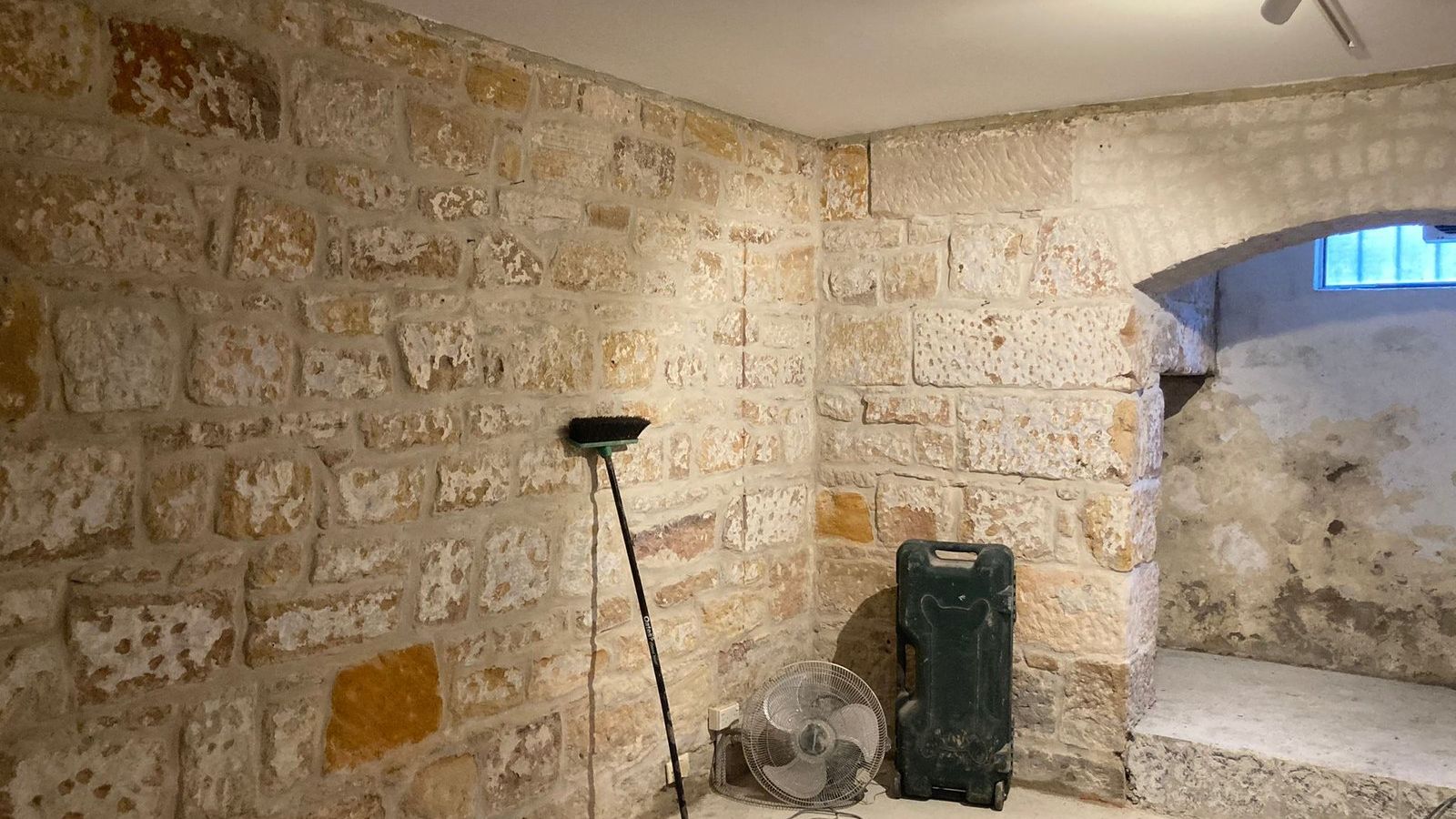
Cleaning does not settle the question. Dirt, biological growth and old coatings can hide defects, and powdering stone, open joints or salt that keeps returning will not be fixed by a wash. Sandstone does not need sealing after cleaning as a matter of course. Any treatment has to suit the stone, its moisture behaviour and its exposure. A sealer is not a standard part of every sandstone cleaning job.
Cleaning and repair come before any treatment
Deal with the cause first, then the salt, then compatible repair. Consider a water repellent only after that, and only if it still has a purpose. Where rising damp or salt is driving the damage, assess the source and the salt load before any surface repair, because the repair fails if the cause stays active. Salt already in the masonry is drawn out with poultices, in stages, where that load is driving decay. A poultice does not stop water that is still arriving. That order, from assessment through to cleaning, repair and maintenance, is set out in full in restoring and repairing sandstone on older Sydney buildings.
A weathered face is not a face that has scaled away. Compatible repair, consolidation or a matched indent keeps sound stone, and a unit that cannot be kept is replaced on its own. A blanket waterproof coating traps moisture. Neither that coating nor a breathable repellent replaces failed joints or an active salt problem. The choice is made stone by stone, as set out in when damaged sandstone can be repaired instead of replaced. Firmly bonded cement is trialled before removal, because forcing it can break the edge of the stone. New pointing, where it is needed, is a lime mortar matched so the wall can still dry.
A small trial, then a heritage assessment
Any cleaning or treatment is tested on a small, discreet area first. A trial shows how that stone responds, and a sample panel checks the method before it is taken across the wall.
Ask for a heritage assessment when salt or fretting keeps returning, when cement or a coating is already on the stone, when the face is powdering or scaling, or when the building is listed or in a conservation area. Consent may be required before visible work, and a quote should say whether it assumes those approvals. Send photographs of the elevation and the damaged stone, noting earlier cement, coatings or deposits that return. Through our sandstone and stone restoration service we will come back with a method to assess on site, and what has to be confirmed before a quote.
Short answers
Should sandstone be sealed? Not as a standard treatment. A film that stops drying can trap moisture and salt. A breathable repellent is considered only after the cause is dealt with, and only where it suits that stone.
Will sealing stop salt coming back? No. Water still moving through the wall brings more salt. The source, and the salt already in the stone, come first.
Does cleaning need a sealer afterwards? Not automatically. Cleaning does not repair lost stone, and it does not stop rising damp, a leak, or salt still in the masonry.