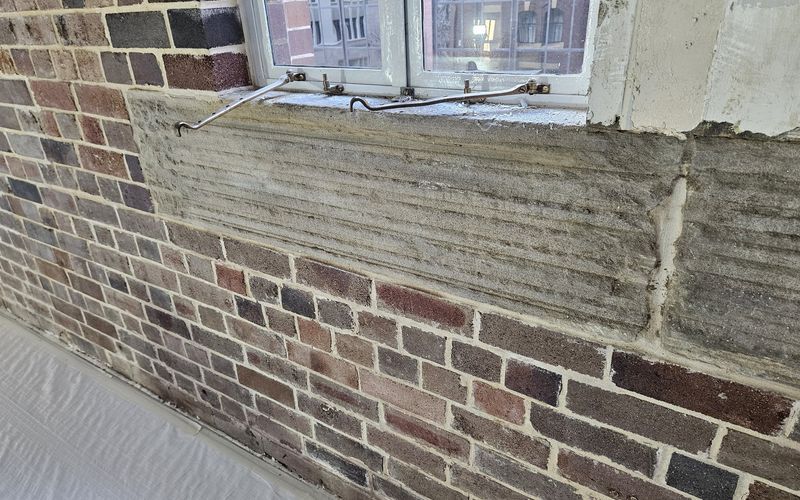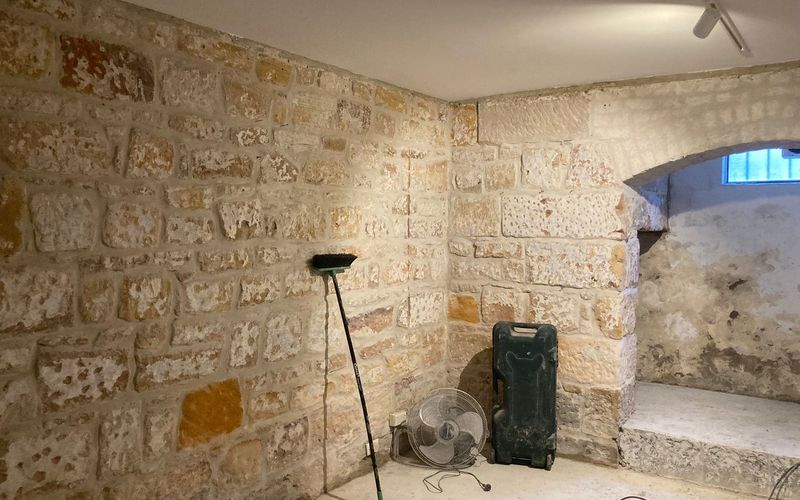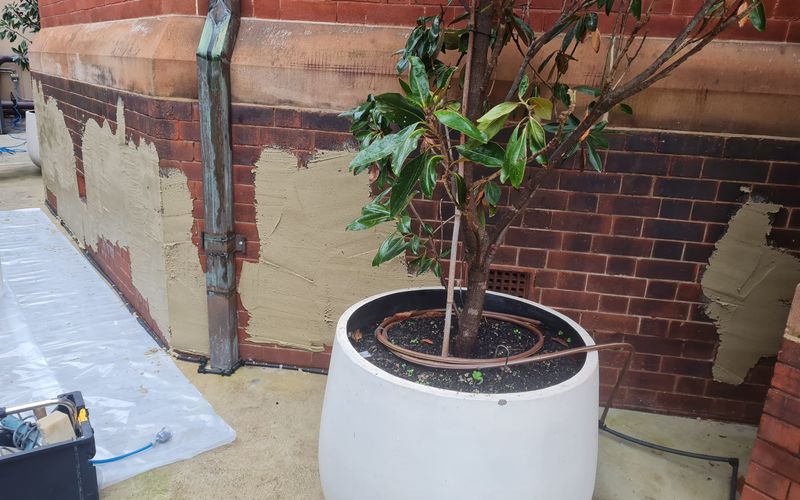

Lime plaster walls are the original breathable coat on many heritage and period interiors, and they are often the compatible finish to keep. Lime plaster lets moisture leave the wall, while a hard cement or gypsum finish on a damp historic wall can fail or trap salts. Whether it is the right repair depends on what is already on the wall.
Lime plaster walls: what they are, and how they differ from lime render and ornamental plaster
Lime plaster is the coat you see on the inside of an older wall: a lime-based mix laid over brick, stone, lath or an earlier coat, then finished smooth or with a texture. Traditional lime-based finishes have been used throughout Europe and Australia for centuries and form an integral part of many historic buildings, inside and out.
Three terms get mixed up on older buildings. Lime plaster is the interior wall coat. Lime render is the exterior coat on masonry. Ornamental plaster is the moulded decoration — cornices, brackets, string courses and ceiling roses — and putting it back from surviving evidence is a different job from patching a flat wall, as our note on ornamental plaster mouldings sets out.
Lime plaster vs cement plaster on an older wall
Historic buildings were built to manage moisture through breathable materials. Water moves through porous brick or sandstone and through lime joints, and as the wall dries, soluble salts can crystallise in the fabric. If a finish stops that drying, the salts stay where they do the damage.
That is the core difference. Dense cement-based plaster can trap moisture, restrict the small movement of historic masonry and place stress on the softer background, so decay can speed up around the patch. Salt crystallisation within the pores of plaster leads to surface loss, crumbling and ongoing failure. In many heritage buildings, lime-based and mineral repair systems are the more appropriate choice because they let the fabric breathe and move, and repairs can be matched to the existing substrate in strength, porosity, permeability, colour and texture.
A hard cement or gypsum skim over a damp historic wall can look tidy and still fail — cracking, debonding or holding salts against the background. On a soft old wall, the harder coat is often the coat that does the damage. What matters is the evidence for the proposed mix on that wall: the binder, the sand, the strength, the finish and the curing.
Interior walls: when a lime plaster repair is the compatible choice
Peeling or bubbling internal plaster near an external wet wall often has a moisture cause behind it — rising damp, bridging or condensation — and sometimes the external coat is only part of the story. Investigate the moisture source before committing to replastering, because a new coat will not fix a wall that is still being wetted.
Where the wall is sound enough to keep, the compatible path is assessment first. The condition of the substrate, the cause of deterioration, previous repairs, moisture movement, salt contamination and exposure are all recorded before a material is recommended, and sample areas can be prepared to test the method. Historic plaster that survives is consolidated or repaired in place with materials and techniques compatible with the original construction, rather than stripped back wholesale.
Hollow or debonded areas are cut back to sound edges, the background is prepared, and the coats are rebuilt to match the thickness and finish of the original. Cutting into sound historic plaster so the patch looks neater can throw away material that should have stayed, and sample panels viewed dry beside the original work set the texture and colour before the main area is done. For delicate interiors and fragile plaster, waterless peel-off cleaning systems can remove soot, dust and surface contamination with minimal water.
Exterior lime plaster on older walls
Outside, the question becomes the lime render question: a breathable, sacrificial lime coat on older masonry, chosen or kept because the wall can dry through it. Our guide to lime render on heritage buildings sets out how that decision is made on the building. For how failed render and plaster on a facade is cut back, matched and rebuilt bay by bay, see render and plaster facade repairs.
Painting lime plaster
Lime plaster can be painted, but only with a finish that lets the wall keep drying, and only once the coat underneath is sound. Limewash and mineral-based paints remain highly breathable, so moisture can still move through the fabric — our guide to limewash, mineral paint or acrylic on older masonry compares those finishes. A film-forming acrylic can hold moisture against soft plaster and the masonry behind it, and trapped moisture speeds decay.
Paint is not a repair. If the plaster is hollow or debonded, painting over it leaves the failure in place, and a failed acrylic may have to come off before a compatible finish goes on. Breathable lime and mineral finishes suited to the substrate are the default on heritage walls, not modern film-forming coatings.
What drives the cost and duration of a lime plaster repair
No honest figure can be given without an inspection, so none is offered here. What moves the scope is the work the wall actually needs: the extent of hollow and damaged areas, decorative complexity, the mix, access, whether the building stays in use, and what is found once the face is opened. Trials of the mix and finish, investigation of salts and active moisture, matching beside the original, protection while the new work cures, and a written record of the mix so a later patch can match all sit inside that scope.
On a listed building or in a conservation area, scope, matching and methods are confirmed during an on-site assessment, from the surviving evidence and the condition of the substrate. Stoneline Heritage assesses and repairs lime plaster and traditional finishes on heritage, period and listed buildings across Sydney and NSW.
Short answers
What are the benefits of lime plaster? Breathability is the main one: lime plaster lets moisture move through the wall, which helps reduce the risk of trapped moisture and salt-related deterioration. Its permeability and flexibility also match traditional construction, so the repair and the old work can move and dry together, and damaged sections can be consolidated or recreated with compatible materials.
Is lime plaster always natural? Lime is a family, not a single product — non-hydraulic and hydraulic limes differ, and additives change behaviour. The useful question is what evidence supports the proposed mix on this wall: binder, sand, strength, finish and curing. A bag that says it is for heritage work is not a specification.
Can lime plaster go over cement? Only after the existing build-up is understood. Where a hard grey skim already covers parts of the wall, the assessment asks whether that coat is still compatible before more is added, and removal can be part of the brief, trialled so that sound plaster is not torn off with the coating.
If you are weighing up lime plaster on an older wall in a heritage, period or listed building in Sydney or NSW, send photographs of the wall and a short description through our heritage finishes and decorative restoration service and request a quote. The useful reply is a method: what has to be assessed on site and what has to be confirmed before the work is specified.