Stonework repair on a heritage building usually keeps more of the original fabric than owners expect. Most damaged stonework — weathered faces, fretting, salt-related decay, failed earlier patches — can be repaired in place once the cause is understood. The first step is always to diagnose moisture, salt and previous repairs; sound original stone is kept wherever a compatible repair will hold, and replacement is reserved for units that cannot be retained.
What stonework repair covers on a heritage building
Stonework repair on an older, period or listed building is conservation work, not cosmetic patching. The sandstone and stone service covers buildings affected by weathering, salt damage, cracking and previous repairs, and the work runs across Sydney and New South Wales — including the Northern Beaches, where coastal salt is part of every diagnosis.
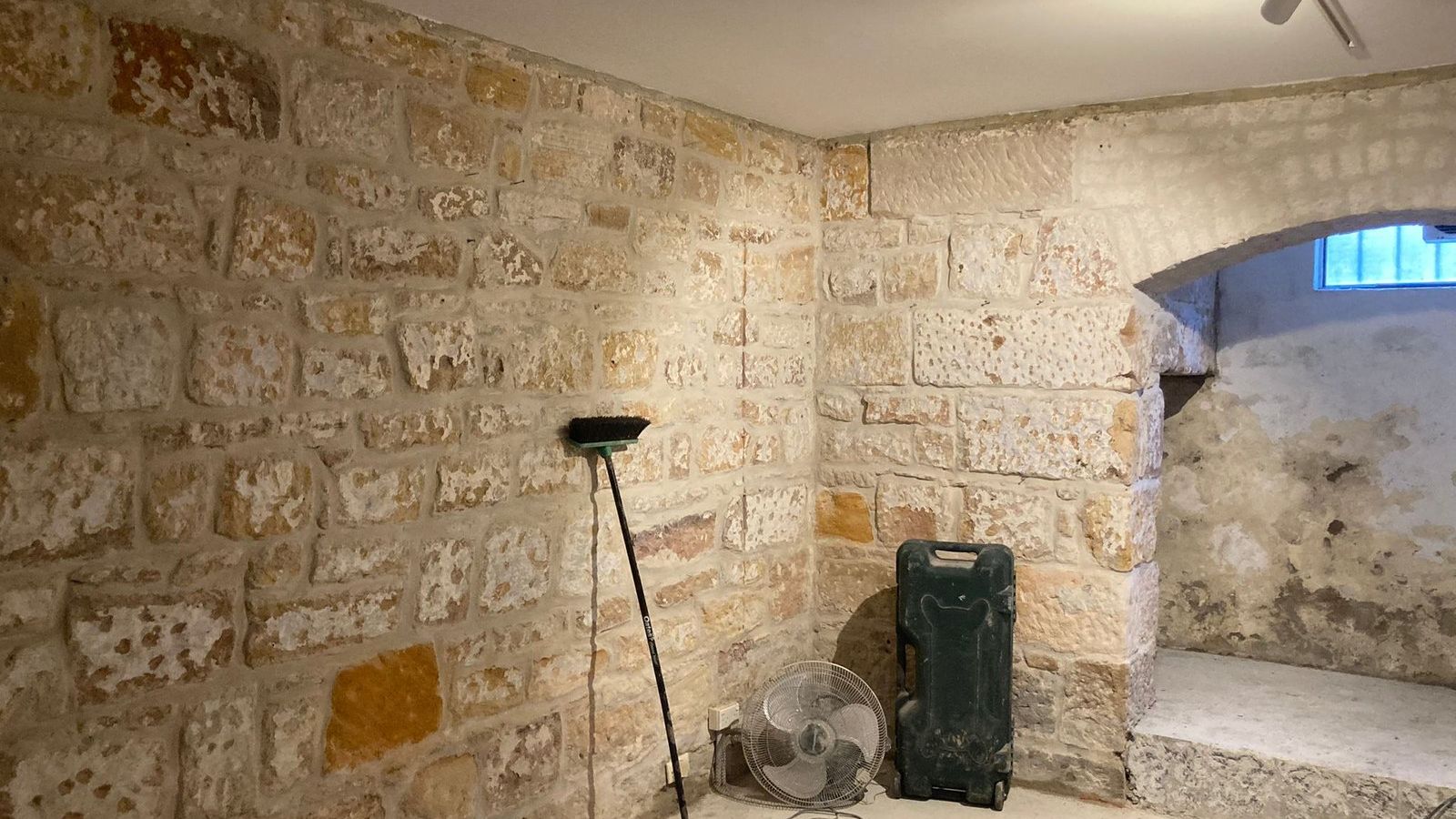
The methods are chosen stone by stone: careful cleaning where soiling conceals the true condition; consolidation of faces that are losing grains but still in place; cavity filling; Dutchman (stone indent) repairs; lime mortar repairs in compatible mixes; and replacement of severely deteriorated sections with carefully selected matching stone. For how assessment, repair, indents and replacement fit together on a whole building, see our guide to sandstone restoration and repair in Sydney.
The principle underneath all of it is minimum intervention: preserve as much original fabric as the building allows, use compatible materials, and treat the cause before the symptom. Where moisture ingress or soluble salts are driving the damage, that is investigated as part of the same programme, because a surface repair on its own fails if the cause is left active.
Keep, repair or replace: how that decision is made
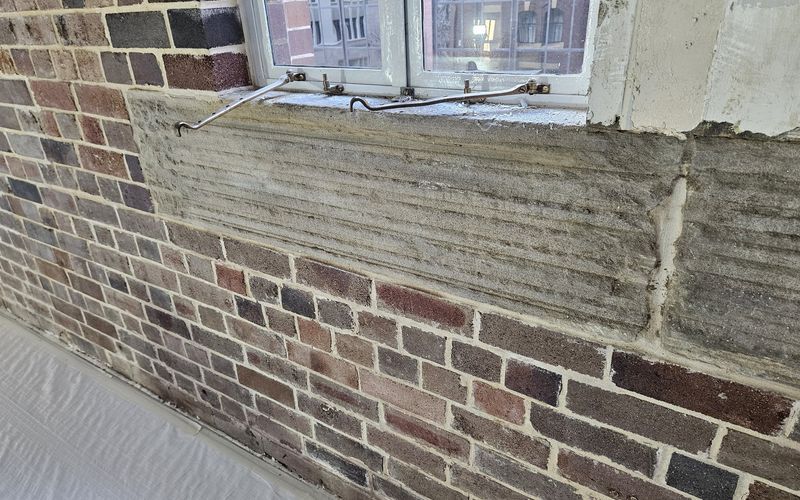
A weathered face is not the same thing as stone that has lost its face. Surface scaling, fretting and crumbled edges mean the surface now visible is not the one that was built, and a mortar skim will not restore it. Where enough sound stone remains behind the damage, the conservative choice is to keep that fabric — see when damaged sandstone can be repaired instead of replaced for the full retain, indent, replace logic.
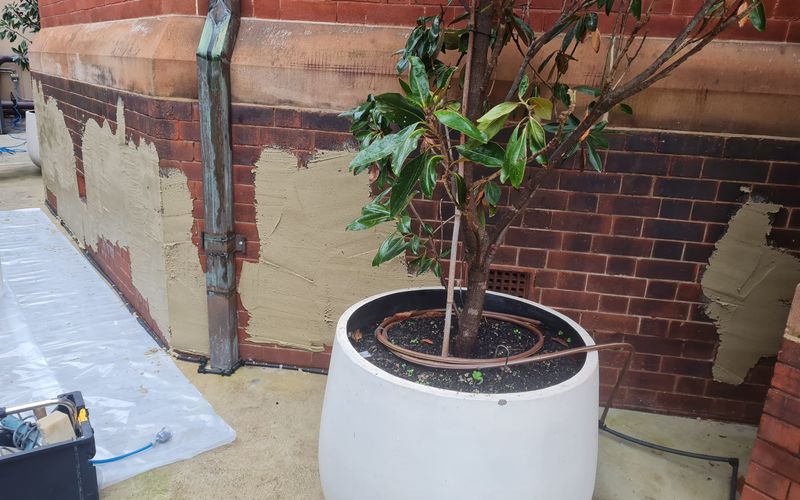
The decision is made one unit at a time, and only after the cause of the decay is clear. White powdery deposits are a reason to investigate, not a mark to cover. Where salt or moisture is active near the base of a wall, that is assessed before any repair is specified, because a patch fails if an active salt load or rising damp is left running. Earlier cement patches often leave the stone worse beside the repair than in it.
Indents, piecing and compatible mortar repairs
Where part of a profile has decayed but the rest of the block is sound, an indent — often called a Dutchman repair — lets a small piece of matching stone into the original. The new piece is chosen by bed, colour and weathering character, dressed to the surrounding tooling and face-bedded, so the repair reads as part of the wall rather than a smear of repair mortar over a fretting face.
Mortar repairs on heritage stonework use compatible lime mortars, matched to the original in strength, porosity, permeability and appearance. Lime accommodates small movement and lets moisture evaporate through the masonry; hydraulic and non-hydraulic limes are not interchangeable, and the mix is matched to the stone. Dense cement is harder and less breathable than the stone, so it traps moisture and salts and tends to accelerate decay around the repair.
Consolidation strengthens weakened but still coherent stone from within — it is not a cosmetic gloss — and cavity repairs fill voids behind the face. Protective treatments are a separate decision: silane- and siloxane-based water repellents can limit water ingress while vapour still escapes, but sealing a damp, salt-loaded wall can push crystallisation to a worse plane. Trials and sample panels prove each method on the building before it is extended across an elevation.
Brick-and-stone buildings
Many Sydney terraces and semi-detached houses combine face brick with sandstone bases, sills and dressings, and each material is assessed within the same programme — lime repointing of the brickwork alongside compatible repair of the stone. Federation and Victorian fronts commonly need exactly this mix of brick and stone work on one elevation.
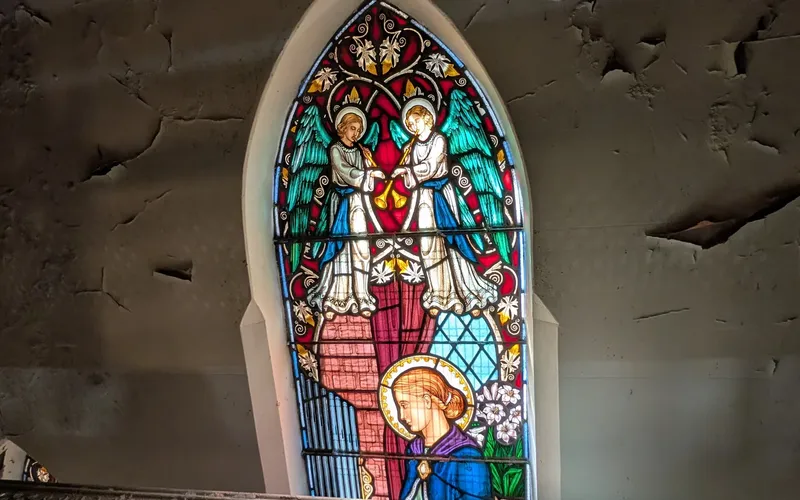
Church and civic walls bring their own situations: on a Gothic sandstone church facade the carved tracery and arch sit in the same conservation programme as the ashlar around them. Carved and moulded detail — sills, string courses, copings, cornices, rusticated joints — is recorded from the surviving evidence first, then repaired in place, indented with matched stone, or replaced unit by unit only where it cannot be retained. See carved stone repair on heritage buildings.
What a site assessment looks at
A useful assessment starts from condition and cause, not a favourite product. It records the defects and their pattern, the moisture paths — gutters, overflows, ground levels built up against walls — and previous repairs and coatings such as cement patches, paints, sealers and unknown cleaners, plus any white crystalline deposits. Elevations are photographed dry and after rain, so any change over time is easy to track.
The assessment also sets the trial needs: cleaning trials, mortar sample panels and indent stone matching, each viewed dry beside the original work. You can start before the visit by sending photographs of the whole elevation and of the damaged units, with a short description of what you can see. The team comes back with the method it would recommend assessing on site, and what has to be confirmed before a quote.
FAQ
Is sandstone always replaced? No. Where enough sound original stone remains, compatible mortar repair, indenting or consolidation usually retains it; replacement is reserved for units where retention is no longer viable, decided one stone at a time.
Can painted or sealed stone still be repaired? Often, yes — but the coating has to be dealt with first. Dense paints and sealers can trap moisture in soft stone and accelerate salt damage at the face, so the repair plan may need careful removal trials alongside joint and stone repair, not another impermeable layer.
Do you work across all of NSW? Yes — the work covers Sydney and New South Wales, including the Northern Beaches, with selected regional areas by arrangement.
If the stonework on your heritage or period building is fretting, cracking, powdering or patched in hard cement, send photographs and a short description through our sandstone and stone restoration service and request a quote. Every job begins with an on-site assessment, and a useful quote names the method for each element — not a single rate for the whole wall.