Damaged sandstone can often be repaired instead of replaced when enough of the original unit is still sound. A weathered face is not the same thing as stone that has scaled away, and the conservative choice is to keep fabric that can still be retained. Replacement is reserved for units where retention is no longer viable, decided one stone at a time after the cause of the decay is clear.
How to tell repairable damage from stone that has lost its face
Sandstone is expected to weather. A worn, darkened or uneven face can still be sound, and the aim is to keep that original material rather than cut it out for a newer look. The question is whether the unit can still be retained.
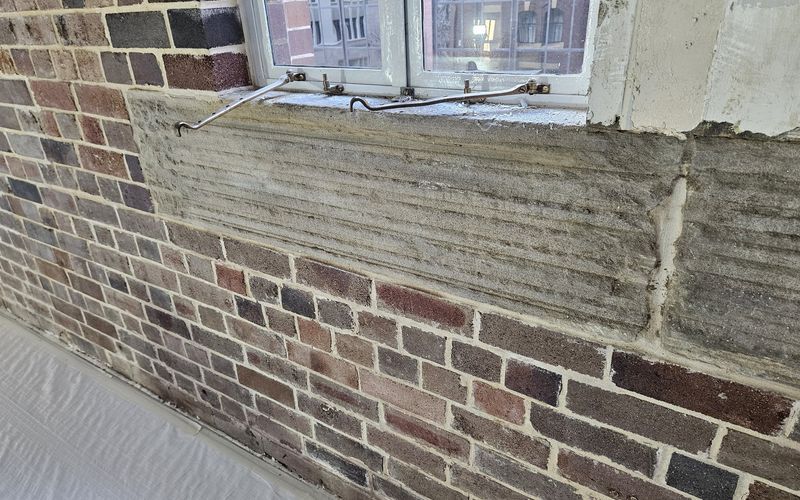
Loss of the face is different. Surface scaling, fretting and crumbled edges mean the surface now visible is not the one that was built, and a mortar skim does not restore it. Where a section has deteriorated beyond repair, the options are a matched indent into the sound remainder, or replacement of that unit alone. Open joints, cracks, salt and a still-sound face often share one elevation, so one treatment for the whole wall is the wrong brief.
Fretting, scaling, salt and failed cement patches
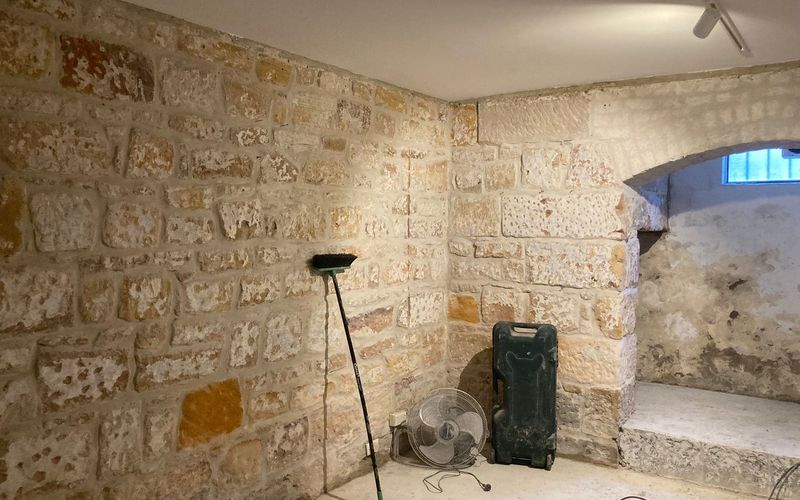
Fretting and surface scaling are the loss that matters here: grains and surface breaking down until original fabric is gone. Moisture carries soluble salts through porous sandstone, and when those salts crystallise they contribute to crumbling, scaling and further loss. White deposits are a reason to investigate, not a mark to cover.
Where the deposits and the fretting sit near the base, moisture and salt are assessed before a repair is specified. A patch fails if rising damp or an active salt load remains, because the new repair is the next thing to decay. That assessment is part of the stone brief, as described in our salt damage and desalination work. Cement patches often leave the stone worse beside the repair than in it. Cement is harder and less breathable, so it traps moisture and salts and decay develops around it. A firmly bonded patch is trialled before removal, because forcing it off can break the arris. Where removal would do more harm, a stable patch is sometimes left. The mechanism is set out in why hard cement pointing damages older masonry.
A crack through a unit is not the same brief as a weathered face, and a crack that steps or widens may be movement. Mortar repair does not correct a failed lintel, a bulging panel or ongoing foundation movement.
What a compatible repair involves
Work starts from the condition of the stone and the cause of the decay, and keeps original fabric wherever it can be retained. Where the unit is still sound enough, that may include careful cleaning, consolidation of stone that is losing grains but remains in place, cavity filling, and lime mortar repairs. Lime mortars allow small movement and let moisture evaporate. Hydraulic and non-hydraulic limes are not interchangeable, and the mix is matched to the stone for strength, porosity, permeability and appearance.
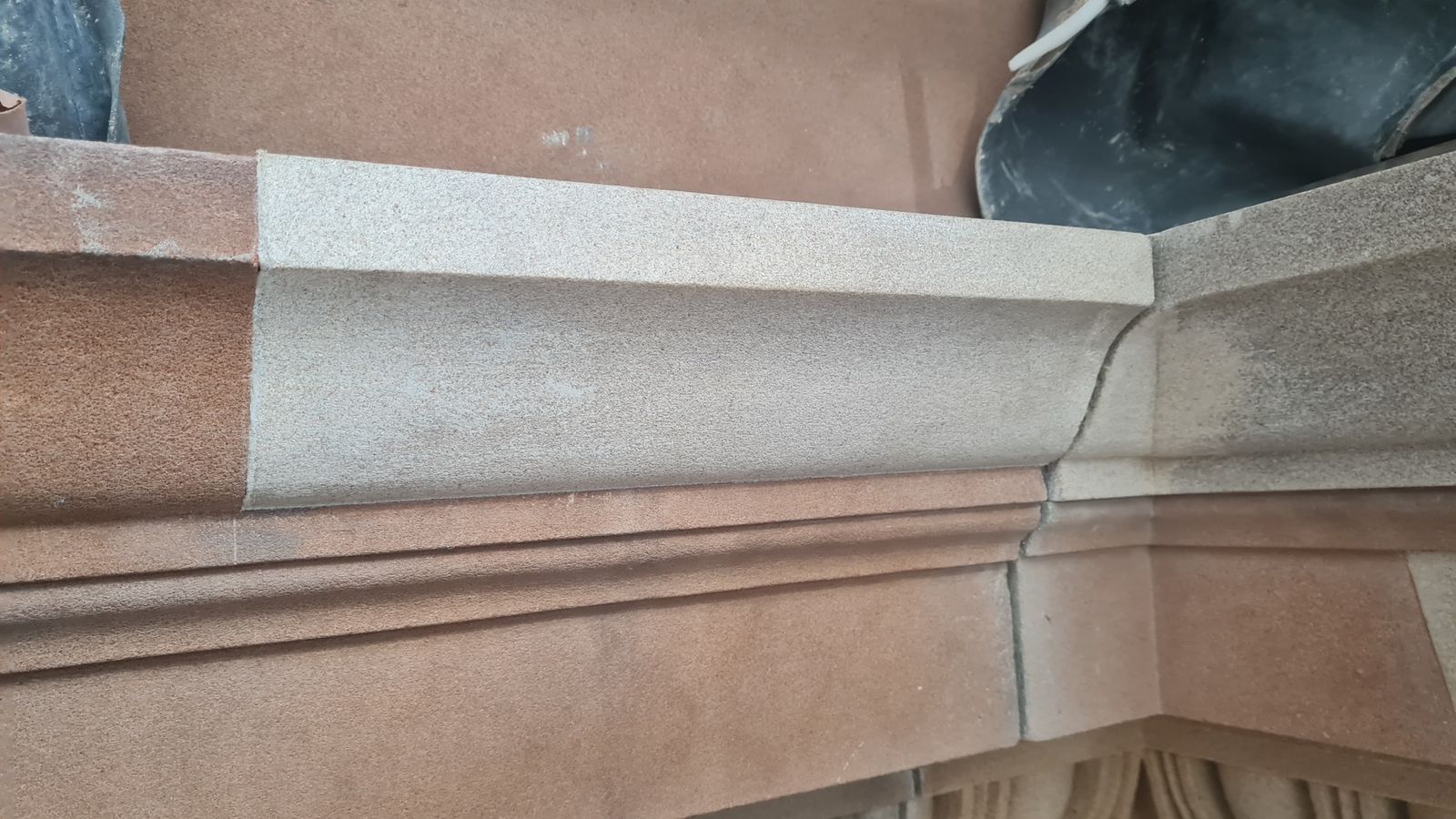
Where part of a profile is lost and the rest of the block is sound, a Dutchman indent lets a piece of matching stone into the original. The new piece is chosen by bed, colour and weathering character, dressed to the surrounding tooling, and face-bedded. Protective treatments are a separate decision. Silane- and siloxane-based water repellents can limit water ingress while vapour still leaves. A blanket waterproof coating traps moisture. Neither replaces an active salt problem or failed joints. A trial and a sample panel test the method on the building before it is extended.
When replacement of a single unit is the conservative choice
Replacement is the conservative choice when the unit can no longer be retained, or when decay has affected the integrity of that part of the wall. The new stone is carefully matched so the masonry keeps its performance and its character. One failed sill, coping or length of string course is not a reason to rebuild the elevation. Sound units stay. Retain, indent or replace is decided stone by stone, which is why the work cannot honestly be one square-metre rate. Access, salt, previous cement and the mix of methods change the scope. Those drivers, with no single figure, are explained in how sandstone restoration is scoped. Marble is assessed separately from sandstone. Chips, etching and cracks in marble, on a stair, a facade or in a heritage interior, are covered in our guide to marble repair in Sydney.
How this sits in a sandstone restoration programme
Each of those methods is used only where the condition warrants it. Where salt or rising damp is the cause, that assessment sits in the same programme, as does the decision to remove earlier cement or to leave a stable patch. For how assessment, repair, indents and replacement stone fit together on a whole building, see our guide to Sydney sandstone restoration and repair.
A useful quote names the elements and the method for each one, how stone and mortar will be matched, the trials and sample panels, access and protection, exclusions, and how hidden conditions will be handled. On a listed building or in a conservation area it should flag that consent may be required, and say whether the quote assumes those approvals are already in place.
If you are weighing repair against replacement, send photographs of the whole elevation and of the damaged units, with a short note of what you can see. Through our sandstone and stone restoration service we will come back with a method to assess on site, and what has to be confirmed before a quote.