Hard cement repointing can damage older brick and sandstone when the new mortar is too hard or too dense for the original masonry. It can restrict drying and small movements, leaving softer brick faces and stone edges to absorb the stress. The right repair starts with assessing the wall, not choosing the strongest mortar available.
Why compatibility matters more than hardness
Mortar is part of the wall's moisture behaviour, not just the material that holds the joints together. Many older buildings were constructed with lime mortars that allow moisture to evaporate and accommodate small movements in the masonry.
Replacing those joints with a dense, hard mortar changes how the wall behaves. A joint can look neat and solid while the softer material beside it begins to deteriorate. That is why mortar colour alone is not enough to judge a repair.
Compatibility means considering strength, permeability, texture and appearance together. Hydraulic and non-hydraulic limes behave differently, too. A bag labelled for heritage work is not a specification for a particular building; the surviving mortar, brick or stone and exposure conditions should guide the choice.
Moisture and salts can damage the masonry beside a repair
A hard cement patch can make it harder for older masonry to dry naturally. If moisture remains active, soluble salts can travel through the porous brick, stone and mortar and crystallise within the fabric. Crumbling joints, surface scaling and loss of original material can follow.
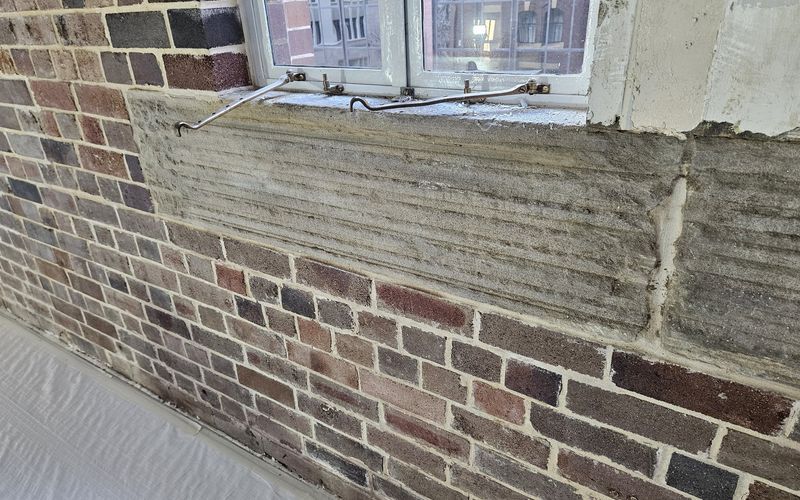
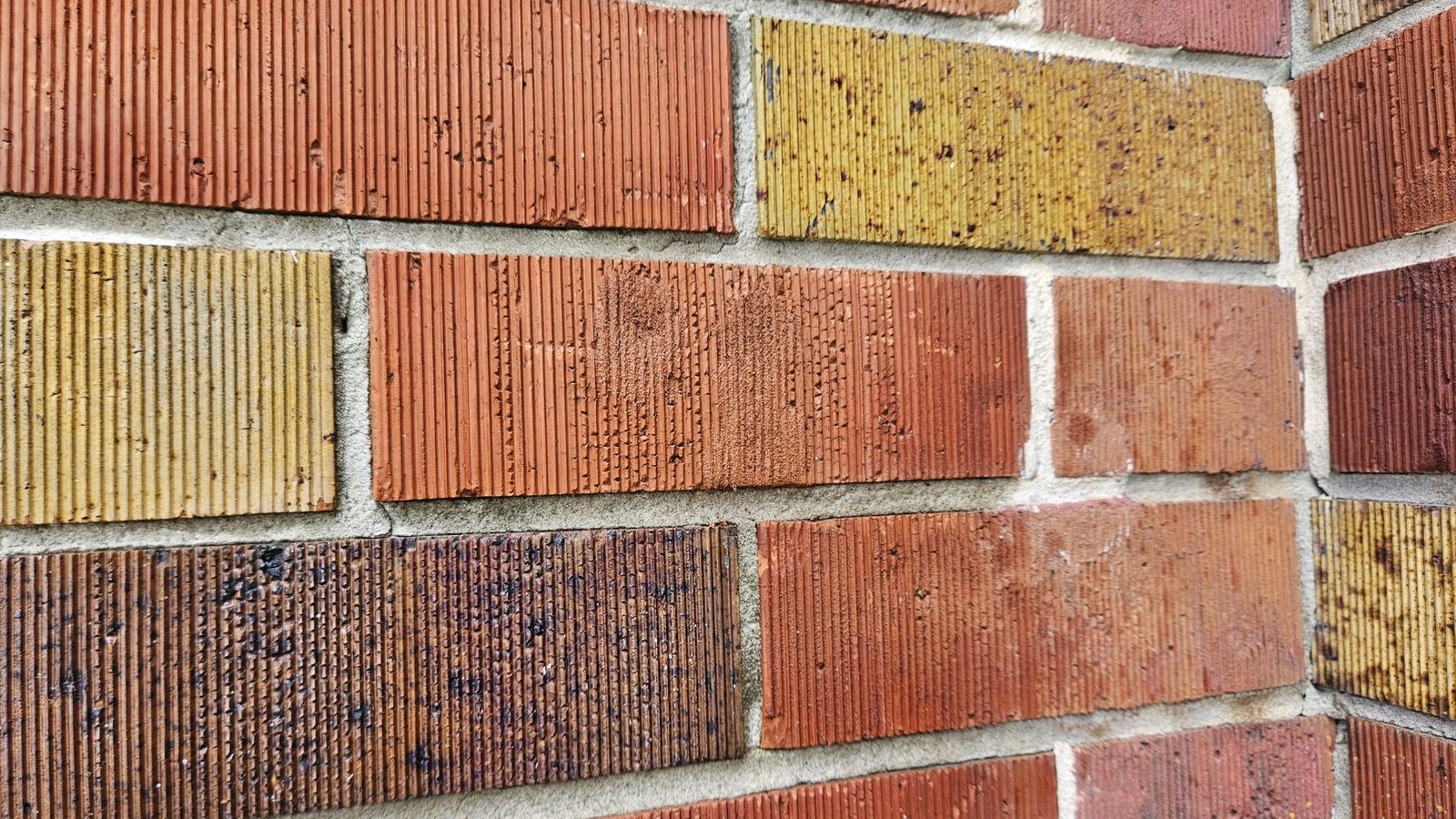
On sandstone, dense cement repairs can leave decay developing around the repair rather than within the harder patch. On soft brickwork, the visible result may be spalling faces or loss along the edges of the units.
Hard pointing is not the only possible cause. Leaking gutters, persistent wetting, existing salt contamination and other incompatible finishes can contribute. Where salt deposits and fretting occur near the base of a wall, moisture and salt assessment belongs in the scope rather than being treated as a separate cosmetic problem.
Movement needs its own assessment
Historic masonry needs a mortar suited to the small movements of the original construction. A hard repair can restrict that movement and transfer stress into softer units.
However, stepped cracks, widening cracks, loose masonry or a bulging wall should not automatically be diagnosed as failed pointing. Repointing alone cannot correct ongoing foundation movement, an unstable pier or a failed lintel. Those conditions need their own investigation and may need attention before mortar work begins.
The distinction matters: renewing joints is appropriate when the joints have failed. It is not a substitute for finding out why the wall is moving.
What to look for before commissioning work
Useful observations include open or recessed joints, mortar falling away, flaking brick faces, crumbling stone and white deposits around damp areas. Photograph the whole elevation as well as the affected joints so the pattern is visible.
Mortar softness alone is not proof of failure. Traditional lime mortar is intended to be softer than many modern mixes. Equally, a very hard joint is not proof that the wall is sound.
Note previous repairs, recurring damp and any changes in cracking. These observations help define an assessment; they do not establish the cause without examining the masonry.
Removing cement without sacrificing original fabric
Firmly bonded cement needs careful trials before widespread removal. Forcing it out can break the arrises—the edges of the brick or stone—and remove material that the repair is meant to conserve.
The aim is not to strip every joint for a uniform new appearance. Sound joints should be retained. Where removal would cause greater harm, a stable but imperfect patch may sometimes be left after assessment.
Where repointing is appropriate, preparation should protect the unit edges and provide a suitable joint for the replacement mortar. A thin smear across the face is not prepared repointing. Mortar colour and joint profile should be assessed in a sample beside the original work, with appropriate protection and curing included in the method.
When repointing is not enough
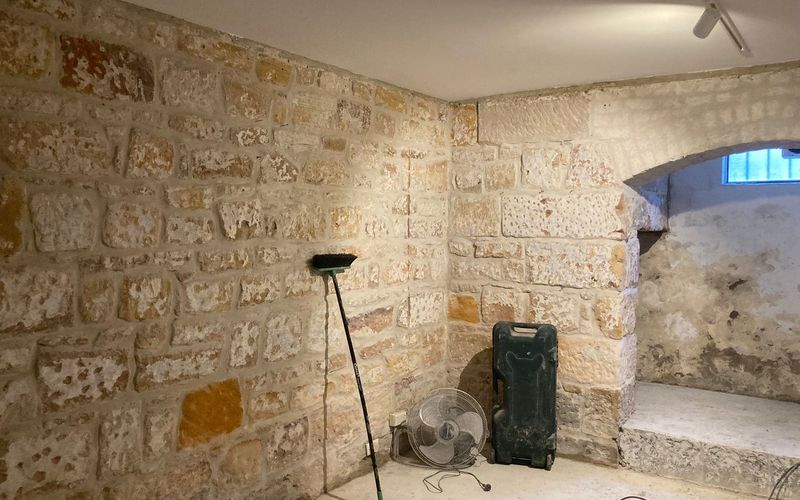
New mortar cannot restore material that has already been lost from a brick face or sandstone block. Depending on condition, conservation work may include compatible mortar repairs, consolidation, carefully matched stone indents or replacement where retention is no longer viable.
The objective is to keep sound original fabric, not replace units simply because they look weathered. Stoneline's sandstone restoration approach begins with the stone's condition and the causes of deterioration before selecting a treatment.
What the repointing scope should explain
Ask which joints need intervention, how cement removal will be trialled, what original fabric will remain and how the replacement mortar will be matched. The scope should also cover access, protection, sample panels, curing, exclusions and any further assessment needed for moisture or movement.
For a listed building or a property in a conservation area, confirm the approval requirements before visible changes proceed. Our heritage masonry restoration quote checklist sets out what a clear written scope should include.
If hard pointing is damaging an older building, start with an assessment rather than another surface patch. Send Stoneline Heritage photographs and a short description through our brick and mortar repointing service so the existing fabric, moisture conditions and appropriate conservation method can be assessed.