Dressed sandstone is stone that has been tooled to a finished face, margin or profile, rather than left as a raw split or sawn surface. On a heritage building the dressing is part of the original fabric, so a repair starts by reading the existing tooling, and the new work is matched to what survives rather than set against it.
What dressed sandstone is
Dressed sandstone is stone worked after it came out of the quarry bed: split or sawn to size, then tooled to a finished face, a drafted margin around that face, or a profile such as a moulding. What is left as-quarried, a raw split or sawn surface, is undressed. On a heritage building the dressing is original fabric, not a coating, so it is recorded and matched rather than covered.
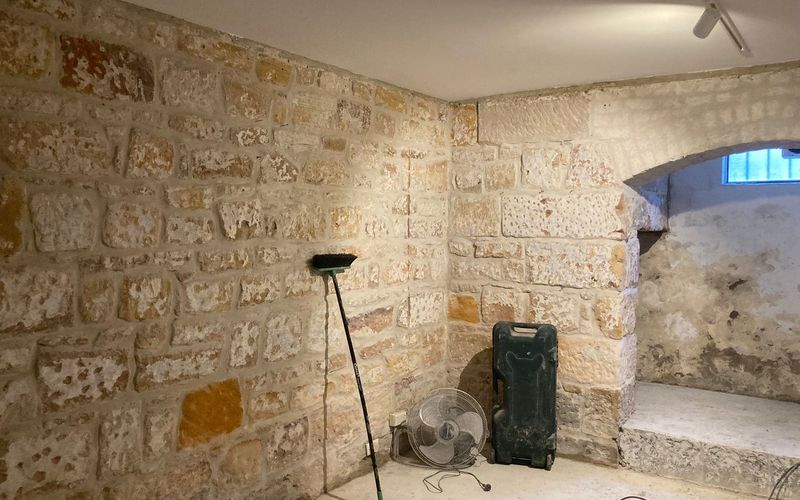
On older Sydney and NSW buildings, dressed sandstone is everywhere once you start looking. Window sills and lintels, string courses, copings, cornices, moulded surrounds, corner quoins, rusticated joints on ashlar panels and applied lettering all carry the profile of the original tooling. Many terraces and semi-detached houses combine face brick with sandstone bases, sills and dressings, so the brick and the stone on one elevation are assessed within the same programme.
Because the dressing is part of the building, losing its crisp edge is a warning sign. Losing the crisp edge of carved, moulded or dressed stone is one of the earliest signs that a stone facade needs a proper look. Weathering is expected; a face that has fretted, scaled or crumbled back is a different matter, because the surface now visible is no longer the one that was built.
Tooling marks, margins and profiles on older Sydney and NSW buildings
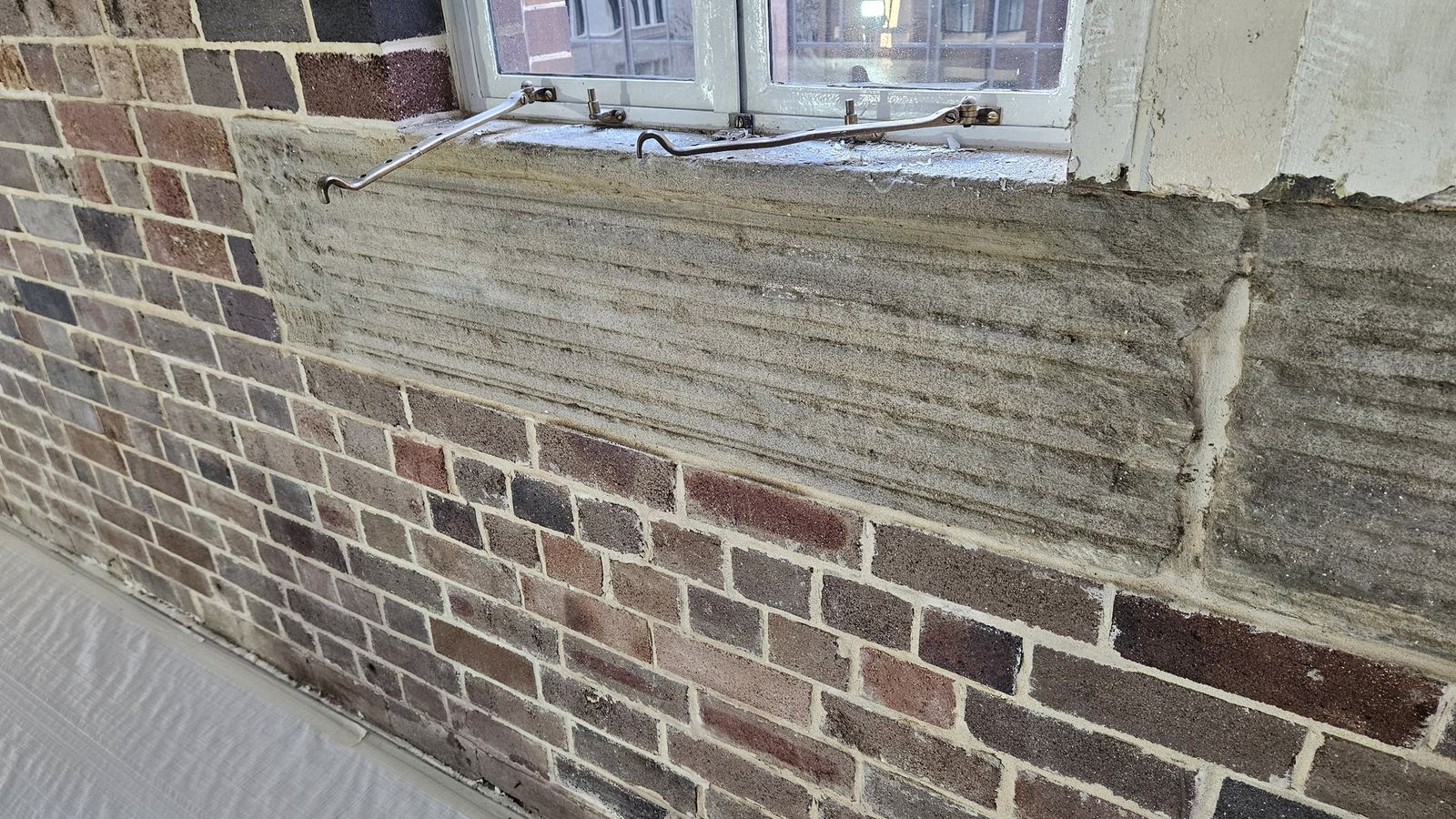
Every tool leaves its own mark, and on an old wall those marks record how the face was finished. Reading them is the first step in any matching job: the direction and spacing of chisel or point marks, a drafted margin framing a recessed panel, a rusticated joint course, a moulded sill profile. The surviving detail is the specification. Before any tool touches the stone, each element is recorded with photographs and measurements, and where a profile has partly survived it is sketched so a template can be cut from it.
That recording discipline is what keeps a repair honest. Sample areas and trial panels prove the method on the building before it is extended across a whole elevation, and the matching is judged against the original work, not against a catalogue finish. On a listed building or in a conservation area the assessment also works out what the controls mean for the method, and scope and matching are confirmed on site from the fabric itself.
What sandstone dressing means in a repair
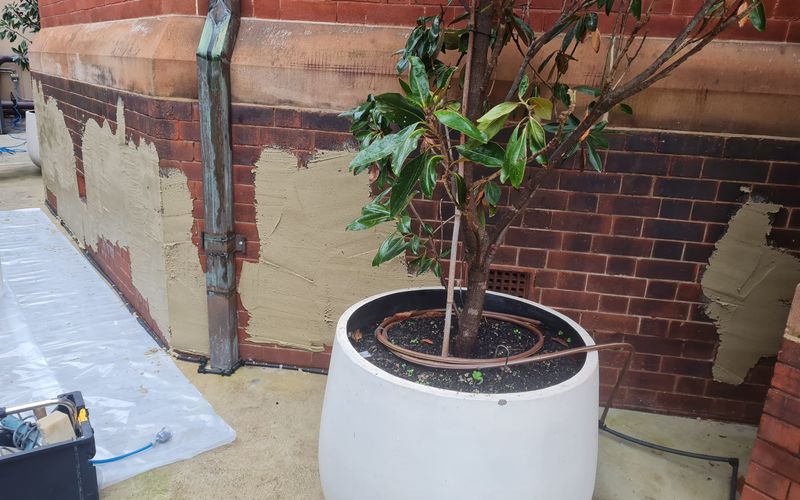
In conservation work, dressing is not a product you buy; it is the finishing of new or replacement stone so it sits honestly beside the old. A repair piece is dressed to the surrounding tooling and face-bedded, so the repair reads as part of the wall rather than a smear of repair mortar over a fretting face. Where only part of a profile has decayed and the rest of the block is sound, that finishing happens on a small indent let into the original stone; where a whole unit has failed, it happens on a replacement unit.
The distinction that matters is between a weathered face and a lost face. Sandstone is expected to weather: a worn, darkened or uneven face can still be sound, and the aim is to keep that original material rather than cut it out for a newer look. Surface scaling, fretting and crumbled edges mean the face has been lost, and a mortar skim will not restore it. The options then are a matched indent into the sound remainder, or replacement of that unit alone.
The principle underneath all of it is minimum intervention: preserve as much original fabric as the building allows, use compatible materials, and treat the cause before the symptom. Where moisture ingress, soluble salts or earlier cement repairs are driving the damage, that is investigated in the same programme, because a surface repair on its own fails if the cause is left active.
Matching new work to surviving faces (indents and replacement units)
An indent, often called a Dutchman repair, lets a small piece of matching stone into the original where part of a profile has decayed but the block is sound. The new piece is chosen by bed, colour and weathering character, dressed to the surrounding tooling and face-bedded. Replacement of a whole unit is the conservative choice only when retention is no longer viable, and it is decided one stone at a time: one failed sill, coping or length of string course is not a reason to rebuild the elevation, and sound units stay. For the same retain, indent, replace logic set out stone by stone, see our guide to when damaged sandstone can be repaired instead of replaced.
Where a unit does have to be replaced, the matching decides whether the repair is visible forever. Matching colour, bedding orientation, tooling and joint profile matters on heritage facades; salvage stone from the same building is often the best match, and new stone can work when it is carefully selected so the joint profile does not advertise the repair. A bright modern unit dropped into a soft historic field reads as a patch forever unless the elevation already mixed periods honestly.
Joints and patching mortars are matched the same way. Traditional lime mortars remain an essential part of heritage stone conservation: unlike dense cement-based materials, they accommodate movement, let moisture evaporate through the masonry and stay compatible with historic stone. They are matched to the original stone in strength, porosity, permeability and appearance, because cement is harder and less breathable than the stone, traps moisture and salts, and tends to accelerate decay around the repair.
Every matching decision is proved on the building before it is accepted: cleaning trials, mortar sample panels and indent stone matching, each viewed dry beside the original work. For how assessment, repair, indents and replacement fit together on a whole building, see our guide to stonework repair on heritage and period buildings.
Steps and thresholds
Repairing sandstone steps and thresholds follows the same logic as any other dressed unit, because they are dressed stone out in the weather. A worn tread can still be sound and is kept; fretting or a crumbled arris on a step means the face is lost, and the retain, indent, replace decision is made for that unit alone. Mechanical damage at edges, sills and carved details is assessed with the rest of the elevation, not treated as a separate cosmetic job.
Short answers
Is dressed stone the same as carved stone? No. Dressing is the finished face of the stone itself, flat, margined or profiled, while carving cuts ornament into that face. Both are read from surviving evidence rather than invented, and the two often sit on the same elevation; see our guide to carved stone repair on heritage buildings.
Can a machine finish replace a hand-tooled face? The test we publish is the wall, not the tool. A sample or an indent is accepted when it is dressed to the surrounding tooling and reads as part of the wall when viewed dry beside the original work; if it does not match, it is reworked, whatever cut it. Matching to the surviving face is what makes new work honest.
When is replacing a dressed unit justified? When the unit can no longer be retained, decay through the arris, structural loss, or damage that compromises the wall, and then only that unit is replaced, in matched stone, and recorded as a replacement rather than passed off as original fabric.
If the dressed sandstone on your heritage, period or listed building in Sydney or NSW has lost its crisp edges, send photographs of the whole elevation and of the affected units, with a short description of what you can see, through our sandstone and stone restoration service and request a quote. We come back with the method we would recommend assessing on site, and what has to be confirmed before a quote.