Lime render is a breathable, sacrificial coat used on older masonry so the wall can dry. A hard cement render can trap moisture and stress softer historic fabric. Whether lime render is the right finish depends on the existing coat, the substrate and the path moisture takes through the wall, and that choice is made on the building, not from a product label. Stoneline Heritage assesses and repairs these finishes on heritage, period and listed buildings across Sydney and NSW.
What lime render is, and why it is used on older masonry
Exterior lime render is the outside coat: a mineral finish, traditionally based on lime, laid over brick, stone or an earlier render. On a heritage or period building it is part of how the wall deals with weather, not only a way to change the look of the masonry. Traditional lime-based finishes have been part of historic buildings for centuries. Unlike many modern coatings, they stay breathable, so moisture can move through the fabric. That movement helps reduce the risk of trapped moisture and the salt-related decay that follows when a wall cannot dry.
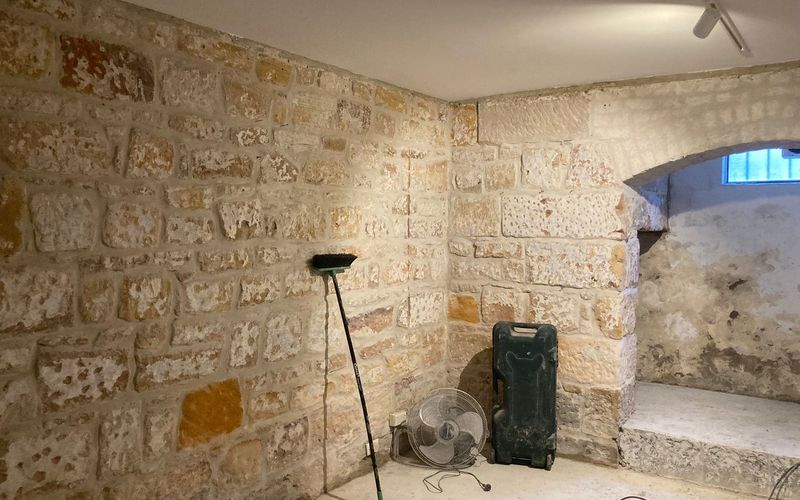
Stoneline Heritage undertakes lime rendering, together with limewash and other breathable mineral finishes, selected to remain compatible with the existing fabric. The work may conserve an original coat or carefully recreate a historic surface, matched for composition, appearance and performance. There is no one-size-fits-all system. The finish is chosen after the wall is assessed, because a compatible coat has to keep working with the construction behind it.
Lime render or cement render on historic walls
Lime render and cement render do not behave the same way on an old wall. Lime-based renders often suit older masonry because their permeability and flexibility match traditional construction. A hard, dense cement render can look tidy and still trap moisture, concentrating stress in the softer background so decay speeds up around the patch.
External lime render is not a product to adopt by default, and neither is a polymer-modified modern render. Those coats have a place on backgrounds that suit them. They are not an automatic improvement on a lime building. A bag that says it is for heritage work is not a specification. The useful question is what has failed — adhesion, compatibility of the mix, movement or moisture — and which repair will protect the wall without trapping damp behind a hard shell.
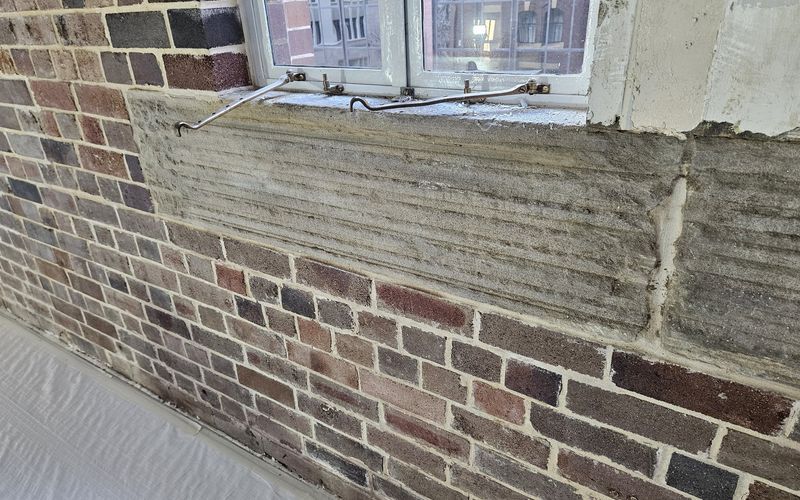
The same mismatch shows up in joints. A dense cement mortar on soft historic brick or sandstone can restrict drying and small movement, and leave the softer face to take the stress. That mechanism is set out in our note on why hard cement pointing damages older masonry. For how a failed render is cut back, matched and rebuilt, see render and plaster facade repairs. This page stays with the lime render decision.
Hydraulic lime render: when a stronger lime is considered
Hydraulic lime render is one choice inside the lime family. It is not a brand name, and it is not a stronger coat to specify because it sounds more durable. Non-hydraulic and hydraulic limes differ. What has to be shown is the evidence for the proposed mix on this wall: the binder, the sand, the strength, the finish and the curing. A higher strength is justified only when that evidence supports it. On a soft historic background, a harder coat can be the coat that does the damage.
Ask what the existing build-up actually is — lime, a gauged mix, cement, or a later modified coat — and why the proposed strength follows from it. Exposure, salts and the way the wall is wetting and drying all belong in that reading. The answer is particular to the building. A product label does not supply it.
Repairing failed or cement-patched lime render
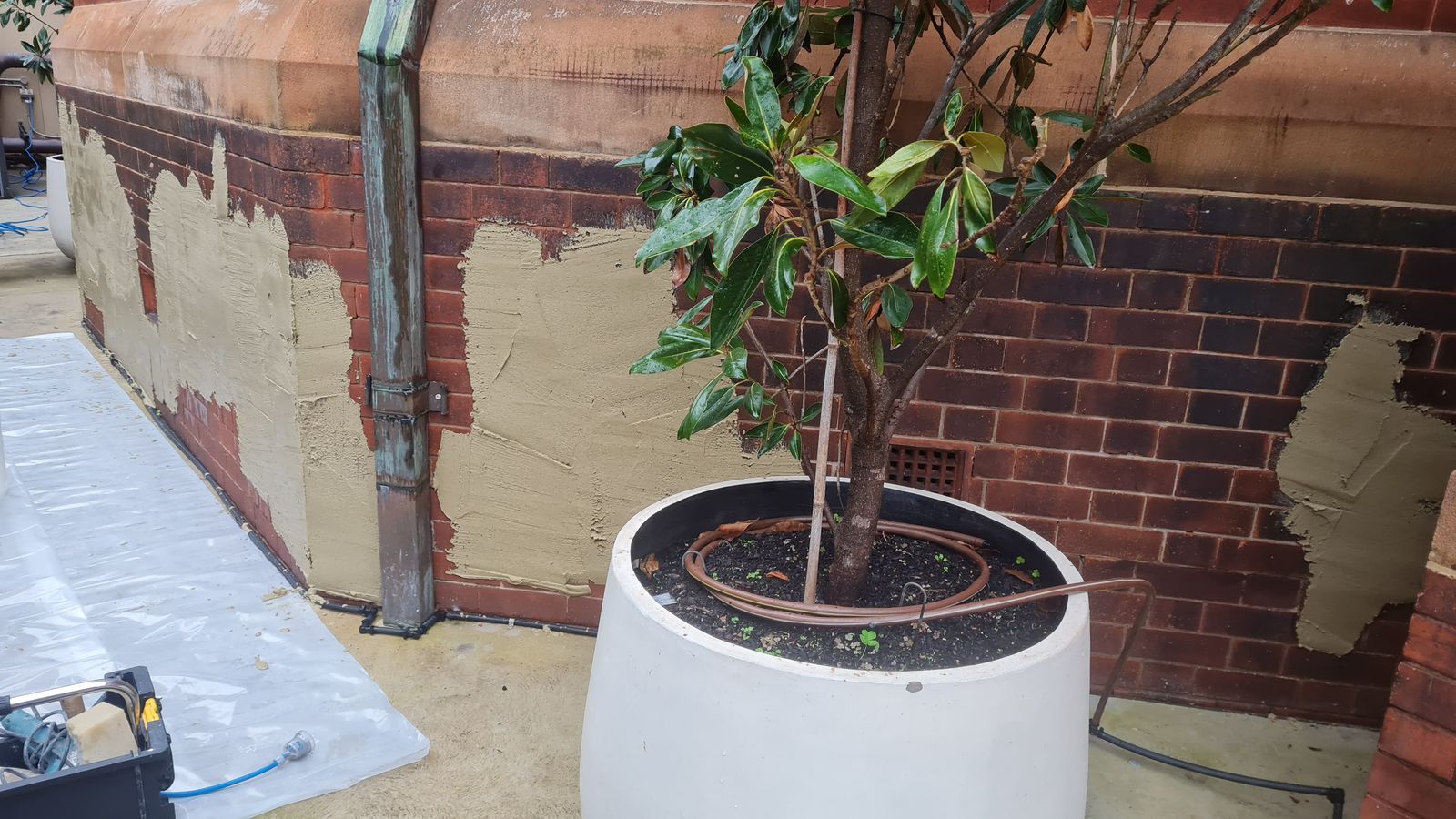
Repair of failed or cement-patched lime render starts with a record, not a skim. Photograph the elevation dry and after rain. Tap for hollow areas. Note grey cement patches beside softer original work, stains, failed paint and any leak that is still wetting the wall. As moisture moves through render, soluble salts can crystallise in the pores and lead to surface loss and ongoing decay, so the moisture path is part of the brief.
Sound historic render is kept, and only what has failed is renewed. Hollow areas are taken back to sound edges, the background prepared, and the coats rebuilt to match thickness and finish. Cutting into sound historic fabric so the patch looks neater can throw away material that should have stayed. A hard cement patch that is damaging the wall is a compatibility problem, not a line to paint over. Sample panels, viewed dry beside the original work, set texture and colour before the main area is done.
Where a hard grey skim already covers several bays, the assessment asks whether that coat is still compatible before more of it is added. Matching is judged on the building, including in raking light, so a bright new patch does not dominate a facade that used to read as one surface. Failures also gather where render meets a stone sill, a brick string course, timber or a metal flashing. A sound field of lime render still fails if water sits on a sill or a capping has opened. Render on its own cannot replace a failed capping.
Can you paint lime render?
You can paint lime render only with a finish that lets the wall keep drying, and only once the coat underneath is sound. Breathable mineral paints often suit a lime system better than a dense acrylic. Limewash and other mineral finishes stay breathable, so moisture can still move. A film-forming acrylic can hold moisture against soft render and the masonry behind it, and trapped moisture speeds decay.
Paint is not a repair of a hollow or debonded coat. If the render has failed, painting over it leaves the failure in place. A failed acrylic may have to come off before a compatible finish goes on. The word breathable on a label does not replace an assessment of the substrate, of salts already in the wall, and of the finish already there. How to choose between limewash, a mineral paint and an acrylic is set out in limewash, mineral paint or acrylic on older masonry.
What drives the cost of lime render
What drives the cost of lime render is the work the wall actually needs. This is not a price guide. No figure would be honest without an inspection, so none is offered here. Scope moves with the extent of hollow areas, the decorative complexity, the mix, access, whether the building stays in use, and what is discovered once the face is opened.
Trials of the mix and the finish, investigation of salts and active moisture, and matching of texture and colour beside the original all sit inside that scope. So do protection of the new work while it cures, and a written record of the mix so a later patch can match. Compare marked photographs, the sample process and the exclusions. A start date on its own is not a method.
Short answers
Is lime render suitable for a Federation or Victorian house? It can be, when the existing coat and the masonry behind it are traditional breathable construction. Many Federation and inter-war Sydney facades use textured finishes, including roughcast, which a smooth modern skim will lose. The style name does not decide it. A later cement coat, a film-forming paint, or a wall that was built as exposed masonry changes the answer. The assessment reads what is there.
Does lime render need special maintenance? It needs care that lets it keep drying. Keep gutters and overflows clear so the wall is not held wet. Do not seal a soft lime system with a dense membrane. Brush biological growth lightly rather than blasting it off. After storms, look for new cracks and for patches that now sound hollow. Record the mix that was used. That care protects the way the coat performs. It is not a fresh skin on a timetable.
If you are weighing up lime render on a heritage, period or listed building in Sydney or NSW, send elevation photographs and a short description through our heritage finishes and decorative restoration service and request a quote. The useful reply is a method: what has to be assessed on site, and what has to be confirmed before the work is specified.