Missing ornamental plaster is put back from what still survives: a fragment, a repeating length, a drawing or a photograph. Where that evidence exists, the damaged section can be repaired in place, or a new piece cast to the same profile and fixed with compatible materials. A motif chosen because it looks old is not a restoration.
Record the profile before anything comes off
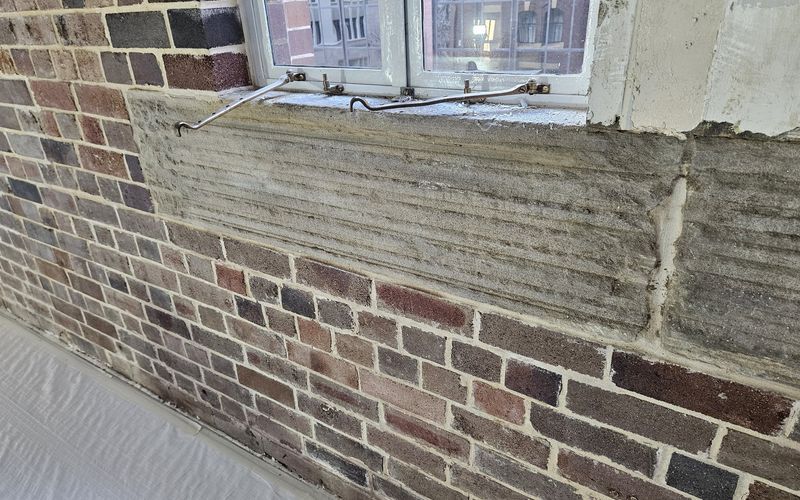
Cornices, brackets and ruled lines are craft repairs, not a skim-coat extra. Record the profile before a damaged length is taken off. A sketch, a template or a mould from sound work is the reference for anything that has to be made again. On an older facade, decorative plaster and stucco — cornices, quoins, string courses and mouldings — belong in the same assessment as hollow render and failed coatings. Photograph the elevation, tap for hollow areas, and note where a later hard patch sits beside softer original work. How that assessment is set out is in our note on render and plaster facade repairs.
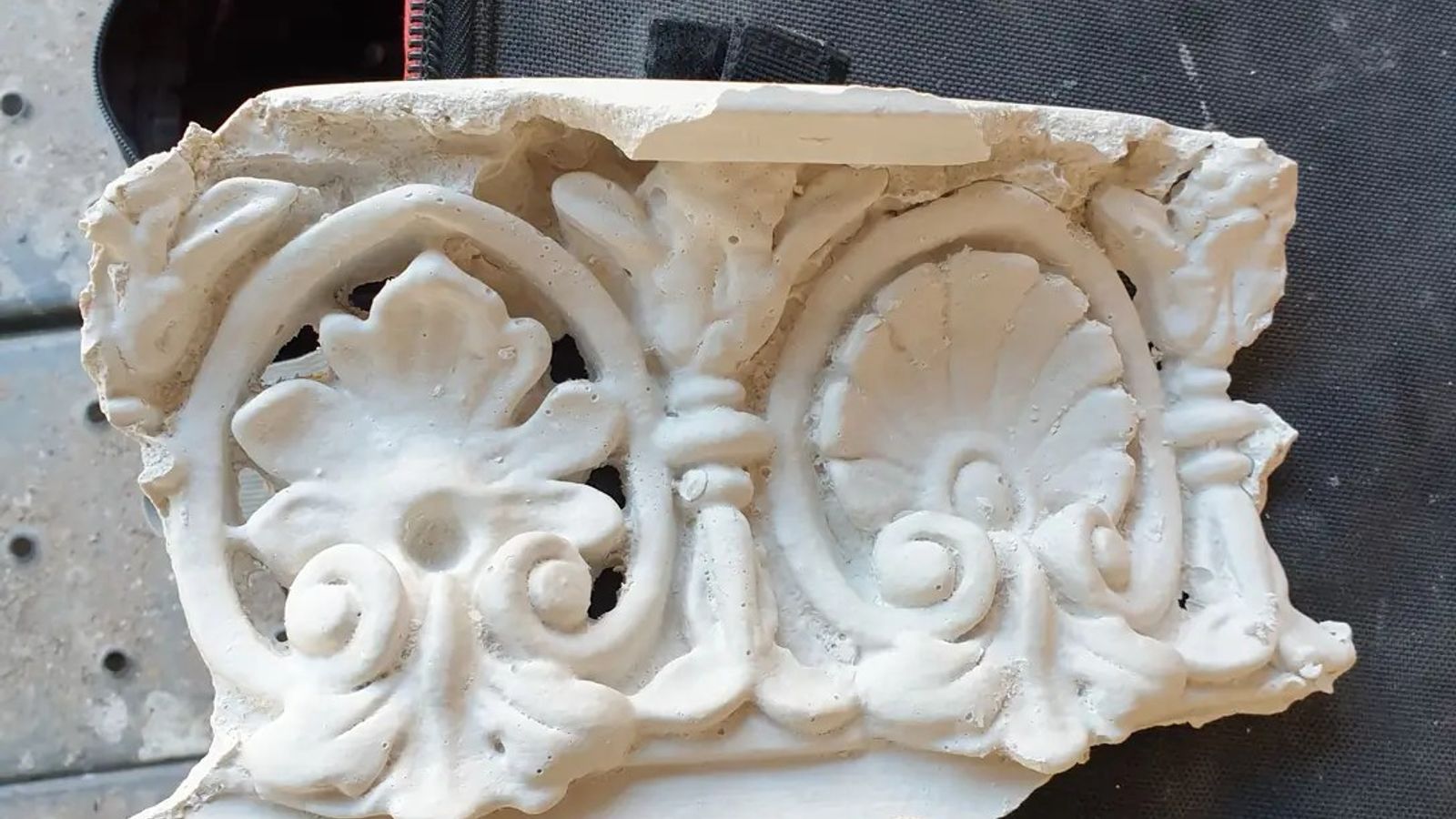
Mouldings and ornamental details can be reproduced from surviving evidence, from historic documentation, or from an element that is still on the building. If one bay still carries the original enrichment, that bay is the pattern. If nothing survives and there is no record, a plain compatible repair is the honest choice. Inventing a new ornament, and presenting it as original, is how a facade loses the detail that made it readable. Where the evidence is missing, the better repair does not pretend to be something the building never had.
Repair in place, or cast a match
Repair of historic plaster and stucco includes consolidation and, where the evidence supports it, recreation with materials compatible with the original construction. Where a profile or a photograph still exists, missing decorative plaster is repaired in place, or a replacement is cast to match and put back with compatible materials. Enrichments are cast from surviving detail, including scroll and shell motifs taken from an original profile, rather than the nearest ready-made section.
That cast is only as good as the evidence it was taken from. Decorative restoration depends on what survives, on the condition of the background, and on the building's significance. The scope, the match and the method are confirmed on site. A single photograph of a damaged corner is a start, not a specification.
A mix the wall can live with
Historic plaster and stucco deteriorate when moisture gets in, when the building moves, when the weather wears the face, and when an earlier repair was too hard or too dense. A compatible mix lets the repair and the old work move and dry together. Matching the wet colour on the day is not enough. Agree a sample, let it dry, and view it beside the original work before a long run proceeds.
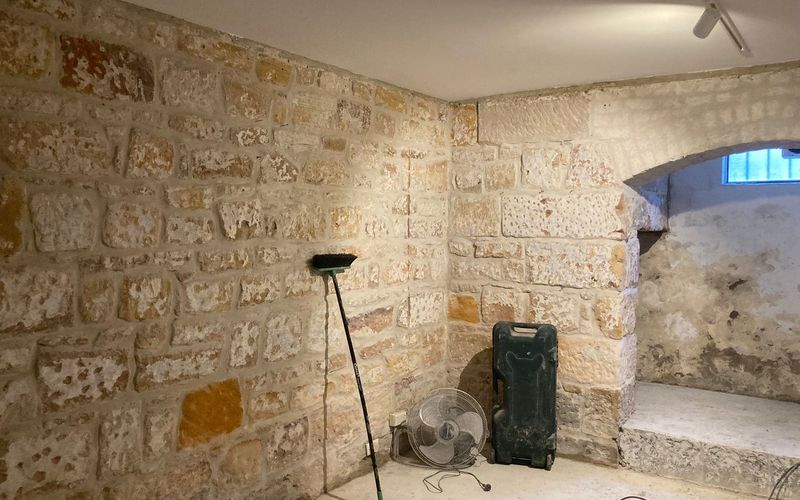
Breathable lime and mineral finishes suit these backgrounds. A film that seals the face can hold moisture against soft plaster and speed the decay the repair was meant to stop. Where a dense coat is already failing, removal can be part of the brief, and it is trialled so that sound plaster is not torn off with the coating. Do not assume a wash under pressure will lift a coating safely from fragile ornament.
Keep the ornament you still have
A local cut-out is the usual path when only part of a run is hollow or broken. Cutting sound historic fabric away, so the patch is a neater rectangle, can be more loss than the defect. Leaving a sheet that is barely attached, because it still looks complete from the footpath, is not a repair either. Decorative mouldings need a profile-aware repair before a whole elevation is stripped and the line of the cornice is lost.
On a listed building, or in a conservation area, a visible change to significant render and decorative plaster may need a council pathway before work starts. That is a check on the scope. It is not a reason to hide the condition, and it is not a set of rules this note can settle for you. Record what was found, what was remade, and what was left alone, so the next person does not have to guess.
Short answers
Can a missing cornice be put back? Yes, where a surviving profile, a repeating length, a drawing or a clear photograph exists. Without that evidence, do not invent the enrichment.
Is ornamental plaster the same job as patching flat render? No. Hollow flat areas and decorative profiles are different work. The profile has to be recorded and put back. A flat patch that ignores the moulding leaves a gap in the line of the facade.
Who should you engage? A heritage contractor who will say what evidence is missing before promising a match. Send photographs of the surviving detail and the lost section through our heritage finishes and decorative restoration service. We will come back with a method to assess on site, and what has to be confirmed before a quote.