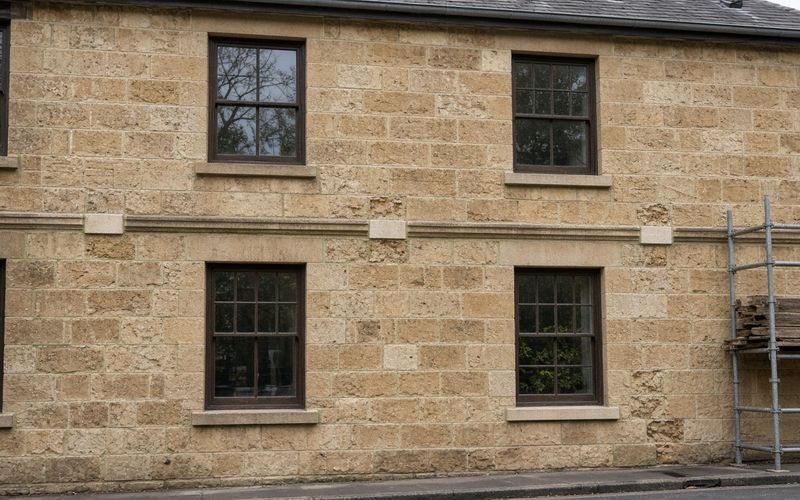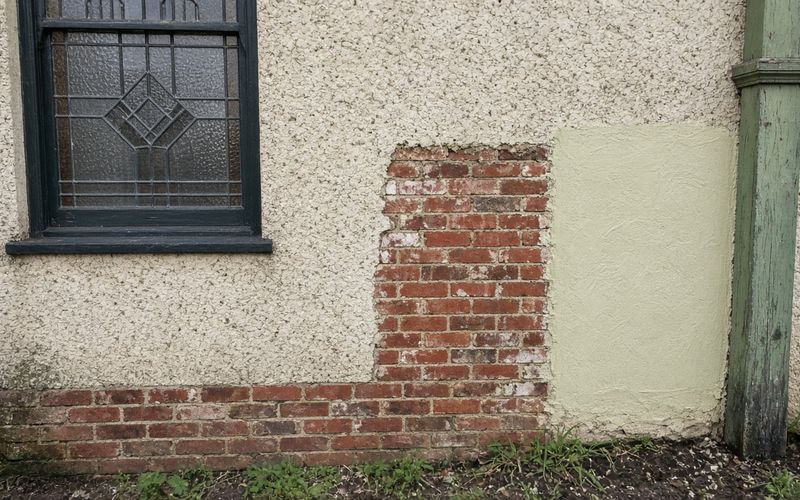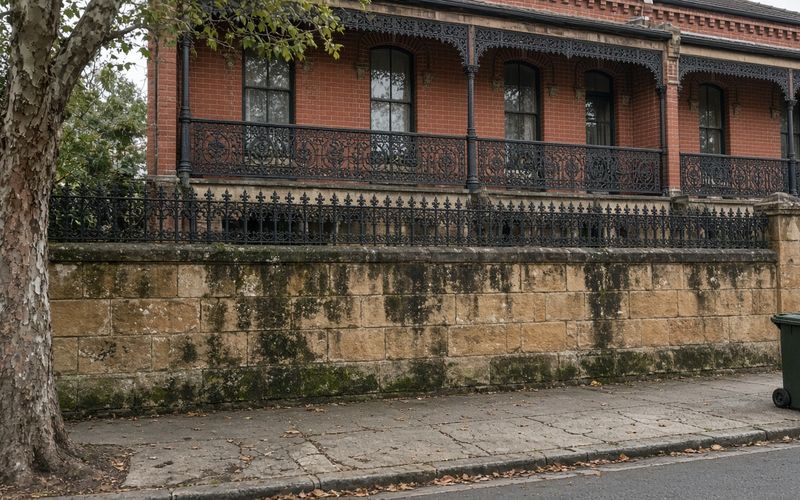
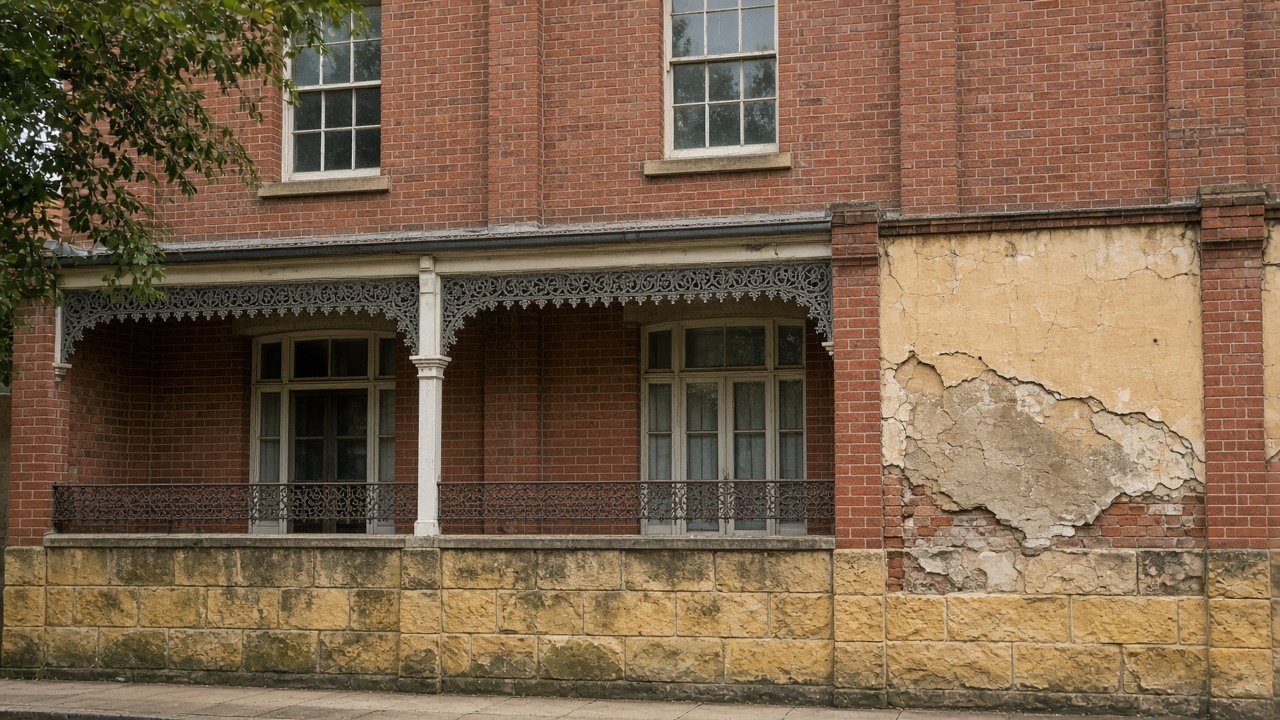
Façade restoration and repairs on older NSW buildings bring together cleaning, masonry, pointing, render, decorative plaster and sometimes stone indent work — sequenced after assessing materials and cause. The useful question is not “how do we make the street front look new?” It is what has failed, why it failed, and which interventions will protect the fabric you already have while the building stays usable.
This supporting /news guide expands the live façade restoration and repairs service in plain language for owners, strata and facility managers. Sister articles cover façade cleaning, render and plaster repairs, and repair versus replacement.
What façade restoration usually includes
Under one brief, programmes may combine:
Assessment and recording — fabric, defects, moisture, significance, access.
Making-safe — loose cornices, unstable panels, public protection.
Heritage-sensitive cleaning — trials; gentle methods; see façade cleaning.
Brick and stone repairs — indents, consolidation, unit replacement where needed.
Mortar replacement and repointing — compatible mixes.
Render, plaster and stucco repairs — including decorative elements.
Protective treatments — only where substrate and salts support them.
Documentation — method statements, samples, SWMS for occupied sites.
Stoneline’s service page emphasises breathable materials, traditional methods where appropriate, and staging for occupied residential, strata and commercial buildings.
Why NSW façades need conservation-led thinking
Sydney and regional NSW façades face coastal salts, driving rain, pollution, and decades of hard cement patches and dense coatings. Soft sandstone and historic brick punish aggressive cleaning and impermeable repairs. Conservation practice retains sound fabric, matches materials to the wall, and fixes water paths rather than chasing a showroom finish. That approach is also usually better value than premature wholesale replacement — explored in façade replacement vs repair.
Assessment: the spine of a usable quote
A competent façade assessment typically establishes:
Materials and construction periods (including later alterations).
Defect map by elevation and bay.
Moisture and salt behaviour.
Structural red flags needing engineering.
Heritage listing / conservation-area constraints.
Access options (scaffold, EWP, rope access).
Occupation and neighbour interfaces.
Priorities for staging if the full programme cannot run at once.
Photographs help; they do not replace sounding hollow render or inspecting flashings. Send wide and close images, dry and after rain if you can, to start the conversation.
Core techniques (plain English)
From conservation practice and our service description:
Cleaning with chemical poultices — gels or clays that dissolve salts and pollutants without flooding the wall.
Lime-based mortars and renders — permeability and compatibility with soft masonry.
Stone consolidation and indent repairs — retain where viable; match where replacement is required.
Discreet crack treatments — where specification supports them; not a substitute for movement diagnosis (see rendering cracks).
Decorative reinstatement — profiles recorded and remade carefully.
Aggressive pressure washing of soft masonry is not a core heritage technique.
Sequencing that protects fabric and occupants
A sound order often looks like:
Making-safe and public protection.
Moisture path corrections (gutters, flashings, ground levels) where practical.
Trials (clean + mortar/render samples).
Primary fabric repairs (masonry, pointing, render).
Broader cleaning once weather paths are controlled — or limited pre-clean so defects can be read.
Coatings only if specified and compatible.
Handover records and maintenance advice.
Occupied buildings benefit from staged elevations or bays so entries and apartments remain usable — a point already stressed on the service page FAQs.
Strata, commercial and residential differences
Residential — access through gardens, neighbour courtesy, heritage overlays on character homes.
Strata — common-property decisions, AGM budgets, lot notices, prioritisation of weather and safety.
Commercial / CBD — pedestrian management, after-hours windows, head-contractor documentation, higher public scrutiny.
Ask for SWMS/JSA and induction packs where sites require them. Documentation is part of professional façade work, not optional paperwork.
Cost drivers across NSW projects
Cost moves with façade size, materials, condition, decorative complexity, access, previous repairs, heritage documentation and occupation constraints. There is no honest single square-metre rate for every street front. Compare method statements, sample processes, exclusions and staging options. Discoveries behind render or inside joints should have clear variation rules.
Heritage approvals
Confirm whether the property is locally listed, in a conservation area, or on the State Heritage Register before visible façade change. Method statements, photographs and sample approvals help applications; they do not replace checking the address and pathway. Repair that retains fabric is often easier to justify than wholesale replacement — another reason for a repair-first brief.
Maintenance after restoration
Keep gutters and overflows clear. Inspect after major storms. Avoid dense DIY sealers on soft masonry as a default. Soft cleaning and timely minor repairs cost less than waiting for whole-elevation failure. Keep records of mixes and treatments with the building file.
Working with Stoneline Heritage
Stoneline Heritage provides assessment-led façade restoration and repairs across Sydney and NSW, including residential, strata and commercial work. Selected regional NSW projects are considered by arrangement. Contact with location, photographs and a short defect description is enough to discuss the next assessment step.
Deep-dives: cleaning, render, cracks, replacement vs repair.
Multi-disciplinary coordination without chaos
Façade programmes often need scaffolders, masons, render specialists, roofers for flashings, and sometimes engineers or damp consultants. Name who leads diagnosis. A single point of contact helps if they still show the people who will work on the elevation. Conflicting product choices — hard cement pointing beside lime render, dense sealers over salt-loaded stone — usually come from fragmented briefs. Write compatibility into the head method statement.
Project example mindset (without invented claims)
Public project stories on the Stoneline site, such as selected masonry and repointing to church façades, illustrate the pattern: access planned for street fronts, compatible mortars around architectural detail, protection at ground level. Your building will differ — use examples as evidence of approach, not as a promise that every elevation needs the same scope.
Regional NSW considerations
Outside Sydney, access to specialist lime materials, matching stone and experienced decorative plasterers can lengthen programmes. Weather windows differ inland and on the coast. Freight for scaffold and stone matters in the price. Selected regional projects are considered by arrangement — send location early so logistics are honest in the first conversation. Conservation principles do not change with postcode; supply chains do.
Salt attack, rising damp and façade symptoms
White crystalline deposits, fretting faces and tide marks near ground level often signal salt and moisture behaviour rather than “dirty walls.” Cleaning alone will not fix rising damp or bridging earth against masonry. Coordinate damp investigation with façade scope. See efflorescence guidance. Sealing a salt-loaded wall after a pretty clean is a common way to pay twice.
Decorative and significant fabric — what “restore” should mean
On significant façades, restoration means revealing and repairing historic character — tooling, joint profiles, mouldings — not inventing a new style. Where evidence is missing, honest contemporary repair that does not pretend to be original can be better than conjectural ornament. Record decisions. Future custodians should know what was found, what was remade, and what was left alone.
Comparing quotes without getting lost
Ask each tenderer for:
Marked-up elevations of included work.
Method notes for cleaning, masonry and render.
Sample and hold-point process.
Access and protection allowances.
Exclusions and discovery rules.
Programme and curing time.
Handover documentation list.
The lowest total that omits access or assumes high-pressure cleaning on sandstone is not a saving. The highest total still needs justification in retention of fabric and clear method — not only heritage adjectives.
When to pause for engineering
Spreading arches, bulging panels, cracked lintels, leaning chimneys and separated corners are not “extra pointing.” Make-safe, then engineer. Façade restoration contractors should say when they stop. Clients should reward that honesty rather than pressuring a craft quote to absorb structural risk.
Aftercare inspections
Book a post-storm check in the first year after major works. Look for new open joints, crack movement and blocked overflows. Early minor fixes protect the investment better than waiting for the next capital works cycle. Keep the contractor’s material notes with the strata or owner file.
Links between cleaning subpages and restoration
Cleaning is often the public’s entry search; restoration is the durable answer when fabric has failed. Use façade cleaning to brief soiling methods, power washing caution to avoid damage, and rope access when sites are constrained — then return here for the full repair picture. Render-specific paths sit under render repairs and crack repairs.
Breathable materials — why the service page insists on them
Stoneline’s public guidance emphasises breathable materials because older masonry needs to wet and dry without trapping salts behind dense shells. Lime mortars and compatible renders support that cycle when correctly specified. The insistence is practical: impermeable “improvements” are a leading cause of repeat failure on Sydney façades. Ask every tenderer how their proposed coats and treatments manage vapour and salts — not only how they look on day one.
Traditional methods and object-specific mixes
Where excessive salt and moisture are not expected to dominate, traditional materials and object-specific recreation of historical formulas remain a primary restoration objective — language reflected on the live service page. That does not mean every elevation gets the same bag. Sand grading, binder choice and finish are tuned to the wall after inspection and samples. Modern materials appear when evidence supports them; they are not a default upgrade.
Public protection and street-facing work
CBD and high-street projects need hoardings, fans, dust and water control, and clear pedestrian routes. Church and civic façades add ceremonial calendars and neighbour scrutiny. Price protection into the programme. A restoration method that cannot be delivered safely on a public footpath is not yet a complete method.
Frequently asked questions
What is façade restoration?
Assessment-led repair and conservation of building façades — cleaning where appropriate, compatible masonry and render repairs, decorative reinstatement — aimed at protecting existing fabric.
Do façades have to be done all at once?
Often not. Staging by elevation or priority suits occupied buildings.
Do you work on strata and commercial façades?
Yes — including access plans and documentation for managers and head contractors.
Is cleaning enough?
Sometimes for soiling on sound fabric. Failed joints, hollow render or loose masonry need repair. See cleaning and render guides linked above.
What affects cost?
Size, materials, condition, access, decoration, heritage documentation and occupation. Compare scopes.
How do I start?
Send photos, address and a short description of the problem. Expect assessment before a firm quote.