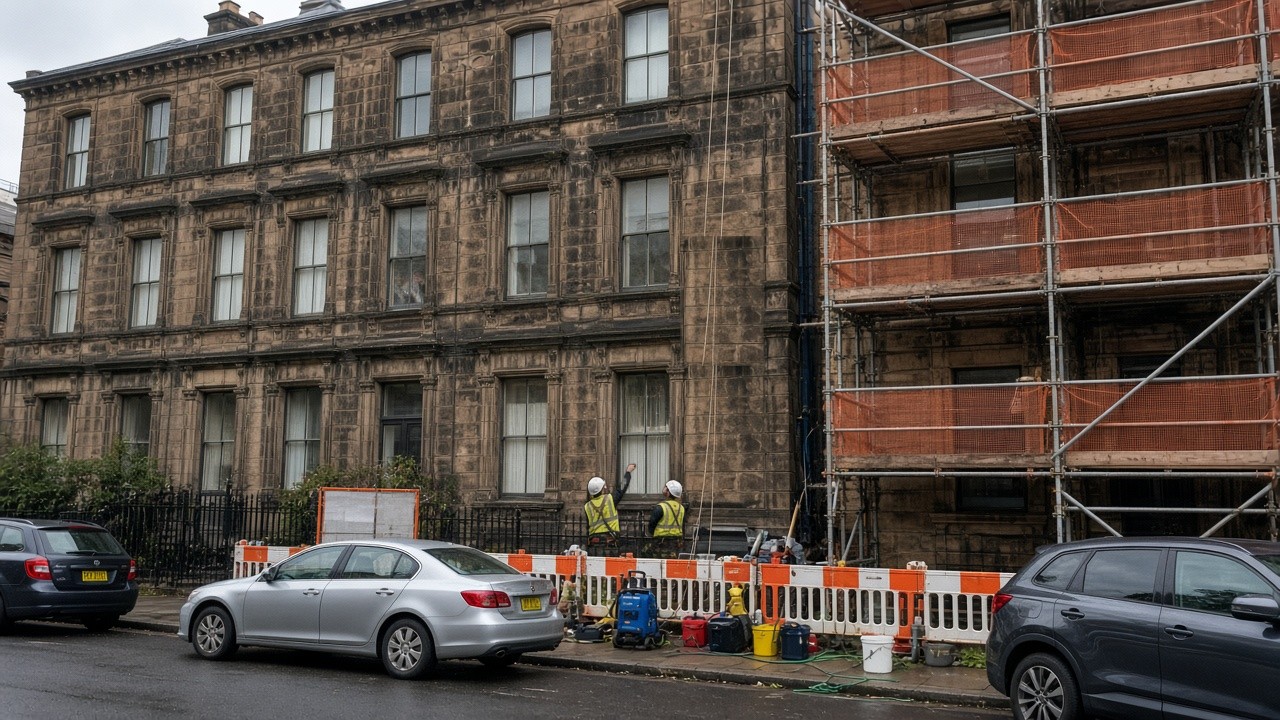
Rope access façade cleaning uses industrial rope systems so technicians can reach elevations where scaffolding or elevated work platforms are impractical, slow to approve, or disproportionately expensive for the work area. In Sydney’s CBD, harbour foreshores, narrow terraces and occupied strata towers, that access choice can be the difference between a feasible programme and a stalled one. Access is not a cleaning method. Soft masonry still needs gentle, trialled techniques — a rope does not make high pressure safe on sandstone.
This supporting guide sits under façade cleaning for heritage buildings. It explains when rope access helps, what safety and documentation usually include, and how to keep conservation decisions ahead of logistics. Service and repair sequencing remain on façade restoration and repairs. Pressure-washing risks are covered in power washing heritage façades.
What rope access is — and what it is not
Industrial rope access (often associated with IRATA or equivalent training frameworks) is a system of dual ropes, anchors, rescue plans and competent technicians for work at height. It is used for inspection, cleaning, light repairs and surveys. It is not:
A substitute for structural engineering when the façade is unstable.
Permission to use aggressive blasting because “we’re already up there.”
Automatically cheaper than scaffold on every job — complex rescues, weather downtime and limited concurrent trades can reverse savings.
The same skill set as recreational abseiling.
If the brief includes heavy masonry replacement, extensive scaffolding may still be required for materials handling even when inspection used ropes.
When rope access suits Sydney façades
Typical good-fit situations:
Tall or mid-rise elevations with limited street closure options.
Narrow lanes where scaffold footprint blocks access or retail.
Localised cleaning or inspection bays rather than full wrap trades.
Occupied buildings where scaffold would darken interiors for weeks.
Follow-up inspection after storms or after a trial clean.
Poor fit includes loose overhead cornices that need propping, large stone unit replacement, or programmes that need multiple trades working the same bay simultaneously with heavy materials. Making-safe may still need scaffold or EWPs before any rope cleaning proceeds.
Heritage-safe cleaning still comes first
The parent façade cleaning rules do not relax because the technician is on ropes:
Assess fabric, defects and soiling before choosing chemistry or pressure.
Trial panels where the substrate is soft or significant.
Avoid aggressive pressure washing on soft brick and sandstone.
Sequence repairs when open joints or hollow render would be harmed by wash water.
Record products and methods for heritage and strata files.
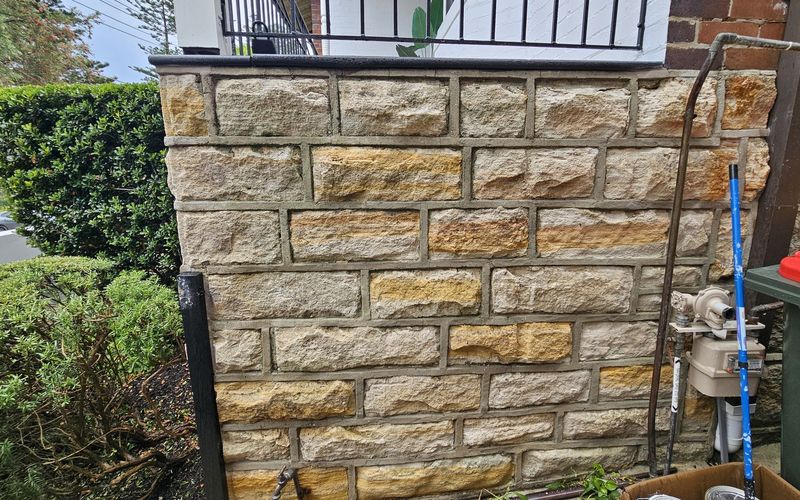
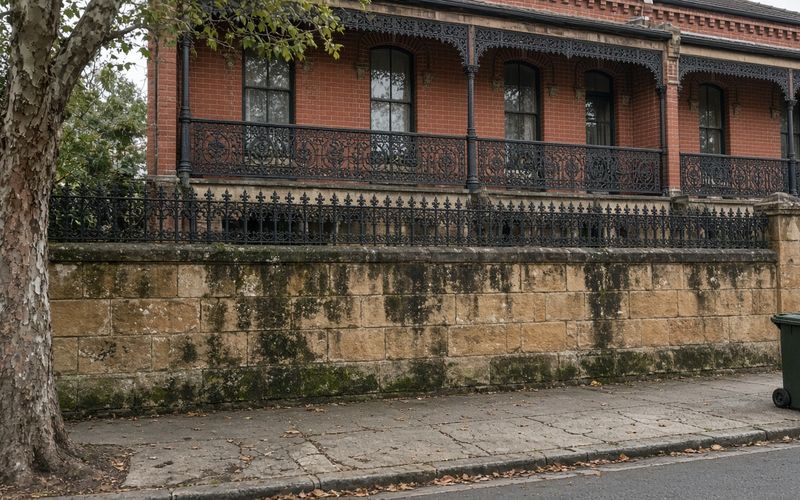
Rope access can make gentle, localised work *more* practical — for example treating a stained sandstone bay without scaffolding the whole street. It can also tempt speed. Write the method statement around the fabric, then select access.
Safety, competence and documentation
Expect, as a minimum conversation:
Competency evidence for rope technicians and supervision.
Anchor strategy and structural advice where anchors load heritage fabric or parapets.
Rescue plan and exclusion zones at ground level.
SWMS/JSA suited to the site and head-contractor rules.
Public protection for pedestrians and vehicles.
Weather limits (wind, lightning, wet stone slip risks).
Communication with building management and neighbours.
Anchoring into soft parapets, corroded railings or unverified plant without engineering input is a heritage *and* safety failure. Sometimes temporary proprietary anchor systems or internal tie-backs are required. Price that investigation honestly.
Cleaning tasks that work well from ropes
Inspection and defect photography at close range.
Localised biological treatment and gentle rinsing.
Poultice application and removal on selected panels.
Window and metal cleaning integrated with masonry caution.
Light pointing touch-ups only where the method and material handling allow — heavy jointing programmes often need scaffold.
Tasks that often need other access: full-elevation render renewals, large indent stone delivery, and concurrent multi-trade packages. Hybrid programmes (rope for survey and trials; scaffold for main repair) are common and sensible.
Cost drivers specific to rope access
Cost moves with height, complexity of anchors, number of drops, weather downtime, rescue standby, ground exclusion management and whether cleaning chemistry requires long dwell (harder on rope time). Compare against scaffold on *total programme*, including street permits and lost retail access — not only day rates. A rope quote that omits rescue planning or public protection is incomplete.
Ask whether cleaning rates assume high pressure. If soft masonry is present, require the gentler method in the price, not as a variation after damage.
Strata and commercial coordination
Occupied towers need lift bookings, lot notifications, balcony clearances and sometimes after-hours windows. Rope drops over entries need marshals. Heritage façades on street alignments may still need council notification for exclusion zones even without scaffold permits. Provide method statements that building managers can attach to WHS files.
Documentation at handover should include before/after photographs by elevation, chemicals used, areas deferred for repair, and any anchors left or removed. The next contractor should not guess.
Rope access versus EWP versus scaffold — choosing without ideology
| Access | Strengths | Limits | |---|---|---| | Rope | Small footprint; fast for localised work; less visual bulk | Material handling; weather; concurrent trades; anchor demands | | EWP | Stable platform; good for mid-height bays | Street occupation; reach limits; soft ground | | Scaffold | Best for heavy repair and multi-trade | Cost, time, light loss, permits |
Choose for the *work*, not for the brochure. Conservation outcomes depend on method more than on which access brand is fashionable.
Integrating cleaning with façade restoration
Cleaning from ropes often reveals defects invisible from the street: open joints behind soiling, cracked cornices, failed flashings. Build a hold-point: after cleaning or inspection, review whether façade repairs, render crack repairs or making-safe must precede further washing. Stoneline’s façade restoration service is structured for that assessment-led order on residential, strata and commercial buildings.
Weather, salt air and harbour sites
Harbour and coastal Sydney sites combine wind, salt and public scrutiny. Rope work windows can be short. Salt-laden spray after cleaning can reappear as white deposits — treat as moisture/salt behaviour, not failed detergent. See efflorescence guidance. Do not “fix” bloom with higher pressure.
Briefing a rope-access cleaning contractor
Send:
Elevations and close photographs (dry and wet if possible).
Known substrates (sandstone, brick, render, coatings).
Heritage status and strata/commercial constraints.
Preferred outcome (soiling removal vs preparation for repair).
Explicit instruction: no indiscriminate high pressure on soft masonry.
Questions on anchors, rescue, exclusions and trial panels.
Prefer teams who will decline rope cleaning when the façade needs propping or heavy repair first.
Working with Stoneline Heritage
Stoneline Heritage plans access as part of assessment-led façade restoration and cleaning across Sydney and NSW. Where rope access is appropriate, it supports inspection and heritage-sensitive cleaning; where scaffold or EWP better protect fabric and workers, we say so. The goal is a sound method on the right access — not access theatre.
Inspection value — seeing the façade properly
One under-sold benefit of rope access is close inspection. Binoculars and drone photographs help; they do not replace a technician’s hand on hollow render, a torch into open joints, or a sounding of a cornice. Cleaning programmes that begin with a documented rope survey often save money by limiting full cleans to elevations that need them and by flagging making-safe items before public cleaning starts.
Ask for a simple defect log: location, photograph, recommended next step (clean / repair / engineer / monitor). That log becomes the spine of a staged façade restoration budget rather than a vague “wash everything” invoice.
Insurance, licences and who holds the risk
Confirm public liability and height-work coverage suitable for the site. NSW contractor licensing categories differ for cleaning versus building work — know which activities are proposed. Head contractors on commercial sites will usually require inducted technicians and site-specific SWMS. Heritage owners should still ask who is legally contracting: a specialist rope company, a façade restorer subcontracting ropes, or a facilities firm packaging both. Clarity matters when something goes wrong.
If anchors attach to the building, agree who designs, inspects and removes them, and whether any fixings remain. Unrecorded stainless anchors left in soft stone can become future corrosion and moisture points.
Neighbours, noise and overspray on dense sites
Rope drops over shared lanes, café awnings and apartment balconies need courtesy and planning. Water and chemistry travel. Quiet hours and school or retail peaks may constrain drops more than scaffold would. Build a neighbour note into the programme: dates, exclusion zones, contact person. Conservation goodwill evaporates quickly when run-off stains a freshly painted neighbour.
Combining rope cleaning with render and masonry hold-points
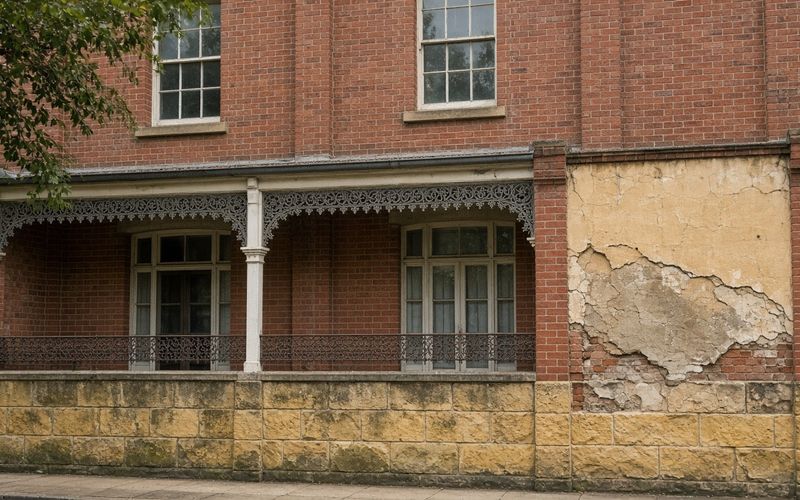
After soiling lifts, cracked render and open brick joints become obvious. Agree in advance that cleaning can pause for urgent patches. Trying to “finish the wash” across a hollow bay because the rope crew is booked for two days is how water ends up behind render. Hold-points are cheaper than emergency call-outs.
Where replacement versus repair is already under discussion, use rope inspection photographs to inform the repair-first decision before anyone prices a full reclad.
Training pathways and what “IRATA” style competence implies
Clients do not need to memorise training syllabi, but they should hear that technicians are trained for rope work *and* supervised on the specific cleaning method. A highly competent rope technician who has only washed glass may still mishandle soft sandstone. Ask who mentors substrate decisions on heritage drops. Dual competence — height systems plus masonry cleaning judgement — is the combination that protects fabric.
Frequently asked questions
What is rope access façade cleaning?
Industrial rope systems used so trained technicians can clean or inspect building elevations with a small ground footprint — still using substrate-appropriate cleaning methods.
Is rope access cheaper than scaffolding?
Sometimes for localised work on constrained sites; not always for heavy or multi-trade programmes. Compare total cost and risk.
Can you pressure wash from ropes?
Technically possible; often unwise on soft heritage masonry. Method must follow heritage cleaning and power-washing caution.
Is rope access safe on heritage parapets?
Only with competent planning and suitable anchors. Soft or unverified fabric may need engineering input or alternative access.
Can rope access include repairs?
Light works sometimes; major masonry and render programmes often need scaffold or platforms for materials and quality.
How do I start?
Send photos, address, access constraints and substrate notes. Ask for method + access options, not only a rope day rate.