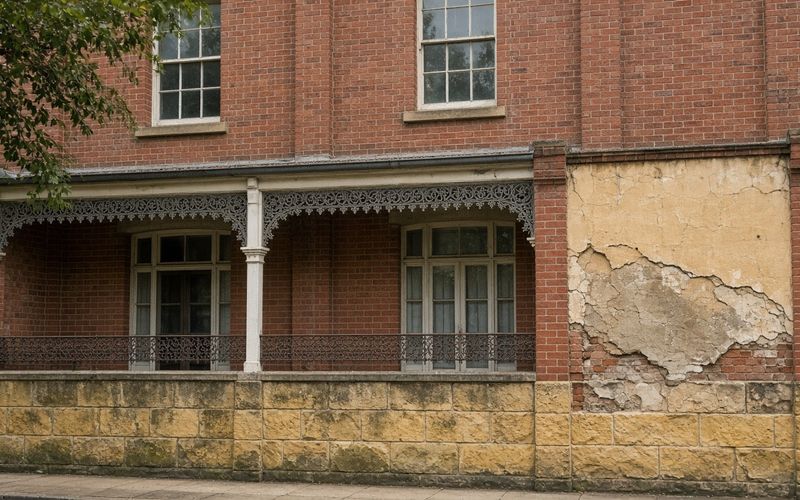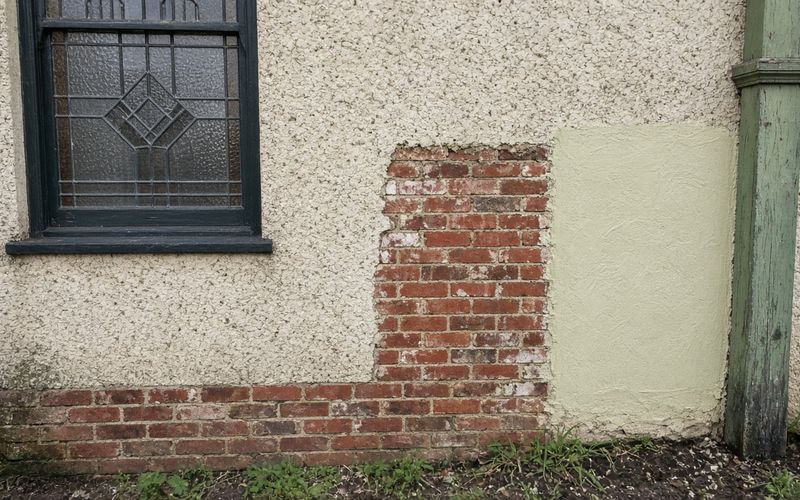
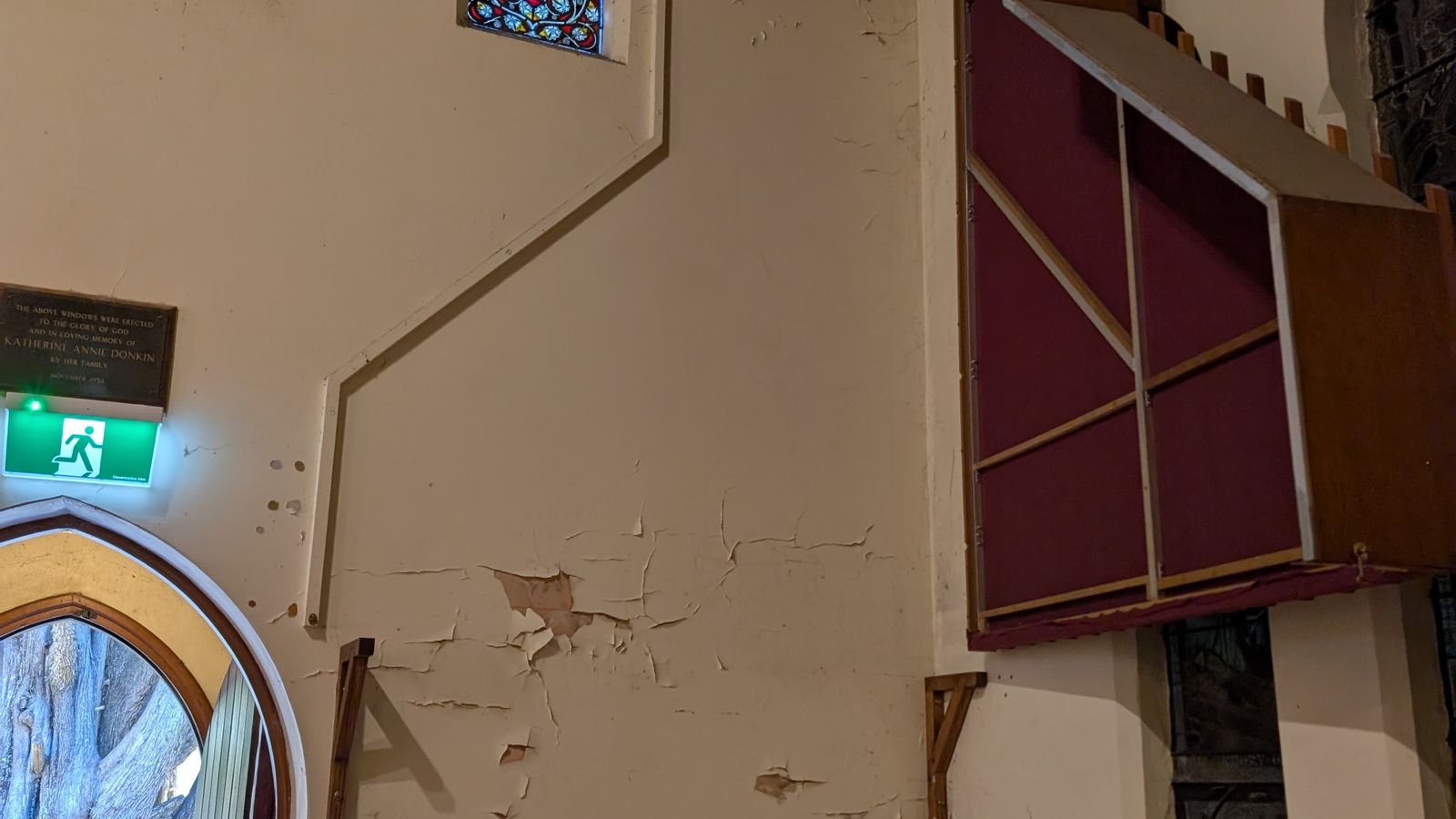
Fixing rendering cracks on a heritage or older Sydney façade starts with reading the crack — not with the first tube of exterior filler on the hardware shelf. Hairline shrinkage, map cracking over dense coatings, stepped cracks through masonry, and movement at openings all look different and need different responses. Filling a structural symptom with flexible sealant can hide risk while water continues to enter.
This supporting article sits under render and plaster façade repairs. It explains crack types, assessment, compatible repair approaches and when to call for broader façade restoration. Service detail remains on façade restoration and renovation.
Crack types owners commonly see
Hairline / crazing — fine networks, often in finish coats or overpainted surfaces; may be cosmetic if stable and dry.
Map cracking — irregular networks that can signal shrinkage, weak finish, or moisture behind dense paint.
Linear cracks at openings — corners of windows and doors; movement and stress concentration.
Stepped cracks — follow mortar joints in brick backgrounds; may indicate masonry movement.
Horizontal cracks — sometimes related to floor levels, corrosion of embedded metals, or settlement patterns.
Cracks with rust staining — possible corroding ties, mesh or fixings.
Cracks with hollow sound — adhesion failure; filler will not reinstate bond.
Photograph with a scale (coin or tape), note whether the crack is wider after rain, and whether edges are soft or powdering.
Cause before cure
Ask what the crack is telling you:
Moisture — overflows, failed flashings, rising damp, bridging earth.
Movement — foundation, lintel, thermal, dissimilar materials.
Material failure — wrong mix, poor curing, incompatible patch.
Corrosion — expanding metals behind the coat.
Impact or settlement — discrete events versus ongoing displacement.
Without cause, repair is cosmetics. Our parent render repair guide covers hollow areas and mix compatibility in more depth.
When DIY filler is enough — and when it is not
Skilled owners may carefully open and reinstate fine, stable, dry hairline cracks in accessible modern cement render with a compatible exterior compound — after confirming no hollow areas. That is not the same as:
Piping flexible sealant over stepped masonry cracks.
Painting closed over active damp stains.
Ignoring cracks above doors and public footpaths.
Filling cracks in lime render with hard acrylic without understanding the system.
Working at height without proper access and fall protection.
If the crack reopens seasonally, widens, or coincides with internal damp, stop and seek assessment.
Compatible repair approaches (families)
Depending on diagnosis:
Open, clean and repoint/re-render local zones with mixes matched to existing coats.
Cut back hollow areas to sound edges and rebuild coats (see parent guide).
Crack stitching or masonry repair where the background is moving — often beyond a render-only brief.
Discreet crack injection or consolidants only where specification and fabric support them (noted among techniques on our façade service page).
Metal remediation where corrosion is the driver.
Coatings — breathable systems after repairs cure; not as a crack fix alone.
Match texture and colour with samples. A bright ribbon of filler across a weathered elevation reads as a scar.
Structural red flags — do not “render over”
Seek engineering or urgent making-safe advice if you see:
Rapidly widening cracks.
Bulging or displaced render and masonry.
Cracks through lintels with sagging openings.
Loose overhead cornices or panels above access routes.
New doors/windows that jam as cracks grow.
Keep clear of apparently unstable areas. Repointing or flexible filler cannot straighten a moving wall. Related brick crack patterns are discussed in our brick-topic guides; the principle is the same — diagnosis first.
Moisture, salts and crack staining
Brown or white staining along cracks often means water and salts are active. Cleaning the stain without closing the weather path — or worse, sealing the face with dense coatings — can worsen crystallisation. See efflorescence on brick and sandstone for salt behaviour. Fix gutters and flashings as part of the crack brief when they are contributors.
Access, height and strata realities
Many crack repairs need scaffold or EWP for safe, quality work. Rope access may suit inspection and minor localised work; larger cut-outs usually need platforms. Strata schemes should prioritise cracks that admit water or sit over public areas when budgets are staged. Document crack monitoring (dated photos, simple gauges) if movement is suspected but not yet conclusive.
Cost: why “crack fill” quotes vary wildly
A tube of filler and a day rate is not comparable to cut-out, compatible rebuild, decorative matching and access. Ask what is included when hollow areas are found, how samples are approved, and whether moisture defects are excluded. Cheap fills that fail after the next storm become the expensive option.
Sequencing with cleaning
Aggressive power washing can open fine cracks and drive water behind render. If cleaning is planned, secure weather-critical cracks first or use gentle methods under the façade cleaning approach. Do not blast a cracked lime façade “so the filler sticks better.”
Monitoring versus immediate repair
Not every fine crack needs same-week intervention. Stable, dry, hairline cracks in a monitored elevation may wait while moisture sources are fixed. Active, wet, widening or overhead cracks should not wait for a perfect committee meeting. Write the distinction into strata minutes with photographs.
Working with Stoneline Heritage
Stoneline Heritage assesses rendering cracks as part of façade and render repair programmes across Sydney and NSW — matching repair type to cause, retaining sound fabric, and escalating structural concerns rather than hiding them. Send close-up crack photos with a scale, wide elevation context, and notes on leaks or recent movement. Ask for a method that names cause hypotheses — not only a fill product.
For broader coat failure and decorative plaster, return to render and plaster façade repairs. For whether a cracked skin should be renewed wholesale, see façade replacement vs repair.
Reading cracks at junctions and material changes
Cracks often start where render meets stone sills, brick quoins, timber framing or later extensions. Different thermal and moisture movement rates open junctions even when the field is sound. Repair may need junction redesign (drips, sealant only where appropriate, flexible but breathable detailing) rather than endless filler in the same line. Photograph junctions after rain — water entry points show as dark tracks.
Paint over cracks — temporary optics, lasting problems
Painting closed cracks before repair is common before sale. Buyers and building inspectors increasingly notice telegraphing lines and hollow sounds. More importantly, paint can trap moisture along the crack plane. If presentation painting is unavoidable, disclose known defects and plan proper repair soon after — do not treat paint as the fix.
Seasonal opening and closing — what “it moves with the weather” means
Some fine cracks open in dry heat and close after rain as materials swell and shrink. That pattern suggests thermal/moisture cycling rather than a single impact event. Compatible, slightly flexible lime systems tolerate small movement better than brittle hard patches. Recording seasonal change with dated photographs stops committees arguing from memory. If movement increases year on year, escalate beyond cosmetic fill.
Crack repairs on decorative plaster and mouldings
Cracks through cornices and moulded profiles need profile-aware repair. Filling a moulding crack flush with a flat spatula destroys the shadow lines that make the façade read correctly from the street. Record the profile, reinstate arrises, and cure carefully. Decorative work is priced as craft — see the parent render and plaster guide. Aggressive cleaning of cracked mouldings can snap fragile edges; use gentle cleaning methods.
Documenting cracks for heritage and insurance files
Keep a simple register: location sketch or marked photo, date first noticed, width estimate, whether damp is present, actions taken. After repair, archive product notes and curing photos. Heritage applications and insurance claims both go smoother with that trail. If an engineer is involved, their recommendations should sit beside the craft method statement so trades do not invent conflicting “fixes.”
Common product myths
“Flexi crack filler fixes everything.” It hides and often fails on moving or wet cracks.
“Harder cement is stronger.” On soft backgrounds it can crack again at the interface.
“If we paint it, it’s waterproof.” Paint is not a crack repair.
“Injection always saves cutting out.” Injection has specific uses; hollow sheets still need cut-back.
“All hairline cracks mean the house is falling down.” Many are finish-coat issues — still assess, but avoid panic pricing.
Working alongside brick and stone repairs
Cracks that start in render and continue into brick or stone need a combined brief. Pointing soft brick with hard cement while filling render cracks above with acrylic creates a stiffness mismatch. Coordinate with masonry trades so joints and coats move as a system. Broader programmes sit under façade restoration.
Frequently asked questions
How do I fix rendering cracks on an old house?
Identify crack type and cause, fix moisture/movement contributors, then reinstate with compatible materials — or cut back hollow areas. Filler alone suits only limited, stable cases.
Are hairline cracks dangerous?
Not always. Monitor for change, damp and hollow areas. Seek advice if unsure, especially overhead.
Can I use silicone on render cracks?
Flexible sealants have limited roles at designed joints. They are a poor general substitute for render repair on heritage coats and can look wrong and trap moisture.
When is a crack a structural issue?
Widening, stepped masonry cracks, bulging, or distorted openings need professional structural advice — not cosmetic fill.
Should I clean before filling cracks?
Gentle cleaning may help reading defects; aggressive pressure washing can worsen them. Coordinate with heritage cleaning guidance.
How do I get a quote?
Send scaled crack photos, elevation context, access notes and leak history. Expect assessment before a firm price.