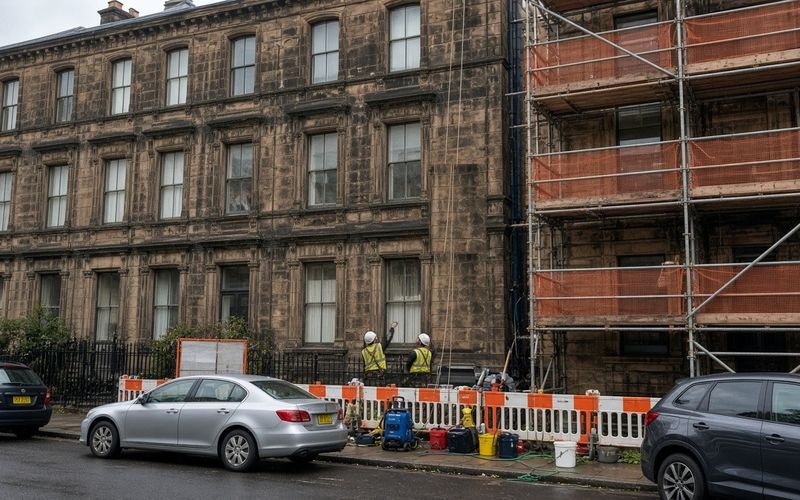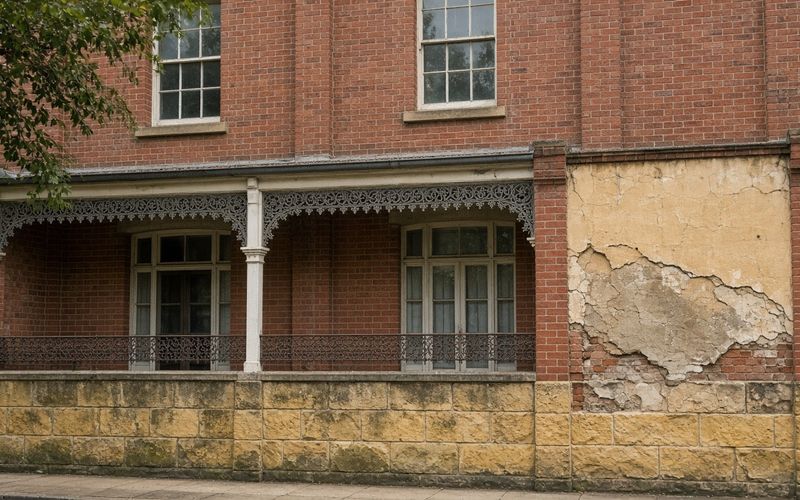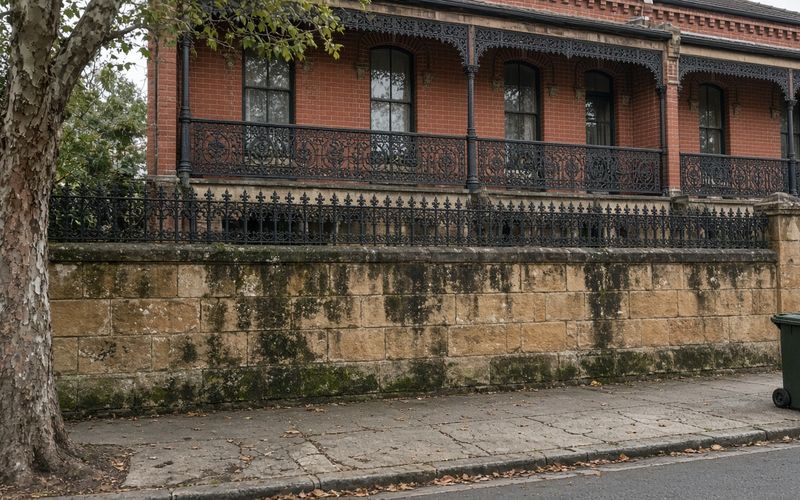
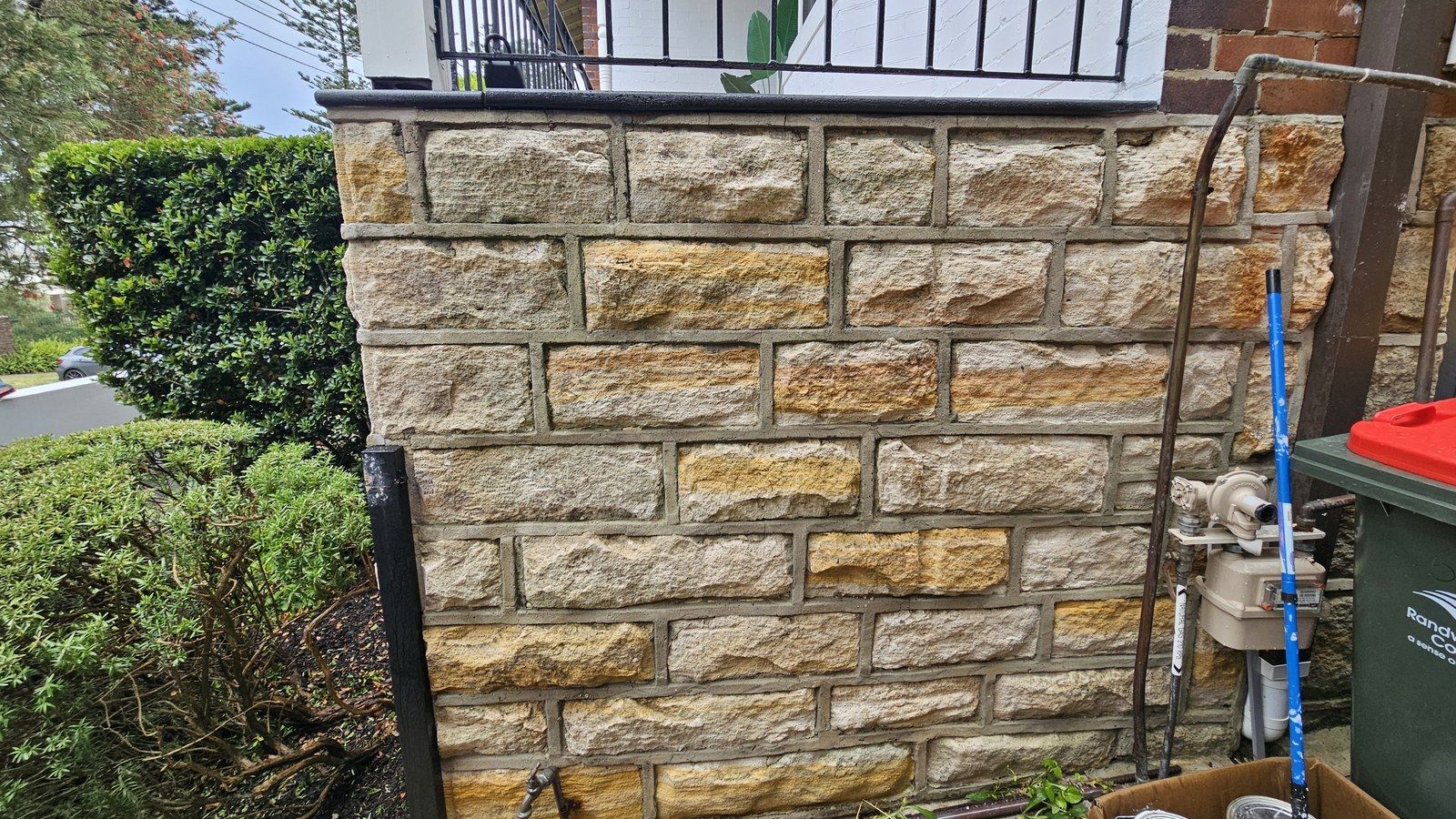
Power washing (pressure washing) is the search phrase many Sydney owners use when a house or strata façade looks dirty. On modern hard render or dense concrete it can be a reasonable tool in careful hands. On soft historic brick, sandstone, lime mortar and fragile decorative plaster, the same lance settings can abrade faces, open joints, drive moisture and salts deeper, and erase tooling marks that carried the building’s character.
This supporting article sits under façade cleaning for heritage buildings. It explains when controlled water cleaning helps, why “highest bar pressure” is the wrong KPI for soft masonry, and how to brief a contractor without buying permanent damage. Service detail remains on façade restoration and repairs. Access questions continue in rope-access façade cleaning.
What “power wash the house” usually means in practice
Under one phrase, owners may be asking for:
Removal of algae and traffic film from painted weatherboards or modern acrylic render.
Brightening of brick or sandstone that has greying or biological growth.
Preparation for painting.
A strata “make it look fresh” brief ahead of sale or AGM photographs.
Those briefs are not interchangeable. Soft masonry is not weatherboard. Sandstone is not dense engineering brick. A method that suits one can harm another in minutes. Ask the contractor to name the substrate and the proposed pressure, nozzle, distance and chemistry — in writing — before anyone starts on a street elevation.
How high pressure damages soft masonry and sandstone
Damage is often irreversible:
Abrasion of the weathered face — soft sandstone and soft historic brick lose their outer skin; fresh, softer stone or brick then weathers faster.
Rounded arrises and lost tooling — edges and tooled surfaces that defined Victorian and Federation detail become soft and blurred.
Opened or washed-out joints — lime pointing can be cut by a fan jet; water then enters more freely.
Driven salts and moisture — saturation followed by drying can pull salts to the surface or into a worse crystallisation zone.
Hollow render failure — water pressure behind debonded render lifts patches that then need larger repair.
Forced entry at cracks — fine cracks become water paths overnight.
Aggressive grit blasting and sandblasting create similar or worse losses. Conservation guidance (including SPAB-style caution on abrasive cleaning) treats “maximum clean” as a risk, not a virtue.
When controlled water cleaning can still help
Not every water-based clean is reckless. Controlled approaches may include:
Low pressure and greater stand-off with soft brushes on sound, harder surfaces.
Soft wash / chemical-assisted cleans where a biocide or detergent dwells and is rinsed gently.
Nebulous or mist systems specified for fragile stone.
Localised rinsing after poultice work rather than whole-elevation blasting.
“Controlled” means measured pressure, trained operators, trial panels reviewed dry, and a stop rule when the face softens or joints open. It does not mean a domestic “turbo” lance on sandstone because the operator is in a hurry.
Soft masonry checklist — stop before you hire the loudest machine
Pause aggressive pressure washing if any of the following apply:
Soft or friable sandstone, fretting faces, or laminated stone.
Soft historic brick with lime joints (common on older Sydney terraces).
Hollow-sounding or cracked lime render and decorative plaster.
Significant carved detail, terracotta or fragile mouldings.
Active damp, salt bloom or rising-damp symptoms.
Unknown previous coatings that may hide decay.
Heritage listing or conservation-area controls on surface change.
In those cases, start with assessment and trials under the parent façade cleaning approach — or with fabric repair if joints and render have already failed. See also render and plaster repairs and fixing rendering cracks.
Trials beat promises
A useful trial panel is discrete, photographed before and after, and inspected dry after a weathering interval where practical. Agree success criteria in advance: removal of biological film without loss of face texture; no new open joints; no slurry of stone grains in the run-off. If the trial leaves a lighter patch that looks abraded beside original weathered tone, that is evidence — not a reason to “even up” the whole façade with more pressure.
Ask what happens if the trial fails. A competent team changes method. A sales-led team increases pressure.

Chemistry is not a free substitute for pressure — and vice versa
Some operators market “chemical soft wash” as always safer. Chemistry still needs substrate compatibility, dwell control, neutralisation where required, and protection of plants, metals and neighbours. Conversely, plain water at excessive pressure remains abrasive. The choice is evidence-based combination or rejection — not brand slogans.
Poultices and gels that hold agents against the surface without flooding the wall are often more appropriate for salt and pollution loads on heritage masonry than a high-volume jet. Our façade restoration service describes poultice approaches among core techniques.
Painted surfaces and preparation myths
Power washing before paint is common on modern cladding. On older brick and stone that were never meant to be sealed under acrylic, washing as paint prep can be the first step toward a trapped-moisture problem. Confirm whether paint is appropriate at all. If coatings must be removed, plan trials — do not assume pressure will lift paint evenly from soft stone without taking face with it. Related paint-on-sandstone risks belong in a specialist brief, not a generic house-wash package.
Water management, salts and neighbours
High-volume washing sends run-off into basements, light wells and street drains. On salt-loaded walls, that water can mobilise crystallisation. Manage collection where required, protect openings, and avoid saturating elevations late on a cold evening when drying is slow. Tell neighbours about overspray windows. Strata and commercial sites often need documented water and pedestrian controls — price them honestly.
Access still matters when the tool is a lance
Pressure equipment does not remove the need for safe access. Scaffolding, EWPs or rope access may still be required. Unstable footing leads to inconsistent nozzle distance — one of the fastest ways to stripe and damage a façade. Access and method are one risk plan.
Cost: why the cheapest “power wash house” quote is often the dearest
Low square-metre rates usually assume one method for the whole building and omit trials, protection and defect allowances. When soft stone abrades or render blows, the variation becomes indent repairs, repointing or render patches — work covered in façade restoration. Paying for assessment and a gentler method is not luxury; it is avoiding a second contract to undo the first.
Compare:
Named substrates and methods per elevation.
Trial panel process and stop rules.
Access, protection and water management.
Exclusions for repairs discovered mid-clean.
Handover notes on products used.
How Stoneline approaches water-based cleaning
Stoneline Heritage does not treat maximum pressure as a selling point. We assess fabric and soiling, run trials where needed, prefer the gentlest effective method, and sequence repairs when joints, render or loose masonry make blasting reckless. Cleaning sits inside façade restoration and renovation, alongside masonry repair and compatible materials — not as a standalone “make it white” product.
Send photographs (wide and close, dry and after rain if possible), note brick/stone/render types if known, and ask explicitly whether high pressure is proposed on soft masonry. If the answer is vague, ask for another opinion before the lance arrives.

DIY domestic pressure washers on heritage fabric
Hire-shop machines make it easy to point a jet at a terrace front on a Saturday. That convenience is why damage is common. If you own a soft-brick or sandstone house:
Do not use turbo nozzles on masonry.
Do not chase white by reducing stand-off.
Do not wash into open joints or cracks.
Do not assume “it looks fine wet” means the face is intact.
Stop at the first sign of sandy run-off or rounded edges.
Small algae on hard modern paving is a different job from a Federation sandstone bay. When in doubt, leave soft elevations alone until assessed.
Strata briefs that say “just wash it”
Strata committees often receive the lowest “whole building wash” quote under time pressure before an AGM or sale. Push for substrate notes: which elevations are soft stone or lime render; which are modern coatings; where joints have failed. A single price that ignores those differences transfers risk to common property. Prefer staged trials on representative bays, then a method statement the committee can file with the building’s maintenance records.
If previous cleans already left patchy abrasion, further pressure will usually widen the mismatch. Discuss consolidation, compatible repair or accepting an even weathered tone — not another pass at higher bar pressure.
After a damaging wash — what to do next
If sandy residue, rounded edges or newly open joints appear after cleaning, stop further washing. Document with dated photographs. Keep people clear of any loosened overhead fabric. Assessment may need pointing, indent repairs or render work rather than more cleaning. Our façade restoration guide covers repair-led sequencing; replacement versus repair questions continue in façade replacement vs repair.
Frequently asked questions
Is power washing safe on heritage brick or sandstone?
Often not at typical domestic or “house wash” pressures. Soft masonry can abrade and joints can open. Use assessment, trials and gentler methods.
What is a safer alternative to high-pressure washing?
Controlled low-pressure rinsing, soft washing with compatible chemistry, nebulous systems, poultices, or hand cleaning — chosen after trials. See façade cleaning.
Can pressure washing cause rising damp or salt damage?
It can mobilise salts and drive water into walls. Salt bloom after a wash is a warning, not a success metric.
Should I power wash before painting brick or stone?
Question whether paint is appropriate. If coatings are needed or must be removed, plan substrate-specific trials — do not default to high pressure.
Will insurance or heritage listing care about cleaning method?
Visible abrasion of significant fabric can be a compliance and conservation problem. Confirm listing status and keep method records.
How do I brief a contractor?
Name the substrates, require written method and trial panels, forbid indiscriminate high pressure on soft masonry, and link cleaning to any needed repairs.