Stone polishing services are easy to oversell. A high shine can look impressive in a showroom photograph and entirely wrong on a weathered heritage façade. On older Sydney buildings the useful question is not “can we polish it?” It is whether polishing will protect and present the stone — or whether cleaning, compatible repair or a different finish is the honest next step.
This supporting article sits under our sandstone restoration and repair cluster. It explains when polish helps, when it harms, and how it relates to sandstone cleaning and repair. Commercial assessment and quoting remain on sandstone and stone restoration in Sydney. Sydney-specific sandstone polish decisions continue in sandstone polishing Sydney; choosing capacity is covered in stone mason Sydney — heritage.
What stone polishing actually changes
Polishing abrades and refines a stone surface through progressively finer abrasives (and sometimes compounds) to alter texture and reflectivity. Related finishes include honing (a lower sheen), grinding to remove coatings or unevenness, and chemical or mechanical cleaning that is *not* polishing at all — even when contractors blur the language.
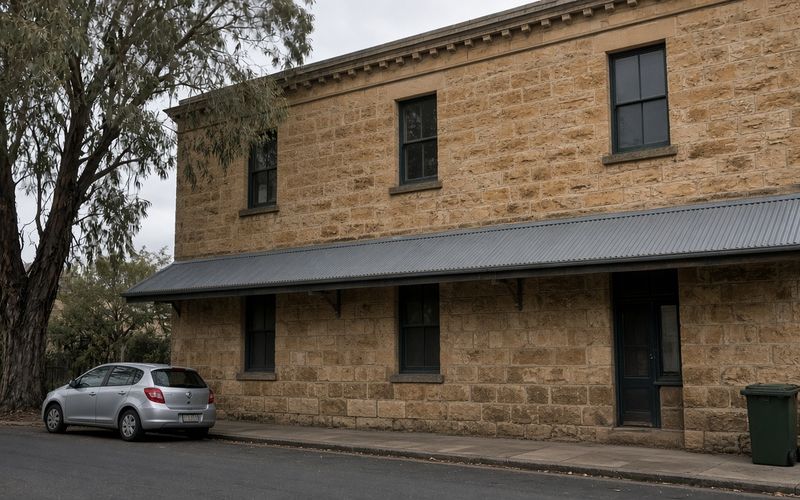
On dense, sound stone used as flooring, stairs or modern cladding, a controlled hone or polish can be appropriate maintenance. On soft, weathered or salt-affected sandstone façades, aggressive polishing can remove the protective weathered skin, open pores to moisture and salts, and erase tooling that carries historical evidence. The finish decision follows condition — not a catalogue page.
When polishing helps
Polishing (or honing) can be a sound choice when:
The stone is structurally sound and free of active fretting or laminating faces.
The surface is a floor, tread, ledge or modern paving intended for a refined finish — not a significant weathered façade.
Coatings, grout smears or installation marks need controlled removal before a specified finish (as in some pool-surround and paving corrections).
A sample panel can be agreed dry, beside original work, and heritage controls allow the change in appearance.
Moisture and salt issues have already been diagnosed so the finish will not trap an active problem.
In those cases, specify grit sequence, edge protection, dust and slurry control, and the target sheen in writing. “Polish the stone” is not a specification.
When cleaning or repair is the correct first step
Skip polishing — or postpone it — when:
Faces are powdering, fretting or delaminating. See recognising sandstone deterioration.
White salts or recurring damp dominate the complaint — start with efflorescence guidance and moisture diagnosis.
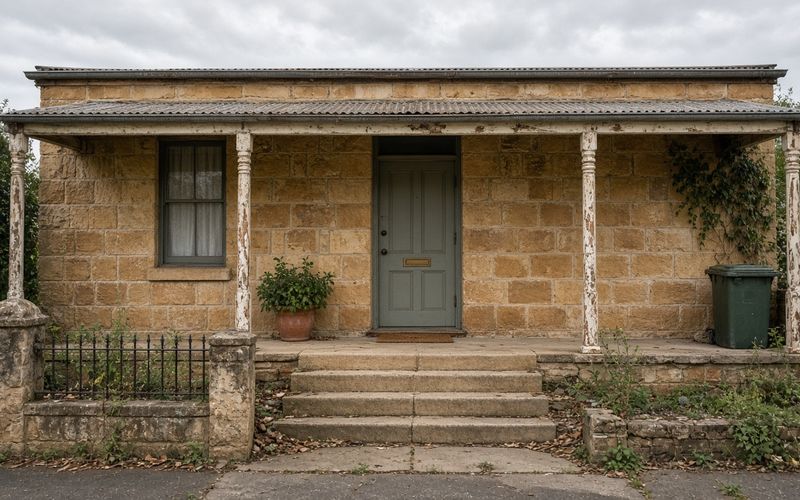
The elevation is significant weathered sandstone whose character is the soft, tooled face — not a mirror finish.
Joints have failed and water is entering; polish will not renew mortar. Prefer restoration and repair.
Previous colour-enhancing sealers have darkened and mottled the stone — removal and assessment may come before any new finish.
Someone proposes polish as a cheap substitute for indent repairs or consolidation.
Many enquiries that arrive as “polish” are actually cleaning, coating removal or masonry repair problems. The sandstone cleaning techniques guide covers trials, mild methods and why pressure-washing assumptions fail on soft stone.
Heritage appearance versus “like new”
Conservation practice generally prefers retaining original surface character where it remains sound. Uniform high gloss on a Victorian or Federation sandstone elevation can read as a modern intervention even when owners intended “restoration.” Agree the target finish in daylight, dry, next to untreated stone. Remaining natural colour variation is not, by itself, a reason to escalate abrasives.
The Burra Charter’s cautious approach — understand significance before changing fabric — is a useful briefing tool with contractors. Ask what will be removed forever if polishing proceeds, and whether a lower intervention (clean, hone, or local repair) meets the brief.
Process: how a professional polishing programme should run
Where polishing is justified, a competent sequence looks like this:
Assessment — stone type, condition, coatings, salts, moisture, heritage status.
Trial panel — representative area; record method and dry result.
Protection — adjacent finishes, drains, occupied rooms, slurry management.
Preparation — remove unsuitable coatings; repair defects that polishing would worsen.
Abrasive sequence — agreed grits to the approved sheen (often hone rather than high polish outdoors).
Optional treatment — only if justified; breathable products where appropriate; never automatic “seal everything.”
Handover — care instructions, photographs, monitoring advice.
Dust, slurry and noise matter on strata and commercial sites. Price access, waste and protection into the quote — not only machine hours.
Indoor stone, outdoor stone and mixed buildings
Indoor floors and stairs often tolerate finer finishes if the stone is dense and well bedded. Outdoor paving and pool surrounds face UV, pool chemicals, leaf tannins and foot traffic — a high polish may be slippery when wet and short-lived under wear. Façade stone is usually a different brief entirely: weather performance and fabric retention outweigh shine.
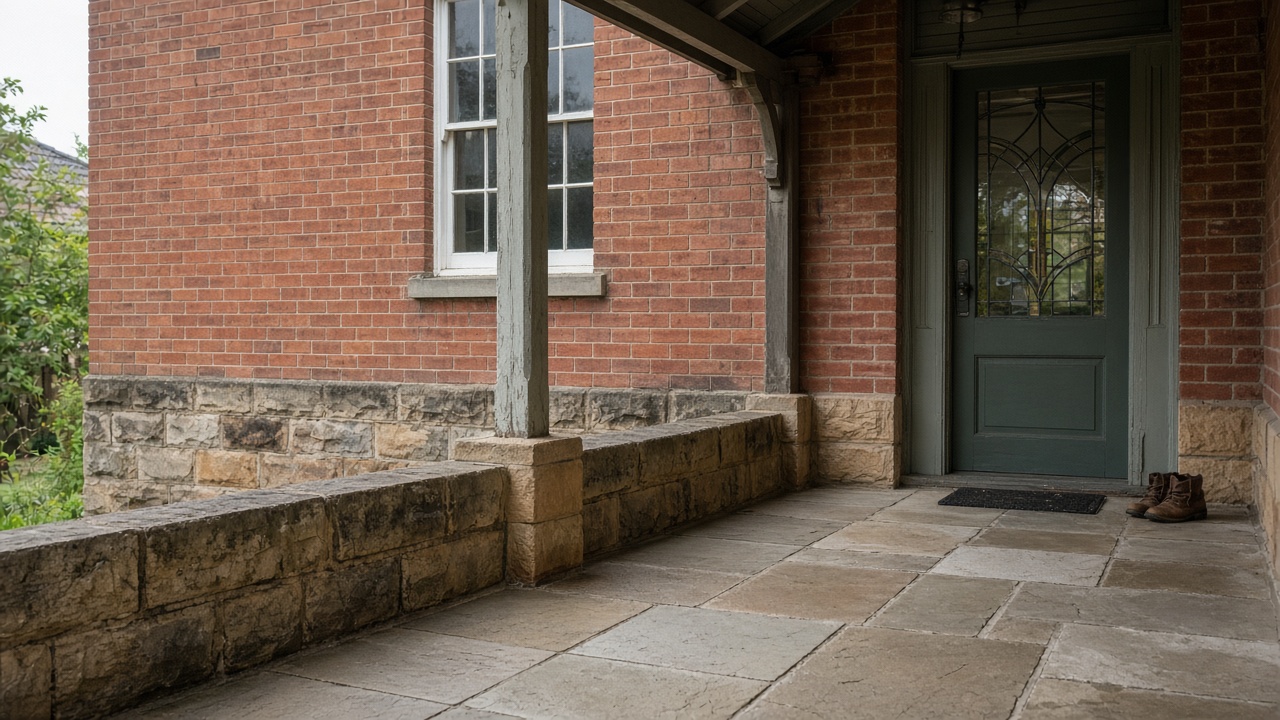
Where one building mixes brick, sandstone and later concrete or reconstituted stone, do not assume one polish system suits all. Test each substrate. Ask who will supervise transitions at junctions so one trade’s slurry does not stain another’s repaired joints.
Cost factors — comparing scopes, not shine promises
Stone polishing cost moves with area, stone hardness, coating removal, access, edge and detail work, slurry control and the approved finish. A low square-metre rate that skips trials or coating removal expands on site. Restoration and repair packages that include polishing as a line item should still separate diagnosis from finish so you can defer polish if defects appear during cleaning.
There is no useful guarantee that polishing increases property value. The return is an agreed, appropriate surface — or the decision *not* to polish when repair is the priority.
Choosing a contractor without retail hype
Prefer teams who will:
Decline polish when fretting or active damp is present.
Show comparable heritage or character projects — not only retail kitchen photos.
Approve a sample before the main elevation or floor.
Name stone type and method rather than a brand slogan.
Coordinate with masonry repair when indents or pointing are needed.
Hold relevant NSW licensing for the scope offered.
Locality helps for Sydney access and weather windows; method protects the stone. See stone mason Sydney — heritage for craft versus cleaning-only capacity.
How this links to Stoneline’s sandstone work
Stoneline Heritage’s sandstone restoration service is assessment-led: cleaning, compatible repairs, consolidation and replacement where required. Polishing may appear in a wider programme for suitable surfaces, but it is not the default answer to every stained or weathered façade. Send photographs (wide and close), note indoor versus outdoor stone, and describe what you hope the finish to achieve. We can discuss whether polish, clean, repair — or a combination — fits the fabric.
Tools, dust and what “professional polish” should control
Semrush-style briefs lean into tool lists. In practice, the machine matters less than containment and sequence. A competent polishing or honing programme typically needs:
Diamond or abrasive pads matched to the stone and target sheen — not a single aggressive grit for every surface.
Means to control dust and capture slurry so drains, gardens and occupied rooms are not contaminated.
Edge and detail tools for stairs, thresholds and carved junctions without rounding historically sharp arrises unintentionally.
Protection for adjoining brick, timber, metal and glass.
Access — ground-level paving differs from upper ledges that need platforms or scaffold.
DIY hire grinders on soft sandstone façades are a poor investment: they remove fabric quickly and leave hollows that then need indent repair. Small, sound indoor floors may be maintainable by a skilled owner with the right pads; fretting outdoor stone is not a weekend polish job.
Moisture compatibility after a refined finish
A smoother surface can change how water beads and how soiling returns, but it does not cure rising damp or failed flashings. If polish is proposed together with a sealer, ask what problem the sealer is meant to solve, what evidence supports vapour permeability on *this* stone, and how future maintenance will work. A small appearance trial does not establish long-term moisture compatibility.
Where salts are active, postpone finish work until the moisture source is understood. Polishing a salt-loaded face can accelerate loss of the very surface you hoped to improve. Link finish decisions back to the parent restoration assessment rather than treating polish as a standalone product sale.
Strata, commercial and occupied buildings
In apartments and workplaces, polishing noise, vibration and slurry logistics dominate the programme. Agree working hours, lift protection, pedestrian routes and who signs off the sample before machines start. Phased floors may be safer than emptying a whole lobby at once — but each phase needs a sensible stopping point so unfinished edges are not trip hazards.
Commercial street-facing stone may need after-hours work and traffic control. Price those constraints honestly. A low daytime rate that cannot actually run on a busy footpath is not a real quote.
Maintenance after honing or polishing
Keep grit and sand off polished floors; they act as abrasives underfoot. Use pH-appropriate cleaners intended for the stone — not vinegar or acidic household products as a default. Recoating schedules, if any, should be written into the handover, including product names and when *not* to recoat. Outdoor honed paving still needs joint care and drainage attention; the finish does not replace masonry maintenance.
Frequently asked questions
What are stone polishing services?
Controlled abrasive finishing to refine stone texture and sheen — distinct from cleaning, coating removal or masonry repair, even when sold under one “stone care” label.
Should I polish heritage sandstone façades?
Usually no as a default. Weathered significant façades more often need assessment, cleaning trials and compatible repair. Polish suits selected sound surfaces after diagnosis.
Is honing the same as polishing?
Honing produces a lower, matte-to-satin sheen. It is often more appropriate outdoors than a high gloss. Agree the target on a dry sample.
Can polishing fix salt damage?
No. Salts and moisture need diagnosis first. Polishing a salt-loaded face can worsen loss of surface.
How do stone polishing and sandstone restoration relate?
Restoration addresses decay and failed fabric; polishing is a finish option for suitable sound stone. They may share one programme but should be specified separately.
How do I enquire in Sydney?
Send photos, address, access notes and whether the stone is paving, floor or façade. Ask for assessment and a trial before committing to a full polish.