Building restoration services investigate deterioration, repair damaged materials and help an older property remain useful. For buildings in Sydney and NSW, that can mean stone repairs, brick repointing, façade restoration or treatment of moisture-related damage. The first step is understanding what caused the problem and which original materials can be retained.
Before requesting a quote: gather photographs, the property address and any earlier reports. Ask for an assessment, a defined repair scope and an explanation of any further investigations needed. A photograph can start the conversation, but it rarely provides everything needed for a reliable price.
This guide covers the main services, the restoration process and how to compare proposals. For the wider conservation and planning context, see our heritage building restoration guide.
Which restoration service does your building need?
The symptoms help identify where an assessment should begin. A damp wall, for example, may involve a leak, salt deposits and failed finishes. Treating only the visible surface can leave the cause unresolved.
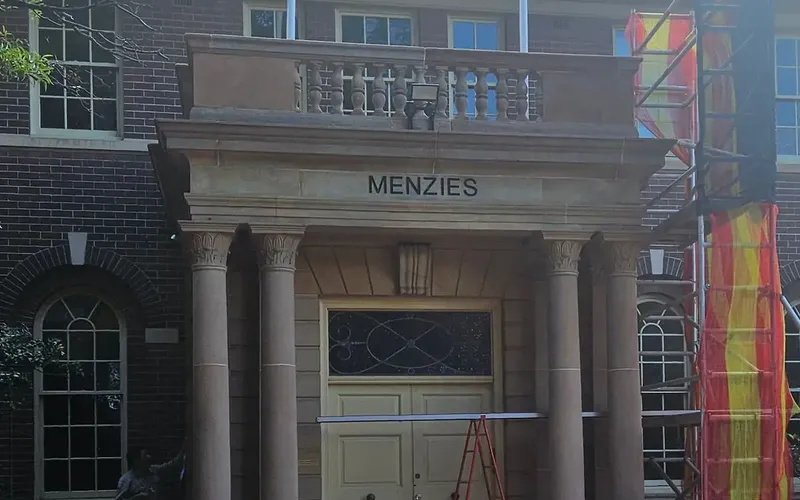
Sandstone and stone restoration
Weathered stone, damaged sills, failed patches and deteriorating carved details need assessment of both condition and the surrounding material. The proposed scope should explain what can remain and where repair, consolidation or replacement is appropriate.
Ask how the work will retain profiles, tooling and other important details. A new-looking surface is not automatically a better result. See our sandstone and stone restoration service for the types of work considered after inspection.
Brick repair and repointing
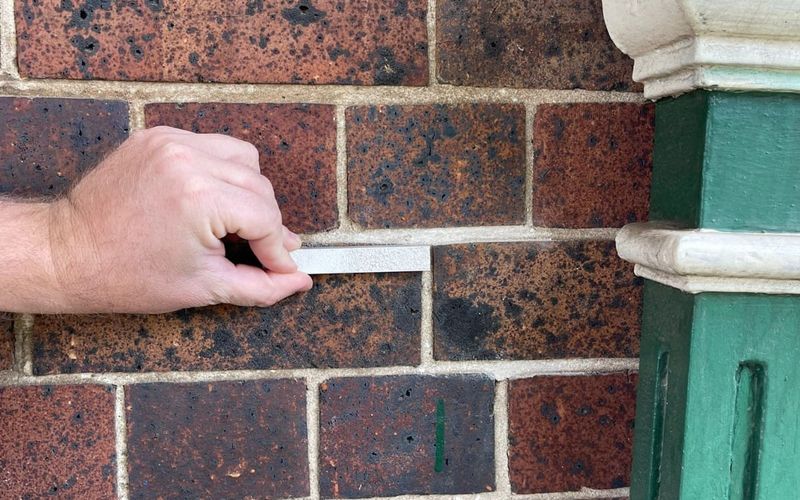
Repointing replaces deteriorated mortar between bricks or stones. Mortar selection involves more than colour: the repair needs to suit the existing masonry, its condition and exposure.
The NSW technical guide to mortars explains the importance of investigation and compatible repair methods. For brick and mortar repairs, ask how joints will be prepared, what material is proposed and whether a sample panel should be agreed before the main work.
Façade and decorative repairs
A façade project may combine masonry repairs, cleaning, render or stucco repairs and restoration of decorative elements. The scope needs to identify the affected areas and explain access, protection and the order of work.
Our façade restoration service covers older residential, strata and commercial buildings. Where significant finishes are involved, heritage finishes and decorative restoration may form a separate part of the scope. Agree the intended finish and any trial areas before treating a whole elevation.
Salt and damp-related deterioration
White deposits, fretting masonry and recurring damp patches are reasons to investigate. Their appearance alone does not establish the moisture source or the right treatment.
The NSW guide to salt attack and rising damp explains why diagnosis matters. Ask how the proposed salt and damp-related treatment responds to the findings, whether another trade needs to address water entry and what should be monitored afterwards.

What happens during a restoration project?
A useful proposal connects each repair to a finding. It also makes clear what is known, what remains uncertain and who will resolve it.
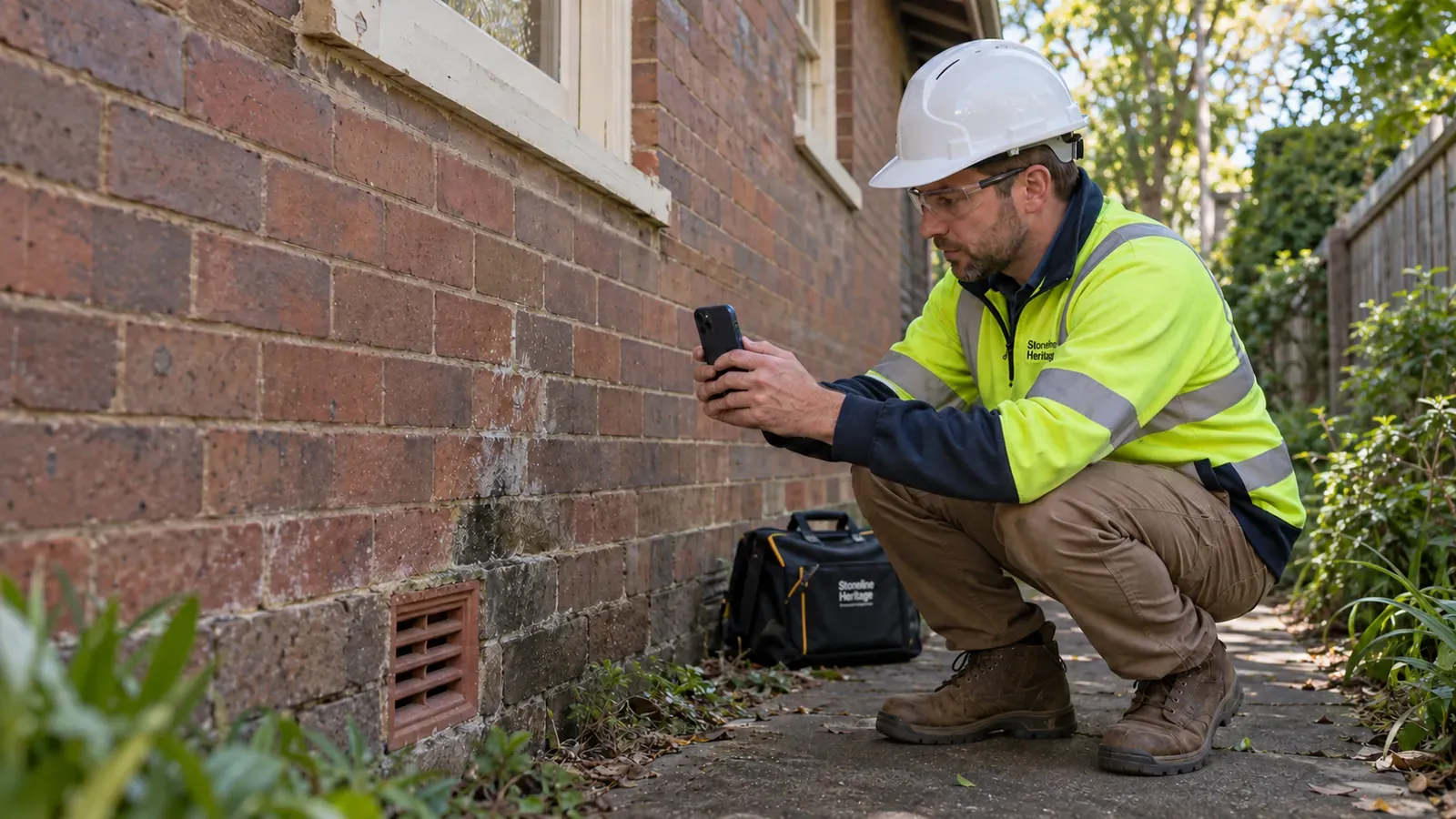
Assess the condition. Record visible defects, previous repairs, access limitations and the owner's concerns. Note any issues requiring urgent attention or specialist advice.
Investigate the cause. Identify whether further access, testing or input from an engineer, heritage adviser or another trade is needed. Confirm what the initial assessment includes before commissioning additional work.
Define the scope and approvals. List repair locations, materials, methods, protection and exclusions. Establish the relevant approval requirements before work begins.
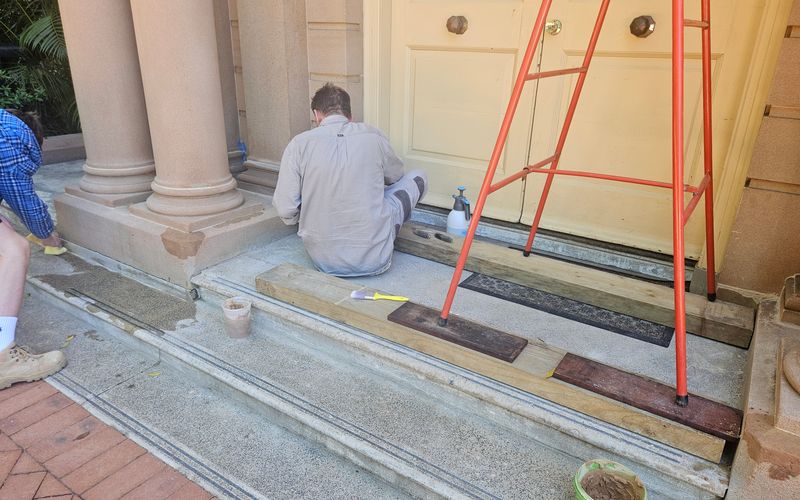
Agree trials and carry out repairs. Use sample areas where appropriate, document discoveries and agree changes before extending the work.
Inspect and hand over. Review the completed scope and collect photographs, material details, outstanding items and maintenance recommendations.
For example, if paint repeatedly blisters near a window, a useful assessment looks beyond repainting. The repair proposal should explain the observed condition, any suspected water entry and what must be investigated before the finish is renewed. This makes the quotation easier to assess than a general allowance to “repair damp wall”.
Keep uncertainty visible in the paperwork. An inaccessible section of a façade should be identified as uninspected, with an agreed next step. It should not quietly become an assumed quantity in a fixed-looking total.
Check NSW heritage controls before committing to work
An older building is not necessarily heritage listed, and an unlisted property may still sit within a heritage conservation area. Check the address and proposed work, rather than relying on another owner's approval experience.
Start with the NSW State Heritage Inventory, then confirm local controls with the relevant council. Heritage NSW's pre-lodgement guidance directs local heritage enquiries to councils. For State Heritage Register items, check the applicable Heritage Act pathway as well as other necessary approvals.
Some activities may qualify for NSW standard exemptions, but their conditions must be met. An exemption is not blanket permission to renovate.
For building restoration in Menai or elsewhere in the Sutherland Shire, confirm the property's position with Sutherland Shire Council. The suburb name does not establish heritage status or determine the repair method. Contact Stoneline with the address and proposed scope to discuss assessment availability.
What affects restoration costs—and how do you compare quotes?
There is no single useful price for “building restoration”. Costs depend on the defects, repair quantities, access, material requirements and specialist input. A small area of difficult-to-access stonework can involve different preparation and access costs from a larger wall at ground level.
When comparing proposals, check these items together:
Repair quantities: Which walls, joints or elements are included, and how were the quantities established?
Access and protection: Are scaffolding, temporary protection and management of occupied areas included?
Materials and preparation: Does the price describe the repair method, sample work and treatment of previous patches?
Professional input: Who arranges investigations, drawings or heritage advice, and are those fees included?
Unresolved work: What is provisional or excluded, and how will discoveries and variations be priced?
Ask for differences to be explained against the same scope. A lower total may cover fewer repairs or leave access costs elsewhere. A higher price also needs justification; detail and relevant experience matter more than the number alone.
Restoration can improve condition, usefulness and appearance, but it cannot guarantee a particular resale value. Prioritise safety, active deterioration and retention of sound fabric before optional cosmetic changes. Ask which stages depend on earlier work and which can reasonably wait.
Check the contractor's relevant qualifications and licence through the NSW contractor guidance. Request examples of comparable work and clarify who will supervise. For residential projects, review the NSW building contract guidance before signing. Our guide to choosing a heritage renovation specialist in Sydney provides a fuller contractor checklist.
Plan access and occupation early
For a home, discuss which rooms, entrances and services will be affected. For strata or commercial premises, establish who coordinates resident or tenant notices, access arrangements and approvals for changes to the scope.
Phasing may make work easier to manage, but each stage needs a sensible stopping point. Ask how exposed areas will be protected, whether temporary arrangements are included and whether later stages require scaffolding to return. Splitting a project can change its overall cost.
Agree who can authorise variations and how quickly decisions need to be made. A clear contact and written record help avoid work pausing while several owners or managers give different instructions.
When separate specialists are needed
Mould: Resolving a building defect and removing mould are related but different tasks. NSW Health's mould guidance explains the importance of controlling moisture. Extensive or recurring contamination may need specialist assessment or cleaning alongside building repairs. Confirm who is responsible for each part; do not assume masonry restoration includes mould remediation.
Fire damage: Follow emergency services' instructions about access and contact your insurer before arranging cleaning or repairs. For bushfire-affected properties, NSW Government guidance on returning home safely identifies structural, service and hazardous-material concerns. Heritage masonry repairs may be one later package within recovery work, after the necessary assessments.
Likewise, changing cracks or loose façade elements can require structural advice before repairs are specified. Keep people clear of an apparently unstable area and arrange appropriate assessment.
What to keep after the work
Ask for a handover record containing the completed scope, photographs, material information, outstanding work and any required sign-offs. Include recommendations for monitoring and future inspections.
The NSW guidance on preparing a maintenance plan provides a framework for ongoing care. Keep these records with the property's earlier reports so future contractors can understand what was repaired and why.
To discuss your building, send Stoneline photographs, the address and a short description of the problem. Mention when it appeared, any earlier repairs and access restrictions. That gives us a useful starting point for discussing the assessment your property needs.
Questions and answers
What do building restoration services include?
They can include condition assessments, stone and brick repairs, repointing, façade work, decorative restoration and repairs associated with damp or salt damage. The appropriate scope depends on the building's condition and materials. Ask which investigations and specialist services are included in the proposal.
How much do building restoration services cost in NSW?
A reliable price requires a defined scope. Repair quantities, access, materials and professional input all affect the cost. Compare written proposals against the same information, including exclusions and provisional allowances; a general square-metre rate cannot account for every older building.
Can you assess a property in Menai or the Sutherland Shire?
Contact Stoneline with the address, photographs and proposed work to discuss assessment availability and suitability. Confirm any local heritage controls with Sutherland Shire Council. The suburb alone does not establish a property's heritage status or which repairs it needs.
Does restoration always require heritage approval?
Requirements depend on the property's heritage status and the proposed work. Some activities may qualify for an exemption, subject to conditions. Confirm the applicable council and Heritage NSW requirements before starting; do not assume a repair is automatically exempt.
Should damaged original materials always be replaced?
No. Assess their condition and significance first. Sound fabric should be retained, and appropriate repairs considered before replacement. Where replacement is needed, the proposal should explain the material choice and how important details and adjoining fabric will be protected.
Can we stay in the building during restoration?
Sometimes, if the scope allows suitable access, essential services and protection from the work. Discuss occupation and staging during the assessment. Establish which areas will be unavailable and whether any stage requires temporary relocation.
Does restoration include mould removal or fire recovery?
Not automatically. Mould remediation and emergency fire recovery can require separate specialists. Agree the responsibilities before commissioning work. Stoneline's masonry and façade repairs may form part of a wider scope after the relevant assessments.
Can you provide a restoration quote from photographs?
Photographs help with an initial discussion, but hidden defects, access and material condition often need inspection before a reliable quote is possible. Send the address, clear images and any earlier reports, then ask what further assessment is needed.