Whether you need council approval to repair a heritage house in NSW is rarely a simple yes or no. Heritage repair approval NSW depends on how the property is listed, what the proposed work involves and the rules of the local government area where it stands. Repair that reinstates existing fabric is generally treated differently from alteration that changes the building, and some minor work is exempt in some council areas but not in others. The safest course is always to confirm the requirement with the relevant authority before work starts.
The short answer on heritage repair approval NSW
Approval for repair work on a heritage property in NSW is best understood as three overlapping questions rather than one. First, how is the property listed: as a local heritage item in the council's planning controls, as a contributory building within a heritage conservation area, or as an item on the State Heritage Register. Second, what is proposed: like-for-like repair of existing fabric, or work that alters, removes or replaces fabric. Third, which local government area controls apply, because exemption lists and application pathways differ from council to council.
For most houses listed at the local level, the council determines whether consent is needed. For houses on the State Heritage Register, approval generally runs through Heritage NSW, sometimes alongside the council process. In both categories, genuine repair that matches the existing materials and detailing is commonly dealt with more simply than alteration, though more simply does not automatically mean no approval at all. Written confirmation from the relevant authority before work begins is the only position worth relying on. This article is general information, not legal or planning advice.
First, confirm how the property is listed
The listing determines the pathway, so establishing it is the first task. Several ordinary sources give the answer:
- The council's local environmental plan heritage schedule and maps show whether the house is a local item or sits within a conservation area, and most councils publish these through their planning portals.
- A planning certificate for the land, commonly obtained through the council, records the heritage controls that apply; in NSW it is often called a Section 10.7 planning certificate.
- Heritage NSW maintains the State Heritage Register of items significant to the whole state, which can be searched for any property.
- Service NSW provides general access to NSW government services and planning information, and is a common starting point when owners are unsure which agency to approach.
Within heritage conservation areas, many councils also record whether each building contributes to the significance of the area. Contributory buildings usually attract firmer controls than non-contributory ones, although both remain inside the conservation area's rules. Knowing which category the house falls into, in writing, saves guessing later.

Local heritage items: council is usually the decision maker
When a house is listed as a local heritage item, the local council is generally the consent authority for work that affects its significance. Repairs are usually assessed against the same controls as alterations, but the outcome is often different: councils generally prefer repair over replacement and look favourably on methods that retain original fabric and match existing materials.
For anything beyond routine maintenance, councils commonly request supporting documentation with an application. The document most often requested is a statement of heritage impact, prepared by a heritage consultant, describing the significance of the place, the condition of the fabric, the effect of the work and the measures taken to protect significance. For simple repair work, a shorter description of method and materials is often all that is needed, and some councils run early checks through a heritage advisor before a formal application is lodged.
The repair method and the approval pathway also influence each other. A proposal framed as targeted repair of decayed fabric, with matching mortar and retained original material, is generally a simpler proposition for a council than a proposal to replace elements wholesale. Involving a contractor experienced in heritage masonry early, even just to assess and describe the fabric, can shape the scope of what is actually applied for.
Heritage conservation areas: the setting carries the significance
A heritage conservation area protects the collective character of a streetscape, including the rhythm of facades, fences, verandahs, roof forms and gardens, rather than a single building. Controls therefore tend to concentrate on what is visible from the public domain: the front facade, roof, front fence and garden setting receive the closest scrutiny, while work at the rear, out of public view, is often treated with more flexibility.
That pattern is not a rule, though. Each council writes its own conservation area controls, and some govern materials, colours and even mortar joints on prominent elevations. Maintenance with matching materials and the same detailing is commonly viewed more simply than changes to appearance such as new openings, different finishes or the removal of original elements.
If the house is recorded as a contributory item within the area, expect the controls to be applied with care, because the building is part of what the listing protects. Non-contributory buildings inside the same area usually face lighter controls, though redevelopment can still be assessed for its effect on the area as a whole. Council planning staff can confirm how the controls read for a particular property.
State heritage items: a separate layer of approval
Houses on the State Heritage Register are significant to NSW as a whole, and the approval pathway generally runs through Heritage NSW rather than the local council alone. Work to a state-listed item typically needs approval under the state heritage framework, and some works may also need council consent; the two processes are separate, so owners commonly check both.
The State Heritage Register also carries expectations about upkeep. Owners are generally expected to keep listed fabric in reasonable repair, which means deferring maintenance can become a compliance question in its own right. Sympathetic repair is usually consistent with those expectations, but the approval to carry it out still needs to be in place first.
Because the state framework differs from the local one, owners of these houses usually deal directly with Heritage NSW at an early stage, and Heritage NSW publishes plain-language guidance about the register and its approvals.
Repair versus alteration: why the distinction changes the answer
Most heritage controls draw a practical line between work that repairs what exists and work that changes it. The distinction matters because repair sits on the favourable side of that line far more often, provided it genuinely reinstates the original fabric rather than replacing it.
Work usually read as repair includes:
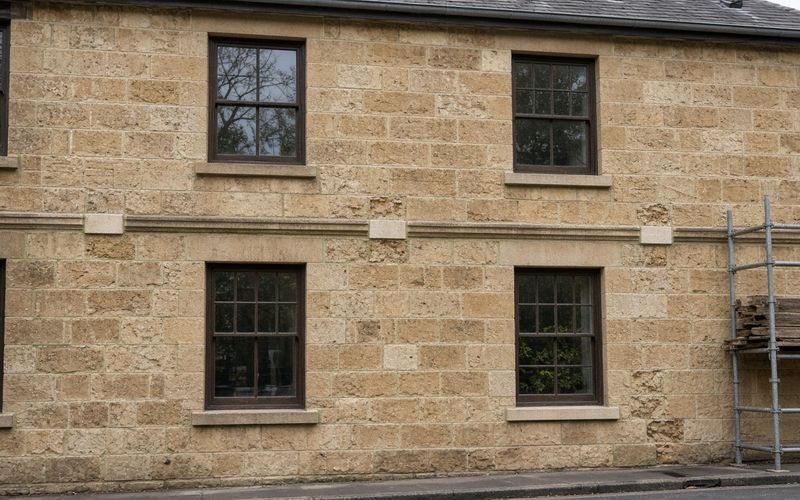
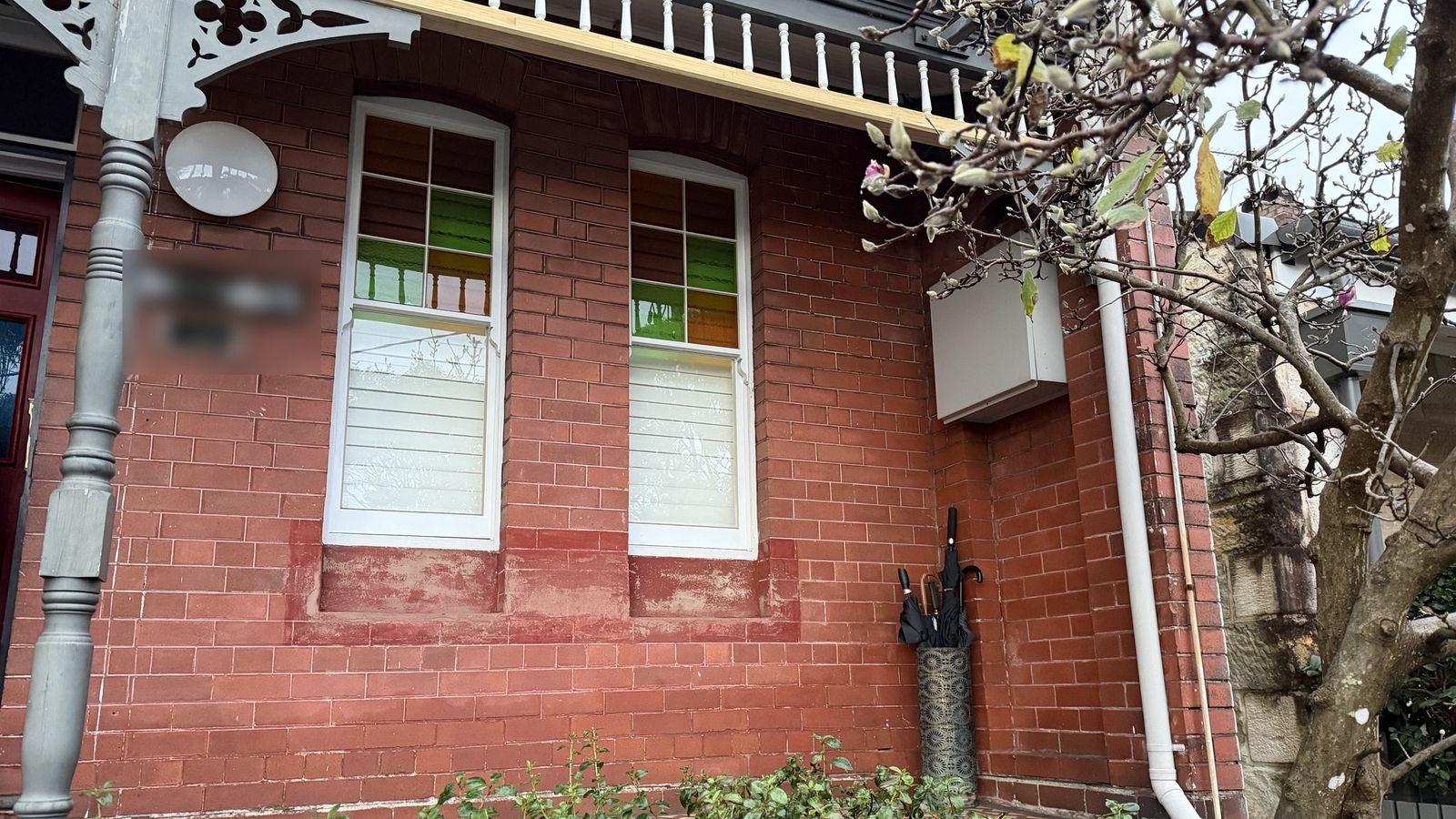
- raking out failed mortar and repointing with a mortar that matches the existing in composition, colour and joint profile
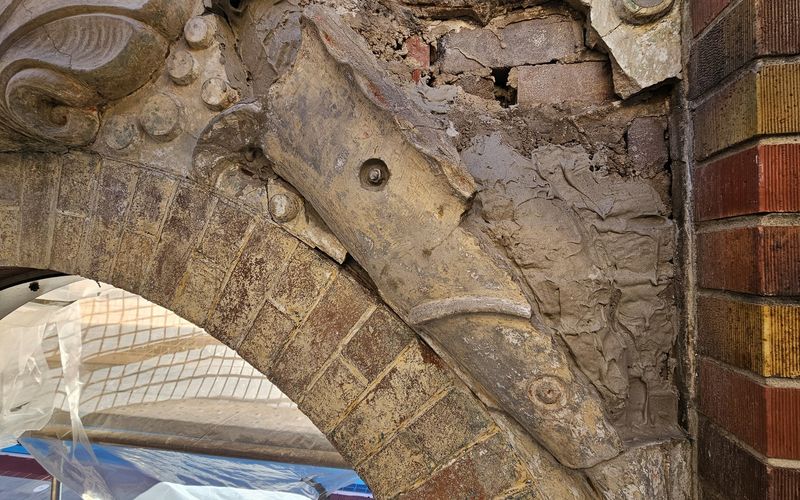
- piecing in new stone or brick where individual units have decayed beyond saving, matched to the surrounding material
- stitching or grouting cracks in masonry, often to a detail confirmed with the project engineer or certifier
- gentle cleaning that removes harmful deposits without abrading the surface
Work more likely to be read as alteration includes new openings, the removal of chimneys or verandah elements, rendering over face brick, painting previously unpainted masonry, replacing intact original fabric with modern substitutes, and abrasive cleaning that permanently changes the surface.
Two nuances catch owners out. First, even genuinely repair-minded work can need approval when it changes appearance: repointing a wall finished in a hard grey mortar with a softer lime mortar improves the wall but visibly changes it. Second, removing later inappropriate work, such as stripping a cement render, is still a change to what currently exists and may be assessed as such. Where structural safety is involved, the repair details are checked against the NCC, the manufacturer instructions for any materials used, and the requirements of the project engineer or certifier; those requirements sit alongside the heritage approval rather than replace it.
More context on this repair-first approach is in our article on facade restoration and repairs in NSW.
Heritage exemptions and minor works, in plain language
Many NSW councils keep a list of work that does not require development consent, commonly described as heritage exemptions, exempt development or routine maintenance provisions. The idea is simple: minor work that maintains the building without changing its fabric or appearance should not need a full application. Typical inclusions are repainting previously painted surfaces in the same colour scheme, repairs in the same materials and detailing, and maintenance that does not remove or damage fabric.
What varies is everything else. Exemption lists differ between local government areas, are updated from time to time, and often carry conditions: some exemptions require prior notification to the council, some require review by a council heritage advisor before work starts, and some exclude particular listing types or items on the State Heritage Register altogether.
A few plain-language practices avoid most of the trouble:
- Read the current exemption provisions for your own local government area rather than relying on advice for another area or an earlier version of the rules.
- Contact the council's planning counter or duty planner, describe the listing and the proposed work, and ask specifically whether an exemption applies.
- Ask for the answer in writing, and keep it with the job records.
- Remember that an exemption from planning approval does not remove other requirements, such as building rules under the NCC or the directions of the project engineer or certifier.
A neighbour's experience or a builder's recollection is not a reliable basis for proceeding. The only version of these provisions that matters is the current one for your property.
Where owners typically check before starting work
The same authorities come up again and again, and each answers a different question:
- City of Sydney. For properties within that local government area, the council's heritage maps, planning portal and staff are the usual first stop for local listing, conservation area and application questions.
- Your local council. Every other council plays the same role: planning certificates, heritage schedules and maps, and duty planner or heritage advisor services.
- Service NSW. The general NSW government service point, commonly used to reach planning information and certificate services when owners are unsure which agency to approach.
- Heritage NSW. The authority for the State Heritage Register, including whether a property is state listed and what approvals apply to state-listed fabric.
A workable order is to confirm the listing first, then ask the relevant authority about the specific work proposed, and only then engage contractors to quote or proceed. Approaching it in reverse risks pricing work that ends up needing a different method or approval entirely.
What a masonry contractor can help with
A stonemasonry contractor experienced in heritage work contributes practical, technical input to this process, but not the decision, and the division of roles is worth stating plainly.
A contractor can typically:
- assess the condition of stone, brick and masonry-related cladding, describing what is decayed, why, and what is genuinely repairable
- prepare scope notes for each repair: the location, the defect, the proposed method and the materials to be matched
- provide methodology statements and photographic records for an application, covering access, protection of adjacent fabric, mortar mixing to match the existing, and cleaning methods
- advise on the properties any replacement material needs so the owner, architect or designer can select and source it
- attend site when the council officer, heritage consultant or certifier inspects
What stays with others:
- whether approval is needed, and which pathway applies, is confirmed by the owner with the council or Heritage NSW
- statements of heritage impact and other heritage advice come from a heritage consultant
- the decision on the application itself rests with the consent authority
No tradesperson's opinion is a substitute for the authority's written response. What a contractor brings is a precise description of the fabric and the repair, often exactly what the authority needs to assess the proposal quickly.
Planning the repair itself
Once the approval position is clear, attention turns to the repair. Careful heritage masonry repair begins with recording the existing fabric and sampling the existing mortar so the new work matches in strength, colour and texture. Original material is retained wherever it can be reinstated; new stone or brick is introduced only where units have failed, matched so the repair reads as part of the wall rather than a patch on it.
This repair work is the core of what Stoneline does. Our facade restoration and renovation services cover the assessment and repair of stone, brick and cladding on heritage houses across Sydney and NSW, from repointing and stone piecing to crack repair and facade reinstatement. For a broader walkthrough of the process, our heritage building restoration guide sets out how these repairs are planned and carried out.
The emphasis on assessment is practical: the fabric tells the stonemason what the repair needs to be, and the same assessment often informs the approval documentation. Stoneline provides that assessment and the scope notes that go with it; the approval pathway itself remains a question for the owner, the council and, where applicable, Heritage NSW.
Frequently asked questions
Does repointing a heritage house need council approval in NSW?
Repointing is like-for-like maintenance in most circumstances, and some councils exempt it when the new mortar matches the existing. Whether an exemption applies depends on the listing type and the current rules of the local government area. Confirm the position with the council before raking out any joints.
Is a heritage conservation area the same as being a heritage listed item?
No. An item listing protects a specific building for its own significance, while a conservation area protects the collective character of a streetscape or precinct. Controls differ in what they cover and how firmly they apply, so check which category the planning records show for the property.
Do state heritage items follow the same council process?
Generally not, or not only. Items on the State Heritage Register are dealt with through Heritage NSW under the state heritage framework, and some works may also involve the local council. Owners of state-listed houses usually confirm the pathway with Heritage NSW directly.
Can my stonemason or builder decide whether approval is needed?
No. The requirement is determined by the council or Heritage NSW, not by a tradesperson. A contractor experienced in heritage work can prepare scope notes, methodology statements and photographs that support an application, which is a different thing from clearing it. A statement of heritage impact, where one is needed, comes from a heritage consultant.
Where can I check whether my house is heritage listed in NSW?
Start with the council's heritage maps and a planning certificate for the land, and search the State Heritage Register held by Heritage NSW for state-level listing. Service NSW provides a general entry point for NSW government planning information, and council planning staff can confirm how the controls read for a specific address.