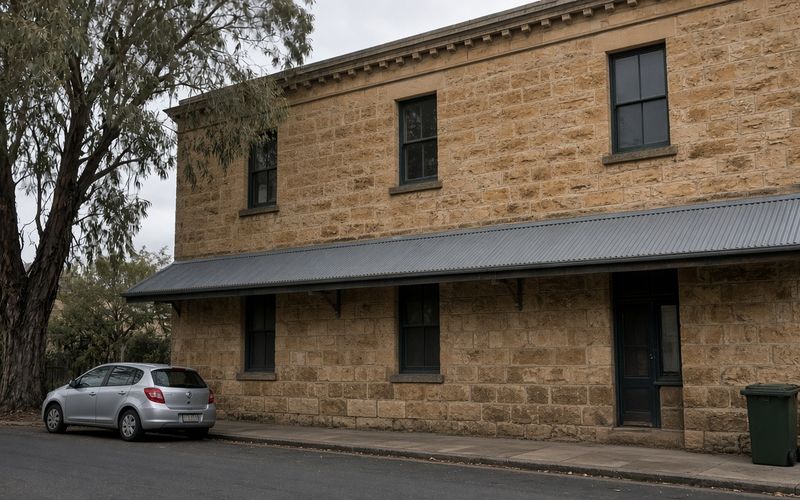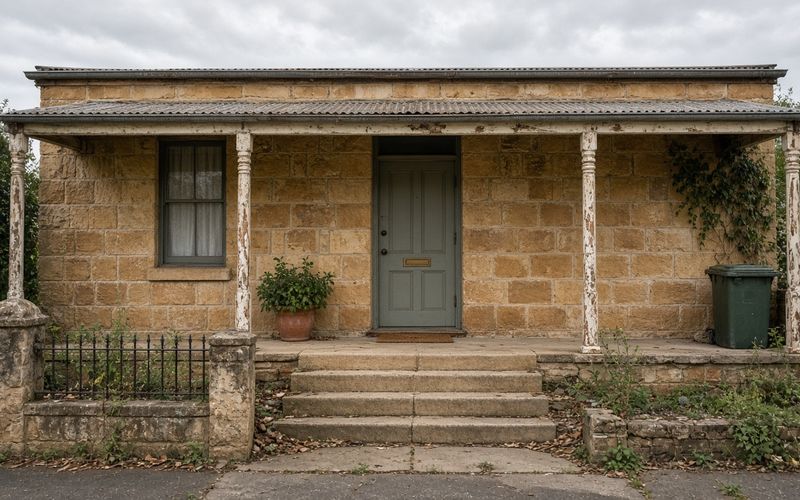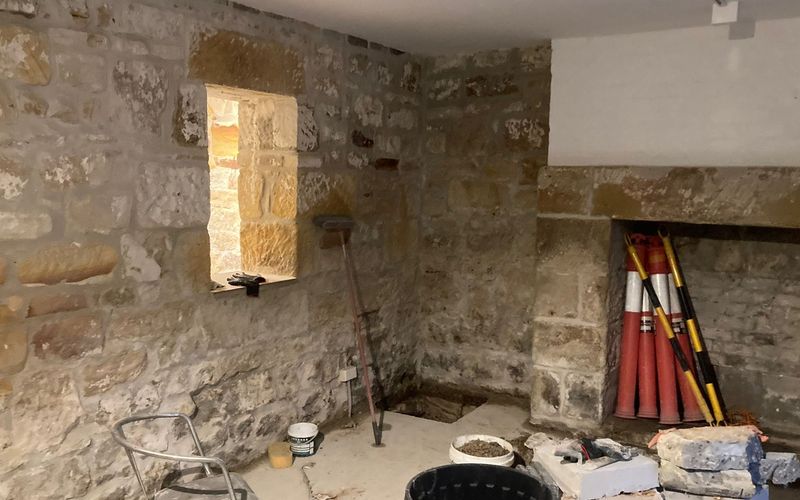
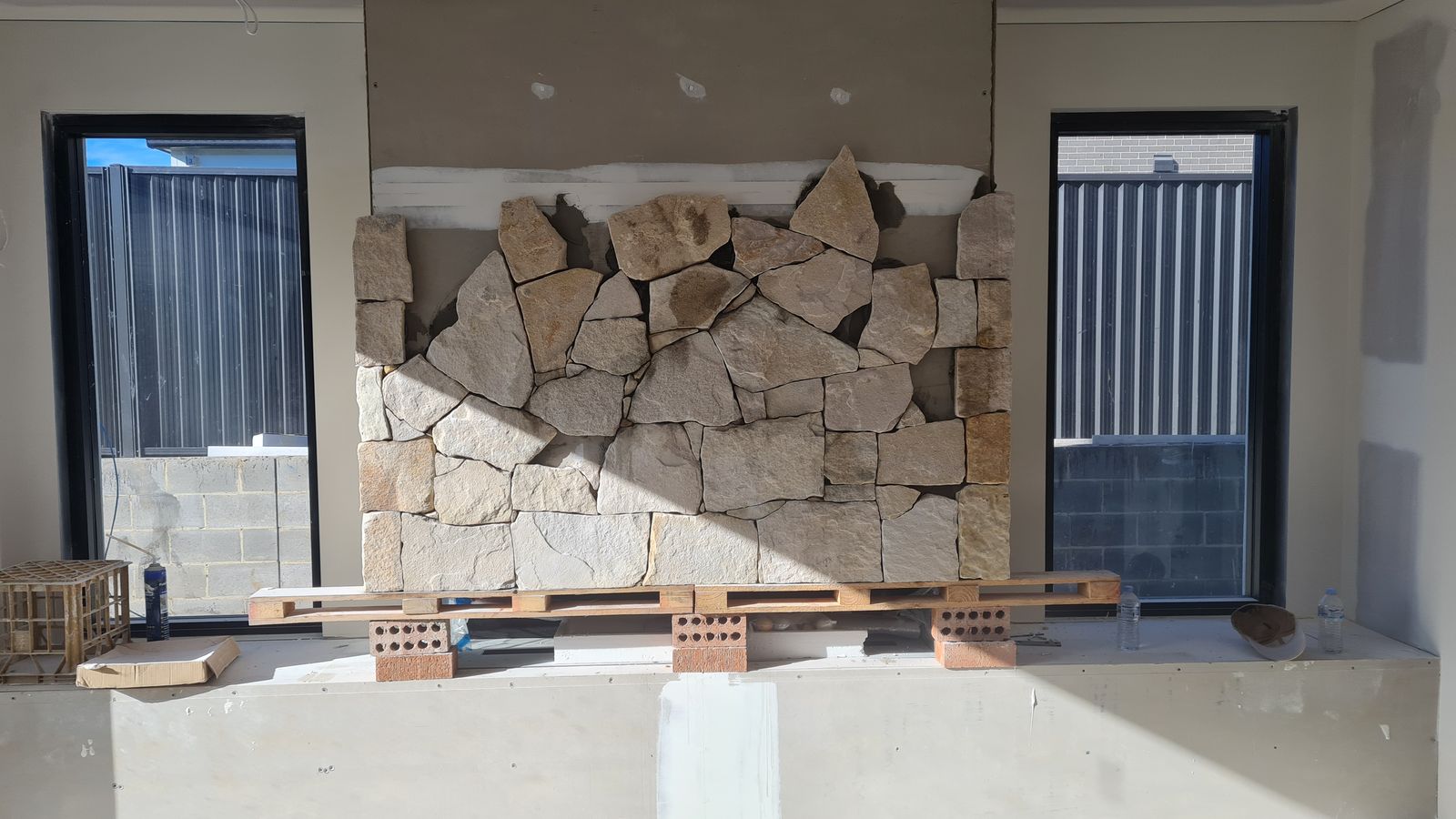
Durable stone cladding installations fix a selected stone face to a prepared wall so the cladding stays attached, sheds water and has room to move. In Sydney and across NSW the work includes new exterior walls and the repair of cladding already on the building, from Victorian and Federation houses to later cavity-brick homes. The owner, architect or designer chooses and sources the stone. Stoneline advises on whether that stone suits the wall and the site, then installs or repairs it.
Introduction
Much of older Sydney was built in solid stone masonry. Cladding is a different assembly: a stone face fixed to a wall that already carries the building. Whether that face lasts depends on the stone, the fixing, the joints and the path water takes out of the wall. This page is the overview of that installation service.
Importance of Exterior Stone Veneer
An exterior stone veneer is the stone skin on the outside of a wall, the face that takes rain, sun and salt. A sound veneer sheds water, stays attached and lets the backing dry. A poor one holds water against the structure, stains the sills and the base, and can loosen until a unit overhead is unsafe.
Shaded Sydney walls stay damp, west walls take the afternoon sun, and coastal walls take salt that corrodes ordinary steel. The brick, frame or concrete behind the veneer carries the house. The stone carries only itself, and only if the fixings and the substrate can take the load.
In a heritage conservation area, or on a listed building, cladding over original fabric usually needs council consent and is often inappropriate. Repair of the existing stonework is usually preferred, especially on a Victorian or Federation front of sandstone or face brick. Thin veneer and lightweight panels are set out separately as stone veneer installation.
Overview of Durable Stone Cladding
Durable stone cladding is a facing that stays attached and weathers slowly when the joints, the fixings, the backing, the flashings, the drainage and the movement allowance all suit the stone and the site. Durability describes that assembly. It carries no promise about one type of stone.
Sydney sandstone, cream to buff and sometimes iron-banded in colour, is relatively soft, porous and formed in beds. Allowed to dry, it loses surface slowly. Kept damp, or coated so salts cannot escape, it scales. The designer selects the stone. Stoneline advises on suitability, then installs or repairs it. The work covers stone cladding, stone veneer and stack stone, and the repair of stone, brick and cladding, in Sydney and NSW.
Types of unit, the difference between natural and manufactured stone, and exterior, outdoor and feature-wall choices are on the stone wall cladding page, and are not set out again here.
Benefits of Stone Cladding
The benefits appear when the assembly suits the stone and the building. A sound face weathers slowly and reads as finished masonry because of the detailing, not because a film has been painted on.
Aesthetic Appeal
The look of a clad wall comes from the colour and grain of the stone, the height of the courses, the width of the joints and the texture of the face. A honed face can suit an interior. On a weather face it shows every run of water. Finish choices for sandstone, and which of them respect the stone outdoors, are discussed in sandstone polishing.
Against brick, render and existing sandstone, a very regular stack or a joint far from the stone in colour can sit awkwardly on a Victorian or Federation front. White salts, rust streaks and mould in a damp joint point to water or to corroding metal. Coating the stone to hide them leaves the cause in the wall. Interior stacked formats, including fireplace surrounds, are covered under stack stone tiles.
Increased Property Value
Well-executed, well-detailed work is generally seen as a quality finish. Poor detailing can do the opposite. Open joints, loose units, stained sills and a dark band of damp at the base suggest a wall in trouble.
Value depends on the whole property. The suburb, the planning controls, the layout, the structure and the condition of the rest of the building all sit ahead of any one finish. Careful stonework will not make good a failed roof or an unresolved heritage constraint. The installation does not set what the property is worth.
Energy Efficiency
Thin stone cladding adds little insulation by itself. Thermal mass matters more with full-thickness stone: a heavy wall takes up heat and gives it back slowly. That mass does not stand in for an insulation layer. Insulation and sarking in the wall system do most of the work. NCC energy requirements are met by the wall system as a whole, not by the stone face.
Orientation, shading, glazing and the insulated backing deal with summer sun on a west wall and winter sun on a north wall. Dark stone in full sun becomes hot at the surface. Eaves and verandahs do more for summer comfort than the choice of facing.
Sustainable Building Materials
Sustainable building materials, for this work, are materials that can remain in service and that suit the climate they are fixed in. Stone can meet that description when water and movement are detailed properly.
Choosing Environmentally Friendly Options
The practical case for stone is long service with modest upkeep. Joints still need watching and drains still need to stay open. Calling the finish free of maintenance is how small faults are left until the backing is wet.
Embodied energy is the energy used to quarry, cut and carry stone. A cladding kept and repaired uses that energy more fully than one removed because joints, flashings or fixings failed. Stone from nearer Sydney generally travels less than stone carried a long way. The designer weighs that against colour, strength and coastal salt. Stoneline does not select the quarry. It advises on suitability, then installs or repairs the stone the project team has chosen.
A film over the face can trap moisture, so salts crystallise underneath and the surface scales. An uncoated external stone, with joints that breathe, is often the more durable course.
Benefits of Using Recycled Stone
Recycled stone here means stone reused from an earlier structure, most relevantly reclaimed Sydney sandstone. Sound pieces can be redressed and fixed again, so less newly quarried stone is needed. On an older terrace, reclaimed sandstone often sits beside the masonry already there.
Units vary. Some are salted, painted or still carrying a hard mortar, and cracks can be hidden, so each piece needs sorting. Not every piece belongs on a weather face, and a salted stone returned to a damp wall keeps breaking down. Patching existing stonework is a different task from fixing a new skin over original fabric. Sandstone already built into an older Sydney building is the subject of sandstone restoration and repair.
Stone Cladding Installation Process
A stone cladding installation is a run of checks, then a method of fixing. The work starts with the building.
Preparation and Planning
Planning asks whether cladding is the right work. In a heritage conservation area, or on a listed building, covering original fabric usually needs council consent and is often inappropriate, and repair is usually preferred. Heritage and character stonework sets out what that work involves. On a later addition, a rendered wall, or a house outside heritage control, a new face is a more ordinary question, and it still has to suit the street.
The wall is identified before a unit is fixed: brick, block, concrete or frame, and whether it is straight, dry and able to hold a fixing. Sydney cavity brick usually has weep holes and flashings that must keep working. Pipes, vents and the switchboard are located so they are not buried. Rising damp, leaking gutters and failed window heads are repaired as themselves. Cladding over a wet wall only hides them.
Full-thickness stone loads footings and ties more than a thin facing. The project engineer confirms the wall can carry the units. Fire performance, structural support and waterproofing are checked against the NCC, the manufacturer's installation instructions where the system is proprietary, and the engineer or certifier. Structural masonry is designed with AS 3700 Masonry structures in view, and the checks belong in the design.
The scope, and therefore the cost, turns on access and labour, the height of the wall, the condition of the substrate, the size and weight of the units, and whether the work is repair or a new installation. An existing exterior sits with facade restoration and renovation. The usual sequence is to confirm heritage controls, check that the wall is dry and able to carry the load, agree the stone and the fixing, and draw the joints, flashings and outlets before any unit is fixed.
Techniques for Residential Stone Cladding
Residential stone cladding has to suit an occupied house. Doors still open, weep holes still breathe, and a terrace party wall stops at the boundary. Work above one storey needs scaffold. These notes are general information, not a method for an untrained installation, and they name no brand.
Heavier units are fixed mechanically, with ties, anchors or a rail, into a backing designed for the load. Thinner units may be adhered where the system and the substrate allow, with a drained space behind. A framed wall needs a substrate specified for the weight and for drainage.
Sandstone cladding installation follows the bed of the stone. Sydney sandstone is laid on its natural bed. Stood on end, the face can shell away, so the person who cut the stone, and the mason, confirm the bed before fixing. Full-thickness units are often bedded in a compatible mortar and tied or dowelled, on a structure that can carry them, with room to move against other materials.
Movement joints sit at changes of backing, at corners, beside large openings and at storey breaks. Mortar across a joint stops it working. Flashings and the drip under sills throw water clear of the face, and the base is left able to drain. Soil or paving against that base holds water on the wall. Coastal fixings are chosen for salt air and confirmed by the engineer or the system notes. Ordinary steel in a damp joint rusts and loses its grip.
Mortar for traditional sandstone is softer than the stone, so the joint weathers first. A dense grey cement joint does the reverse. Openings are spanned by a lintel or shelf angle in the design. Corners use a supported quoin or the system detail. A film sealer outside can trap moisture and salt in the face. If a sealer is specified, the designer specifies it for that stone, and the project team obtains it with the stone.
Stonework Restoration
Stonework restoration is the repair of stone already in place. On a clad wall that means a loose unit, a failed joint, a stain with a cause, or a corroded fixing, dealt with where the rest of the face is sound. Stoneline carries out stonework restoration on stone, brick and cladding in Sydney and NSW.
Maintaining Durable Stone Cladding
Maintaining durable stone cladding means watching the wall and dealing with small faults early. After wind-driven rain, look for cracked or shifted units, open joints, rust, white salt and mould, and for weep holes blocked by paint, mortar or mulch.
Clean with restraint. High-pressure water cuts soft sandstone, and the wrong acid etches it. A neutral wash, a brush or a poultice matched to one stain is the usual limit, after the leak or the rusting fixing is found. Repoint open joints in a mortar softer than the sandstone, so the joint weathers first.
Salts dissolve when the stone is wet and crystallise as it dries, pushing the surface off in scales. Reduce the water before treating the face. A coating that blisters or holds the stone damp may need to come off.
Tips for Long-lasting Installations
Long service follows a short list of habits, almost all of them about water and movement.
- Leave a way for water to leave at the base and at the head of every opening.
- Keep movement joints clear, and renew the sealant when it splits or loses its bond.
- Keep soil, mulch and paving below the damp-proof course and off the base flashing.
- Keep gutters, downpipes and window flashings working, so the cladding is not asked to drain the roof.
- Leave porous external stone unpainted unless the specifier has a reason tied to that stone.
- Repair a loose unit or an open joint before the bay beside it is affected.
For an assessment of the stone, the substrate and the way the wall handles water, see sandstone and stone restoration. That assessment is the point at which a repair is distinguished from a new installation.
Frequently asked questions
Can damaged stone cladding be repaired?
Loose, cracked or stained cladding and failed joints can usually be repaired. The repair starts by finding why the unit moved or the joint opened, such as water behind the face, a corroded fixing, missing movement allowance or salt. A sound repair uses a compatible mortar and a unit that matches the existing stone in type and bed. Stoneline repairs cladding as well as installing it.
Is exterior stone veneer the same as full-thickness stone?
Exterior stone veneer is a facing fixed over a structural wall. Thin veneer and full-thickness stone differ in weight, fixing and thermal mass. Thin units add little mass and need a substrate and a drainage plane suited to that system. Thicker stone has to be carried by the wall and the footings, which the project engineer confirms.
Do durable stone cladding installations make a house energy efficient?
They do not do so by themselves. Thin stone cladding adds little insulation, while thermal mass matters more with full-thickness stone and only slows temperature change. Insulation and sarking do most of the work. NCC energy requirements are met by the wall system as a whole.
Can new cladding go on a heritage house in Sydney?
In a heritage conservation area, or on a listed building, cladding over original fabric usually needs council consent and is often inappropriate. Repair of the existing sandstone or brick is usually preferred, because that original face is what the control protects. A new face on a later addition still has to be detailed for water and weight.
Who selects the stone?
The owner, architect or designer selects and sources the stone, including any reclaimed Sydney sandstone. Stoneline advises on whether it suits the exposure, the substrate and the fixing method, then installs or repairs it. Any adhesive or sealer named in the specification is obtained by the project team with the stone.
What causes a sandstone cladding installation to fail early?
The usual causes are stone laid on the wrong bed, joints harder than the stone, no room for movement, flashings that do not throw water clear, and a base that cannot drain. A coating that traps moisture, and steel fixings that rust in coastal salt air, lead to the same damage. Leaking gutters and garden beds against the wall push water into a face that would otherwise cope.