Efflorescence keeps coming back because the white deposit is salt carried through the wall by moisture, and left on the face as the wall dries. Washing or brushing removes that deposit and does not stop the water, so the salts return. On heritage brick and sandstone the work starts with the moisture path, not with another clean.
Why washing only clears the symptom
Moisture moving through older masonry carries soluble salts. As the wall dries, those salts crystallise in the brick, the stone and the mortar. The white bloom is salt that has reached the face. The salt left in the fabric is what breaks the next repair: crumbling joints, surface scaling, plaster failure and loss of original material.
A wash or a stiff brush takes off the salt-rich deposit. Those deposits hold moisture, and clearing them makes the face easier to read. It is not a treatment of the cause. If water is still moving through the wall, it brings more salt, and the bloom returns.
Moisture pathway first, the deposit second
Find where the water is coming from before you decide what to do about the powder. These are observations for an assessment. A photograph does not settle the cause.
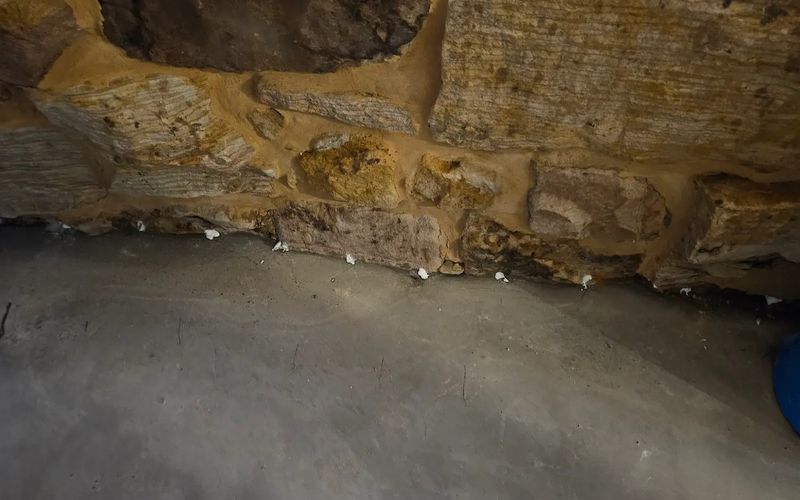
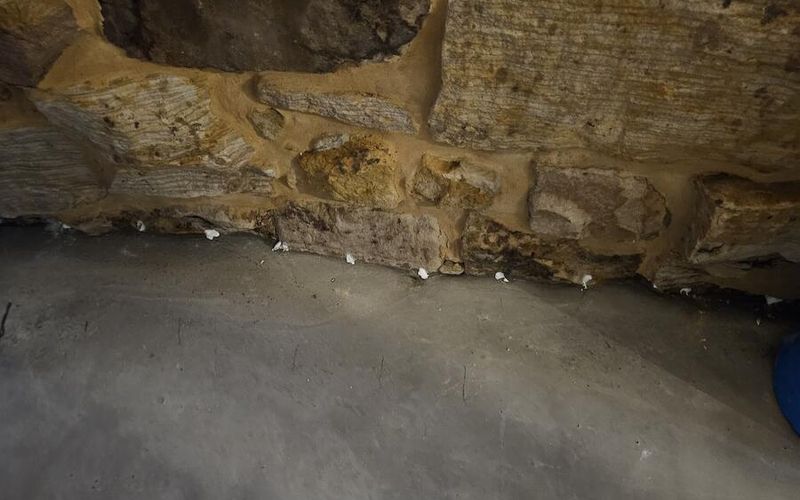
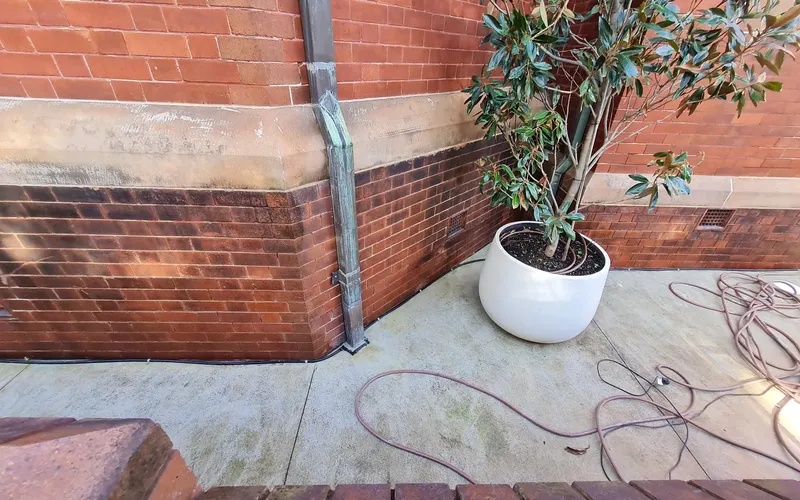
Look at where the deposit sits, and how high it reaches. White deposits and fretting near the base belong in a moisture and salt assessment. A bloom under a gutter, beside a downpipe, or on one wet elevation is a different path from a line of deposits at the base. A leaking gutter can keep saturating a wall that would otherwise be repairable.
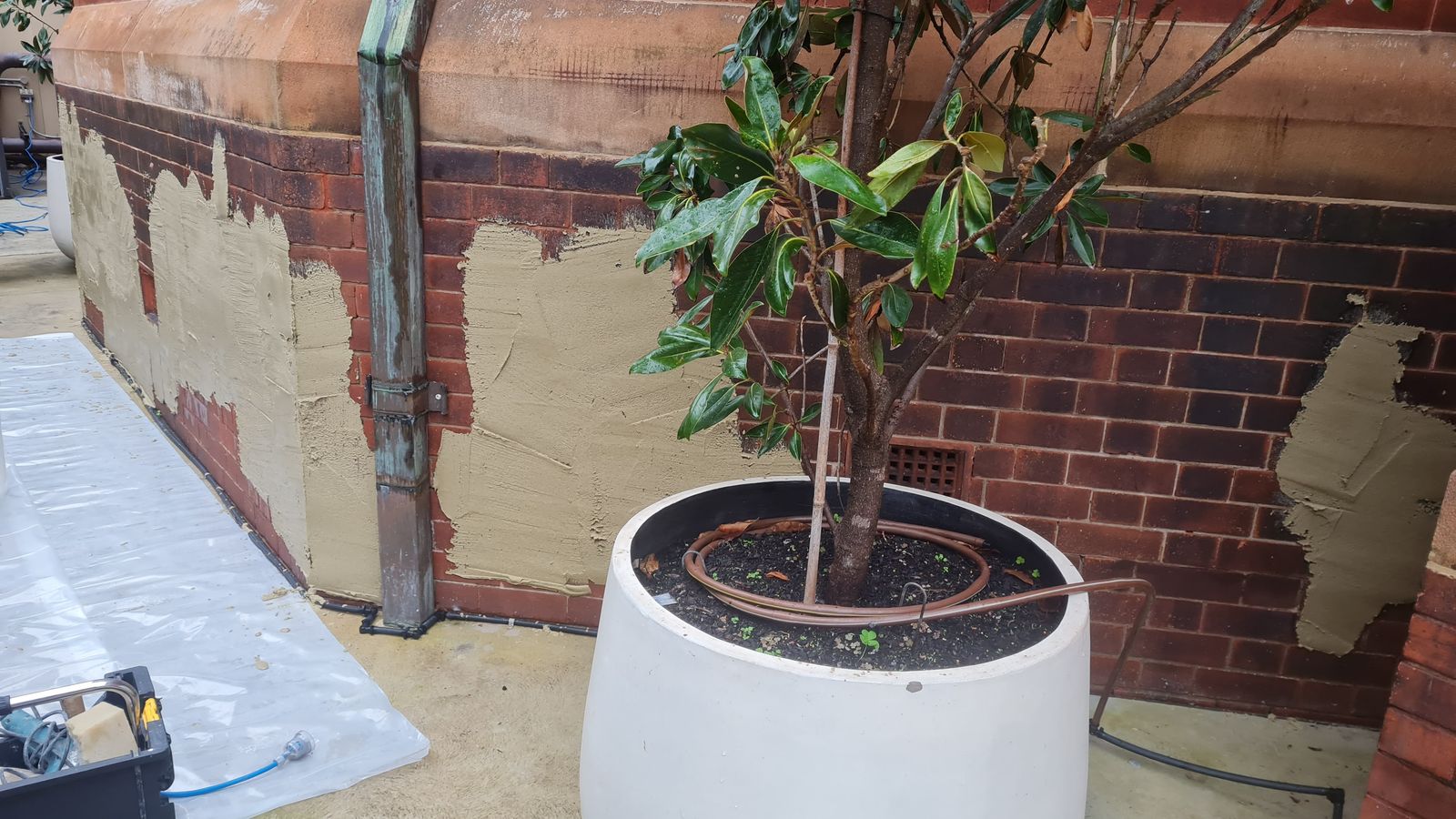
Look at what is already on the wall. Dense cement renders, hard pointing and impermeable coatings stop historic walls drying, and they trap moisture. Open or powdery joints, flaking brick faces, crumbling stone and white deposits around damp areas are worth recording, together with any previous cement and coatings. Those notes define an assessment. They do not, on their own, prove the cause.
Desalination and staged salt reduction
Salts already in the masonry still have to be reduced before a lasting repair. Desalination draws them out with poultices, usually in stages. It is not a wash, and it is not finished on the same visit. A poultice, or compress, is a temporary layer that extracts soluble salts, including chlorides and nitrates, without physical damage to the original surface. A cellulose-based poultice or a hydrophilic mineral wool poultice may be used, depending on the building and the contamination. It is left while it works, then peeled away once it has cured. The stages are set out in our guide to masonry desalination and poultices.
A poultice only deals with salt already in the wall. It does not repair a gutter, undo a coating, or stop rising damp. If moisture is still arriving, salts are replenished and the next repair fails.
Why cement and impermeable sealers make it worse
Cement render and hard cement mortar are a poor match for older brick and sandstone. Cement is harder and less breathable than the stone, so moisture and salts are pushed into the softer fabric and decay develops around the patch. On soft brick the face can spall while the hard joint stays. That mechanism is set out in why hard cement pointing damages older masonry.
A blanket waterproof coating usually makes this worse. Older masonry dries through the wall. A sealer that stops that drying traps water, and the salt crystallises in the brick or stone face. A treatment that still lets water vapour leave is a separate decision, made wall by wall. It does not find the moisture source, and it does not remove salt already in the masonry.
Lime-compatible repairs, after the salt is managed
Permanent repairs wait until the moisture path is understood and the salt load has been reduced. Incompatible cement is replaced, where that is appropriate, with natural hydraulic lime and other breathable lime repairs. The mix is matched to the brick or stone for strength, porosity, permeability and appearance. Hydraulic and non-hydraulic limes are not interchangeable.
Where contamination is severe, sacrificial lime plasters may be used. These porous plasters draw salts off the original masonry and can be renewed later, so the brick or stone is not the layer being sacrificed. On sandstone, compatible repair, consolidation or a matched indent keeps sound original stone. Units that can no longer be retained are replaced. None of that lasts if salt and moisture are still active. Where that is the case, the salt work sits inside sandstone restoration.
When to ask for a heritage assessment
Ask for an assessment when the deposit returns after cleaning, when it sits with fretting or scaling, when cement or a coating is already on the wall, or when the building is listed or in a conservation area. Consent may be required before visible work, and a quote should say whether it assumes those approvals are in place.
A useful quote names the moisture source, how salt will be assessed, whether desalination is staged before lime repairs, and what is excluded if the load is heavier than it first looked. Send photographs of the deposits, the height they reach, and any previous cement or coatings, with a short note about the building.
Through our salt damage, rising damp and desalination service we will come back with a method to assess on site, and what has to be confirmed before a quote.
Short answers
Why does the white powder return after a wash? The wash removes salt that has already reached the surface. Moisture still in the wall brings more.
Will repointing stop it? Repointing repairs failed joints. It does not, by itself, correct a leaking gutter, rising damp, or salt still held in the masonry.
Will a sealer finish the job? A coating that stops the wall drying usually traps moisture and makes salt damage worse. The moisture source, and the salt already in the fabric, come first.