What a salt-damaged wall costs, and how long the repair takes, depends on the cause of the moisture, the salt already held in the masonry, and what has to be put back once that salt is lower. The size of the damp mark does not set either one. Covering the mark at the first visit is not a repair, and it does not fix a timeframe.
The cause has to be named first
A white deposit or a damp patch is a reason to investigate, not a diagnosis. Rising damp, a leaking pipe, poor drainage, a bridged damp-proof course and condensation can all look the same from the footpath, and each one is a different scope. Treating the wrong cause is why a damp treatment usually fails.
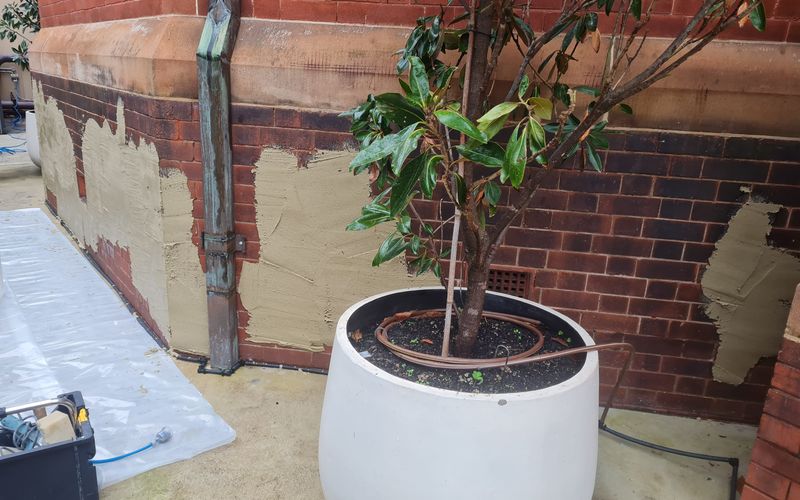
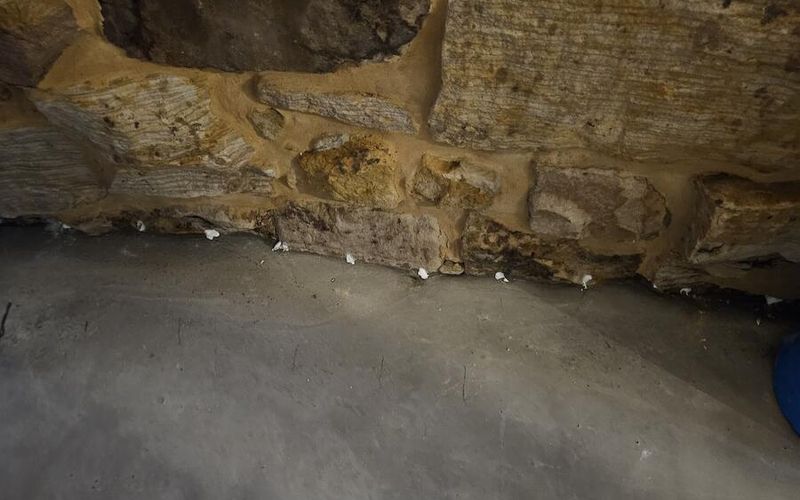
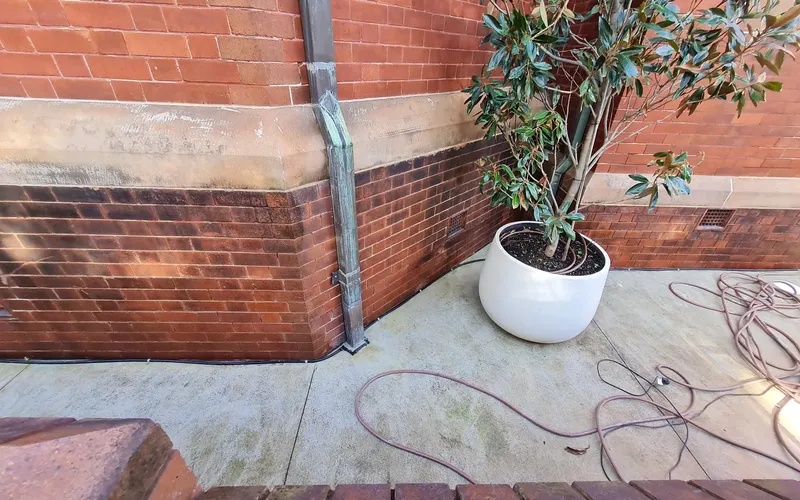
That check is done on site, not from a photograph. Moisture is read at different heights, the other side of the wall is looked at, and the obvious sources are ruled in or out: a leaking downpipe, condensate against the wall, garden beds or paving built up at the base, or render carried below ground. Until that is done, the scope and the time stay open. How those causes are told apart is set out in our note on understanding salt damage and rising damp.
Salt load changes how the removal is staged
The salt left in the brick, the stone and the mortar is what breaks the next repair, so removing it is often essential before a lasting repair. A desalination poultice, or compress, is a temporary layer that draws soluble salts, including chlorides and nitrates, out of the masonry without cutting the original surface. Depending on the building and the contamination, a cellulose-based poultice or a hydrophilic mineral wool poultice may be used. The treatment is temporary, non-destructive and reversible.
The compress is left while it works, then peeled away once it has cured, so the salt load is lower before repair is attempted. It is staged, not a single visit. How heavy the contamination is, and how thick the wall is, changes how those cycles are staged. Only an assessment of that wall can say what it needs. Salt on the face holds moisture, so it is cleaned with little added water before the next step. The order is in our masonry desalination poultice guide.
Stopping the water is a separate piece of work
A poultice only deals with salt already in the masonry. It does not repair a leaking gutter, undo a coating that is holding the wall wet, or stop rising damp. If salt and moisture stay active, the new repair becomes the next thing to fail.
Where rising damp has compromised the fabric, a chemical damp-proof course may be part of the approach. It is not a poultice. A siloxane or silicone-based treatment is introduced by controlled gravity feed or injection and, once cured, forms a barrier to upward moisture. It does not remove the salts already in the wall. Leaving either step out changes the result. A blanket waterproof coating usually traps water in older masonry. Dense cement mortar does the same, forcing moisture out through the brick or stone face. Replacing those materials with breathable lime, where that is appropriate, is often part of the scope.
The repair waits, and some decay is still hidden
Lasting repairs wait until the salt load has been reduced and the moisture path is understood. Failed joints can still be repointed, but pointing alone does not correct a water source. Where contamination is severe, sacrificial lime plaster may be used. It draws salts away from the original masonry and can be renewed at a later maintenance visit, so the historic brick or stone is not the layer being sacrificed. That later renewal is part of how long the approach runs.
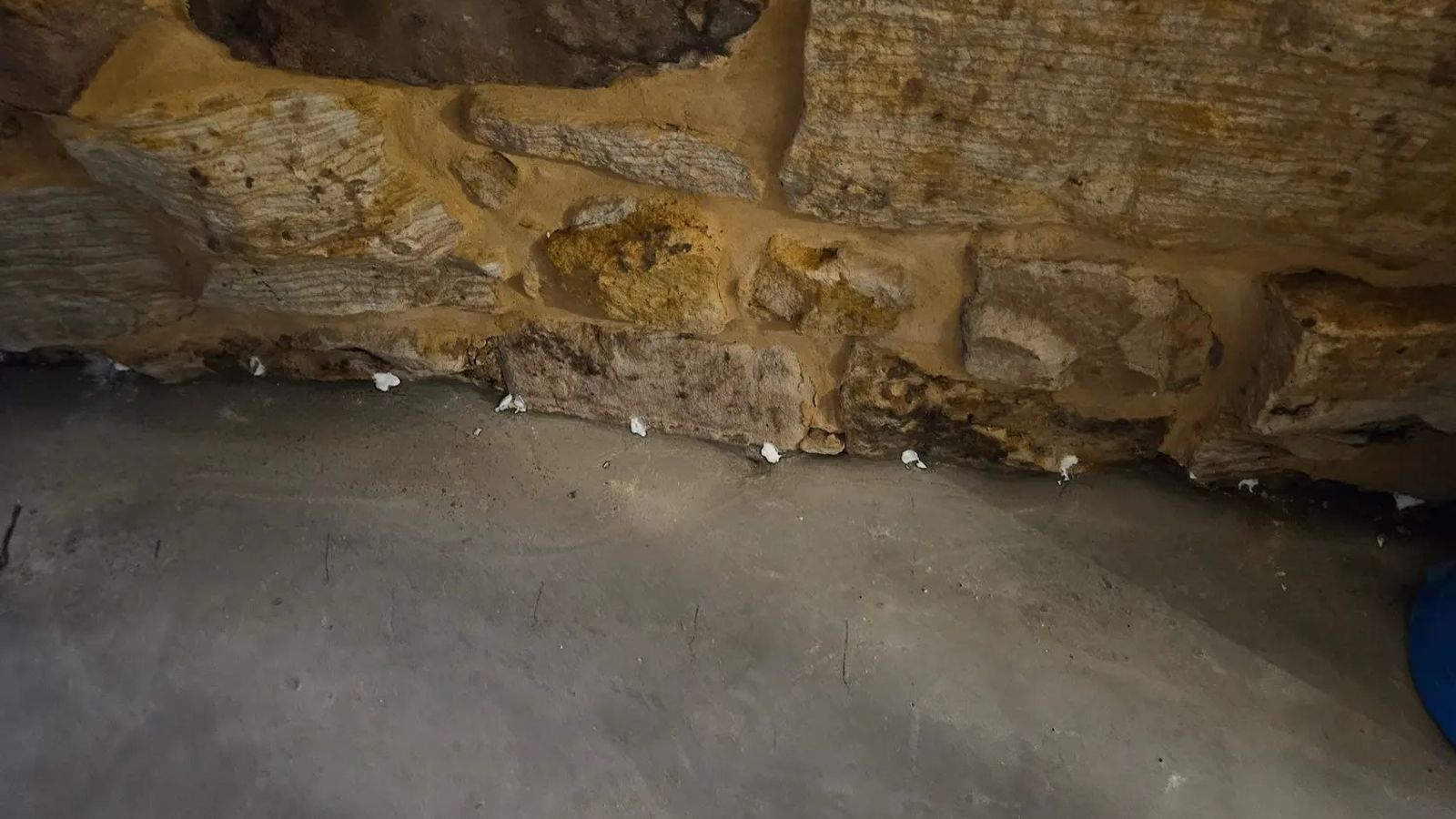
On sandstone, compatible mortar repair, a Dutchman indent or consolidation keeps sound original stone. Replacement is for a unit that can no longer be kept, and it does not last while salt and moisture stay active behind it. Decay behind a sound-looking face is not known until the fabric is opened, so a first look can understate the salt load. A trial is left to dry before it is judged, because damp masonry can look sound and only show loss once dry. Drying sits inside the timeframe.
A quote should name the moisture source, how the salt will be assessed, and whether desalination is staged before lime repairs or stone indents. It should say what is included, what is excluded if the load is heavier than the first look, and whether gutters, coatings or a damp-proof course sit in the masonry scope. Access, protection, trials and the mortar or stone match belong in that scope. On a listed building or in a conservation area, consent may be required, and the quote should say whether it assumes those approvals are in place. How to read that kind of quote is in our heritage masonry quote checklist.
Short answers
Does a larger damp patch mean a larger job? Not by itself. The cause, the salt load, the thickness of the wall, the access, and what is still concealed matter more than the size of the mark.
Why is the repair not finished when the poultice goes on? Desalination is staged, and lasting repairs wait until the salt load is lower and the moisture path is understood. One application is not the whole treatment. Salt-laden air on a coastal or harbourside site can also deposit salts directly, on top of whatever is moving through the wall.
Send photographs of the damp, the deposits and the base of the wall, with a short description, through our salt damage and rising damp service. We will come back with a method to assess on site, and what has to be confirmed before a quote. A permanent result is not promised without that inspection. Moisture source, substrate, salt load and exposure all affect the outcome.