Masonry desalination is the controlled reduction of soluble salts already held in brick, stone and mortar. On heritage fabric it is done with poultices, usually in stages, and only after the source of the moisture has been identified. It is not a wash, and it is not a permanent repair carried out on the same visit.
What salts do to brick and sandstone
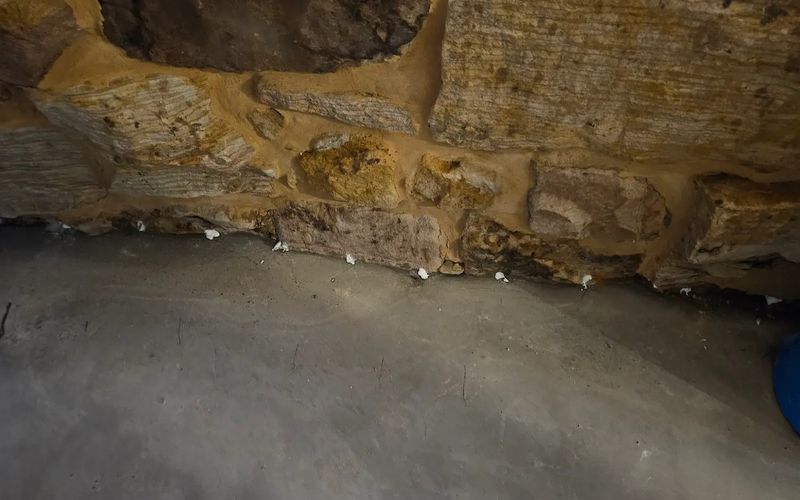
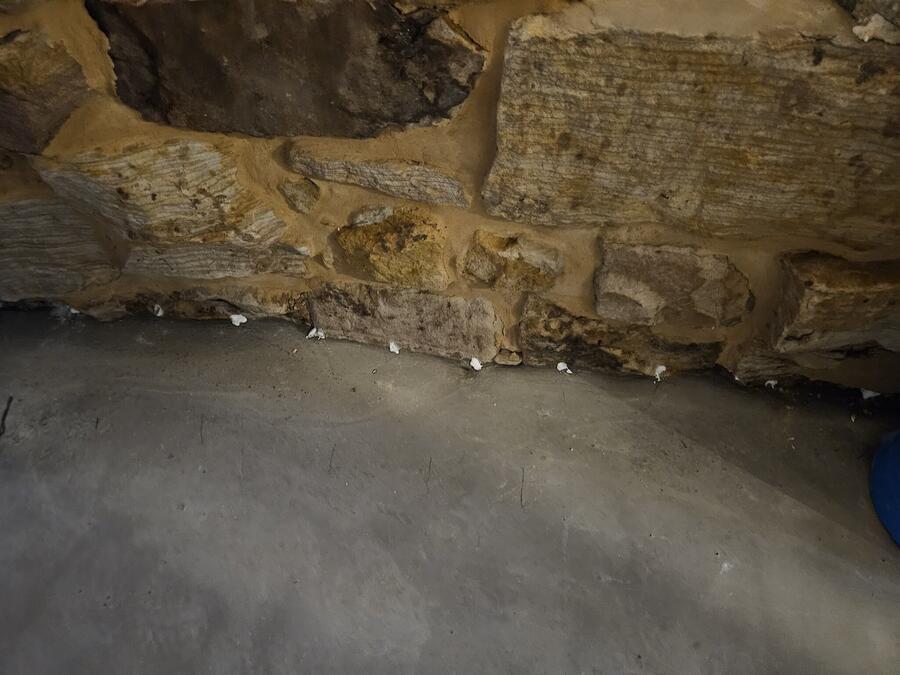
Moisture moving through older masonry carries soluble salts. As the wall dries, those salts crystallise in the brick, the stone and the mortar. The result is crumbling joints, stone decay, plaster failure, surface scaling and loss of original fabric. The damp mark is often what people notice. The salt left behind is what breaks the next repair.
Dense cement renders, impermeable coatings and hard pointing make this worse, because historic walls were built to dry through breathable materials. On sandstone, cement is harder and less breathable than the stone, so decay tends to develop around the patch. White deposits, fretting near the base and scaling that returns after a repair are reasons to look for salt rather than to seal the wall.
What desalination means in conservation practice
Desalination means drawing accumulated salts out of the masonry so a later repair is not bedded onto an active salt load. It is used where that load is driving decay, and it comes before compatible lime-based repair. It does not, by itself, stop water entering the wall. If moisture is still arriving, salts are replenished and the new work becomes the next failure.
Assessment has two parts: where the water is coming from, and how heavily the fabric is contaminated. A chemical damp-proof course, where rising damp has compromised the wall, is a different measure. It uses a siloxane or silicone-based treatment, introduced by controlled gravity feed or injection, to form a barrier to upward moisture. That is not a poultice, and it does not remove the salts already in the masonry.
Poultices and staged salt reduction
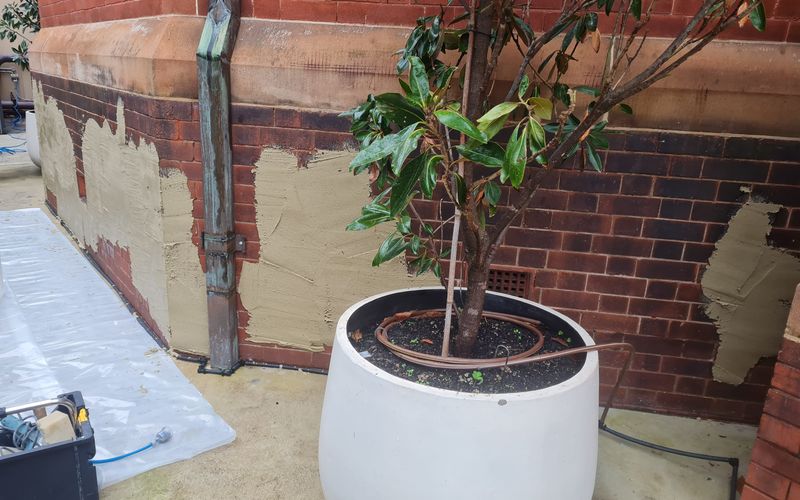
A desalination poultice, or compress, is a temporary layer placed on the masonry to extract soluble salts, including chlorides and nitrates, without physical damage to the original surface. Depending on the building and the contamination, a cellulose-based poultice or a hydrophilic mineral wool poultice may be used. These treatments are temporary, non-destructive and reversible. Their job is to lower the salt concentration while the original fabric stays in place.
The compress is left while it works. It binds with salts in the stone and is peeled away once it has cured, which lowers the load before repair is attempted. The work is usually staged, not a single visit. Cleaning sits beside this. Salt-rich surface deposits hold moisture, and removing them prepares the masonry for later treatment. The method is matched to the substrate, and systems that minimise water — including conservation poultices and peel-off cleaning — are used so a soft face is not harmed.
Diagnose the source of moisture first
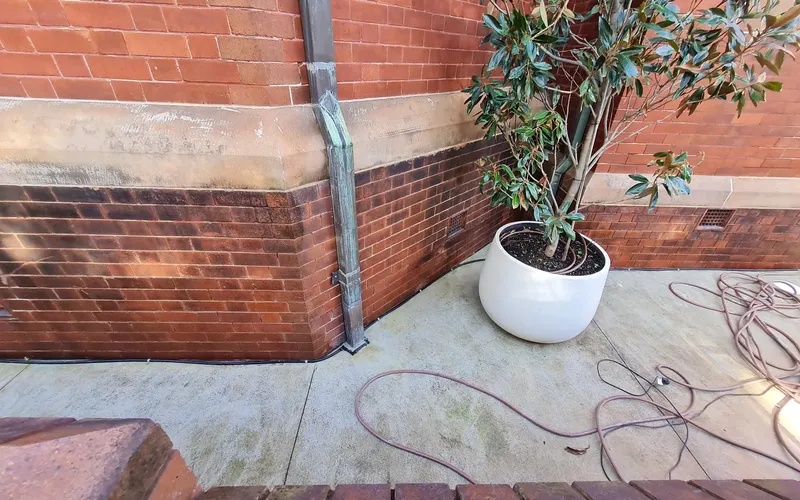
A poultice only deals with salt already in the masonry. It does not repair a leaking gutter, undo a coating that is holding the wall wet, or stop rising damp. Those sources are found first. The aim is a breathable moisture balance, not a hidden symptom. A blanket waterproof coating usually traps water in older masonry. Repointing failed joints is still right when the joints have failed, but pointing alone does not correct a water source. Salt and fretting at the base belong in the moisture assessment.
How desalination sits with lime repairs and sandstone
Permanent repairs wait until the salt load has been reduced and the moisture path is understood. Incompatible cement renders and mortars are replaced, where that is appropriate, with natural hydraulic lime and other breathable lime repairs. Where contamination is severe, sacrificial lime plasters may be used. These porous plasters draw salts away from the original masonry and can be renewed later, so the historic brick or stone is not the layer being sacrificed.
The same order applies to sandstone. Compatible mortar repair, a Dutchman indent or consolidation keeps sound original stone. Replacement is for units that can no longer be retained. None of those repairs lasts if salt and moisture are still active behind them. Where that is the case, desalination is part of the sandstone restoration programme, not a cosmetic extra, and the lime work that follows is the same compatibility question covered in brick repair and repointing.
What to ask for in a quote
Ask where the moisture is coming from, how salt contamination will be assessed, and whether desalination is staged poultice work before lime repairs or stone indents. Ask which areas are included, what is excluded if the load is heavier than the first look suggested, and whether gutters, coatings or a damp-proof course sit inside the masonry scope.
The quote should also set the work out element by element, with access, protection, trials, the mortar or stone match, exclusions and a flag for approvals. On a listed building or in a conservation area, consent may be required, and the quote should say whether it assumes those approvals are in place. Our heritage masonry quote checklist sets out those headings. A single line that says the damp will be treated is not a scope.
Send photographs of the deposits, the height they reach and any previous cement or coatings, with a short description of the building. Through our salt damage, rising damp and desalination service we will come back with a method to assess on site, and what has to be confirmed before a quote.