Brick repointing is the repair of deteriorated mortar joints between bricks. Failed pointing is cut out and replaced with a compatible mix so the wall can shed weather again without trapping moisture against soft historic masonry. On older Sydney and NSW buildings, the decision is rarely “fill every joint.” It is whether the wall needs a diagnosed mortar repair — and whether that repair will protect the brick you already have.
This article follows the questions owners and strata usually ask when they compare professional brick repointing with a quick patch: what the work is, why method matters more than a neat finish, what drives repointing brick cost, and when DIY stops being sensible. It is written as a supporting guide. The service overview and quote path live on our brick repairs and repointing page.
What brick repointing is — and why it becomes necessary
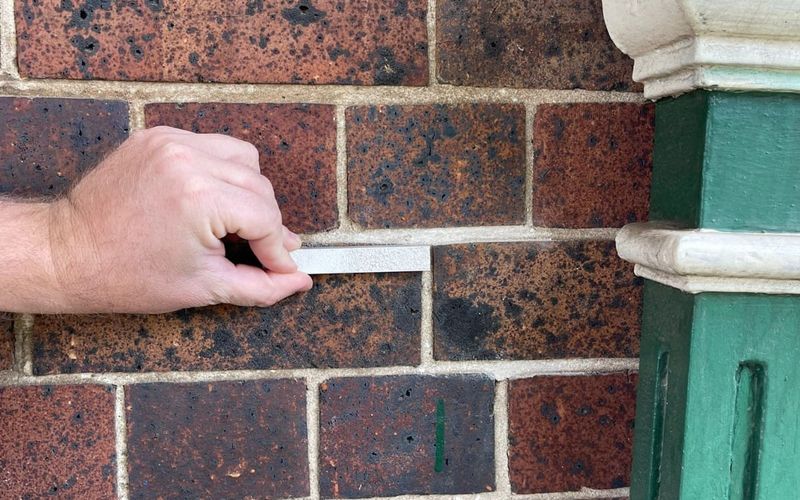
Repointing brickwork restores the exposed mortar (the pointing) that weathers first. Bricks themselves may still be sound while joints open, recess or powder away. Once joints fail, water enters more easily, frost and salts work deeper, and edges of soft brick can start to spall.
It becomes necessary when the pointing no longer does its job — not merely when the façade looks tired. Sound joints should be retained. Wholesale raking of every elevation is rarely conservation-led practice. Compare exposed walls with sheltered ones; photograph after rain and when dry. That is often enough to separate cosmetic unevenness from a genuine weather path.
Cracking, bulging or loose masonry is a different brief. Repointing alone cannot correct foundation movement, a failed lintel or an unstable panel. Keep clear of loose overhead masonry and arrange assessment before anyone prices “pointing” as the cure.
Why professional repointing is worth the investment
For heritage and older brick, that investment is not a promise of higher sale price. It is the cost of getting diagnosis, mortar and workmanship aligned so you are not paying twice.
Protecting the masonry you already have. A competent assessment distinguishes joint failure from brick replacement, structural advice or moisture treatment. The value is a scope aimed at the actual defect — not a uniform “new look” over unresolved damp.
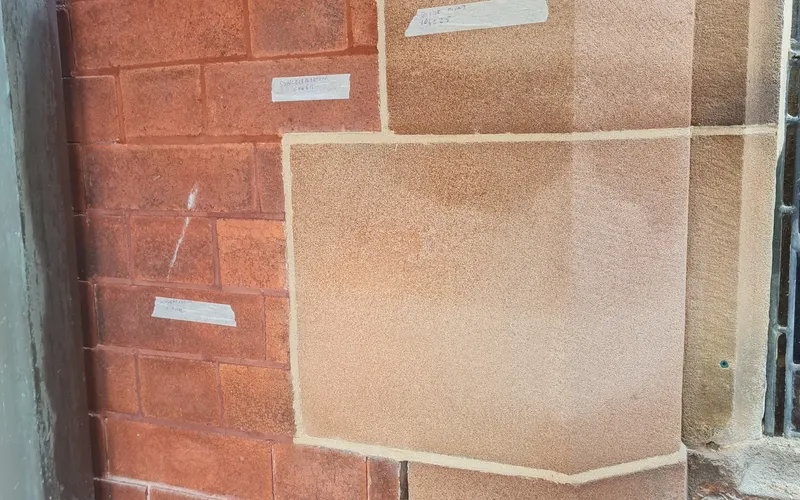
Appearance that still reads as the same building. Colour, texture and joint profile change how a façade reads from the street. A bright, wide cement joint can dominate brickwork that previously looked restrained. Agree a sample panel and view it dry, beside original work, before the main elevation proceeds.
Spending that is usable. Paying for unnecessary joints is poor value. So is a cheap rate that omits access, preparation or curing, then expands on site. Ask for priorities if the full programme cannot run at once: what is urgent, what can wait, and what must be checked after handover.
None of this requires claiming that every repointed wall will “save money forever.” Compatible repair reduces the chance of repeating the same failure for the wrong reason.
Assess the brickwork before you price the pointing
Before tools come out, record what has failed.
Common signs include open or missing joints, mortar that has fallen away, gaps at brick edges, and salt deposits near the base of the wall. Softness alone is a weak test: traditional lime mortar is meant to be softer than many modern mixes. The Society for the Protection of Ancient Buildings’ guidance on repointing stresses retaining sound pointing and avoiding unnecessary work.
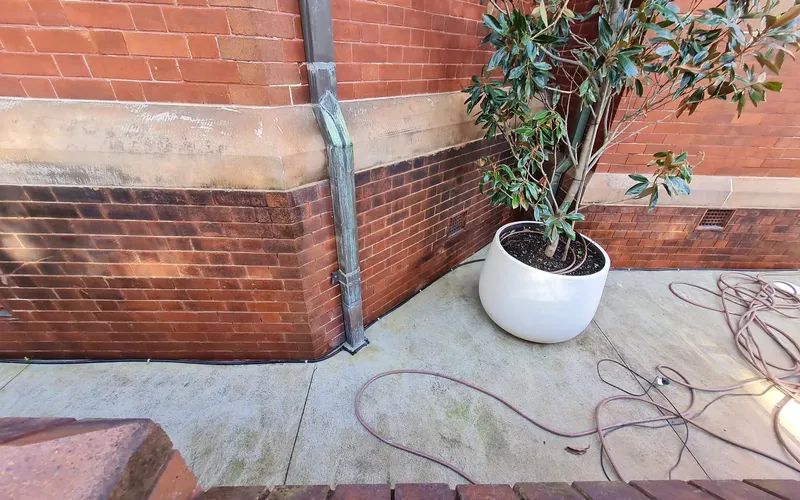
Simple inspection aids help a conversation with a contractor: close-up photographs, a full elevation shot, and notes on gutters, overflows and previous cement patches. If white powder is the main symptom, start with our guide to white powder on brick and sandstone so joint repair is not confused with a salt or damp problem.
Choose mortar pointing that suits the wall
Mortar pointing is not only a colour match. The repair must suit the brick, the surviving mortar and the exposure of the elevation. A hard, dense cement repair can look crisp while trapping moisture and concentrating stress on softer brick faces.
Lime-based mortars are often appropriate for older masonry because permeability and small movement suit traditional construction. “Lime mortar” is still a family of materials — non-hydraulic and hydraulic limes differ in early strength and curing. Ask what evidence supports the proposed mix for your wall: binder, sand, strength, texture and finish. A bag labelled “heritage” is not a specification. Our longer guide to lime mortar repointing for heritage brickwork covers mix logic and cost factors in more depth.
Where hard cement pointing already exists, removal should be trialled. Forcing out firmly bonded mortar can damage brick arrises. Sometimes leaving a stable but imperfect patch is less harmful than aggressive removal — that decision belongs in the assessment, not in a square-metre slogan.
DIY repointing brick — when it helps and when it does not
Search interest in DIY repointing brick and DIY repointing brickwork is real. Small, accessible areas of soft lime pointing, with the right tools and a compatible mix, can be maintained carefully by a skilled owner. That is not the same as raking a whole terrace front with bagged cement because the joints look uneven.
DIY becomes a poor investment when:
masonry is loose, bulging or above a doorway or footpath
earlier hard cement must be removed without damaging bricks
damp keeps returning after “sealing”
decorative tuckpointing is part of the original finish
access needs scaffolding or traffic control
In those cases, a failed DIY mix often creates a larger professional job. Pointing and repointing are related skills; tuckpointing versus repointing should stay distinct in any scope so decorative work is not priced as ordinary joint fill.
What drives repointing brick cost in Sydney
There is no single honest rate for every wall. Repointing brick cost moves with:
Extent — selected joints, one elevation or the whole building; how area is measured
Condition — removal of hard pointing, brick replacement, concealed defects
Mortar and finish — samples, specialist materials, matching, decorative tuckpointing
Labour and supervision — preparation depth, finishing standard, who signs off the sample
Access — scaffolding, occupied premises, narrow lanes, street frontage
Protection and completion — adjoining surfaces, waste, curing visits, final clean
A low square-metre figure that omits access or preparation is not cheaper once the true scope appears. Ask whether quantities are gross wall area or measured repair area, and whether openings are deducted. For a fuller cost discussion, see Brick Repointing in Sydney: Costs, Mortar and Repairs.
How professional work is usually sequenced
A sound professional programme typically includes:
Assessment and recording — failed joints, surviving profiles, earlier repairs, moisture or movement.
Specification and sample — agree mortar and appearance on a trial area.
Preparation — rake failed pointing to a suitable depth; protect brick edges.
Placing and finishing — compact the repair; finish to the agreed profile without smearing brick faces.
Protection and handover — weather protection, curing, inspection and plain maintenance advice.
That sequence is what you are paying for when you hire brick repairs and repointing in Sydney — not only the final joint colour.
Maintaining repointed brickwork
After handover, keep gutters and overflows clear, watch for new open joints after storms, and avoid sealing soft masonry with dense coatings that trap moisture. Regular inspection and timely minor repairs usually cost less than waiting for a whole elevation to fail again. SPAB’s preventative maintenance guidance supports that pattern; it does not require claiming a fixed lifespan for every mix.
Brick repairs Sydney — choosing a contractor without “near me” theatre
Queries such as brick repairs Sydney and “brickwork repairs near me” are how people find capacity. Locality matters for site visits and access knowledge; it does not establish method. Prefer contractors who will show the affected areas, name the mortar approach, approve a sample, and stop when the wall needs something other than pointing.
Stoneline Heritage undertakes assessment-led brick, mortar and repointing for heritage and older buildings across Sydney and NSW. Send clear photographs (full elevation and close-ups; dry and after rain if you can), note access limits, and ask for a method that covers diagnosis and sample approval — not only a start date.
Frequently asked questions
What is brick repointing?
It is the replacement of failed mortar in the joints between bricks with a compatible mix, after deciding which joints need work and what else affects the wall.
Is professional brick repointing worth it on an older house?
It is worth it when joints have failed and the alternative is water entry, accelerating spall, or a cheap hard patch that damages soft brick. The return is a repair matched to the wall — not a guaranteed uplift in sale price.
What affects repointing brick cost?
Extent, existing hard pointing, mortar specification, labour, access and protection. Compare scopes, not headline rates.
Can I DIY repointing brickwork?
Small, accessible lime joints may be maintainable with care. Loose masonry, hard cement removal, damp, height and decorative tuckpointing usually need a professional.
What is the difference between pointing, repointing and tuckpointing?
Pointing is the finished joint. Repointing renews failed joints. Tuckpointing adds a fine decorative line on top of a coloured joint bed — common on many Victorian and Federation façades, and priced as a separate craft.
Should I use cement or lime for mortar pointing on old brick?
Older brick was commonly laid in softer lime mortars. Hard cement is often too dense. Suitability depends on evidence from the wall, not on a single product name.