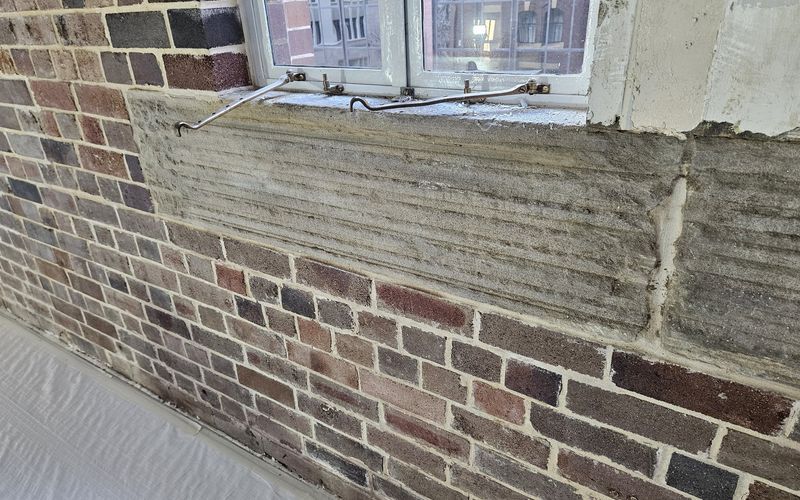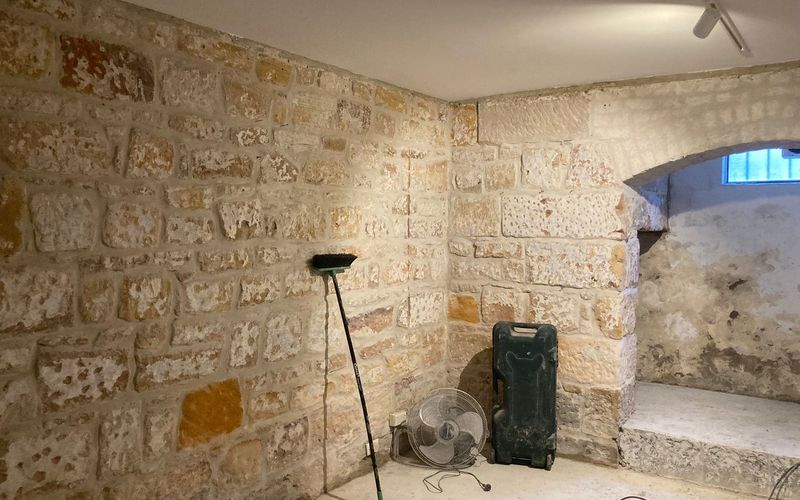
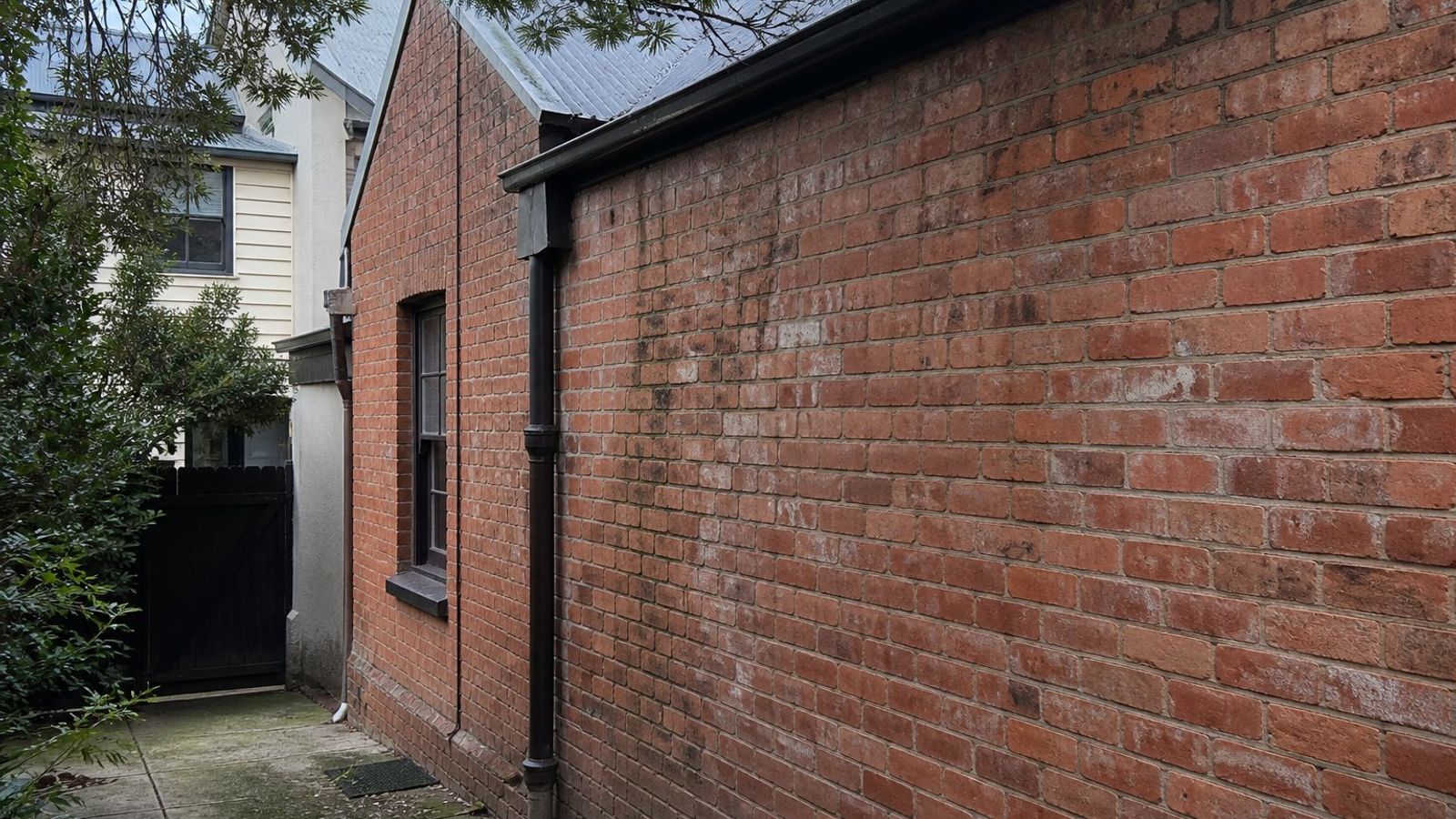
Fretting brickwork is the powdering, flaking or receding of the face of a brick — a surface that sheds sand, loses its sharp edges and slowly crumbles — and on older buildings it is almost always a sign that moisture and soluble salts are moving through the wall. Cleaning, painting or repointing over the face will not last while the moisture source remains: the salts keep crystallising just below the surface and keep breaking the brick apart from within. The right response starts with an assessment of the damp path, the salt load and the condition of the units. Stoneline Heritage assesses and repairs fretting brickwork on heritage, period and listed buildings across Sydney and NSW.
What fretting brickwork looks like
Fretting usually shows as a fine powdering of the brick face, flaking of thin shells, loss of the arrises — the sharp edges of the units — and a face that sits recessed while the unit behind remains sound. It tends to appear where water is concentrated: below downpipes and leaking gutters, near the base of walls where raised paving or garden beds bridge the damp-proof course, and on elevations that take driving rain. White powdery deposits nearby are often salts, and their position maps the moisture path.
Why it happens on older brick
As moisture moves through porous masonry and evaporates at the surface, it carries soluble salts with it; when the wall dries, the salts crystallise just below the surface, and the pressure of crystallisation causes flaking, powdering, fretting and loss of surface material — the damage comes from the crystals expanding, not the moisture alone. Our guide to understanding salt damage and rising damp sets out the mechanism in more detail.
Hard cement repairs make it worse on lime-built walls: a dense mortar on soft historic brick traps moisture, restricts small movement and pushes stress into the brick face, so the moisture escapes through the face itself and accelerates the same fretting — see why hard cement pointing damages older masonry. Other contributors are leaking gutters, persistent wetting, existing salt contamination, coastal and harbour salts and impermeable coatings.
Fretting, spalling and ordinary weathering
Not every tired-looking wall is fretting. Ordinary weathering is gradual and even. Spalling is the loss of larger flakes of the face, often where a hard joint meets a soft unit; fretting is finer — the face powders and sheds sand while the unit holds its shape. Efflorescence, the white powder on the surface, is a deposit left as moisture evaporates: cosmetic on its own, but it confirms salts are moving, and where the crystals form below the surface, salt attack breaks the material apart from within.
What to check before any repair
Photograph the whole elevation and the affected faces, dry and after rain, and note gutters, overflows, downpipes, raised paving, garden beds against the base, previous cement patches and coatings. Record damp patches or tide lines at low level, fallen mortar, and any unit that sounds hollow when tapped lightly where safe. Those notes define an assessment; they do not prove the cause. Keep clear of loose overhead masonry — where a pier or chimney can shed units onto a path, making safe comes first.
Two things not to do first. Do not seal, bag or paint over fretting faces: an impermeable coating traps moisture and pushes the damage into sound brick. And do not assume repointing is the cure — it renews failed joints but cannot correct an active water source, ongoing movement or a failed lintel.
How a compatible repair is approached
A specialist starts by finding what failed and why; where many units fail in one zone, the cause is questioned before more bricks are replaced — too-hard pointing, persistent damp, salts or movement. Where the salt load is driving the decay, desalination poultices can draw accumulated salts out before permanent repairs begin, and the moisture source — gutters, drainage, ground levels — is corrected first. Lasting results need the cause addressed, not only the surface.
The repair uses compatible, breathable lime-based mortars matched to the surviving mortar and brick, and sound joints and sound bricks stay. A spalled unit is cut out and a match bedded for size, colour and texture; where the face has lost material, new mortar cannot restore it, so conservation may include consolidation or a matched replacement where retention is no longer viable. On a listed building or in a conservation area, visible change to brick and mortar can need council approval, so requirements are confirmed before visible works proceed. For the wider scope, see our guide to brick repair on older Sydney homes.
Short answers
Is fretting brickwork structural? Not usually by itself — it is surface decay — but it signals active moisture and salt movement, and stepped or widening cracks, loose units or a bulging panel mean movement that needs its own structural assessment before any mortar work.
Can you paint over fretting brickwork? Not as a fix. Paint and sealers on soft, salt-affected brick trap moisture and can accelerate the decay; the moisture source has to be addressed first.
Is fretting the same as efflorescence? No. Efflorescence is the white deposit on the surface; fretting is the physical loss of the brick face from salts crystallising within the fabric.
When should a specialist look at it? When faces are flaking or powdering, deposits keep returning, the wall stays damp, or mortar is crumbling near the base — book an on-site assessment rather than relying on photographs alone.
If you are seeing fretting brickwork on a heritage, period or listed building in Sydney or NSW, send photographs of the elevation and affected faces through our brick, mortar and repointing service and request a quote or site assessment. Where salt or fretting at the base is driving the failure, the salt damp and rising damp assessment is part of the scope, not a coat over the joint.