Graffiti on heritage sandstone should be removed with the gentlest method the stone will accept, proven on a small test panel in an inconspicuous spot before any full treatment begins. Sandstone is porous and often softer than the mark sitting on its face, so the wrong method can strip the weathered surface and leave the wall worse than the graffiti did. The test panel is what shows which method lifts the mark without taking the face with it.
Why the test panel comes first
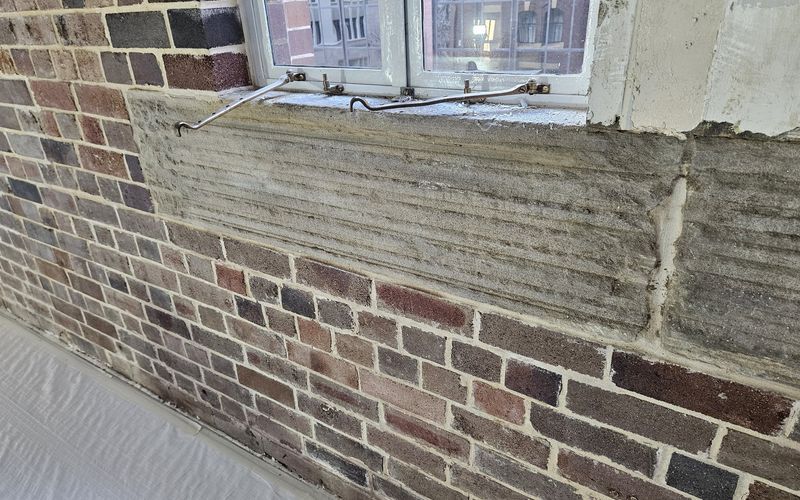
Sandstone varies in texture, strength and weathering even within the one building, so two blocks on the same wall can respond differently to the same treatment. The outer weathered face of the stone, sometimes case-hardened, protects softer material underneath, and aggressive cleaning such as pressure washing, abrasive blasting or strong chemical cleaners can strip that face away and accelerate the very decay it was meant to fix.
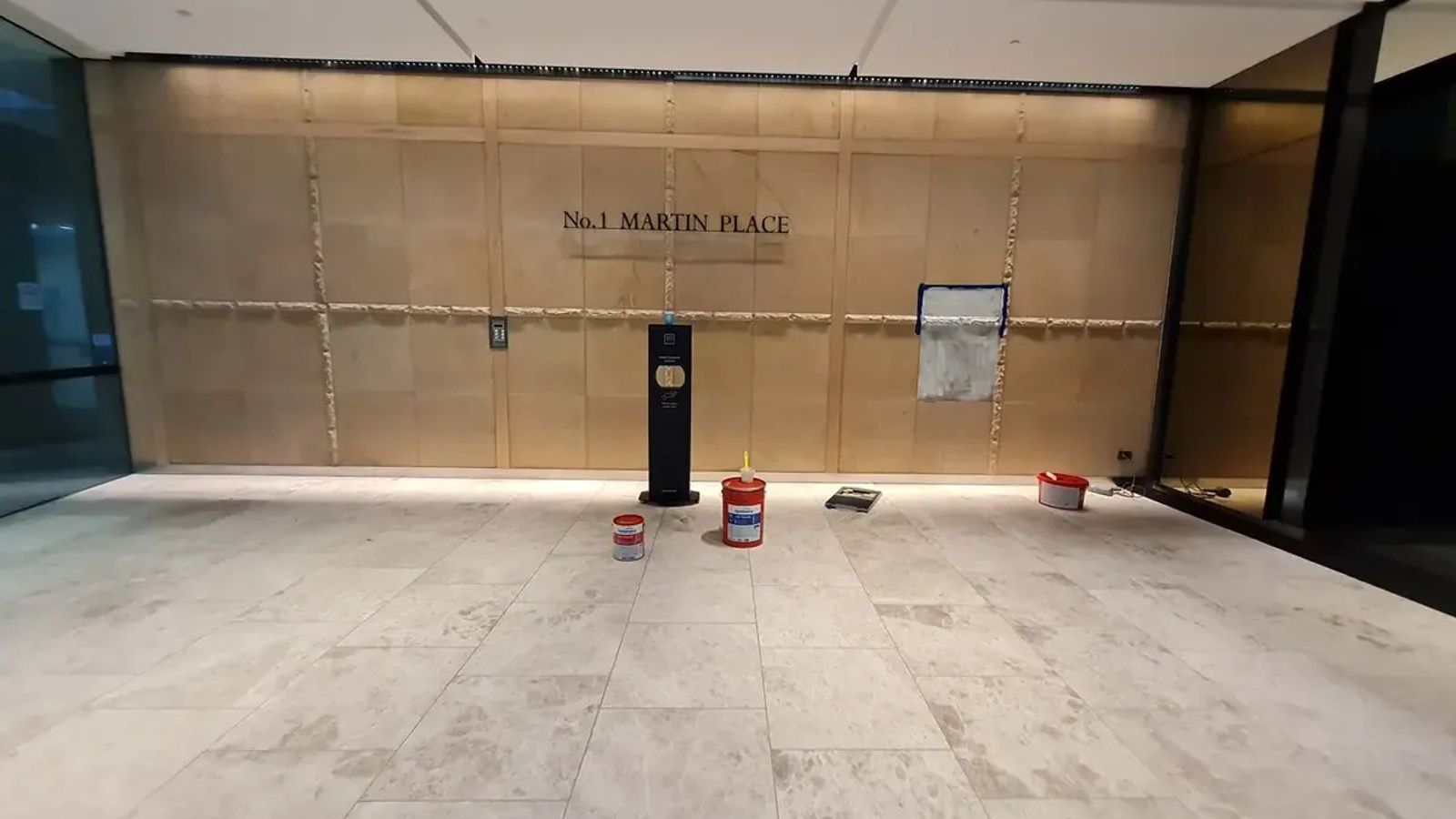
That is why a test panel in an inconspicuous area, using the gentlest method that works, is standard conservation practice. The trial should represent the work being proposed, because one patch cannot show how every block, repair or exposure will respond. Keep a record of the method and the result, and compare the surface after it has dried before extending the treatment. Our guide to the early signs of sandstone deterioration explains how to read the wall before any cleaning starts.
What is checked before a method is chosen
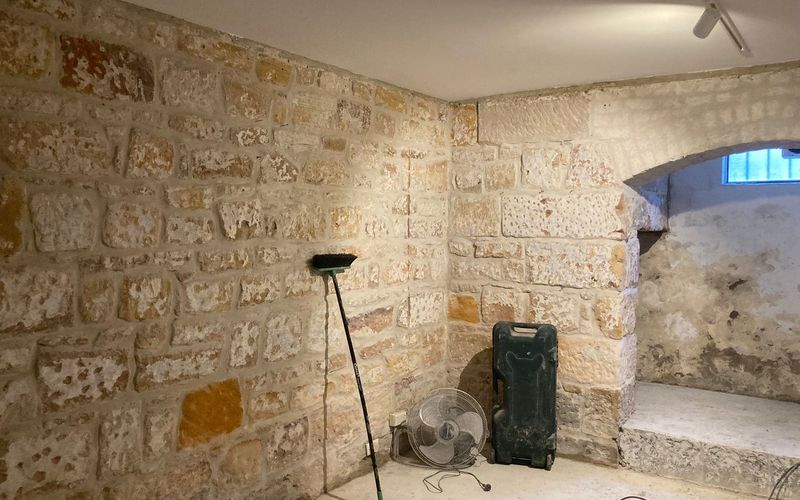
The mark matters as much as the stone. Paint, ink and other media behave differently, and how far the material has penetrated the pores decides what is realistically possible. On site we inspect the surface, the mortar joints, existing coatings and previous repairs, with care around carved details, softened stone and earlier work. Small trial areas then establish how the stone responds to cleaning and what level of change is appropriate before a larger area is treated.
Depending on the stone and the deposit, the work may involve controlled low-pressure cleaning, conservation poultices or a waterless peel-off system, chosen after assessment and testing. One method is not suitable for every part of a building. The sequence we follow on sandstone is set out on our sandstone cleaning service page.
Why not just blast or pressure-wash it off
Blasting removes the mark by removing material, and soft sandstone gives way as readily as the coating does. The typical result is a roughened, orange-peel texture, opened pores that swallow water, and softened detail on mouldings and arris lines. The freshly exposed interior then weathers faster than the original face ever did, and none of it can be reversed.
High-pressure washing can cut through the weathered face, drive water, dissolved paint and salts into the pores, and open the joints. High-pressure cleaning is not our default approach for heritage masonry. Strong chemical strippers can burn or discolour porous stone, and residues are drawn inward rather than rinsed away, where they can keep reacting long after the work appears finished. Methods that rely on force or aggressive chemistry cannot tell the difference between the mark and the stone, which is why removing paint and similar coatings from sandstone safely starts with an assessment and a trial rather than a stronger product.
Not every mark can be fully removed
The achievable result depends on the surface, the material causing the stain and how far it has penetrated. Trial areas help establish what can be removed without unacceptable damage, and some staining or historic patina may need to remain to preserve the original surface. Complete or uniform removal is not always appropriate or achievable, and remaining colour variation is not, by itself, a reason to repeat the cleaning or increase its intensity.
Removal can reveal what the mark was hiding
Removal frequently reveals eroded faces, open joints, delaminating scales and failed earlier repairs. Where that happens, repair follows cleaning rather than being blended into it, with compatible materials matched to the original stone.
Cleaning alone will not repair failing mortar joints, cracked masonry or an ongoing moisture problem. Powdering stone, open joints and recurring salt deposits can indicate deterioration that cleaning alone will not resolve, so moisture management, desalination, consolidation or compatible repairs may need to come first. Any protective treatment or sealer is a separate decision made after the stone has stabilised, not an automatic final step.
Approvals on heritage buildings
If the building is heritage-listed or sits in a conservation area, it is worth checking what approval the work needs before starting. Even like-for-like conservation work can fall under a council's heritage controls, and requirements vary by council and by listing, so the requirement should be confirmed with the relevant authority before work begins. Written confirmation from the relevant authority is the only position worth relying on. This article is general information, not legal or planning advice.
Short answers
Can all graffiti be removed from sandstone? It depends on the surface, the material causing the mark and how far it has penetrated. A trial area shows what can be removed without unacceptable damage, and some staining or patina may need to remain to protect the original face.
Is pressure washing safe on heritage sandstone? Not as a default. Aggressive washing can damage vulnerable stone and mortar joints, so a suitable method is established through assessment and a trial rather than assumed.
Does graffiti removal need council approval? Often it needs checking first. Whether approval is required depends on the listing and the local council, so confirm with the relevant authority before work starts.
Send photographs of the marked stone, the property address and any known earlier treatments through our sandstone and stone restoration service. We carry out graffiti and paint removal on sandstone where the stone's condition allows, and we will come back with a method we would recommend assessing on site, and what has to be confirmed before a quote. Request a quote today.