Brick repair on an older Sydney house is rarely one job. It may mean resetting a loose brick, replacing failed mortar, cutting out a spalled unit, or deciding that the wall needs structural advice rather than a neat patch. The useful question is not “how do I make the façade look new?” It is what has failed, why it failed, and which repair will protect the masonry you already have.
This guide follows the questions owners and strata usually ask when they search for brick repair, brick wall repair or brick and mortar repair: how to read common defects, when mortar repair is enough, when a brick itself must be replaced, and when DIY stops being sensible. It is written as a supporting article under our brick repointing services pillar. The service overview and quote path live on our brick repairs and repointing page.
Why maintaining brick structures matters — without the sales pitch
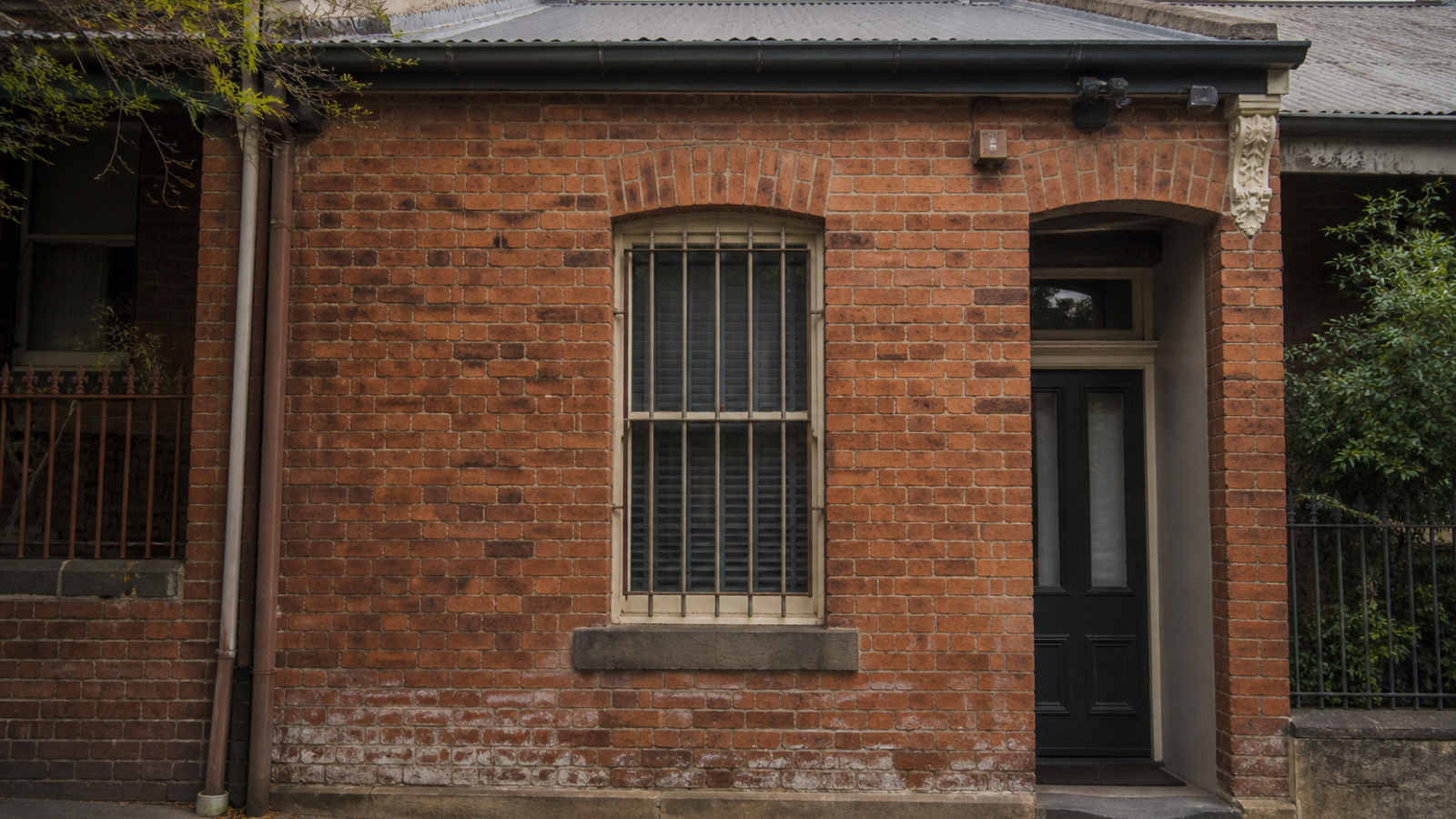
Brick façades in Sydney and NSW carry weather, salts and movement for decades. Joints fail first. Soft brick faces can then spall. A small open joint left alone can become a damp path, a loose arris, or a panel that needs far more intervention than early mortar repair would have required.
Maintenance here is not a promise of higher sale price. It is the cost of catching defects while the wall is still mostly sound. Sound bricks and sound joints should be retained. Wholesale “makeover” raking of every elevation is rarely conservation-led practice.
Common brick repair issues on older homes
Owners usually notice one of a few patterns:
Open or missing mortar — the most common reason walls look tired and start taking water.
Loose brick repair needs — a unit that rocks, has lost bedding, or sits proud after earlier impact.
Spalled or flaking faces — often where hard cement pointing, trapped moisture or salts have stressed soft brick.
Staining and white powder — sometimes cosmetic; sometimes a clue to damp or salt migration. If white deposits are the main symptom, start with our guide to white powder on brick and sandstone.
Cracks through bricks or stepped through joints — may be movement rather than a pointing job. See our sister guide on fixing cracks in brick walls.
Photograph the elevation dry and after rain. Note gutters, overflows, previous cement patches and any areas that feel hollow when tapped lightly (where safe to do so). That record turns a vague “fix brick” request into a scoped conversation.

Understanding brick and mortar — what you are actually repairing
A brick wall is a system. Bricks carry load and weather; mortar beds them, takes small movement and (when compatible) lets moisture leave the wall. On many Victorian and Federation buildings, original mortar was lime-rich and softer than modern bagged cement. Repair that ignores that history can look crisp while concentrating stress on the brick faces.
Brick and mortar repair therefore means choosing which part of the system has failed:
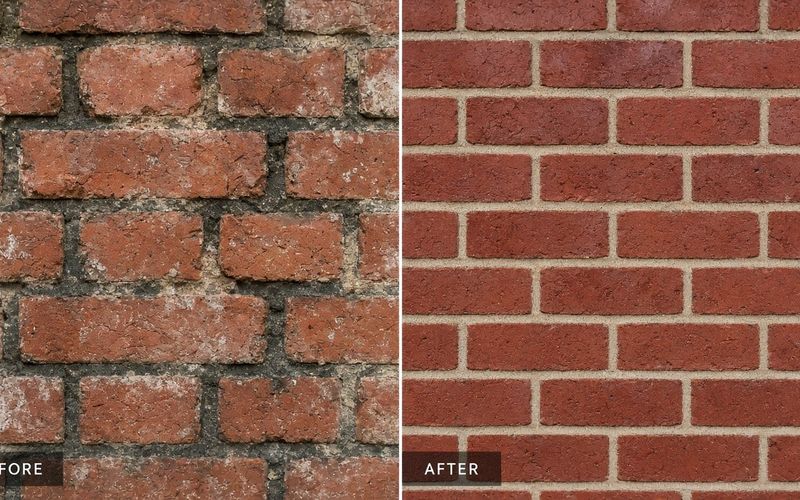
Joints only → usually repointing with a compatible mix.
Individual damaged units → cut out, match, and bed with appropriate mortar.
Both → sequence the work so you do not trap defects behind a neat finish.
Movement, damp or failed lintels → stop pricing “pointing” as the cure.
For mix logic in more depth, see lime mortar repointing for heritage brickwork and our forthcoming brickwork mortar guide.
Identifying damage before you choose a method
Signs of brick damage worth recording:
Cracks that open and close with seasons versus cracks that widen steadily.
Erosion of arrises (sharp edges) where hard pointing meets soft brick.
Discolouration that follows damp paths rather than random weathering.
Mortar that powders away or has already been replaced with a dense grey band.
Flaking faces on the brick itself — sometimes irreversible without unit replacement.
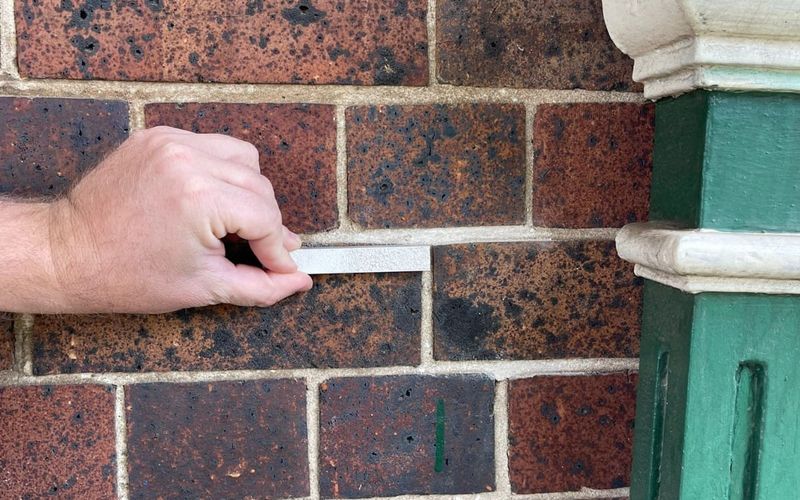
Assessing mortar integrity is not a fingernail test alone. Traditional lime mortar is meant to be softer. The Society for the Protection of Ancient Buildings’ guidance on repointing stresses retaining sound pointing and avoiding unnecessary work. Soft does not automatically mean failed.
Keep clear of loose overhead masonry. If a brick is ready to fall above a path or doorway, temporary making-safe comes before aesthetic matching.
Tools and safety — what professionals bring (and what DIY often skips)
Semrush briefs lean into tool lists. In practice, the kit matters less than sequence and materials. A competent brick repair programme typically needs:
Hand tools for careful raking and finishing (not indiscriminate grinders on soft arrises).
Means to mix and place a specified mortar consistently.
Protection for adjoining surfaces, paving and openings.
Access — ladders may suit a small patch; street fronts often need scaffolding or controlled platforms.
Safety gear and, where relevant, traffic or pedestrian management.
DIY mortar repair on a low, accessible panel of soft lime joints can be reasonable for a skilled owner. It becomes a poor investment when hard cement must be removed without damaging bricks, when units are loose at height, or when decorative tuckpointing is part of the original finish.
Step-by-step: how professional brick repair is usually sequenced
A sound programme looks less like a weekend how-to and more like this:
Assessment and recording — failed joints, damaged units, earlier repairs, moisture or movement.
Specification and sample — agree mortar colour, strength and joint profile on a trial area; view it dry beside original work.
Preparation — rake failed pointing to a suitable depth; carefully cut out units that must be replaced; protect edges.
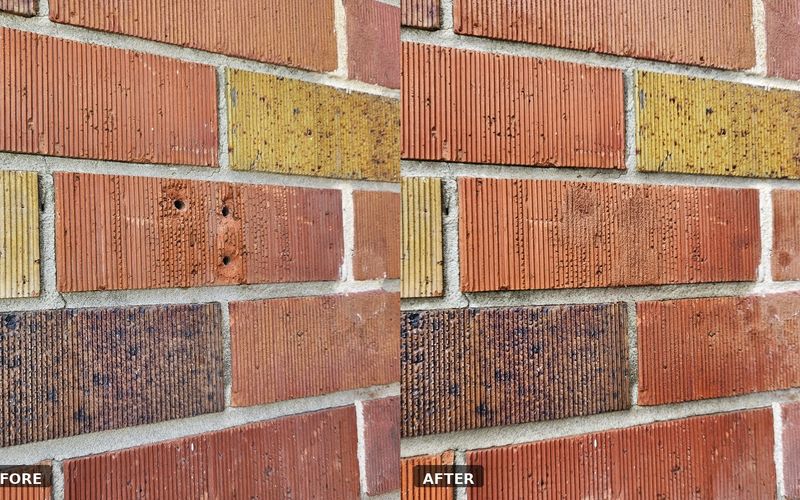
Brick wall repair and mortar repair — bed replacements; compact and finish pointing without smearing faces.
Protection and handover — weather protection, curing, inspection and plain maintenance advice.
That sequence is what you are paying for when you hire brick repairs and repointing in Sydney — not only the final joint colour.
Techniques for brick wall repair versus mortar-only work
Fixing brick mortar (repointing) renews joints that no longer shed weather. It does not straighten a bowed panel or stitch a structural crack.
Loose brick repair usually means removing the unit cleanly, cleaning the pocket, checking the backing, and resetting with a compatible bed and face pointing. Matching colour, size and texture matters on heritage façades; a bright modern brick in a soft Federation wall reads as a patch forever.
Where many units are failing in one zone, ask whether the cause is pointing hardness, persistent damp, salt, or movement. Replacing bricks without fixing the cause repeats the same failure.
Curing, inspection and ongoing care
Mortar needs time and appropriate conditions to cure. Dense coatings that “seal” soft masonry often trap moisture. After handover, keep gutters and overflows clear, watch for new open joints after storms, and treat early local failures before they become whole elevations.
Regular inspection is cheaper than waiting for a façade-wide programme. It does not require claiming a fixed lifespan for every mix.
When to call a professional — and what to send them
Call for assessment-led help when:
masonry is loose, bulging or above public access
earlier hard cement must be removed
damp or salts keep returning after “sealing”
cracks step through the wall or open progressively
decorative tuckpointing or complex matching is involved
access needs scaffolding or occupied-strata coordination
Send clear photographs (full elevation and close-ups; dry and after rain if you can), note access limits, and ask for a method that covers diagnosis and sample approval — not only a start date. Stoneline Heritage undertakes assessment-led brick, mortar and repointing for heritage and older buildings across Sydney and NSW.
Heritage and strata considerations for brick repair
On heritage-listed buildings and properties in conservation areas, visible change to brick and mortar can trigger approval requirements. That does not mean every local mortar repair needs a full development application — but it does mean documentation, photographs and a clear method statement help everyone. Ask early whether the fabric is listed, contributory or simply older character stock; the technical method may be similar while the paperwork differs.
Strata schemes add another layer: common property façades, access through lots, and staged budgets. A clear defect schedule — which elevations, which joints, which units — prevents “do the whole street front” quotes that outrun funds while urgent loose masonry waits. Prioritise making-safe and weather paths first; cosmetic evening-up of sound joints can wait.
Owners’ corporations benefit from sample panels signed off before large elevations proceed. That reduces disputes about colour and profile after the scaffold comes down.
Moisture, salts and why “sealing” brick often backfires
Many brick repair requests arrive after someone has already painted or sealed the wall. Dense coatings can trap moisture in soft masonry, push damp sideways, and accelerate salt damage at the face. If previous coatings are failing, the repair plan may need careful removal trials as well as joint work — not another impermeable layer.
Ground levels built up against brick, overflowing box gutters and unventilated subfloors all feed the same symptoms. Joint repair without drainage correction often returns as “the mortar failed again.” Fix the water path when it is part of the cause.
NSW coastal and harbour suburbs see salt crystallisation that looks like white powder or sandy deposits. Treat that as a moisture and salt problem first; mortar colour matching second. Our efflorescence guide is the right starting point for that pattern.
Matching replacement bricks without creating a patchwork façade
When units must be replaced, matching size, colour, texture and frog or perforation pattern matters. Salvage bricks from the same building (hidden elevations, demolished outbuildings) are often the best match. New bricks can work when carefully selected and when the mortar joint profile does not advertise the repair.
Avoid bright, hard modern bricks in a soft historic field unless the elevation already mixed periods honestly. A competent mason will say when a perfect match is unavailable and propose the least conspicuous alternative — including leaving some weathered original units if they remain structurally sound.
Document batch sources and keep spare matched units for future repairs where the programme is large. That reduces later colour drift when a single brick fails years on.
Frequently asked questions
What counts as brick repair?
Anything from local mortar repair and resetting a loose brick through to replacing damaged units — always after deciding what has actually failed.
Is mortar repair the same as repointing?
Repointing is mortar repair focused on the exposed joints. Wider brick and mortar repair may also include unit replacement or addressing damp and movement.
Can I fix brick damage myself?
Small, accessible lime joints may be maintainable with care. Loose masonry, hard cement removal, height, damp and decorative finishes usually need a professional.
Why do hard cement patches fail on old brick?
They can look strong while trapping moisture and concentrating stress on softer brick faces — accelerating the very damage owners hoped to stop.
How do I choose a contractor for brick wall repair in Sydney?
Prefer those who will show the affected areas, name the mortar approach, approve a sample, and stop when the wall needs something other than pointing. Locality helps logistics; method protects the wall.