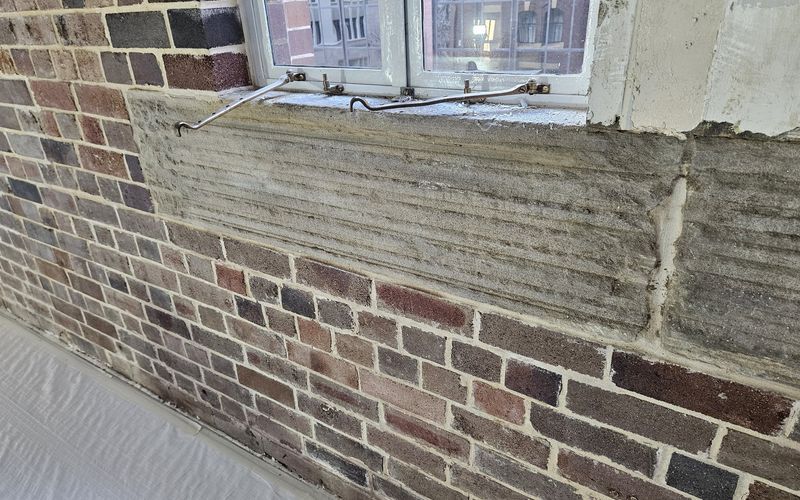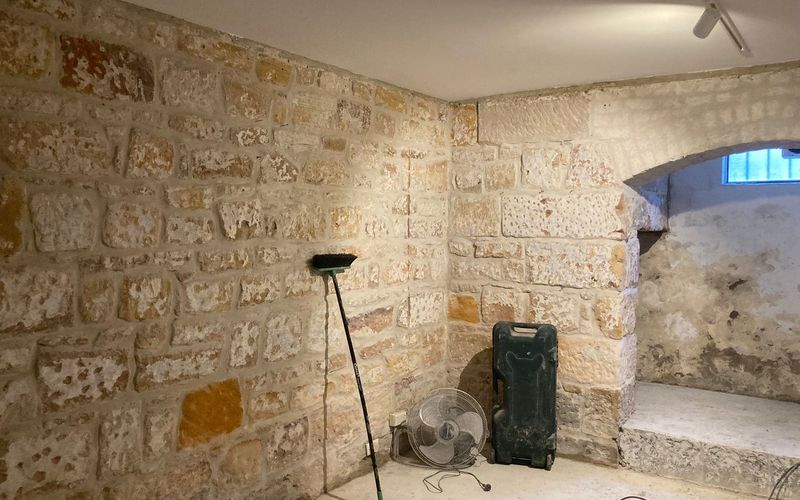
A sympathetic repair on a Federation or Victorian brick facade starts with the joints already on the wall. Match the mortar, the colour and the joint profile to the surviving work. Tuckpointing, the fine lime line used on many Victorian and Federation terraces, is a separate craft, and it is specified only where the evidence or a heritage brief calls for that finish.
Read the wall first
Many Victorian and Federation brick walls in Sydney were built with lime-rich mortars. Those joints were meant to be softer and more permeable than the brick, so moisture can leave the wall and small movements can be taken in the mortar rather than in the unit faces.
Sound joints stay. Raking every elevation for a new, uniform look is not the default. Compatibility means considering strength, permeability, texture and appearance together. A bag labelled for heritage work is not a specification for a particular building; the surviving mortar, the brick and the exposure should guide the mix.
Colour, texture and joint profile
Owners often judge mortar by the wet colour on the day. Dry colour beside the original work is what the street will see. Texture, from the sand, the tooling, and the joint width, changes how the brickwork reads from the footpath.
Flush, weathered, recessed and struck joints each throw light differently across the brick face. Victorian and Federation work often used profiles that kept the brick dominant and the joint quiet. Wide, ribbon-like cement joints reverse that relationship and make the repair conspicuous. Match the surviving original profile where it remains. Do not impose a modern ribbon because it is faster to tool.
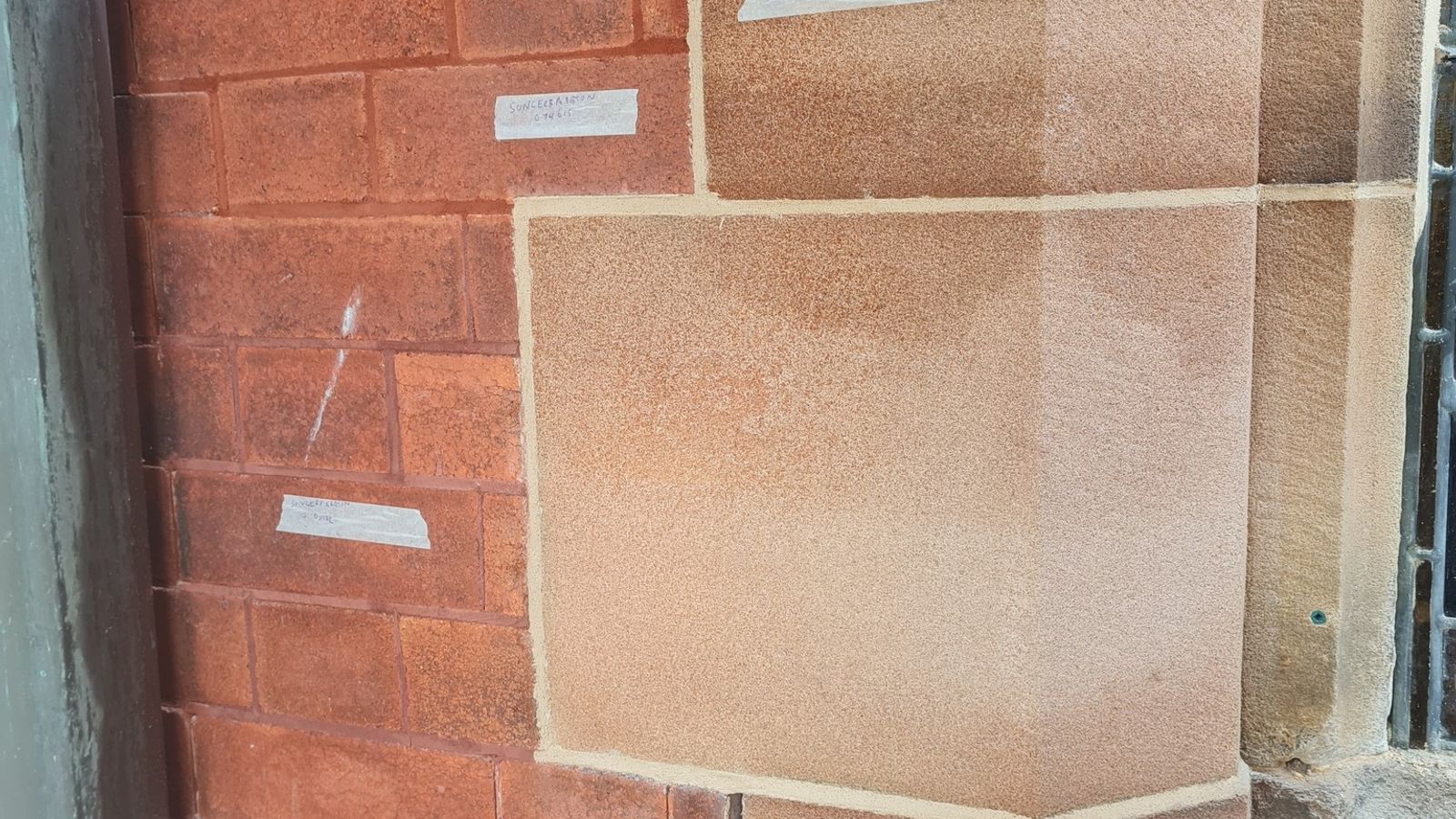
Agree a sample of mortar colour and joint profile, let it dry, and view it in the same light as the adjoining original pointing before a large elevation proceeds. That sample is the shared reference for the work.
Tuckpointing is a separate craft
Repointing replaces failing mortar in the joint with a compatible mix. Tuckpointing for Sydney terraces adds a fine lime line over a coloured joint fill. That refined look belongs on many Victorian and Federation terraces, but only where the surviving evidence or the brief calls for it. It is not ordinary joint fill, and it has to be specified and carried out as its own finish.
Hard cement is not a match
Modern bagged cement mortars became common later because they set faster and feel robust. On soft historic brick, that robustness is often the problem. A hard, dense joint can trap moisture, restrict small movement, and push stress into the brick face. Spalling and edge loss follow. How that damage develops is set out in why hard cement pointing damages older masonry.
Many Sydney facades already carry twentieth-century cement pointing over older, softer brick. Removal is trialled before it is taken across the wall, because forcing a firmly bonded joint can break the arrises, the edges of the brick. A stable but imperfect patch may sometimes be left after assessment, where removal would cause greater harm. New pointing, where it is needed, is a lime mix matched for strength, permeability, colour and profile, so the wall can still dry. Whether older Sydney brickwork should use lime or cement mortar is the longer note on that choice.
What the scope should settle
Ask which joints need intervention, how any hard cement will be trialled for removal, what original fabric will remain, and how colour and profile will be approved. On a listed building or in a conservation area, visible change to brick and mortar can need approval before work proceeds. Treatment suitability still varies by substrate, exposure and existing repairs.
Keep gutters and overflows clear after the work. A leaking gutter can keep saturating a wall that would otherwise be repairable. Inspect joints after wet weather, and deal with loose units as a separate brief from open joints.
Short answers
Should every joint be raked out? No. Sound pointing is kept. Failed joints are renewed in a compatible mortar, matched to the surviving colour and profile.
Is tuckpointing the same as repointing? No. Repointing renews the joint. Tuckpointing adds a fine lime line over a coloured fill, and is used only where that was the original finish or the brief requires it.
Who should you engage? A heritage masonry contractor who will assess the fabric, match the mortar and the profile, and say when tuckpointing is justified. Send photographs and a short description through our brick, mortar and repointing service. We will come back with a method to assess on site, and what has to be confirmed before a quote.